
Table of Contents
Polyester vs Tencel Lyocell: Welcher Stoff ist beim Schwitzen wirklich besser für deine Haut?
This page may contain affiliate links. We may earn a commission on purchases, at no additional cost to you. Learn more →
Die meiste Sportkleidung besteht aus Polyester – und Polyester ist Plastik. Es atmet nicht so, wie deine Haut es braucht, und speichert Gerüche, weil Bakterien sich darin wohlfühlen, und bei jeder Wäsche verliert es Mikroplastik.
Genau das Plastik, in das du beim Training eine Stunde lang hineinschwitzt. Aber es ist günstig, überall erhältlich und die Schnitte sind schön – also greifst du immer wieder zu.
Also stellst du dir die naheliegende Frage: Gibt es Activewear aus natürlichen Fasern, die trotzdem den Halt und die Form gibt wie synthetische Materialien? Bio-Baumwolle gibt es inzwischen überall, und auf der Haut fühlt sie sich aucg wunderbar an, gerade bei empfindlicher Haut. Aber den Halt, den du suchst, gibt sie dir nicht, oder?
Hier kommt Tencel ins Spiel. Tencel-Stoff kann – mit genügend Elasthan (z. B. ROICA) gemischt – die Lösung sein: weich auf der Haut, aber mit der Dehnung und Form, die du wirklich willst. Genau hier setzt der Vergleich Polyester vs Tencel Lyocell an.
In diesem Vergleich geht es darum, welcher Stoff sich beim Schwitzen wirklich besser anfühlt, mit Vor- und Nachteilen. Die Kurzfassung: Tencel (Lyocell) ist weicher, kühler und bleibt länger frisch, während Polyester bei Trocknungsgeschwindigkeit, Haltbarkeit und Preis vorne liegt – aber einen eigenen Preis mit sich bringt (Mikroplastik und eine Chemie, die du kennen solltest). So findest du heraus, was in deine Schublade gehört.
Das Wichtigste in Kürze
-
„Tencel" ist ein Markenname, nicht die Faser. Die Gattungsbezeichnung lautet Lyocell. Genau das verlangt auch die EU-Textilkennzeichnungsverordnung (VO (EU) Nr. 1007/2011): Auf dem Etikett zählt der generische Fasername.
-
Polyester kommt selten „clean" zu dir. Im Material stecken meist Antimon-Reste aus der Produktion, dazu Farbstoffe und Ausrüstungen – und ein Teil der Sportkleidung trägt zusätzlich PFAS.
-
Für empfindliche Haut und Neurodermitis ist gefärbte Synthetik die riskante Wahl. Dispersionsfarbstoffe auf Polyester sind die häufigste Ursache für textile Kontaktallergien.
-
Tencel ist nicht nur für sanftes Training. Mit cleanem Elasthananteil trägt Lyocell jede Intensität mit; Polyesters einziger echter Vorteil ist die schnellste reine Trocknung bei sehr intensiven Intervallen.
-
Polyester gewinnt bei Preis, Haltbarkeit und Quick-Dry – das bleibt in diesem Vergleich ehrlich drin. Wenn du Polyester Kleidung kaufts, achte auf OEKO TEX 100 Zertifikat.
-
Lyocell ist im Grunde die ursprüngliche, nachhaltige Antwort auf Polyester: holzbasiert, hergestellt in einem geschlossenen Kreislauf, der 99,8 % seines einen Lösungsmittels zurückgewinnt.
Polyester vs Tencel Lyocell: Wo liegt der Unterschied?
Lass uns erstmal die Begriffe klären.
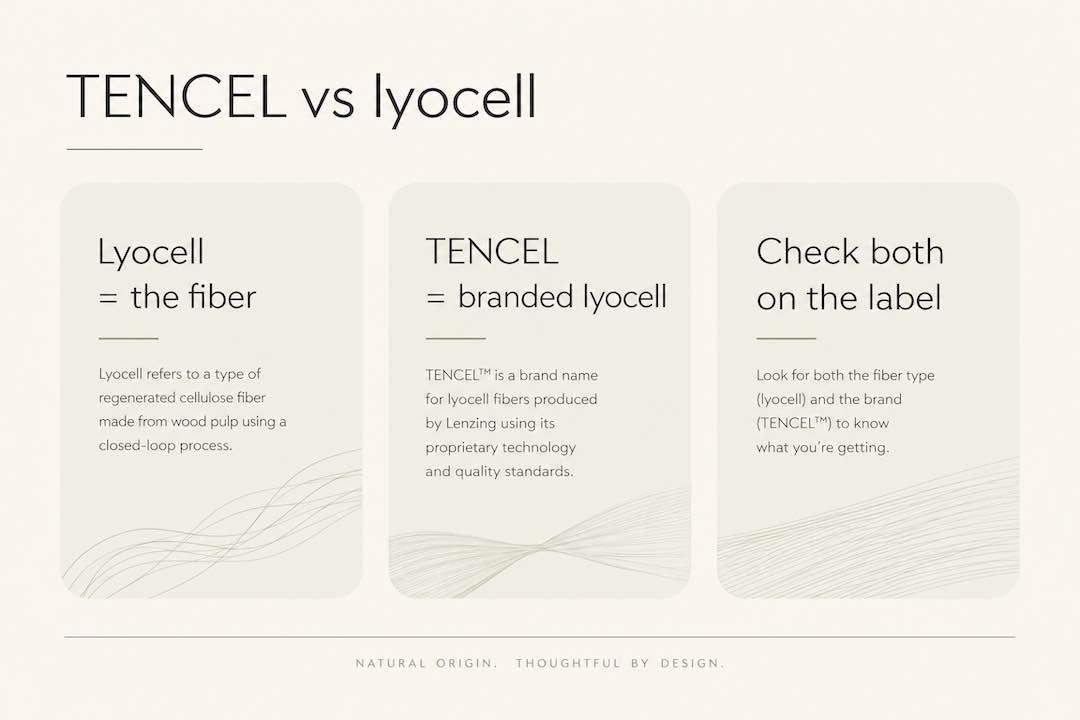
„Tencel" ist eine Marke, Lyocell ist die Faser
Du hast wahrscheinlich „Tencel" mal gegoogelt. Fasertechnisch meinst du aber Lyocell. TENCEL™ ist eine Marke des österreichischen Herstellers Lenzing. Lyocell ist der Gattungsname der Textilfaser – so wie „Elasthan" die Gattung ist und „Lycra" eine Marke.
Anders als reine Markennamen verraten dir solche Fasernamen, was wirklich drinsteckt. Steht TENCEL™ auf dem Etikett, stammt das Lyocell von Lenzing, nach deren Standards. Steht nur „Lyocell" da, bekommst du die Fasergattung ohne diese Marken-Garantie. Mehr dazu in unseren Guides zu schadstoffarmem Stoff und zum Unterschied zwischen Lyocell und Viskose.
Wie Tencel entsteht: Holzzellstoff, Naturfasern und ein geschlossener Kreislauf
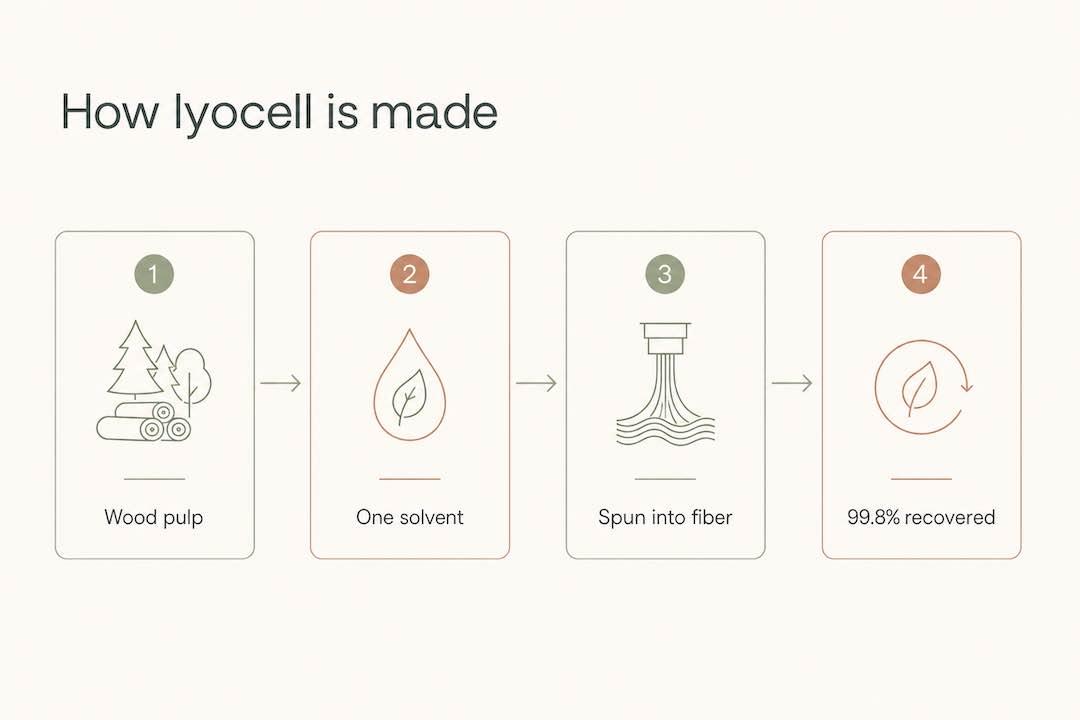
Tencel wird aus Holzzellstoff gewonnen – das Ausgangsmaterial stammt aus nachhaltig bewirtschafteten, FSC- oder PEFC-zertifizierten Wäldern, oft aus Eukalyptus oder Buche, also einer nachwachsenden Ressource. Damit schont Lyocell endliche Ressourcen, die Polyester aus Erdöl verbraucht. Und das ist der Punkt, der für deine Gesundheit am meisten zählt: Für Lyocell braucht es im Kern ein einziges Lösemittel, das im Herstellungsprozess immer wieder verwendet wird.
Das ist der geschlossene Kreislauf. Nach Lenzings eigenen Angaben werden über 99,8 % des Lösungsmittels zurückgewonnen und wiederverwendet, fast nichts wird entsorgt. Polyester dagegen entsteht in einem Produktionsprozess aus einem ganzen Cocktail an Petrochemikalien. Tencel-Fasern sind von Natur aus hydrophil – sie lieben Wasser –, und das ist eine der wichtigsten Eigenschaften dafür, wie sich Tencel Lyocell beim Schwitzen verhält. Für mich ist Lyocell die aktuell beste nachhaltigere und cleanere Antwort auf Polyester: Holz, in Faserform gebracht, mit einem wiederverwendeten Lösemittel statt eines Chemie-Eintopfs.
Wie Polyester entsteht (und wo recyceltes Polyester hineinpasst)
Polyester hat die umgekehrte Entstehungsgeschichte. Es ist eine synthetische Faser, aus Erdöl gewonnen – im Grunde ein feiner Plastikfaden und eine der häufigsten Chemiefasern überhaupt. Vom T-Shirt über Leggings bis zur Regenjacke steckt er fast überall. Es ist hydrophob: Es nimmt Feuchtigkeit nicht in die Faser auf, sondern schiebt sie an der Oberfläche entlang. Daraus folgt fast jeder Unterschied, den du spürst – und es kommt eben nicht als „nur Plastik" auf deine Haut.
Recyceltes Polyester (rPET, oft aus Plastikflaschen) wird als grüne Option vermarktet, und es senkt den Bedarf an Neu-Plastik. Aber es bleibt Plastik auf deiner Haut, es verliert weiter Mikrofasern, und es lässt sich nicht endlos recyceln – das meiste landet trotzdem im Müll. Manche Untersuchungen deuten sogar darauf hin, dass recycelte Fasern höhere Rückstände tragen können als neue. Ich bin der Frage, ob recyceltes Polyester schädlich ist, und der Grundfrage, ob Polyester Plastik ist, in zwei eigenen Beiträgen nachgegangen.
Welcher Stoff fühlt sich beim Schwitzen besser an?
Das ist die eigentliche Frage. Nicht die Chemie – das Gefühl. Hier werde ich konkret.
Weichheit und das kühle Gefühl auf der Haut
Tencel-Stoff hat eine glatte Faseroberfläche, und du merkst es sofort: weich, fast seidig, kühl auf der Haut. An heißen Tagen und Ruhetagen willst du dieses kühle Gefühl nicht mehr hergeben.
Atmungsaktivität, Feuchtigkeitsmanagement und Feuchtigkeitstransport
Hier flachen die meisten Marken etwas ab. Feuchtigkeitsmanagement ist nicht eine Sache – es ist, wie ein Stoff Schweiß von der Haut zieht, weiterleitet und verdunsten lässt.
Weil Lyocell hydrophil ist, nimmt es Schweiß in die Faser auf und gibt ihn nach und nach ab – diese Feuchtigkeitsaufnahme hält das Mikroklima direkt an der Haut trockener. Polyester transportiert Feuchtigkeit anders: Es kann kaum etwas aufnehmen, also schiebt es die Feuchtigkeit zum Verdunsten an die Außenseite. Dieser Feuchtigkeitstransport ist echt und nützlich – aber „nach außen leiten" und „sich auf der Haut trocken anfühlen" sind nicht dasselbe. Genau deshalb beschreiben so viele Polyester als klamm, obwohl es technisch Schweiß bewegt.
Komfort hängt stark von der Konstruktion ab – Strickart, Porosität, Garnaufbau – nicht nur von der Faser. Die Forschung zu Sportbekleidung und Thermoregulation zeigt klar, dass die Konstruktion genauso zählt wie das Material. Unsere Artkel zum besten Material zum Sport und zum besten Stoff zum Schwitzen gehen tiefer auf die Konstruktion ein.
Der Trocknungs-Realitätscheck
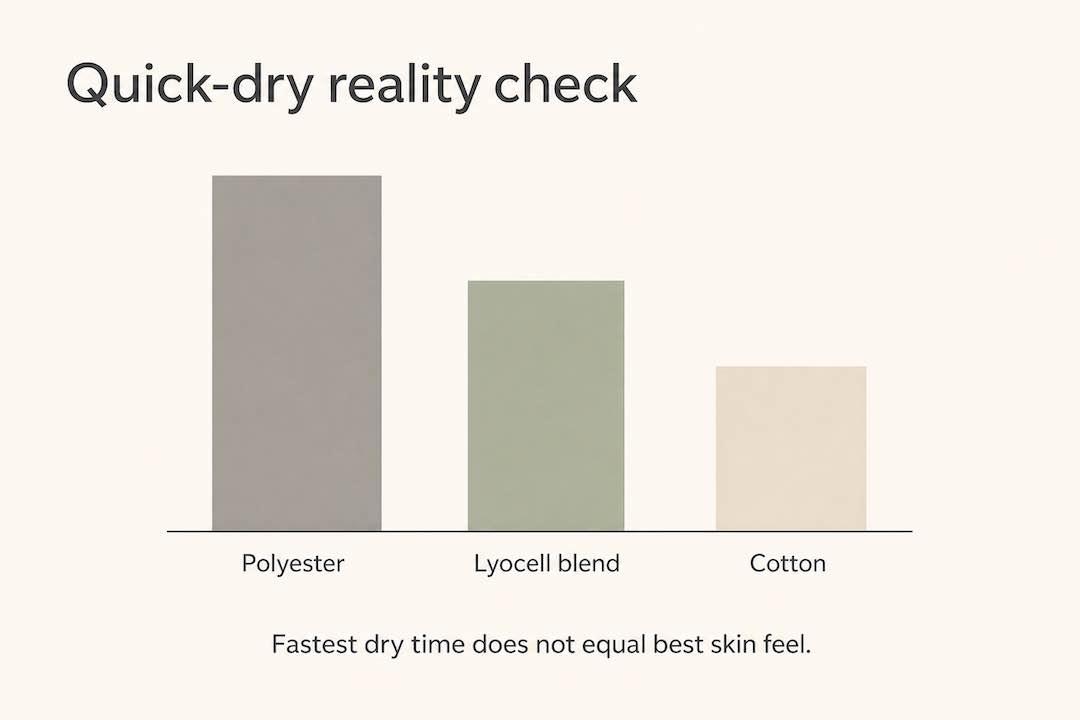
Aber „Tencel-kann-alles-besser" stimmt auch nicht: In Studien zu gestrickten Stoffen trocknet Polyester oft am schnellsten, vor Lyocell und Mischungen. Untersuchungen zum Feuchtigkeitstransport und Trocknen in Single-Jersey-Strick bestätigen das.
Aber achte darauf, was das bedeutet – und was nicht. Schneller zu verdunsten heißt nämlich nicht automatisch, sich trockener anzufühlen, und schon gar nicht, der angenehmere Stoff zum Tragen zu sein. Konkret heißt das: Bei den extremsten, schweißnassen Intervallen wird Polyester die Feuchtigkeit an der Oberfläche am schnellsten los. Bei allem darunter hält eine gute Lyocell-Mischung locker mit – und fühlt sich dabei besser an.
Geruch nach dem Schwitzen
Hier macht Polyester seinem schlechten Ruf alle Ehre. Es ist hydrophob, hat keine eigene Geruchskontrolle und bietet geruchsbildenden Bakterien ideale Bedingungen – dieses Bakterienwachstum sorgt dafür, dass es schneller unangenehm riecht als hydrophile Fasern. Laborarbeiten zum Geruchsprofil von Polyester und Baumwolle, ein Übersichtsartikel zu Textilwäsche und Körpergeruch und Textilgeruchs-Forschung der Universität Gent kommen zum selben Ergebnis: Synthetik speichert Geruch – und nach hartem Training noch hartnäckiger. Die Naturfaser, die als geruchsärmste gilt, ist Merinowolle. Lyocell ist keine Merinowolle, aber es steht auf derselben hydrophilen, atmungsaktiven Seite – und damit weit von Polyester entfernt.
Wenn Geruch dein Thema ist, hilft unser Guide wie du Sportkleidung wäschst, damit sie nicht mehr riecht, egal was du trägst.
Was stört dich an Sportstoffen am meisten?
Was wirklich im Polyester steckt
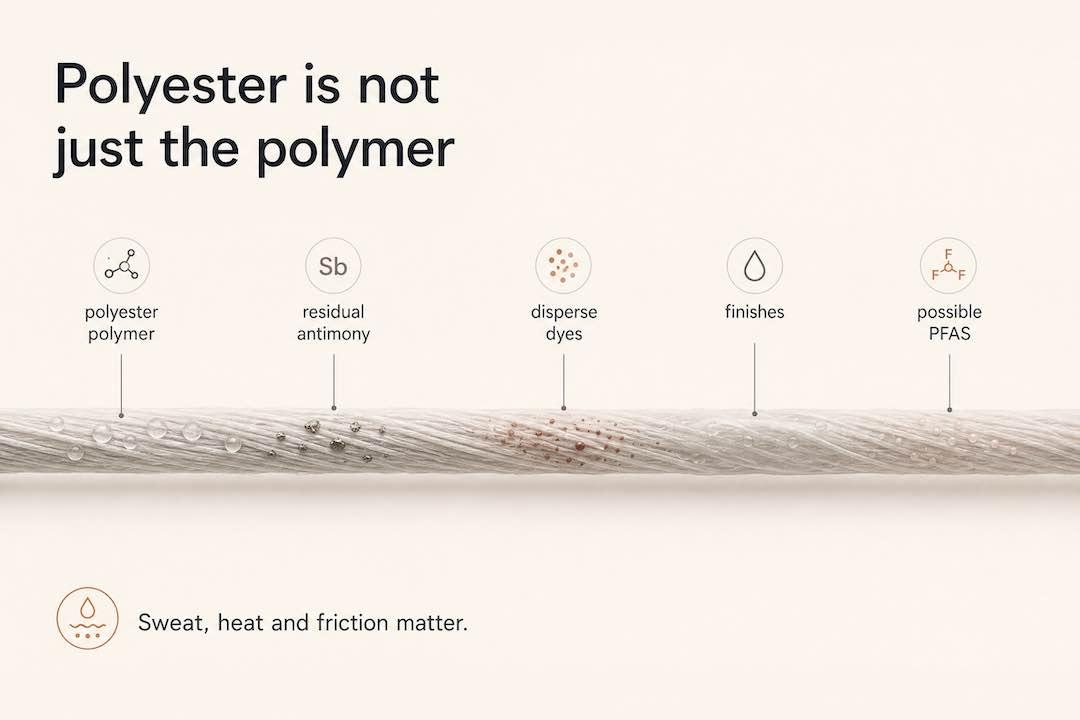
Das ist mir am wichtigsten: Polyester kommt nicht als cleanes, reizfreies Plastik auf deine Haut. Es kommt mit dem Chemiecoctail aus der Herstellung und Veredelung – und du ziehst es genau dann an, wenn du schwitzt und es eine Stunde lang an offenen Poren reibst. Für eine Aktivität, die du deiner Gesundheit zuliebe machst. Diesen Widerspruch konnte ich nicht mehr aushalten.
Das reine Polyester-Polymer ist eigentlich relativ stabil und reagiert kaum mit dem Körper. Die meisten dokumentierten Haut- und Gesundheitsbedenken gehen auf die Zusätze zurück – Katalysator, Farbstoffe, Veredelungen –, nicht auf die Faser selbst. Beruhigend ist das trotzdem nicht, denn kaum ein Polyester-Kleidungsstück kommt ohne diese Zusätze bei dir an.
Antimon – der Katalysator, der nie ganz verschwindet
Rund 80–85 % des neuen Polyesters (PET) werden mit Antimontrioxid als Katalysator hergestellt, und Spuren bleiben in der fertigen Faser. Die Internationale Krebsforschungsagentur (IARC) hat dreiwertiges Antimon, zu dem Antimontrioxid gehört, 2022 als wahrscheinlich krebserregend für den Menschen (Gruppe 2A) eingestuft. Diese Gefahreneinstufung beschreibt für sich allein nicht das Krebsrisiko beim Tragen von Polyesterkleidung; dafür sind unter anderem Freisetzung und aufgenommene Menge entscheidend. Eine Studie 2021 in Regulatory Toxicology and Pharmacology maß Antimon in Polyestertextilien bei etwa 125–470 µg/g und fand, dass ein kleiner Anteil – rund 0,05–2 % – unter Standardbedingungen in künstlichen Schweiß überging, bei Körpertemperatur mehr als in der Kälte.
Jetzt das Gegengewicht: Behörden betonen, dass das Antimon in der fertigen Faser fest gebunden ist, und keine Studie hat gezeigt, dass das Tragen von Polyester beim Menschen Krebs verursacht. Die Mengen wären zu klein. Aber die Lücke ist offensichtlich – Polyester wird am meisten beim Schwitzen getragen, oft und über lange Zeiträume –, und genau diesen Fall decken die Entwarnungen nicht ganz ab. Ich setze ungern auf „wird schon passen". (Die Hormon-Frage habe ich in Ist Polyester ein endokriner Disruptor? vertieft.)
Dispersionsfarbstoffe und „pflegeleichte" Veredelungen
Das ist der besser belegte Punkt. Polyester lässt sich nur mit Dispersionsfarbstoffen färben, und die binden sich nicht chemisch an die Faser – ihre kleinen, fettliebenden Moleküle sitzen im Plastik und können auf die Haut wandern, besonders mit Wärme, Feuchtigkeit und Reibung. Sie sind mit Abstand die häufigste Ursache textiler Kontaktallergien. In der EU greift der Gesetzgeber hier: REACH (Anhang XVII) verbietet Azofarbstoffe, die bestimmte krebserregende aromatische Amine freisetzen, in hautnahen Textilien.
Dann die Veredelungen. Knitterarme und „pflegeleichte" Veredelungen nutzen oft Formaldehydharze – und Formaldehyd ist als krebserregend (CLP-Kategorie 1B) eingestuft. In der EU ist es in Textilien streng begrenzt: REACH limitiert den Gehalt in Kleidung, und ab dem 6. August 2026 gelten zusätzlich verschärfte Emissionsgrenzwerte (Verordnung (EU) 2023/1464). Um dieselbe Art von Bedenken geht es auch in Formaldehyd in Kleidung, BPA in Kleidung und im größeren Bild der Schadstoffe in Kleidung. Die Lösung ist nicht Angst, sondern schadstoffgeprüfte Farben und Veredelungen.
PFAS – die „Ewigkeitschemikalien" in Performance-Kleidung
PFAS werden zugesetzt, um Stoff wasser-, schmutz- und schweißabweisend zu machen. Unabhängige Tests von Mamavation und Environmental Health News fanden nachweisbares organisches Fluor (ein PFAS-Marker) in etwa jeder vierten getesteten Leggings und in 65 % der Sport-BHs – oft in der inneren, hautnahen Schicht. PFAS-Belastung wird mit Hormonstörungen, Immuneffekten und bestimmten Krebsarten in Verbindung gebracht, und Schweiß kann die Aufnahme über die Haut beim Training erhöhen.
PFAS kommen aus Veredelungen, nicht aus dem Polyester selbst, und manche Marken testen heute auf cleane Inhalte. Die EU zieht auch nach: Mit der Verordnung (EU) 2024/2462 dürfen ab dem 10. Oktober 2026 bestimmte PFAS (PFHxA und verwandte Stoffe) in Kleidung und Zubehör für Verbraucher:innen nicht mehr in Verkehr gebracht werden; parallel prüft die ECHA – auf Initiative von fünf Staaten, darunter Deutschland – eine umfassende PFAS-Beschränkung. Bis Etiketten das zuverlässig abbilden, helfen unsere Guides zu PFAS in Sportkleidung und ob Polyester PFAS enthält.
Warum Schweiß alles verschlimmern kann
Sieh dir das Muster an: Antimon wandert stärker in den Schweiß; Dispersionsfarbstoffe lösen sich mit Wärme, Feuchtigkeit und Reibung; PFAS werden beim Schwitzen besser aufgenommen. Jeder dieser Punkte wird schlimmer unter genau den Bedingungen, die du im Gym schaffst.
Deshalb war „Ist Polyester praktisch?" für mich irgendwann die falsche Frage. Die richtige lautet: Warum trage ich Plastik und die enthaltende Chemie an offener, schwitzender Haut – ausgerechnet in der einen Stunde, in der ich gesund sein will?
Polyester vs Tencel Lyocell für empfindliche Haut und Neurodermitis
Wenn deine Haut beim Sport reagiert, rötet oder juckt, ist dieser Abschnitt für dich.
Es ist verlockend zu behaupten „natürlich = gut, synthetisch = reizend". Ich sage dir nicht, Tencel sei hypoallergen. Wahrer und sinnvoller wäre: Die meisten Hautreaktionen auf Kleidung kommen von Farbstoffen und Veredelungen, nicht von der Faser selbst – und diese Farbstoffe und Veredelungen sitzen überwiegend auf Synthetik. Dispersionsfarbstoffe werden gar nicht auf Baumwolle, Wolle, Leinen oder Seide verwendet; sie sind ein Polyester-, Nylon- und Acetat-Thema.
Deshalb kippt die Waage bei reaktiver Haut deutlich. Farbstoff- und Chemikalienabgabe beschleunigt sich mit Wärme, Schweiß und Reibung – also zeigen sich Reaktionen genau dort, wo Activewear eng sitzt: Bund, Achseln, Innenschenkel, Nacken. Für Allergiker:innen und Neurodermitis-anfällige Haut ist gefärbte Synthetik beim schweißtreibenden Training fast eine Worst-Case-Kombination. Tencels glatte Oberfläche hilft zusätzlich, gerade bei Reibung durch den Sport-BH. Mehr in synthetische Stoffe und Hautgesundheit, Textildermatitis, die besten Stoffe für empfindliche Haut und Tencel vs Baumwolle für empfindliche Haut.
Leistung, Haltbarkeit, Pflege und Preis
Wann Polyester trotzdem gewinnt
Ich habe Polyester jahrelang gern getragen, also tue ich nicht so, als wäre es nutzlos. Es ist wirklich:
-
Günstiger in Produktion und Kauf .
-
Robust. Es steckt Abrieb und harten Dauereinsatz weg (wobei die Qualität stark von der Konstruktion abhängt – ein billiges Fast-Fashion-Poly und ein gut gebautes sind nicht dasselbe Kleidungsstück).
-
Pflegeleicht und knitterarm. Es widersteht Falten und Einlaufen und übersteht nachlässige Wäsche.
-
Am schnellsten trocknend in technischen Stricks, bei den extremsten schweißnassen Intervallen.
Wenn du strapazierfähige Ausstattung mit kleinem Budget kaufst, ist Polyester eine vernünftige Wahl. Achte dann auf ein OEKO-TEX® Standard 100-Label – es prüft das fertige Textil auf eine Liste von Schadstoffen. Es macht Plastik nicht zu Nicht-Plastik, aber es ist ein sinnvoller Mindeststandard (mehr in OEKO-TEX vs GOTS). In Deutschland gibt dir zusätzlich den staatlichen Grünen Knopf.
Wann Tencel gewinnt – auch bei intensivem Training
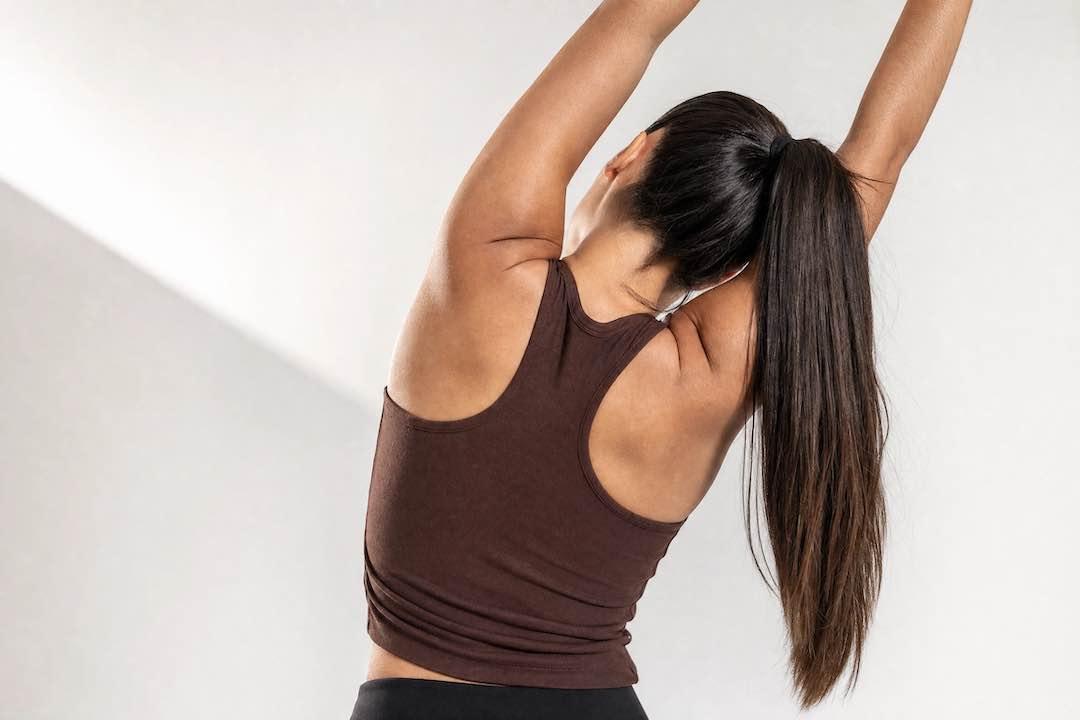
Tencel sei „nur für Yoga und Spazieren" ist nicht ganz korrekt. Zwar hat teines Lyocell wenig Dehnung – allein ist es nicht gym-tauglich. Mische es mit genügend cleanem Elasthan (typisch 80–90 % Lyocell, der Rest Stretch), und es trägt jede Intensität mit: Kraft, Laufen, HIIT, alles. Bei sehr intensiven Intervallen, wo maximale Feuchtigkeitsableitung zählt, führt Polyester – aber in den meisten Trainingssituationen hält Lyocell mit (meine eigene Erfarhung).
Tencel gewinnt also bei dem, was du die ganze Session und über das ganze Jahr spürst: weicherer Griff, kühler in der Hitze, länger frisch, und stinkt nicht, sanfter zu reaktiver Haut – und, mit richtiger Mischung, gibt auch echten Halt. Das ist die Kleidung, die ich an meinem Körper mit ruhigem Gewissen tragen will. Starte mit den besten schadstoffarmen Activewear-Marken, schadstoffarmer Yoga-Kleidung und den besten schadstoffarmen Sport-BHs.
Pflege und Langlebigkeit
Wasche deine Tencel-Kleidung schonend, kühl (30 °C reichen meist), und trockne sie an der Luft statt im Trockner, wo es geht – sie pillt kaum, kann aber pillen, wenn du damit rabiat umgehst; mit dieser kleinen Sorgfalt hält sie jahrelang. Der Bonus: kühl und seltener waschen ist ohnehin das Beste, was du gegen Mikrofaser-Abrieb bei jedem Stoff tun kannst.
Der älteste Rat der Naturfaser-Fans gilt weiter – trag, was du schon hast, wasch es seltener, und nutz einen Mikrofaser-Waschbeutel für die Synthetik, die du behältst.
Die Umweltbilanz: Polyester vs Tencel Lyocell
Was deine Haut berührt und was im Meer landet, ist dieselbe Entscheidung.
Warum Polyester die größere Umweltgeschichte ist
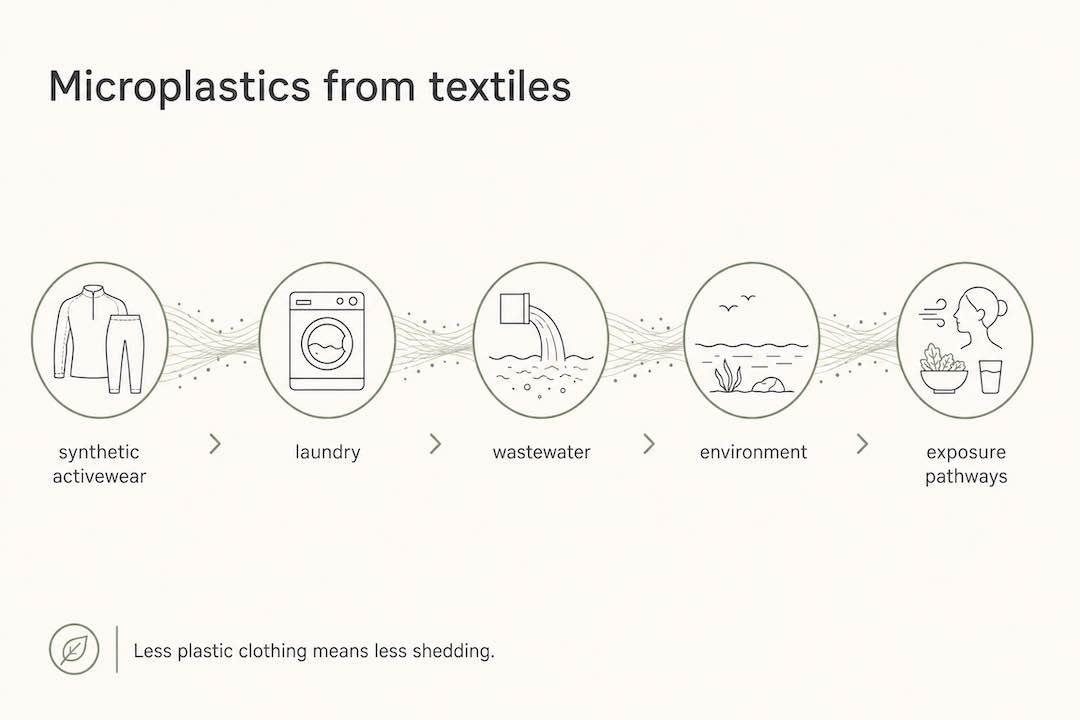
Polyester dominiert die Faserwelt: Der Materials Market Report von Textile Exchange beziffert es 2023 auf 57 % der globalen Faserproduktion. Weil es erdölbasiertes Plastik ist, verliert es bei jeder Wäsche Mikrofasern, und synthetische Textilien sind eine der größten Quellen für primäres Mikroplastik im Meer. Die Europäische Umweltagentur schätzt 200.000–500.000 Tonnen textiles Mikroplastik pro Jahr in den Meeren; auch das deutsche Umweltbundesamt führt Textilien als relevante Quelle. Bis zu 200 Jahre kann Polyester zum Abbau brauchen.
Mikroplastik taucht inzwischen in unseren Körpern auf
Das ist der Punkt, an dem ich nicht vorbeikomme. Mikroplastik ist längst keine reine Meeresgeschichte mehr. Forschende fanden es in menschlichem Blut, Plazenta, Hoden und arteriellen Ablagerungen, und eine Studie 2025 in Nature Medicine fand es in Gehirn-, Leber- und Nierengewebe – mit deutlich höheren Werten in Hirnproben von 2024 als von 2016. Eine andere Arbeit verband Mikroplastik in Halsschlagader-Ablagerungen mit höherem Herzinfarkt- und Schlaganfallrisiko.
Ehrliche Einordnung: Der größte Teil dieser Körperlast stammt aus Essen, Trinken und Atemluft, nicht direkt aus Leggings. Aber synthetische Kleidung ist eine Hauptquelle der Umwelt-Mikrofasern, die in genau diesem Essen, Wasser und in der Luft landen – weniger Plastik tragen und waschen ist also Teil desselben Problems. Wenn es dich beschäftigt, sieh dir woher Mikroplastik kommt, wie du Mikroplastik vermeidest und wie du Mikroplastik im Körper reduzierst an.
Umweltbilanz von Tencel: Wo die Öko-Versprechen Nuancen brauchen
Lyocell ist auf dem Papier der umweltfreundlichere Stoff, und ich will genau sagen, warum. Lenzing gibt an, TENCEL™ Lyocell werde mit mindestens 50 % weniger CO₂-Emissionen und Wasser als generisches Lyocell und Modal hergestellt, aus FSC/PEFC-zertifiziertem Holz, im geschlossenen Kreislauf, und sei biologisch abbaubar. Dazu kommt ein Flächen- und Wasseraspekt, den viele übersehen: Ein Baumbestand liefert weit mehr Faser pro Hektar als ein Baumwollfeld, und Lyocell braucht einen Bruchteil des Wassers von Baumwolle – ein großer Teil seines kleineren ökologischen Fußabdrucks und ein echter Grund, warum es als nachhaltigerer Stoff gilt als erdölbasierte Synthetik.
Lies die Angaben aber genau: Die 50 % beziehen sich auf generisches Lyocell/Modal, und es ist eine Hersteller-Angabe – nach Standardmethoden geprüft, aber vom Hersteller berichtet, und sie überträgt sich nicht automatisch auf jede „Lyocell"-Ware, nur auf zertifiziertes TENCEL™. Ein umweltfreundlicher Stoff ist nur so gut wie seine Herkunft – darum schreiben wir über Greenwashing erkennen und warum man Bio-Fasern wählt.
PFAS und EU-Recht – was sich gerade ändert
Eine Sache sollte 2026 jede:r in der EU kennen. Mit der bereits genannten Verordnung (EU) 2024/2462 läuft das Verbot von PFHxA und verwandten PFAS in Verbraucher-Kleidung ab dem 10. Oktober 2026 an, und auf EU-Ebene wird die umfassende PFAS-Beschränkung über die ECHA verhandelt. Nutze woran du schadstoffarme Kleidung erkennst, um den Etiketten voraus zu sein.
Über das Gym hinaus: Polyester vs Tencel Lyocell bei Bettwäsche und Alltag
Diese Faserlogik hört nicht bei der Sportkleidung auf – sie gilt genauso für Alltagsstücke, vom T-Shirt über Blusen und Hosen bis zu Kleidern. Die Gründe, warum sich Tencel auf schwitzender Haut kühl und frisch anfühlt, machen es auch bei Bettwäsche zum Liebling. Tencel-Bettwäsche gilt als glatt, atmungsaktiv, mit guter Feuchtigkeitsregulierung und temperaturregulierend, während Polyester-Bettwäsche Wärme staut und Geruch hält – wie die Polyester-Leggings –, und Baumwoll-Bettwäsche (auch hochwertige Baumwolle) bei der Feuchtigkeit dazwischen liegt, aber stärker knittert, wobei Bio-Baumwolle wenigstens die Pestizidlast spart (warum wir Bio-Baumwolle wählen sollten). Wenn du heiß schläfst, ist der Unterschied echt: siehe die beste Bio-Bettwäsche für gesünderen Schlaf und schadstoffarme Bettwäsche-Marken. Sowohl Baumwolle als auch Tencel lassen deine Haut atmen, wie Plastik es nie kann.
Warum ich Tencel-Activewear wähle – und warum Orbasics sie entwickelt
Ich finde es toll, wie sich Naturfasern anfühlen, aber die meiste Activewear aus natürlichen Materialien gibt keinen Halt. Keine Stütze, keine Form, nichts von dem festen Grip, die Polyester gibt. Also entscheiden sich die meisten Frauen aus einem Grund für Plastik – wegen der Kompression. Ich verstehe das: Ich habe selbst Polyester-Sportkleidung getragen. Aber ich stelle meine Gesundheit an erste Stelle, und Plastik auf schwitzender Haut wurde für mich ein klares Nein.
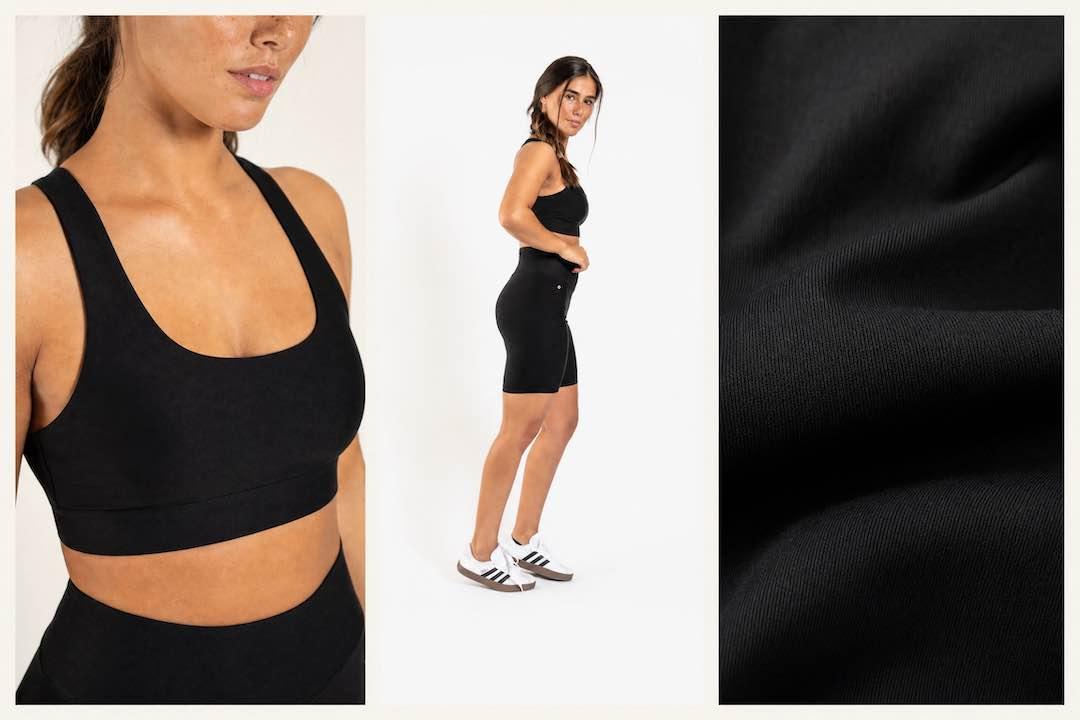
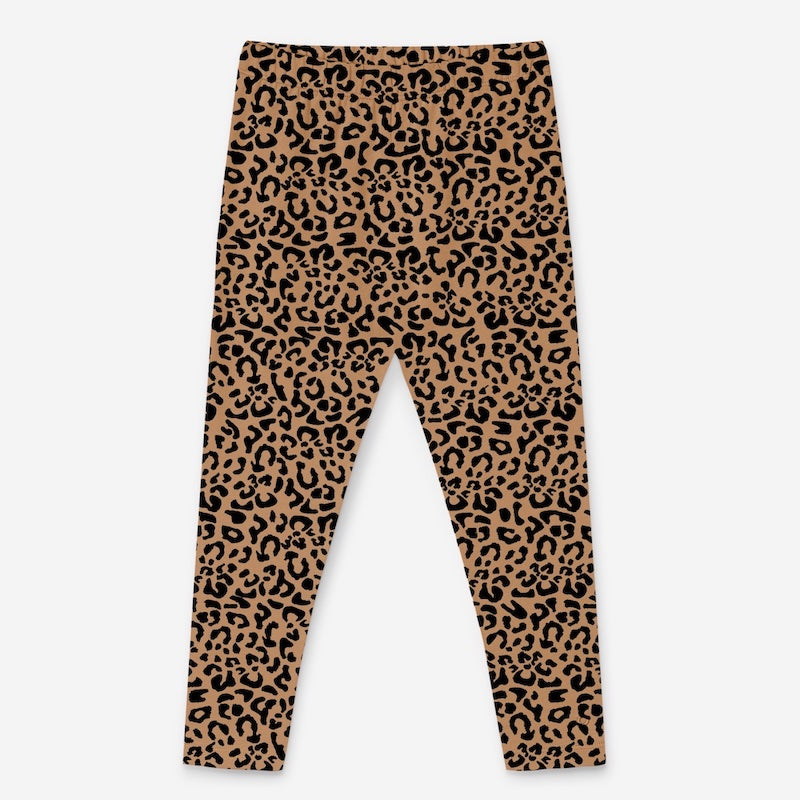
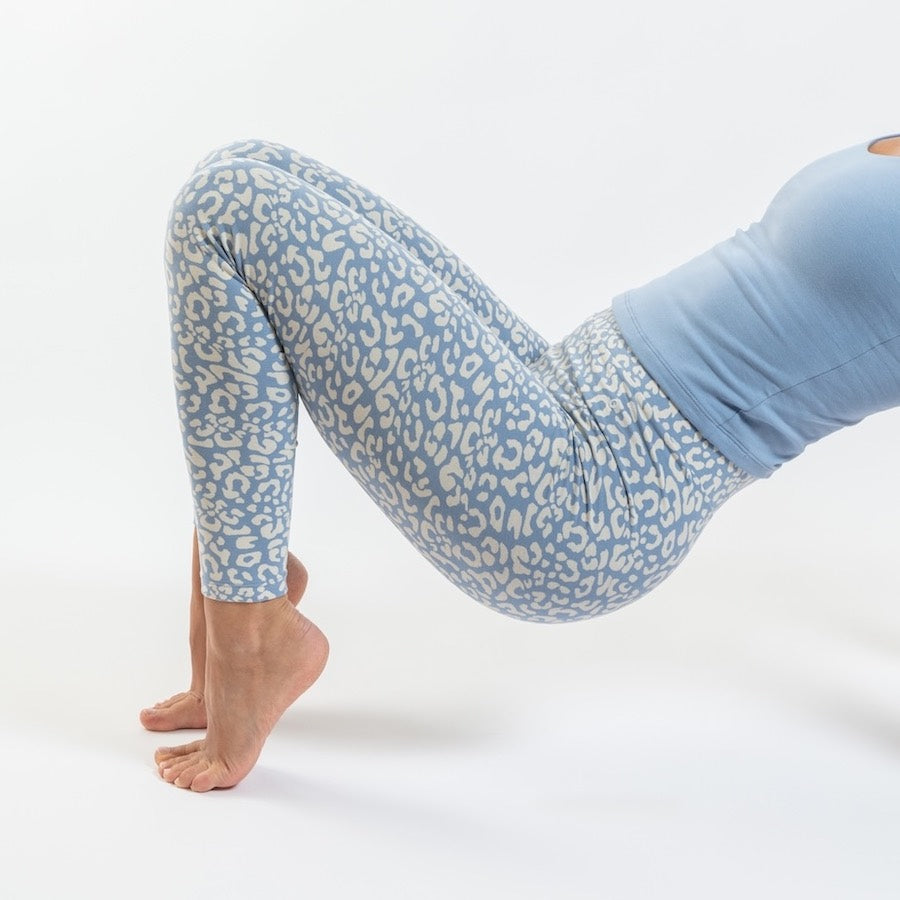
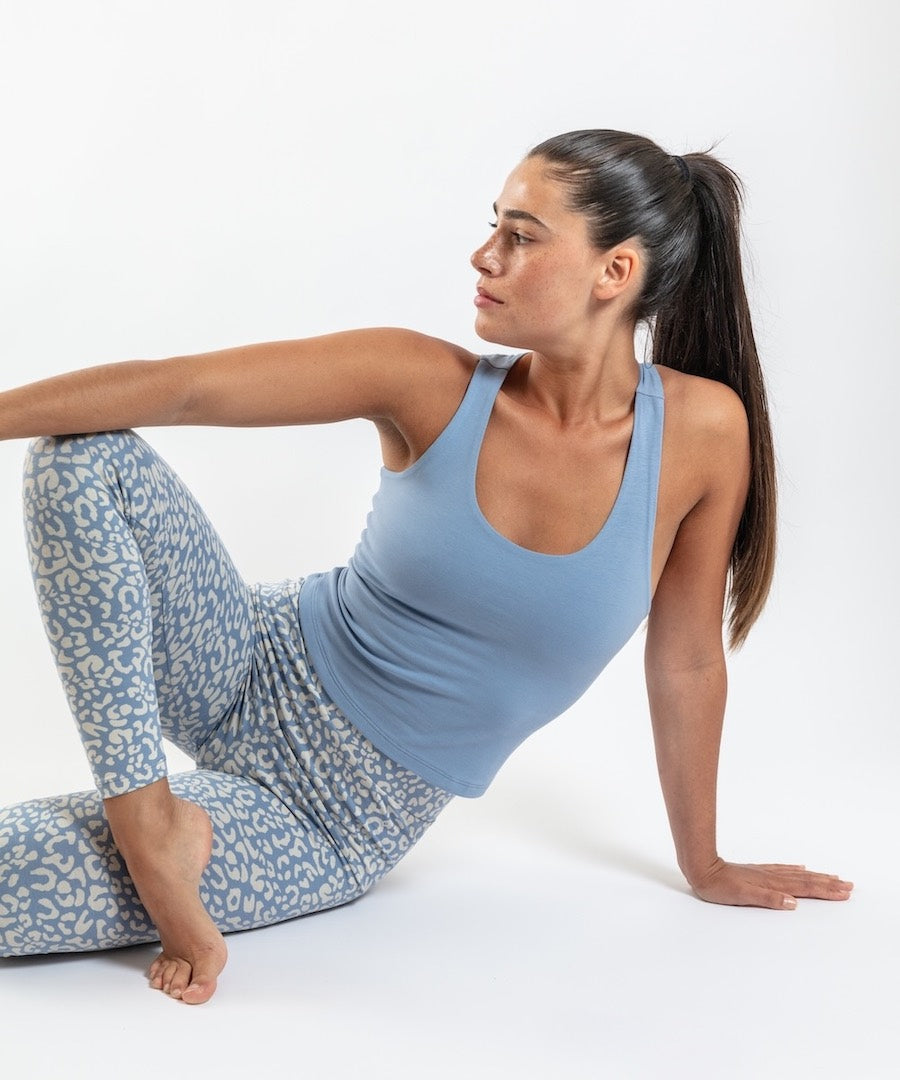
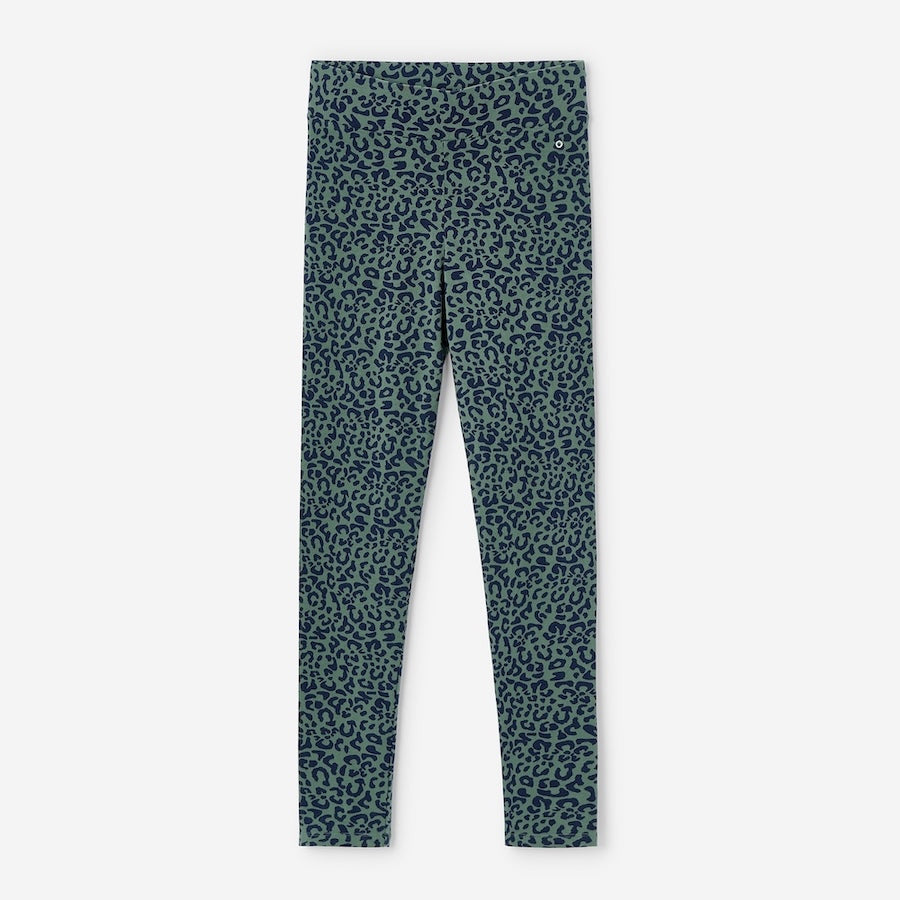
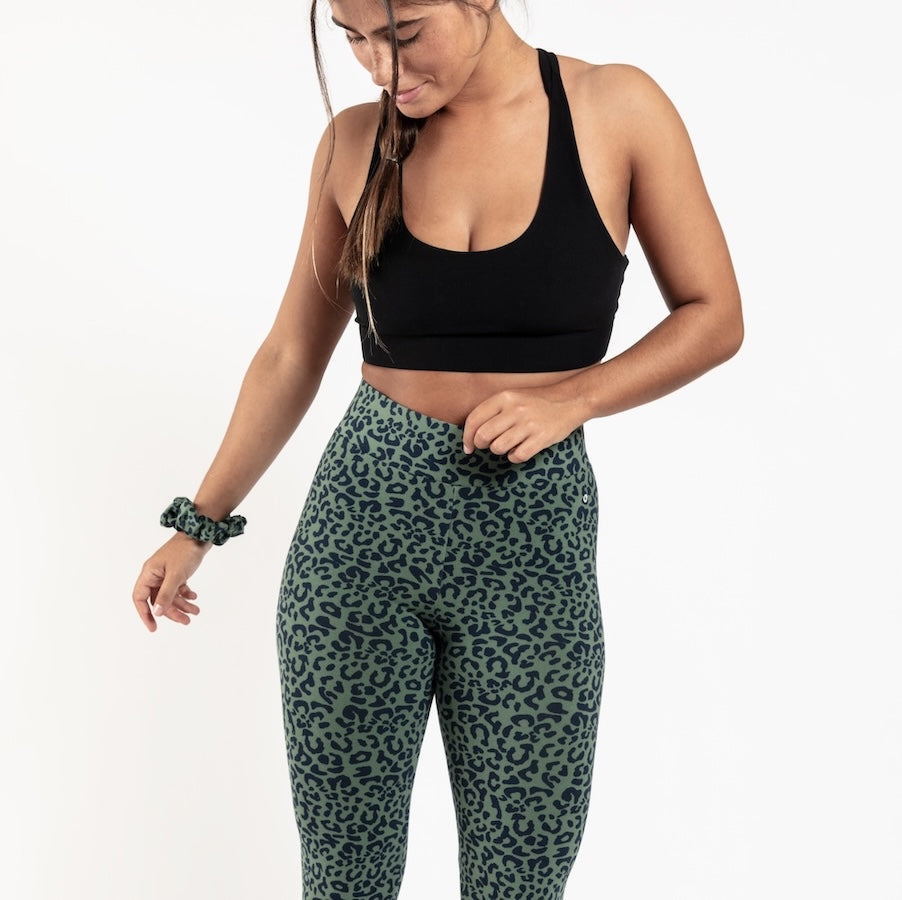
Genau diese Lücke ist der Grund, warum wir Orbasics-Activewear aus 85 % TENCEL™ Lyocell und 15 % ROICA™ entwickelt haben. ROICA™ ist ein cleanes Elasthan – das Stretch-Garn, das dir echten Halt gibt, ohne die Zusätze von konventionellem Elasthan. Das Ergebnis ist keine steife Hochkompressions-Hülle und auch kein formloses „Natur"-Teil. Es ist weich und atmungsaktiv auf deiner Haut, mit echter Stütze und Kompressionsgefühl – und nach meinem eigenen Tragetest unserer Samples für ein Kahr lang kann ich bestätigen, es hält auch intensive Einheiten aus, nicht nur Yoga und Spaziergänge. Genau das ist der Punkt: Sportbekleidung mit den genannten Faseranteilen.
Fazit: So entscheidest du zwischen Polyester und Tencel Lyocell
Wenn du weder Polyester noch Lyocell möchtest, kannst du stattdessen auf Baumwolle setzen: Unsere schadstoffarme Leggings und der Sport-BH aus Bio-Baumwolle sind Optionen mit Bio-Baumwolle als Hauptfaser.
Keinen pauschalen Sieger – aber ich tue auch nicht so, als wögen beide Seiten gleich. Wähle den Stoff nach dem Moment und deinen Vorlieben:
-
Besser für Haut, Komfort und Frische → Tencel/Lyocell. Weich, kühl, geruchsarm, reibungsarm – für den Alltag und, richtig gemischt, auch für hartes Training.
-
Besser für empfindliche Haut und Neurodermitis → Tencel/Lyocell, und gefärbte Synthetik würde ich hier ausschließen.
-
Besser für reines Trocknungstempo, Haltbarkeit und niedrigsten Preis → Polyester – mindestens mit OEKO-TEX® Standard 100.
-
Besser fürs Langfristigkeit (Gesundheit und Planet) → Tencel/Lyocell, wegen dem, was Polyester trägt und abgibt.
Für mich ist die Frage Polyester vs Tencel Lyocell dort entschieden, wo es zählt: auf meiner Haut, wenn ich schwitze, wähle ich Lyocell. Weil ich beschlossen habe, kein Plastik und seine Chemie tragen zu wollen, um mich besser zu fühlen. Wenn du denselben Wechsel machen willst, lies den Artikel woran du schadstoffarme Kleidung erkennst.
Häufig gestellte Fragen
Was ist besser, Tencel oder Polyester?
Für Komfort, Frische, empfindliche Haut und das, was du an deinen Körper lässt, ist Tencel (Lyocell) die bessere Wahl – und mit genügend sauberem Elasthan meistert es auch intensives Training. Polyester gewinnt bei reinem Trocknungstempo, Haltbarkeit und Preis. Sind das deine einzigen Prioritäten und das Budget knapp, ergibt Polyester Sinn; für die meisten Menschen ist Tencel die bessere Wahl.
Was sind Lyocell Nachteile?
Tencel kostet mehr als Polyester, braucht schonendere Pflege (kühl waschen, an der Luft trocknen) und kann pillen. In Trocknungstests trocknet es oft langsamer als technisches Polyester, und reines Lyocell braucht für Stretch eine Elasthan-Mischung. Außerdem garantiert „Lyocell" auf dem Etikett keine Lenzing-Standards – nur zertifiziertes TENCEL™ tut das.
Welcher Stoff ist am ungesündesten zu tragen?
Für hautnahe, schwitzige Kleidung wird konventionelles Polyester am häufigsten genannt. Es ist Erdöl-Plastik, hält Geruch und trägt meist Antimon-Reste plus Dispersionsfarbstoffe und Ausrüstungschemikalien – ein Teil der Sportkleidung zusätzlich PFAS. Das eigentliche Problem sind meist die Farbstoffe, Veredelungen und Rückstände, weshalb Zertifikate wie OEKO-TEX® und GOTS am wichtigsten sind.
Macht Tencel Mikroplastik?
Nein. Tencel/Lyocell ist eine pflanzenbasierte, biologisch abbaubare Zellulosefaser und gibt nicht wie Polyester dauerhaftes Plastik-Mikrofaser ab. Polyester ist die anerkannte Mikrofaser-Quelle; die EEA und das Umweltbundesamt nennen synthetische Textilien als großen Beitrag.
Ist Tencel dasselbe wie Lyocell?
Nicht ganz. Lyocell ist der Gattungsname; TENCEL™ ist Lenzings Lyocell-Marke. Die EU-Textilkennzeichnungsverordnung verlangt, dass der generische Fasername auf dem Etikett steht – „TENCEL™ Lyocell" nennt dir also Marke und Faser.
Welcher Stoff riecht nach dem Training weniger?
Am wenigsten riecht nach dem Training meist Merinowolle, weil sie Schweiß gut aufnimmt und Gerüche länger hemmt. Lyocell ist ebenfalls eine gute Wahl und riecht in der Regel weniger als Polyester, oft auch angenehmer als Baumwolle. Polyester müffelt dagegen am schnellsten, weil sich Gerüche und Bakterien leichter festsetzen. Für Sportkleidung sind also Merinowolle und Lyocell meist die besten Optionen, wenn es um Geruchsarmut geht.
* Werbung: Dieser Artikel enthält mit * gekennzeichnete Affiliate-Links. Wenn du über diese Links einkaufst, erhalten wir eine kleine Provision – für dich entstehen keine zusätzlichen Kosten. Die bereitgestellten Informationen dienen ausschließlich Bildungs- und Informationszwecken und stellen keine medizinische Beratung dar. Sie ersetzen nicht die Konsultation eines Arztes oder qualifizierten Gesundheitsdienstleisters. Dieser Artikel wurde mit Unterstützung von KI-Tools erstellt und von unserem Team redaktionell geprüft und freigegeben. Alle geäußerten Meinungen sind unsere eigenen.
Lilija Bairamova

Lilija ist die Gründerin von Orbasics und Mutter ihrer Tochter Nika. Sie gründete Orbasics als Mutter auf der Suche nach gesunder und biologischer Kleidung für ihr Kind. Heute bietet Orbasics nicht nur Kleidung aus Bio-Baumwolle an, sondern hat sich auch zu einem Blog entwickelt, der sich nachhaltigem, gesundem und achtsamem Leben widmet. Mit Tipps, Anleitungen und Artikeln, die Ihnen helfen, einen nachhaltigeren, bewussteren und gesünderen Lebensstil zu führen.


Hinterlasse einen Kommentar