
Table of Contents
Sportkleidung richtig waschen: Geruch entfernen & Stoff schonen
This page may contain affiliate links. We may earn a commission on purchases, at no additional cost to you. Learn more →
Du kennst das sicher: Du holst deine Sportkleidung aus der Waschmaschine, erwartest diesen frischen Duft und stattdessen steigt dir wieder dieser muffige Schweißgeruch in die Nase.
Du hast deine Sportsachen doch gerade gewaschen. Warum riechen sie trotzdem noch?
Der Grund liegt im Material: Synthetische Stoffe wie Polyester oder Elastan speichern Schweiß, Hautfett und Gerüche besonders hartnäckig. Geruchsbildende Rückstände und Mikroorganismen können sich in synthetischen Fasern besonders hartnäckig halten, und ein normaler Waschgang in der Waschmaschine reicht oft nicht, um sie wirklich loszuwerden.
Wenn du verstehst, warum deine Sportkleidung müffelt, wird es einfacher, etwas dagegen zu tun. In diesem Artikel zeige ich dir eine schonende, wissenschaftlich fundierte Anleitung, wie du deine Sportwäsche richtig waschen kannst. So werden deine Trainingsklamotten sauber, riechen wieder frisch und deine Funktionsmaterialien behalten ihre Funktionalität länger.
Das Wichtigste auf einen Blick
-
Immer auf links drehen, bei 30 Grad waschen, Weichspüler weglassen. Diese drei Dinge machen den größten Unterschied bei der Pflege deiner Sportkleidung. Die Vorteile: weniger Abrieb, bessere Sauberkeit, längere Lebensdauer.
-
Verschwitztes nicht liegen lassen. Lass deine Sportklamotten direkt nach der Trainingseinheit auslüften — in der Sporttasche vergessen ist der schnellste Weg zu Bakterien und muffigem Geruch.
-
Synthetik braucht besondere Aufmerksamkeit. Studien zeigen, dass Funktionskleidung aus Polyester unangenehmen Geruch deutlich stärker festhält als Baumwolle — auch nach dem Waschen. Essig oder Natron kann in vielen Fällen helfen, hartnäckige Gerüche zu reduzieren.
-
Weniger Waschmittel = sauberere Wäsche. Zu viel Waschmittel hinterlässt Rückstände und macht den Gestank sogar schlimmer.
-
Im Zweifel: an der Luft trocknen. Das schont die Elastizität und verlängert die Lebensdauer — am Ende sparst du dadurch auch beim Preis für neue Sportbekleidung.
Deine 7-Schritte-Anleitung zum Sportkleidung waschen
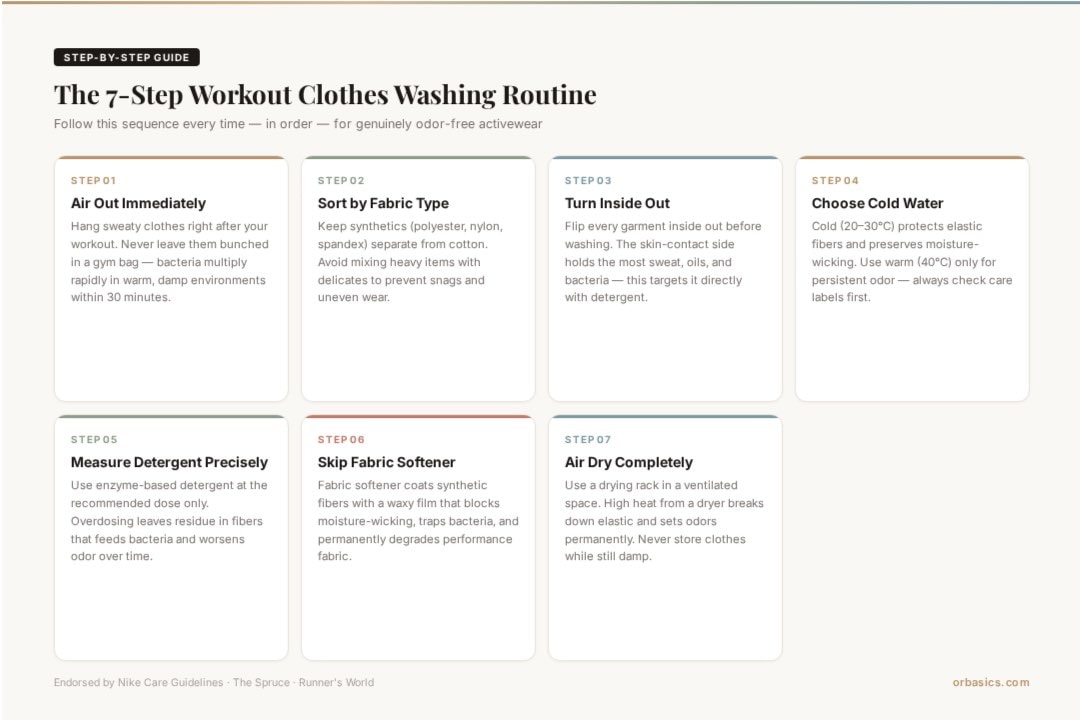
Wenig Zeit? Hier ist die bewährte Routine, die Pflege, Hygiene und Lebensdauer deiner Sportkleidung unter einen Hut bringt. Am besten abspeichern — diese Tipps funktionieren für alle Kleidungsstücke, von Leggings und Hosen über T Shirts bis hin zu Sport BHs.
-
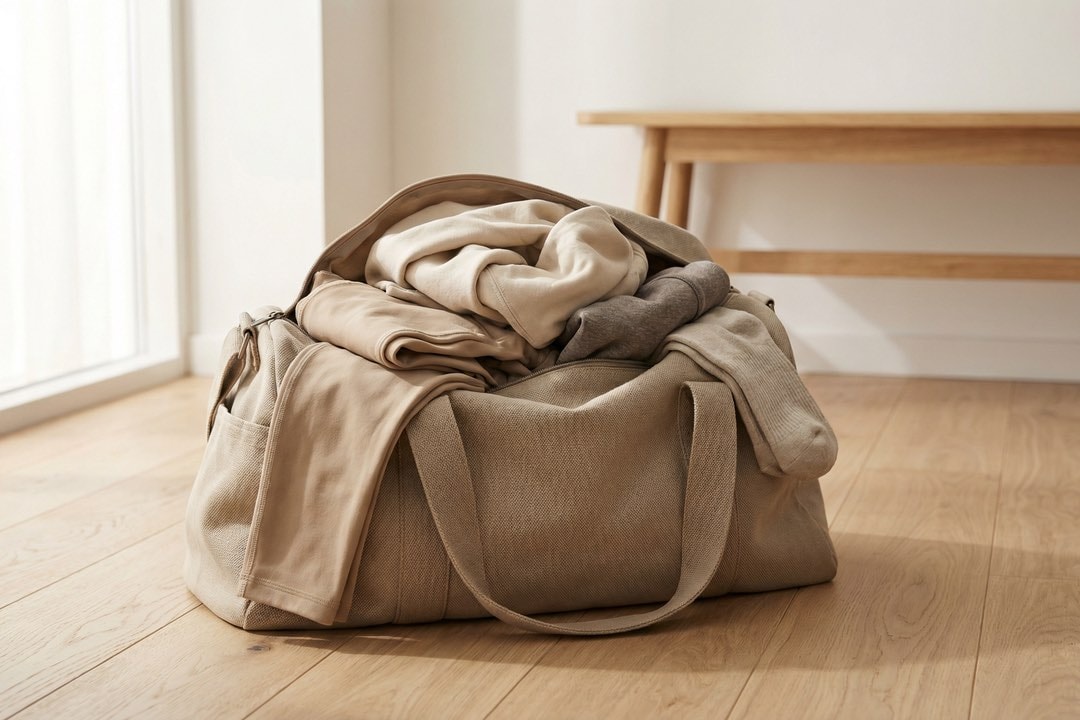
Sofort auslüften. Lass deine Sportsachen nicht feucht in der Sporttasche oder im Wäschekorb liegen. Häng verschwitztes direkt auf — das ist der wichtigste Tipp, um Gerüche und Bakterienwachstum vorzubeugen.
-
Nach Materialien sortieren. Halte fusselnde Baumwolle von synthetischen Stoffen fern. Schwere Kleidungsstücke wie Jeans oder Handtücher verursachen Reibung an empfindlicher Funktionskleidung.
-
Auf links drehen. So erreichst du die Hautseite, auf der sich Schweiß vom Körper und Bakterien ansammeln. Dieser Tipp ist die wichtigste Regel beim Sportkleidung waschen — und er schützt gleichzeitig vor Flecken durch Abrieb.
-
Richtige Temperaturen wählen. Die meisten Funktionsmaterialien am besten bei 30 Grad Wäsche waschen — das schont das Gewebe und reicht bei normaler Verschmutzung aus. Bei starkem Geruch können 40 Grad sinnvoll sein.
-
Die richtige Menge Waschmittel verwenden. Mehr Waschmittel bedeutet nicht sauberer. Rückstände verschlimmern Gerüche. Flüssiges Fein- oder Sport Waschmittel ist die beste Wahl, weil Pulverrückstände die Poren von Funktionsmaterialien verstopfen können.
-
Keinen Weichspüler verwenden. Weichspüler verstopft die speziellen Fasern deiner Sportkleidung und beeinträchtigt die Funktionalität erheblich. Die Atmungsaktivität geht verloren. Das gilt auch für Sportwäsche aus Merinowolle.
-
Vollständig trocknen lassen. Am besten an der Luft — nicht im Trockner. Hohe Temperaturen beschädigen das Material und die Elastizität lässt nach. Ganz wichtig: Feuchte Trainingskleidung, die zusammengefaltet weggeräumt wird, ist ein Paradies für Gerüche und Bakterien.
Warum Sportkleidung so schnell riecht: Schweiß, Bakterien und Material
Schweiß allein ist fast geruchlos. Der unangenehme Geruch entsteht erst, wenn Bakterien auf der Haut die Proteine und Fette im Schweiß zersetzen. Beim intensiven Schwitzen entstehen dabei flüchtige Verbindungen, die sich an bestimmten Stoffen besonders hartnäckig festsetzen. Es gibt einiges, was du dazu wissen solltest.
Synthetik vs. Baumwolle: Was die Forschung sagt
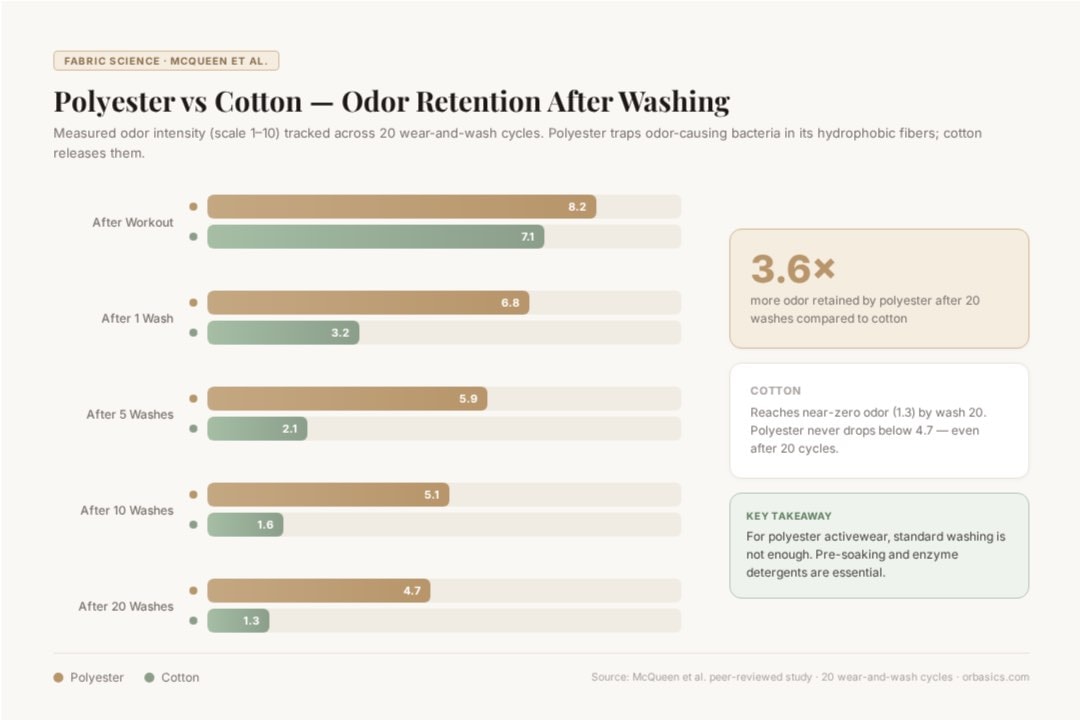
Eine peer-reviewed Studie von McQueen et al. hat über 20 Trage- und Waschzyklen gezeigt: Synthetische Funktionskleidung bleibt auch nach dem Waschen deutlich geruchsintensiver als Baumwolle. Die Fasern ermöglichen eine kumulative Anreicherung von Geruchsstoffen, die schwerer zu entfernen sind.
Callewaert et al. bestätigte das: Testpersonen bewerteten synthetische Shirts als „weniger angenehm" und „intensiver". Der Grund? Zum Beispiel besiedeln geruchsbildende Bakterien — vor allem Mikrokokken — synthetische Stoffe deutlich leichter.
Wenn deine Sportklamotten also trotz Waschen weiter müffeln, bildest du dir das nicht ein. Das Material spielt dabei eine wichtige Rolle. Genau deshalb ist die richtige Pflege so entscheidend.
Deine Waschmaschine kann Teil des Problems sein
Was die wenigsten wissen: Auch die Waschmaschine selbst kann Mief verursachen. Ein umfassendes Review in der Hygieneliteratur zeigt, dass sich in Waschmaschinen mikrobielle Biofilme bilden — vor allem bei niedrigen Temperaturen. Diese Biofilme übertragen Bakterien auf deine Wäsche.
Tipp: Einmal im Monat einen leeren Waschgang bei 60 Grad mit etwas Essig oder einem Maschinenreiniger laufen lassen. Und die Tür der Waschmaschine nach jedem Waschgang offen lassen.
Schritt für Schritt: Sportkleidung waschen — die richtige Technik
Vor dem Waschen
Direkt nach dem Training beginnt die Uhr zu ticken. Häng deine Sportsachen zum Auslüften auf, anstatt sie in den Wäschekorb zu werfen. Das verlangsamt das Bakterienwachstum und verhindert muffigen Geruch. Schließe vor allem alle Reißverschlüsse und Klettverschlüsse, um Reibung zu verhindern. Sport BHs und empfindliche Teile am besten in Waschnetze geben — das schützt das Gewebe. Beachte immer die Pflegehinweise auf dem Etikett.
Das richtige Waschmittel
Verwende ein flüssiges Fein- oder Sportwaschmittel. Pulverwaschmittel können Rückstände in den feinen Poren von Funktionsmaterialien hinterlassen. Ein spezielles Sportwaschmittel ist am besten, weil es gezielt Körpergeruch und Rückstände löst, ohne empfindliche Materialien anzugreifen. Solche Produkte findest du im Drogeriemarkt — der Preis liegt meist bei 3–6 Euro.
Bei hartnäckigem Geruch hilft Einweichen: Löse deine Sportkleidung für 20–30 Minuten in Wasser mit einem Schuss Essig (Verhältnis 1:4). Essig neutralisiert schlechten Geruch und ist gleichzeitig umweltfreundlich. Alternativ kannst du auch Natron in die Waschmaschine geben — hilft effektiv gegen festsitzende Gerüche. Wichtig: Sportkleidung immer separat waschen, nicht mit Alltagswäsche zusammen.
Ein Hygienespüler kann bei besonders hartnäckigen Fällen sinnvoll sein, da er Keime auch bei niedrigen Temperaturen abtötet.
Temperaturen und Waschprogramm
Die Grundregel ist einfach: Sportkleidung bei niedrigen Temperaturen waschen, am besten zwischen 20 und 40 Grad. Eine 30 Grad Wäsche reicht für die meisten Sportsachen. Das schont die Fasern, erhält die Funktionalität und ist zudem umweltfreundlicher.
Welches Programm für Sportwäsche? Am besten das Feinwaschprogramm deiner Waschmaschine. Die Schleuderdrehzahl sollte auf maximal 600 bis 800 Umdrehungen reduziert werden, um das Gewebe nicht zu überdehnen. Viele neuere Maschinen haben auch ein Sportprogramm — perfekt geeignet.
Handwäsche als Alternative
Kann ich Sportwäsche in der Waschmaschine waschen? Ja, absolut — die Maschine ist für die meisten Produkte völlig in Ordnung. Aber besonders empfindliche Sportbekleidung mit Membranen oder speziellen Beschichtungen profitiert von Handwäsche. Dabei die Kleidung in lauwarmem Wasser mit wenig Waschmittel vorsichtig per Hand auswaschen und gründlich spülen.
Trocknen — der unterschätzte Schritt
Sportkleidung gehört an die Luft — nicht in den Trockner. Synthetische Materialien sind hitzeempfindlich: Hohe Temperaturen im Trockner beschädigen die Fasern, die Elastizität lässt nach und Mief kann sich sogar festsetzen. Häng deine Sportwäsche auf einen Wäscheständer oder ins Freie.
Wenn du den Trockner nutzen musst, nur auf der niedrigsten Stufe. Wichtig: Lass alles vollständig trocknen, bevor du es wegräumst. Es gibt einiges an Preis-Leistung zu gewinnen, wenn du deine Kleidung schonend behandelst — sie hält einfach länger.
Tipp für Merinowolle:Merinowolle wird oft als geruchsärmer empfunden und muss deshalb nicht immer nach jedem Tragen gewaschen werden. Oft reicht gründliches Auslüften. Wenn du sie wäschst, per Handwäsche oder im Wollwaschgang bei maximal 30 Grad.
Schweißgeruch loswerden: Was tun, wenn es trotz Waschen stinkt?
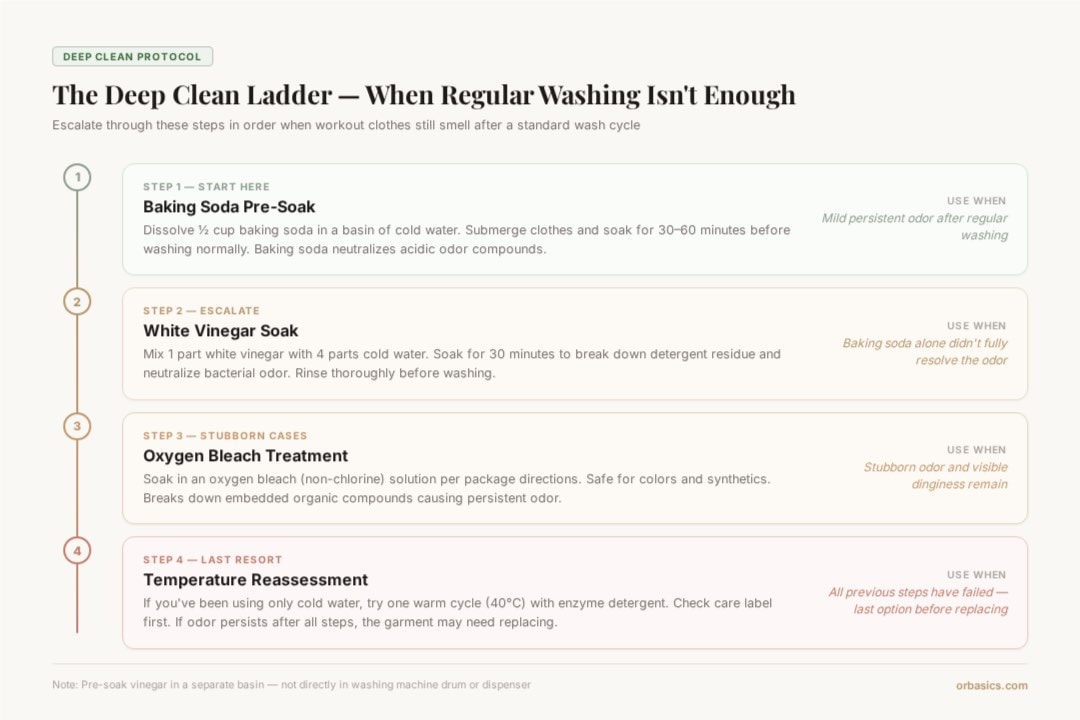
Wie bekomme ich Schweißgeruch aus Sportkleidung, die schon hundert Mal gewaschen wurde? Das Thema ist häufiger als du denkst. Hier die Antwort:
Waschmittel-Dosierung prüfen. Zu viel Waschmittel hinterlässt Rückstände, die Gerüche einschließen statt sie beim Waschen zu entfernen. Weniger ist hier tatsächlich mehr.
Das Synthetik-Problem. Wie die Forschung von McQueen et al. zeigt, speichern synthetische Stoffe Geruchsstoffe kumulativ. Nach Jahren kann ein einzelner Waschgang das nicht mehr lösen.
Die Waschmaschine prüfen. Wenn die Maschine selbst muffig riecht, überträgt sie Biofilm und Bakterien direkt auf deine Sportkleidung. Das ist vor allem ein Problem bei älteren Maschinen.
Stufe für Stufe zum frischen Ergebnis
-
Natron-Einweichen: Löse 2–3 Esslöffel Natron in kaltem Wasser auf und lass deine Sportsachen 30–60 Minuten einweichen.
-
Essig-Einweichen: Kleidung in einer 1:4-Lösung aus Essig und Wasser für 30 Minuten waschen. Neutralisiert Mief zuverlässig.
-
Kälte-Trick: Kälte ist ein wirksames Mittel gegen hartnäckige Bakterien. Leg deine Sportkleidung über Nacht ins Gefrierfach.
-
Waschgang bei 40 Grad: Wenn du bisher immer bei 30 Grad gewaschen hast, probiere 40 Grad mit einem Sportwaschmittel.
Nachhaltigkeit: Mikrofasern und die Umwelt
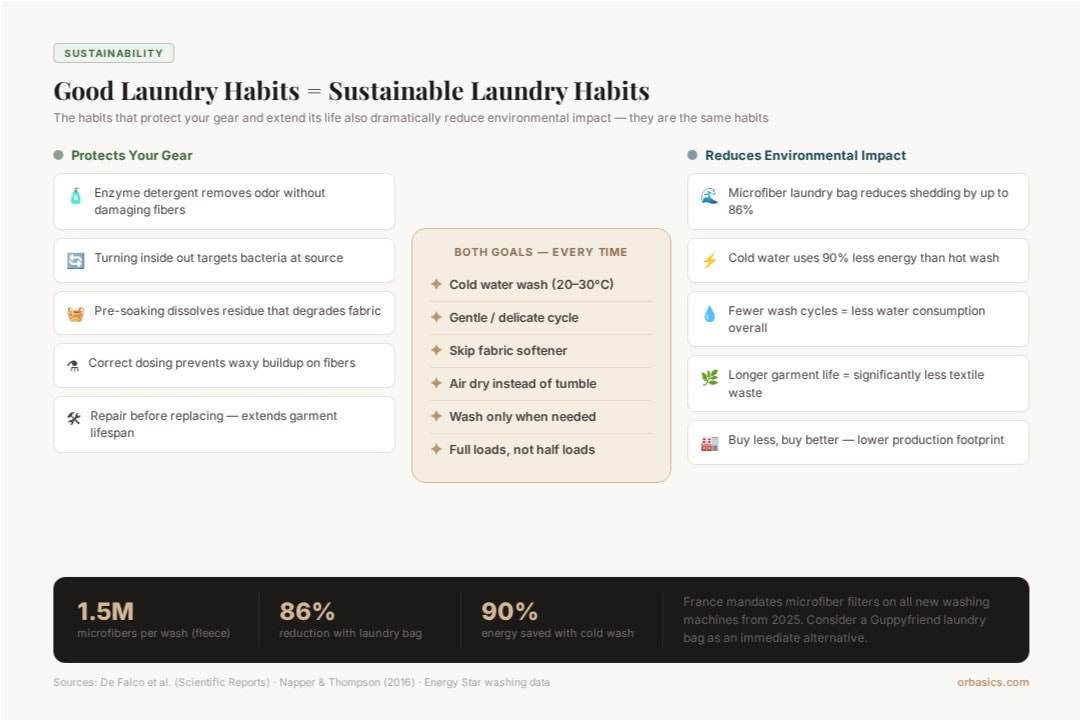
Jedes Mal, wenn du synthetische Sportkleidung wäschst, lösen sich winzige Mikrofasern und gelangen ins Abwasser. Eine Studie von De Falco et al. hat gezeigt, dass ein einziger Waschgang 640.000 bis 1.500.000 Mikrofasern freisetzen kann — je nach Kleidungsstück und wie du es wäschst.
Die gute Nachricht: Genau die Dinge, die deine Sportbekleidung schonen — niedrige Temperaturen, Schonwaschgang, weniger Reibung — reduzieren auch den Mikrofaserabrieb. Die Verwendung von Waschnetzen kann zusätzlich helfen, Mikrofasern aufzufangen.
Frankreich hat bereits ab 2025 Mikrofaserfilter für neue Waschmaschinen vorgeschrieben — ein Trend, der auch in der EU diskutiert wird. Ein Waschbeutel zum Waschen von Synthetik ist ein einfacher erster Schritt.
FAQ — Häufig gestellte Fragen
Wie wäscht man am besten Sportwäsche?
Auf links drehen, bei 30 Grad im Feinwaschprogramm waschen, flüssiges Waschmittel verwenden, keinen Weichspüler, an der Luft trocknen. Bei hartnäckigem Mief vorher mit Essig oder Natron einweichen. Die Pflegehinweise auf dem Etikett der Sportkleidung sollten vor allem immer beachtet werden.
Wie bekomme ich Schweißgeruch aus Sportkleidung?
Am besten hilft Einweichen in Essig-Wasser (1:4) oder mit Natron vor dem Waschen. Sportkleidung direkt nach dem Training auslüften, nie feucht im Wäschekorb lassen. Bei hartnäckigen Fällen einen Hygienespüler nutzen — diese Produkte sind im Preis erschwinglich und machen einen echten Unterschied.
Kann ich Sportkleidung in der Waschmaschine waschen?
Ja — die Waschmaschine ist für die allermeisten Kleidungsstücke völlig in Ordnung. Verwende das Feinwaschprogramm, reduziere die Schleuderdrehzahl und wasche Sportkleidung separat von Alltagskleidung. Empfindliche Bekleidung mit Membranen kann vom Waschen per Hand profitieren.
Welches Programm für Sportwäsche?
Das Feinwaschprogramm bei 30 Grad ist am besten. Schleuderdrehzahl auf 600–800 Umdrehungen reduzieren. Falls vorhanden, nutze das Sportprogramm deiner Maschine.
Kann Sportkleidung in den Trockner?
Am besten nicht. Sportkleidung aus synthetischen Materialien ist hitzeempfindlich und sollte nicht im Trockner getrocknet werden. An der Luft trocknen ist die beste Pflege für Material und Fasern — und auf lange Sicht ein besserer Preis, weil deine Bekleidung einfach länger hält. Falls nötig, nur auf der niedrigsten Stufe.
* Werbung: Dieser Artikel enthält mit * gekennzeichnete Affiliate-Links. Wenn du über diese Links einkaufst, erhalten wir eine kleine Provision – für dich entstehen keine zusätzlichen Kosten. Die bereitgestellten Informationen dienen ausschließlich Bildungs- und Informationszwecken und stellen keine medizinische Beratung dar. Sie ersetzen nicht die Konsultation eines Arztes oder qualifizierten Gesundheitsdienstleisters. Dieser Artikel wurde mit Unterstützung von KI-Tools erstellt und von unserem Team redaktionell geprüft und freigegeben. Alle geäußerten Meinungen sind unsere eigenen.
Lilija Bairamova

Lilija ist die Gründerin von Orbasics und Mutter ihrer Tochter Nika. Sie gründete Orbasics als Mutter auf der Suche nach gesunder und biologischer Kleidung für ihr Kind. Heute bietet Orbasics nicht nur Kleidung aus Bio-Baumwolle an, sondern hat sich auch zu einem Blog entwickelt, der sich nachhaltigem, gesundem und achtsamem Leben widmet. Mit Tipps, Anleitungen und Artikeln, die Ihnen helfen, einen nachhaltigeren, bewussteren und gesünderen Lebensstil zu führen.





Hinterlasse einen Kommentar