Table of Contents
Lyocell vs Viskose: Welcher Bambusstoff ist wirklich besser für dich?
This page may contain affiliate links. We may earn a commission on purchases, at no additional cost to you. Learn more →
Du stehst im Laden und hältst zwei Bettwäsche-Sets aus Bambus in der Hand. Auf einem steht „Bambus-Viskose". Auf dem anderen „Bambus-Lyocell". Beide fühlen sich weich an. Beide werben damit, umweltfreundlich zu sein. Aber bei einem wurde mit deutlich mehr Chemikalien produziert, die oft in die Umwelt gelangen – während das andere in einem geschlossenen Kreislaufverfahren mit im Vergleich zur klassischen Viskose besser rückgewinnbaren Lösungsmitteln hergestellt wird.
Wie soll man das auf den ersten Blick erkennen?
Als ich anfing, mich mit der Frage Lyocell vs. Viskose zu beschäftigen, wurde mir schnell klar: Die beiden könnten unterschiedlicher kaum sein. Denn was hinter der Herstellung eines Bambusstoffs steckt, entscheidet über alles. Wie er sich auf der Haut anfühlt. Wie lange er hält. Und welche Chemikalien bei der Verarbeitung zum Einsatz kamen.
Als ich damals nach nachhaltigen Stoffen für meine Tochter gesucht habe, dachte ich: Bambus ist Bambus – das passt schon. Aber so einfach war es nicht.
Genau diese Verwirrung hat mich dazu gebracht, diesen Artikel zu schreiben. Denn wenn du einmal verstehst, was Lyocell und Viskose voneinander unterscheidet, fällt die Entscheidung leicht.
Das Wichtigste auf einen Blick
-
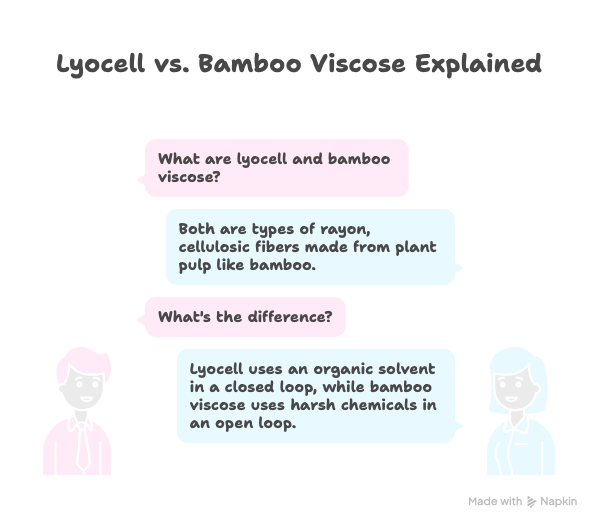
Lyocell und Bambus-Viskose sind beides Zellulosefasern, die aus Holzzellstoff – darunter auch Bambus – gewonnen werden. Beide gehören zur Rayon-Familie, aber ihre Herstellung könnte unterschiedlicher kaum sein.
-
Bei der herkömmlichen Produktion kommen aggressive Chemikalien wie Schwefelkohlenstoff und Natriumhydroxid (Ätznatron) zum Einsatz. Lyocell dagegen wird mit einem vergleichsweise unbedenklichen organischen Lösungsmittel im geschlossenen Kreislauf hergestellt – über 99 % des Lösungsmittels werden dabei zurückgewonnen.
-
Lyocell kann die lösungsmittelbedingte Umweltbelastung gegenüber klassischer Viskose reduzieren, wenn es in einem effizienten geschlossenen Kreislauf hergestellt wird. Die Gesamtbilanz hängt trotzdem von Holzherkunft, Energiemix, Wasserverbrauch und dem konkreten Hersteller ab.
-
Lyocellfasern sind glatte Fasern: die glatte Faseroberfläche wird von vielen Menschen als angenehm auf der Haut empfunden. Ohne zusätzliche funktionale Veredelung hat Standard-Lyocell allerdings keine ausgeprägte antibakterielle Wirkung.
-
Laut EU-Textilkennzeichnungsverordnung darf ein Produkt nur dann als „Bambus" ausgezeichnet werden, wenn es tatsächlich aus echten Bambusfasern durch ein mechanisches Verfahren hergestellt wurde.
| Merkmal | Lyocell | Klassische Viskose |
|---|---|---|
| Faserfamilie | Regenerierte Zellulose | Regenerierte Zellulose |
| Herstellung | Direktes Lösen der Zellulose, häufig mit NMMO in einem geschlossenen Kreislauf | Chemische Umwandlung der Zellulose mit Natriumhydroxid und Schwefelkohlenstoff vor der Regeneration |
| Nassfestigkeit | Bleibt im nassen Zustand in der Regel stabiler | Verliert im nassen Zustand typischerweise stärker an Festigkeit |
| Etikett | Auf die genaue Faserbezeichnung und Zertifizierungen achten | Auf „Viskose“ statt einer pauschalen „Bambus“-Angabe achten |
Was sind Lyocell und Bambus-Viskose?
Rayon: der Oberbegriff
Das hat mich am Anfang auch verwirrt: Lyocell und Bambus-Viskose sind beides Arten von Rayon – also Kunstseide. Es handelt sich um zellulosische Fasern, die aus pflanzlichen Rohstoffen gewonnen werden, meist aus Holzzellstoff von Bambuspflanzen, Buchenbäumen oder nachhaltig bewirtschafteten Wäldern.
In der EU ist „Lyocell" laut Textilkennzeichnungsverordnung (EU Nr. 1007/2011) eine anerkannte Faserbezeichnung – hergestellt mit einem organischen Lösungsmittel, ganz ohne chemische Zwischenstufen. Die Herstellung von Bambus-Viskose funktioniert völlig anders: mit aggressiven Chemikalien und einem offenen Produktionssystem.
Kleines Glossar
-
Zellulosefasern / zellulosische Fasern: Fasern, die aus pflanzlicher Zellulose gewonnen werden – darunter Lyocell, Modalfasern und Rayon
-
NMMO (N-Methylmorpholin-N-oxid): Das Lösungsmittel, das bei der Lyocell-Herstellung im geschlossenen Kreislauf eingesetzt wird
-
Bambus-Viskose: Rayon aus Bambus-Zellstoff, hergestellt nach dem klassischen chemischen Verfahren
-
Bambus-Lyocell: Rayon aus Bambus-Zellstoff, hergestellt nach dem Lyocell-Kreislaufverfahren
-
MMCF (Man-made cellulosic fiber): Der wissenschaftliche Oberbegriff für alle textilen Fasern auf Basis von regenerierter Zellulose
Wie aus Bambus Stoff wird: zwei völlig verschiedene Wege
Das ist der Teil, der mein Einkaufsverhalten wirklich verändert hat. Gleicher Rohstoff, völlig unterschiedliche Ergebnisse.
Der Viskose-Prozess: nicht alle Viskose ist gleich
Die Herstellung von Bambus-Viskose reicht mehr als ein Jahrhundert zurück. Das Verfahren wurde entwickelt, um Kunstseide nachzuahmen – und tatsächlich fühlt sich der Stoff seidig an und fällt wunderschön. Aber die Produktion hat ihren Preis.
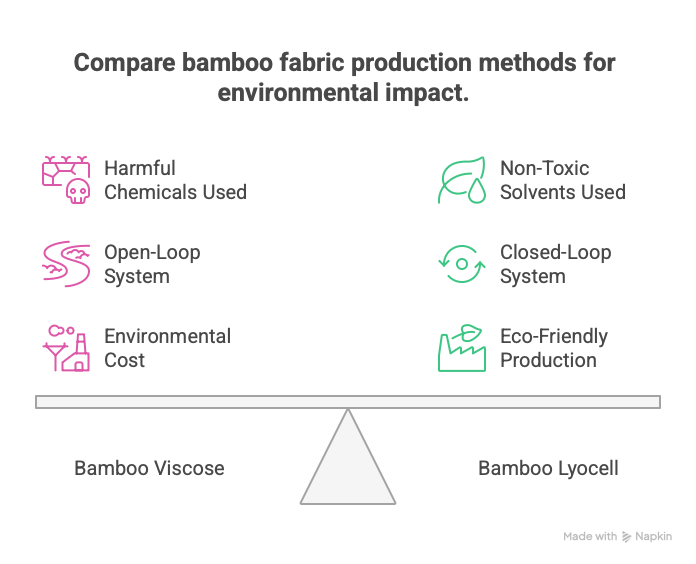
Bambus-Zellstoff oder anderer Holzzellstoff wird in Natriumhydroxid und Schwefelkohlenstoff aufgelöst – beides aggressive Chemikalien. Und weil es sich um ein offenes Produktionssystem handelt, werden diese Lösungsmittel nicht vollständig zurückgewonnen.
Was das konkret bedeutet: Erkrankungen durch Schwefelkohlenstoff sind in Deutschland als Berufskrankheit anerkannt (Nr. 1305). Zu den möglichen Gesundheitsfolgen zählen Nervenerkrankungen, Schädigungen des Gefäßsystems sowie Hör- und Bewusstseinsstörungen. Studien zeigen zudem, dass eine chronische Schwefelkohlenstoff-Belastung bei Fabrikarbeiterinnen zu Menstruationsstörungen, verfrühter Menopause und hormonellen Störungen führen kann.
Dabei will ich fair bleiben: Nicht alle Viskose ist gleich. Einige modernere Produktionsanlagen setzen auf teilweise Lösungsmittelrückgewinnung und sauberere Rohstoffquellen. Der Unterschied zwischen dem schlechtesten und dem besten verfügbaren Verfahren ist real. Das Problem: Rund 83 % der globalen Viskoseproduktion findet in China, Indien und Südostasien statt – in Regionen, in denen Umwelt- und Arbeitsschutzstandards oft weit hinter europäischen Anforderungen zurückbleiben. Facing Finance e.V. Der Großteil der Bambus-Viskose auf dem Markt stammt nicht aus den besseren Anlagen.
Der Lyocell-Prozess: geschlossener Kreislauf
Bambus-Lyocell funktioniert anders. Statt aggressiver Chemikalien kommt bei der Herstellung NMMO zum Einsatz – ein vergleichsweise milderer Lösungsmittel, das speziell für die Auflösung von Zellulose entwickelt wurde.
Das geschlossene Kreislaufverfahren gewinnt über 99 % des Lösungsmittels zurück und führt es wieder in den Prozess ein. Lenzing, der Hersteller hinter der Marke TENCEL, bestätigt das im industriellen Maßstab. Das Unternehmen hat seine Kapazitäten mit neuen Werken ausgebaut und mit „Lyocell Dry" eine Variante für Hygieneanwendungen entwickelt, die bislang auf herkömmliche Rayonfasern oder Kunststoffe angewiesen waren.
Bambus-Lyocell kann nach diesem Kreislaufprinzip hergestellt werden. Gegenüber klassischer Viskose lassen sich dadurch Lösungsmittelverluste deutlich reduzieren; die gesamte Umweltbilanz hängt jedoch zusätzlich von Produktionsstandort, Energiequelle und Rohstoffherkunft ab.
So fühlen sich die Stoffe wirklich an
Atmungsaktivität und Feuchtigkeitstransport
Wer nachts warm schläft – oder in einem warmen Klima lebt – für den sind die Eigenschaften des Stoffes alles. Ich habe beide Materialien getestet, und der Unterschied hat mich überrascht.
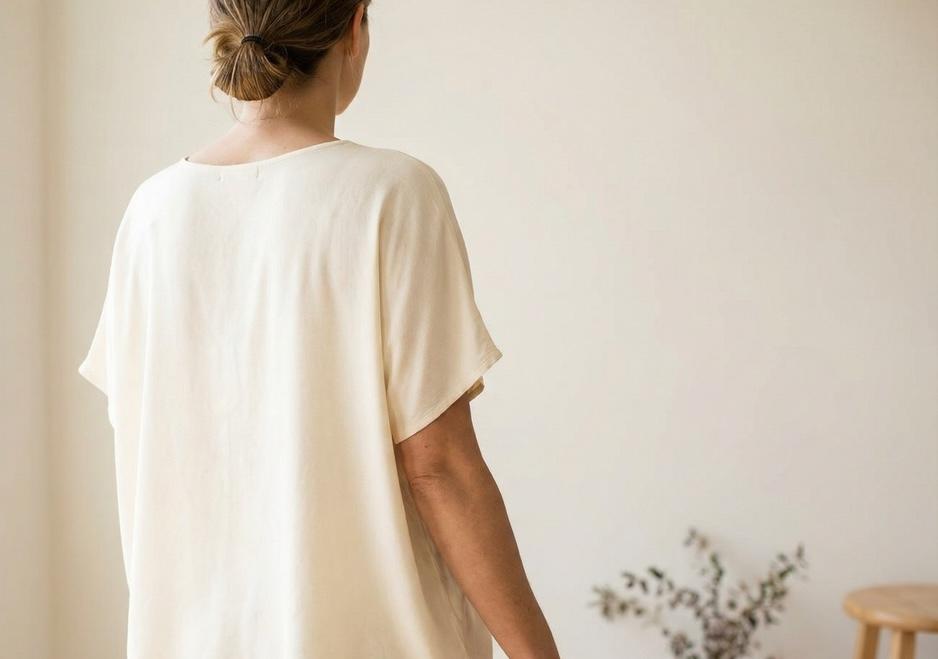
Lyocell ist sehr saugfähig und kann Feuchtigkeit gut aufnehmen und weitergeben. Wie stark dieser Effekt ausfällt, hängt jedoch auch von Garn, Stoffkonstruktion und Ausrüstung ab. Bambus-Viskose ist ebenfalls atmungsaktiv, verliert im nassen Zustand aber typischerweise stärker an Festigkeit und kann sich bei hoher Feuchtigkeit schwerer anfühlen.
Haltbarkeit und Pflege
Lyocell bleibt auch im nassen Zustand stabil – das ist einer der größten Vorteile dieser Faser. Eine Peer-reviewed-Studie zu Rippstrickgeweben zeigte, dass Lyocell eine bessere strukturelle Gleichmäßigkeit aufweist als Viskose, auch wenn es je nach Verarbeitung Unterschiede etwa bei der Abriebfestigkeit geben kann.
Meine Kleidungsstücke aus Bambus-Lyocell haben häufiges Waschen problemlos überstanden, ohne ihre Form zu verlieren. Du kannst sie im Schonwaschgang in der Waschmaschine waschen und bei niedriger Temperatur im Trockner trocknen. Weichspüler brauchst du nicht – die glatten Fasern bleiben von alleine weich.
Bambus-Viskose hingegen verliert im nassen Zustand an Festigkeit, was sie anfälliger für Reißen, Dehnen und Pilling macht. Sie lässt sich gut mit Naturfasern oder synthetischen Fasern kombinieren und ist weit verbreitet – braucht aber sorgfältige Pflege. Lyocell dagegen widersteht Pilling und behält seine Form Wäsche für Wäsche. Bei Bambus-Viskose ist das Risiko, dass Textilien einlaufen oder sich verformen, deutlich höher.
Hautgefühl
Das ist mir persönlich besonders wichtig. Wenn du empfindliche Haut hast – oder etwas für ein Kind kaufst – ist Bambus-Lyocell eine gute Wahl: Die Fasern sind hautfreundlich. Ihre glatte Struktur reduziert die Reibung auf der Haut, allerdings auch hier müsstest du auf die Zertifizierung achten.
Bambus-Viskose fühlt sich ebenfalls weich an. Die größten chemischen Bedenken bei klassischer Viskose betreffen vor allem den Produktionsprozess und den Arbeitsschutz; aus dem Herstellungsverfahren allein lässt sich nicht ableiten, dass problematische Rückstände im fertigen Stoff verbleiben.
Wenn dir Materialtransparenz wichtig ist, ist Bambus-Lyocell aus nachvollziehbar gekennzeichneten und schadstoffgeprüften Produkten oft die klarere Wahl, vor allem bei empfindlicher Haut.
Bambus-Bettwäsche: Was solltest du wählen?
Bettwäsche aus Bambus-Viskose
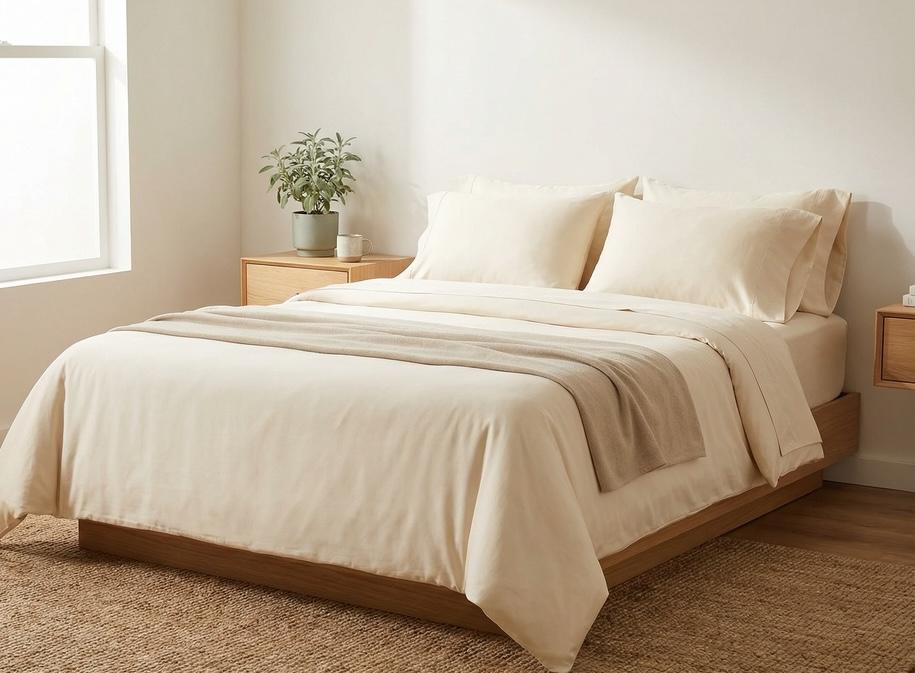
Bettwäsche aus Bambus-Viskose ist überall erhältlich – und günstig. Aber sie neigt schneller zu Pilling, nimmt Feuchtigkeit auf ohne sie gut abzugeben, und ist nicht ideal für alle, die nachts warm schlafen.
Bettwäsche aus Bambus-Lyocell
Bambus-Lyocell-Bettwäsche kostet anfangs mehr. Aber der Stoff widersteht Pilling auch nach vielen Wäschen, transportiert Feuchtigkeit effizient ab und ist sanft genug für die ganze Familie. Wer umweltfreundliche Bambus-Bettwäsche sucht, die wirklich hält was sie verspricht – das wäre meine Wahl.
Umwelt: Was „umweltfreundlich" hier wirklich bedeutet
Ehrlichkeit ist mir hier wichtig. Bambus wächst schnell, braucht kaum Wasser und kommt ohne Pestizide aus. Das macht ihn zu einem echten Naturprodukt mit nachhaltigen Eigenschaften. Aber die Verarbeitung von Bambus zu Stoff – genau da beginnen die Umweltfragen.
Eine detaillierte Ökobilanz-Studie aus dem Jahr 2021 zur chinesischen Produktion ergab: Lyocell verbraucht etwa dreimal mehr Primärenergie und hat einen rund doppelt so hohen CO₂-Fußabdruck – verursacht aber deutlich weniger Versauerung und Ökotoxizität, weil auf schwefelhaltige Chemikalien und Schwermetallzusätze verzichtet wird. Wie groß der tatsächliche CO₂-Fußabdruck ist, hängt stark vom Energiemix der jeweiligen Produktionsstätte ab.
Und hier kommt etwas, das die meisten Artikel über Bambus verschweigen: Eine Studie aus dem Jahr 2024 zu Mikrofasern im Boden stellte fest, dass sowohl Lyocell- als auch Viskosefasern bei hohen Konzentrationen schädlicher für Regenwürmer sein können als Polyester – mit einer Sterblichkeitsrate von bis zu 80 % bei Viskose und 60 % bei Lyocell nach 72 Stunden. Selbst bei geringeren Mengen beeinträchtigten die Fasern Wachstum und Fortpflanzung der Tiere. „Biologisch abbaubar" bedeutet eben nicht automatisch „ohne Auswirkungen auf die Umwelt".
Eine wirklich nachhaltige Entscheidung bedeutet: Bambus-Lyocell von Herstellern wählen, die auf nachhaltig bewirtschaftete Wälder setzen und in saubere Energie investieren. Das Herstellungsverfahren zählt – aber genauso wichtig ist, was passiert, wenn die Zellulosefasern irgendwann in der Erde landen.
Etikett lesen: Das solltest du vor dem Kauf wissen
Was auf dem Etikett stehen muss
Laut EU-Textilkennzeichnungsverordnung gilt: Wird Bambus chemisch zu Viskose verarbeitet, muss das Etikett „Viskose" ausweisen – die Bezeichnung „Bambus" ist in diesem Fall irreführend und gesetzeswidrig. Darauf weist auch die Verbraucherzentrale NRW ausdrücklich hin.
Meine Einkaufs-Checkliste
-
„Bambus-Lyocell" oder „Lyocell aus Bambus" – umweltfreundliche Herstellung im geschlossenen Kreislauf
-
„Bambus-Viskose" oder „Rayon aus Bambus" – herkömmliches Verfahren mit Chemikalien
-
Nur „Bambus" ohne Faserbezeichnung – Vorsicht. Das verstößt wahrscheinlich gegen die EU-Textilkennzeichnungsverordnung
-
OEKO-TEX Standard 100 – geprüft auf relevante Schadstoffrückstände
Fazit
Wenn du stattdessen Baumwolle bevorzugst, findest du in unserer Bio Kleidung und bei den Tops aus Bio-Baumwolle natürliche Alternativen.
Ich dachte lange, Viskose sei gleich Viskose. Ist sie nicht. Und jetzt, wo du den Unterschied kennst, kannst du bewusst entscheiden.
-
Bambus-Lyocell, wenn dir umweltfreundliche Herstellung wichtig ist, du empfindliche Haut hast oder einen Stoff willst, der auch nach vielen Wäschen in Form bleibt.
-
Bambus-Viskose, wenn das Budget an erster Stelle steht und du die Kompromisse bei Umwelt und Eigenschaften bewusst in Kauf nimmst.
Wie auch immer du dich entscheidest: Lies das Etikett. Achte auf die tatsächliche Faserbezeichnung. Und wähle OEKO-TEX-zertifizierte Textilien, wenn dir schadstoffarme Kleidung wichtig ist.
FAQ
Ist TENCEL™ dasselbe wie Lyocell?
Nicht ganz. Lyocell ist die allgemeine Faserbezeichnung; TENCEL™ ist die Marke von Lenzing für bestimmte Lyocellfasern. TENCEL™ Lyocell ist also Lyocell, aber nicht jedes Lyocell-Gewebe ist TENCEL™.
Ist Lyocell dasselbe wie Rayon?
Ja. Lyocell ist eine anerkannte Untergruppe von Rayon – hergestellt mit einem organischen Lösungsmittel, ganz ohne chemische Zwischenstufen. TENCEL™ ist der bekannteste Markenname für Lyocell, entwickelt von Lenzing in Österreich.
Was ist der Hauptunterschied zwischen Lyocell und Viskose?
Beide sind Zellulosefasern aus der Rayon-Familie – ihr Ursprung liegt im selben Rohstoff: Holz, oft Eukalyptus oder Buchenholz. Beim Vergleich Lyocell vs. Viskose zeigt sich der entscheidende Unterschied im Herstellungsverfahren: Bei Viskose kommen Schwefelkohlenstoff und Natriumhydroxid zum Einsatz. Lyocell dagegen wird im geschlossenen Kreislauf mit einem vergleichsweise unbedenklichen Lösungsmittel hergestellt – über 99 % davon werden zurückgewonnen. Ähnlich verhält es sich beim Vergleich Viskose vs. Modal: Modalfasern – darunter Lenzing Modal aus Buchenholz – sind eine Weiterentwicklung der Viskose mit besserer Nassfestigkeit und höherem Nassmodul, aber ohne das geschlossene Kreislaufverfahren von Lyocell.
Ist Schwefelkohlenstoff gefährlich?
Ja. In Deutschland ist die Erkrankung durch Schwefelkohlenstoff als Berufskrankheit anerkannt (Nr. 1305). Zu den möglichen Gesundheitsfolgen einer dauerhaften Belastung zählen Nervenerkrankungen, Schädigungen des Gefäßsystems sowie Hör- und Bewusstseinsstörungen. Das ist eines der zentralen Probleme der klassischen Viskoseherstellung.
Was sind die Nachteile von Lyocell?
Lyocell ist teurer als Bambus-Viskose, knittert stärker als Kunstfasern wie Polyester, und eine Ökobilanz-Studie ergab, dass die Herstellung etwa dreimal mehr Wasser und Energie verbraucht – besonders wenn die Produktion auf fossilen Energiequellen basiert.
Sind Viskose und Lyocell beide atmungsaktiv?
Ja. Beide Stoffe – ob als Jersey, Webware oder andere Stoffarten verarbeitet – sind atmungsaktiv und bestehen aus pflanzlichen Fasern. Aber beim Feuchtigkeitstransport hat Lyocell klar die Nase vorn. Bambus-Viskose hält Feuchtigkeit länger fest und kann sich bei schwülem Wetter klebrig anfühlen – ob in Klamotten, T-Shirts oder Bettwäsche.
Was sind die Nachteile von Bambus-Viskose?
Viskosefasern verlieren im nassen Zustand an Festigkeit – das Nassmodul ist deutlich niedriger als bei Lyocell oder Modal. Sie neigen schneller zu Pilling, brauchen pflegliche Behandlung beim Nähen und Waschen, und die Herstellung ist mit dem Einsatz von Chemikalien verbunden, die sowohl für Arbeitnehmer als auch für die Umwelt problematisch sein können.
Läuft Lyocell genauso ein wie Bambus-Viskose?
Beide Materialien können einlaufen, aber Bambus-Viskose ist deutlich anfälliger. Die Nassfestigkeit von Lyocell ist ein klarer Vorteil. Mit den richtigen Pflegetipps – Schonwaschgang, Trockner auf niedriger Stufe – hält Bambus-Lyocell sehr gut seine Form.
Ist Bambus-Stoff wirklich aus Bambus?
Meistens nicht in dem Sinne, den man erwartet. Die meisten Kleidungsstücke und Textilien, die als „Bambus" vermarktet werden, sind entweder Bambus-Viskose oder Bambus-Lyocell – beides chemiefaserbasierte Produkte aus Bambus-Zellulose. Als Naturprodukt im eigentlichen Sinne kann Bambus-Stoff nur gelten, wenn er mechanisch verarbeitet wurde – was in der Praxis kaum vorkommt. Laut EU-Textilkennzeichnungsverordnung muss das Etikett die tatsächliche Faserbezeichnung tragen.
* Werbung: Dieser Artikel enthält mit * gekennzeichnete Affiliate-Links. Wenn du über diese Links einkaufst, erhalten wir eine kleine Provision – für dich entstehen keine zusätzlichen Kosten. Die bereitgestellten Informationen dienen ausschließlich Bildungs- und Informationszwecken und stellen keine medizinische Beratung dar. Sie ersetzen nicht die Konsultation eines Arztes oder qualifizierten Gesundheitsdienstleisters. Dieser Artikel wurde mit Unterstützung von KI-Tools erstellt und von unserem Team redaktionell geprüft und freigegeben. Alle geäußerten Meinungen sind unsere eigenen.
Lilija Bairamova

Lilija ist die Gründerin von Orbasics und Mutter ihrer Tochter Nika. Sie gründete Orbasics als Mutter auf der Suche nach gesunder und biologischer Kleidung für ihr Kind. Heute bietet Orbasics nicht nur Kleidung aus Bio-Baumwolle an, sondern hat sich auch zu einem Blog entwickelt, der sich nachhaltigem, gesundem und achtsamem Leben widmet. Mit Tipps, Anleitungen und Artikeln, die Ihnen helfen, einen nachhaltigeren, bewussteren und gesünderen Lebensstil zu führen.


Hinterlasse einen Kommentar