
Table of Contents
Ist Textilfarbe giftig? So erkennst du schadstoffarme Farbstoffe in Kleidung
This page may contain affiliate links. We may earn a commission on purchases, at no additional cost to you. Learn more →
Hast du dich schon mal gefragt, was deinem Lieblingsshirt eigentlich seine leuchtende Farbe verleiht? Wenn du dir ein neues, buntes T‑Shirt überziehst und deine Haut plötzlich juckt – oder deine “atmungsaktive” Leggings nach dem Waschen komisch riecht – dann bist du dem Problem schon begegnet: Der Färbeprozess ist meist eine echte Blackbox.
Die meisten Textilfarben enthalten Chemikalien, die weder deiner Gesundheit noch der Umwelt guttun. Synthetische Farbstoffe machen über 90 % aller Textilfarben aus – viele davon mit Inhaltsstoffen, die allergische Reaktionen auslösen, Hormone stören oder Gewässer belasten. Einige Azofarbstoffe können sogar krebserregende Verbindungen bilden, andere geben Schwermetalle an deine Haut ab.
Die gute Nachricht: Wenn du Textilien mit schadstofffreien Farbstoffen wählst, schützt du dich und deine Familie vor unnötigem Chemiekontakt, unterstützt saubere Herstellungsprozesse und trägst dazu bei, die riesige Umweltbelastung der Modebranche zu verringern. Von weniger Hautreizungen bis hin zu saubereren Flüssen – die Vorteile gehen weit über deinen Kleiderschrank hinaus.
In diesem Artikel erfährst du, was Textilfarben tatsächlich giftig macht, welche Inhaltsstoffe du besser meidest und wie du dir Schritt für Schritt eine gesündere, nachhaltigere Garderobe aufbauen kannst.

Das Wichtigste auf einen Blick
-
Gesundheit zählt: Textilfarben enthalten Schadstoffe wie bestimmte Azofarbstoffe oder Dispersionsfarben, die Hautreizungen und allergische Reaktionen auslösen können. Schadstofffreie Farbstoffe senken dieses Risiko deutlich – sie schützen deine Haut (und die deiner Kinder) vor Ausschlag und verhindern, dass Chemikalien durch die Kleidung aufgenommen werden. Achte dabei nicht nur auf die Kleidung selbst, sondern auch auf die Verwendung schadstofffreie Waschmittel – sie helfen zusätzlich, den Kontakt mit schädlichen Stoffen zu vermeiden.
-
Umweltauswirkungen: Die herkömmliche Textilfärbung ist für rund 20 % der weltweiten industriellen Wasserverschmutzung verantwortlich – durch Schwermetalle und Chemikalien, die in Flüsse gelangen. Kleidung, die mit schadstofffreien oder natürlichen Farben gefärbt ist, trägt spürbar zur Entlastung der Umwelt bei, da diese Farbstoffe oft biologisch abbaubar sind und in saubereren Prozessen eingesetzt werden.
-
Qualität & Tragekomfort: Textilien, die mit schadstoffarmen oder umweltfreundlichen Farben hergestellt werden, überzeugen in Sachen Haltbarkeit und Komfort. Das Farbergebnis und die Farbintensität sind oft genauso stark – oder sogar besser – wie bei konventionell gefärbten Stoffen. Durch den Verzicht auf aggressive Chemie bei der Herstellung fühlen sich die Stoffe weicher an und reizen die Haut weniger. Zudem bleiben sie länger schön, weil die Fasern durch die schonendere Färbung weniger strapaziert werden.
-
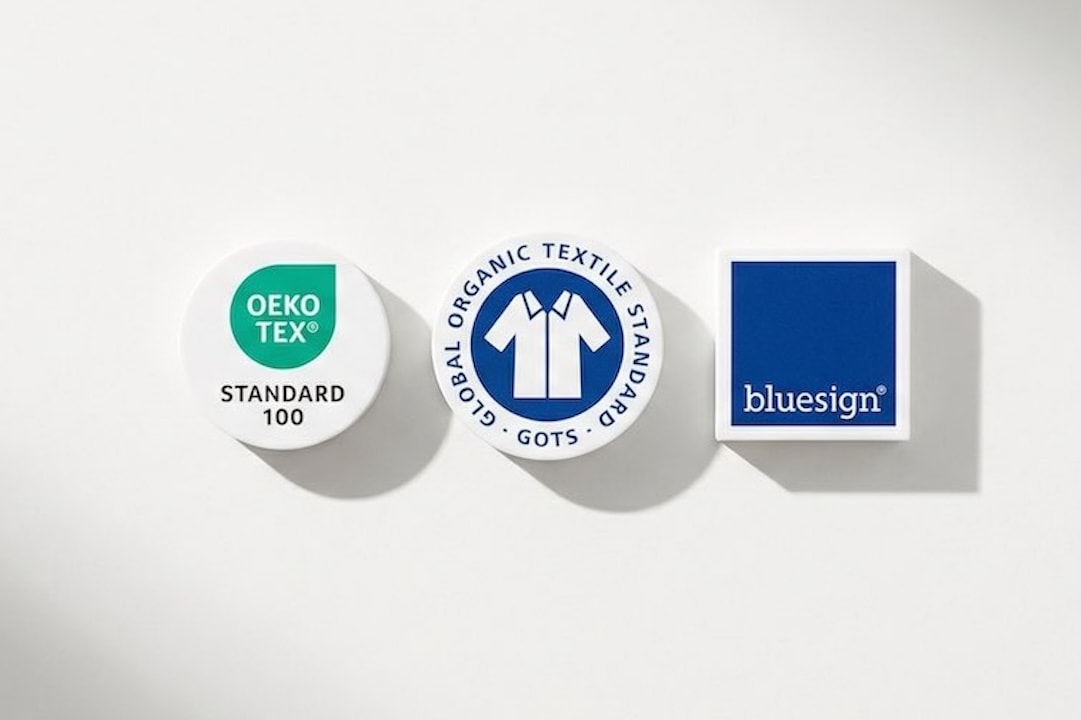
Darauf solltest du achten: Vertraue auf Siegel und Zertifikate wie OEKO‑TEX® Standard 100, GOTS oder bluesign®. Sie garantieren, dass Farben und Textilien bestimmte Sicherheitsstandards erfüllen. Meide Kleidung, die stark chemisch riecht oder mit Bezeichnungen wie „bügelfrei“ versehen ist – sie könnte Formaldehyd oder andere schädliche Ausrüstungsmittel enthalten.
-
Trend mit Zukunft: Auch die Politik zieht nach: In Kalifornien und New York sind PFAS‑Chemikalien („Ewigkeitsstoffe“) ab Januar 2025 in Kleidung verboten. Gleichzeitig entwickeln nachhaltige Marken neue Wege – von pflanzenbasierten bis hin zu im Labor gezüchteten Farbstoffen. Der Wandel hin zu schadstofffreier Mode ist längst keine Nische mehr, sondern Teil eines globalen Trends zu gesünderer, verantwortungsvoller Kleidung.
Was macht Textilfarben „giftig“ oder „schadstofffrei“?
Der Unterschied ist entscheidend – gerade wenn es um deine Gesundheit und das Wohlbefinden deiner Familie geht.
Die meisten Kleidungsstücke – über 90 % laut Branchendaten – entstehen in der Textilherstellung mit synthetischen Farbstoffen aus Erdöl. Diese können aus verschiedenen Gründen als „giftig“ gelten: Sie enthalten schädliche Substanzen oder setzen bei der Verarbeitung gefährliche Nebenprodukte frei.
Zu den toxischen Farbstoffen gehören:
-
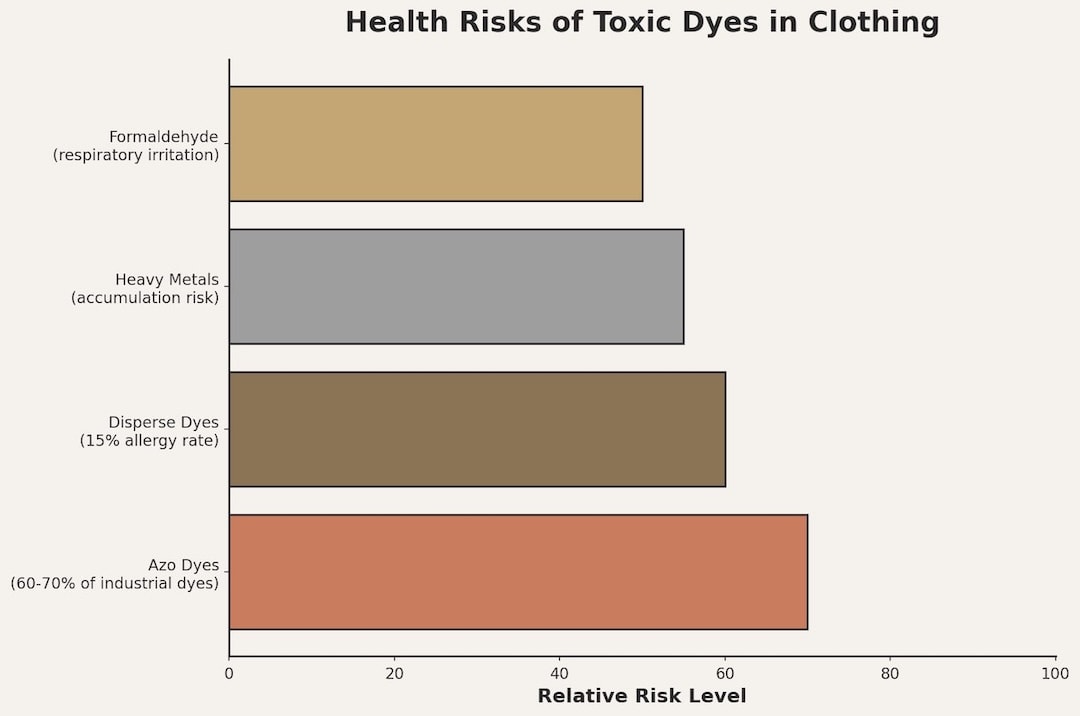
Azofarbstoffe: Sie machen rund 60–70 % aller industriellen Baumwollfarben aus. Nicht alle sind gefährlich, aber 22 aromatische Amine, die aus bestimmten Azofarbstoffen entstehen, gelten als krebserregend. In der EU sind solche Verbindungen eingeschränkt, weil sie – etwa beim Schwitzen – zu gesundheitsschädlichen Stoffen zerfallen können.
-
Dispersionsfarben: Sie werden vor allem zum Färben synthetischer Fasern wie Polyester oder Viskose eingesetzt. Besonders bekannt sind sie dafür, Kontaktallergien und Hautreizungen auszulösen. Disperse Blue 106 und 124 wurden im Jahr 2000 sogar als „Kontaktallergen des Jahres“ ausgezeichnet, weil sie so häufig allergische Reaktionen verursachen.
-
Schwermetalle: Manche Farbstoffe enthalten Blei, Cadmium oder Chrom – entweder als Farbgeber oder als sogenannte Beizmittel. Diese Metalle können sich mit der Zeit im Körper anreichern und ernsthafte gesundheitliche Probleme verursachen.
-
Formaldehyd: Dieser Stoff steckt in manchen Farben oder Nachbehandlungen, zum Beispiel bei „pflegeleichten“ oder „bügelfreien“ Stoffen. Formaldehyd ist ein bekannter krebserregender Stoff, der Haut, Augen und Atemwege reizen kann.

Schadstofffreie Farben sind frei von problematischen Chemikalien:
-
Natürliche Farbstoffe: Sie stammen aus Pflanzen wie Indigo, aus Insekten wie Cochenille oder aus Mineralien – und sind in der Regel frei von synthetischen Chemikalien und biologisch abbaubar. Schon seit Jahrtausenden werden sie zum Färben genutzt, besonders gut funktionieren sie auf Naturfasern wie Baumwolle, Wolle, Seide, Leinen oder Hanf.
-
Synthetische Farben mit geringer Umweltbelastung: Diese modernen Farbstoffe sind gezielt so entwickelt, dass sie keine giftigen Inhaltsstoffe enthalten und die Auswirkung auf Haut und Umwelt minimieren. Reaktivfarben zum Beispiel verbinden sich fest mit dem Stoff, sodass kaum Rückstände bleiben. Oft sind sie „azo-frei“ und erfüllen strenge Sicherheitsstandards.
-
Zertifizierte Farbstoffe: Farbstoffe, die nach Standards wie GOTS oder ähnlichen Zertifikaten zugelassen sind, müssen strenge Anforderungen an Schadstofffreiheit erfüllen. Das bedeutet: Sie sind gesundheitlich unbedenklicher und sorgen gleichzeitig für geringere Umweltbelastung.
Wenn eine Farbe also als „schadstofffrei“ gilt, bedeutet das: Sie stellt beim Tragen kein Gesundheitsrisiko dar und ihr ökologischer Fußabdruck ist deutlich kleiner.
Gesundheitsrisiken durch giftige Textilfarben
Toxische Farbstoffe bleiben nicht einfach in der Kleidung – sie können direkten Einfluss auf deinen Körper und die Gesundheit deiner Familie haben.
Hautreizungen & Allergien
Hattest du schon mal juckende, rote Stellen nach dem Tragen eines neuen Shirts? Dispersionsfarben, die häufig in Polyesterstoffen wie Disperse Blue 106 und 124 verwendet werden, gelten als starke Allergieauslöser – vor allem bei empfindlicher Haut, Neurodermitis oder Psoriasis. Studien mit Epikutantests zeigen, dass bis zu 15 % der getesteten Personen auf Textilfarben allergisch reagieren – also viel häufiger, als viele denken.
Kinder sind besonders empfindlich, da ihre Haut dünner und durchlässiger ist. Wenn dein Kind immer wieder rätselhafte Hautausschläge von Schlafanzügen oder Schulsachen bekommt, könnten Farbstoffe eine Ursache sein.
Chemikalienaufnahme über die Haut
Chemikalien in Kleidung bleiben nicht einfach an der Oberfläche. Die Ergebnisse aus Forschungen der University of Birmingham zeigen, dass beim Schwitzen Chemikalien aus synthetischen Fasern austreten und über die Haut aufgenommen werden können. Da unsere Haut halb durchlässig ist, gelangen diese Stoffe mit der Zeit – etwa beim Sport, Schlafen oder Entspannen in synthetischer Kleidung – in den Blutkreislauf.
Auch eine Studie der Concordia University zeigt, dass synthetische Farbstoffe mutagene Verbindungen enthalten können, die durch regelmäßigen Kontakt das Krebsrisiko erhöhen. Bestimmte Azofarbstoffe stehen im Verdacht, Blasen- und Leberkrebs auszulösen, während andere Zusatzstoffe als hormonell wirksam gelten und Fertilität oder Schilddrüsenfunktion beeinflussen können.
Investigativjournalistin Alden Wicker berichtet von zunehmenden Gesundheitsproblemen bei jungen Menschen, die teilweise mit Chemikalien aus Alltagskleidung in Verbindung gebracht werden. Wenn du dich bewusst für schadstofffreie Farbstoffe entscheidest, reduzierst du die Belastung durch diesen „Chemiecocktail“ – und schützt dich und deine Familie ganz aktiv.
Umweltbelastung: Wie toxische Farbstoffe den Planeten verschmutzen
Die Färbe- und Nachbehandlungsprozesse in der Textilindustrie sind weltweit der zweitgrößte Verschmutzer von Trinkwasser. Wenn das Wasser in den Flüssen von Textilregionen plötzlich knallblau oder schwarz wird, liegt das an unbehandeltem Abwasser aus Färbereien. In Bangladesch und Indien machen Färbereien das Wasser wörtlich ungenießbar und töten das Leben darin ab.
Der Umfang ist enorm: Für eine Tonne Stoff braucht man rund 200 Tonnen Wasser zum Färben. Dieses Wasser wird dann mit Chemikalien, Salzen, Schwermetallen wie Chrom oder Blei und Farbmolekülen abgelassen, die nicht abbaubar sind und sich im Schlamm ablagern. Die Färberei der Modebranche verursacht rund 3 % der globalen CO₂-Emissionen.
Schadstofffreie Färbeverfahren reduzieren diesen Schaden deutlich. Natürliche Farbstoffe bauen sich meist biologisch ab, ohne bleibende Gifte zu hinterlassen. Viele schadstofffreie Prozesse reinigen das Abwasser richtig, und neue Techniken wie Digitaldruck oder wasserlose Methoden sparen Wasser, indem sie es recyceln.
Natürliche Farbpflanzen binden beim Wachsen CO₂ – das gleicht Emissionen aus. Und wenn Kleidung aus schadstofffreier Färbung biologisch abgebaut wird, gelangt kein bleibender Chemie-Müll in den Boden.
Wenn du also Kleidung mit schadstofffreien Farben wählst, hilfst du mit, Flüsse sauberer zu halten, Ökosysteme zu schützen und den CO₂-Fußabdruck der Mode zu verringern.
Vorteile schadstofffreier Farben
Neben Sicherheit und Nachhaltigkeit bringen schadstofffreie Farbstoffe echte Pluspunkte, die sich schnell bemerkbar machen:
-
Sanfter zur Haut: Kleidung ohne aggressive Synthetikfarben fühlt sich einfach besser an. Ohne Formaldehyd oder überschüssige Farbmoleküle bleibt die Atmungsaktivität der Stoffe natürlich, und sie fühlen sich weich an. Für Menschen mit Neurodermitis, Psoriasis oder Chemiesensibilität kann der Wechsel zu schadstofffrei gefärbter Kleidung einen riesigen Unterschied machen.
-
Haltbar & leuchtend: Manche natürlichen Farben halten die Farbe weniger gut, aber viele moderne schadstofffreie Farbstoffe sind für Langlebigkeit gebaut. Hochwertige Prozesse sorgen für tiefe, feste Farben, die auch nach vielen Wäschen strahlen. Weil keine harten Chemikalien die Fasern angreifen, halten die Kleidungsstücke länger.
-
Frischer länger: Stoffe ohne synthetische Nachbehandlungen bleiben frischer und nehmen Gerüche weniger an als chemisch behandelte. Natürliche Materialien lassen Luft besser zirkulieren.
-
Ruhe im Kopf: Der größte Bonus ist das gute Gefühl – du weißt genau, was deine Haut berührt. Keine mysteriösen Chemikalien in den Schlafanzügen deiner Kinder oder Sorge, dass dein Lieblingsshirt dich langsam belastet.
So erkennst du Kleidung mit schadstofffreien Farben
Bereit für einen Umstieg? Hier kommt dein praktischer Guide:
-
Etiketten & Beschreibungen prüfen: Schau auf dem Etikett nach „azo-freie Farben“, „umweltfreundliche Farbstoffe“, „pflanzliche Naturfarben“ oder Zertifikats-Erwähnungen. Warnsignale: „separat waschen“, „knitterfrei“, „fleckenresistent“ oder „Pflegeleicht“ – das deutet oft auf Formaldehyd oder PFAS hin.
-
Einfacher Test: Überprüfe den Geruch der Kleidung. Starke Chemierüche können auf Formaldehyd oder Lösemittelrückstände hindeuten. Gute Kleidung sollte aus der Verpackung frisch riechen.
-
Natürliche Fasern wählen: Bio-Baumwolle, Hanf, Leinen, Wolle oder Seide von umweltbewussten Marken werden meist mit schadstofffreien Farben behandelt. Diese Fasern nehmen Naturfarben super an und brauchen keine aggressiven Dispersionsfarben wie bei Polyester oder Viskose.
-
Transparente Marken kaufen: Recherchiere auf der Website der Marke, wie sie färben. Firmen, die über pflanzliche Farben, Zertifikate oder Lieferketten sprechen, sind vertrauenswürdig.
-
Vor dem Tragen waschen: Wasch neue Kleidung immer vorher, besonders für Kinder, um Produktionsrückstände zu entfernen. Bei natürlichen Farben nimm kaltes Wasser und mildes Waschmittel, damit die Farben halten.
Welche Zertifikate garantieren schadstofffreie Farben?
-
OEKO-TEX® Standard 100: Testet auf über 100 Schadstoffe – von Schwermetallen bis zu verbotenen Azofarbstoffen. Jedes Teil ist frei von gesundheitsschädlichen Chemikalien, mit den strengsten Regeln für Babysachen.
-
GOTS (Global Organic Textile Standard): Begrenzt Farbstoffe und Verarbeitungschemie streng und erlaubt nur umweltfreundliche, schadstofffreie Varianten. Garantiert sichere Produktion – vom Faser bis zum fertigen Kleidungsstück.
-
bluesign®: Sorgt dafür, dass Farben und Chemikalien durchgängig strenge Sicherheitsstandards für Arbeiter, Verbraucher und Umwelt erfüllen – in der ganzen Lieferkette.
Bedeuten Bio-Kleidung automatisch schadstofffreie Farben?
Meistens ja, aber nicht immer. „Bio“ bezieht sich vor allem auf die Fasern – wie Bio-Baumwolle ohne Pestizide. Ein Shirt mit „100 % Bio-Baumwolle“ sagt etwas über den Stoff aus, nicht unbedingt über die Farbe.
GOTS-zertifizierte Bio-Produkte decken aber die gesamte Kette ab – nur sichere Farben und Prozesse sind erlaubt, also schadstofffrei. Viele Bio-Marken setzen auf umweltfreundliche oder natürliche Farbstoffe. Schau nach Extra-Siegeln wie OEKO-TEX® oder Hinweisen wie „pflanzliche Farben“ oder „azo-frei“. Bio-Stoff plus Öko-Zertifikat bedeutet fast immer schadstofffreie Färbung.
Schadstofffreie Farben = Gesundheit und Nachhaltigkeit
Farbe in Kleidung hat Konsequenzen. Wenn du dich für schadstofffreie Färbeverfahren entscheidest, schützt du deine Gesundheit, sorgst für bessere Arbeitsbedingungen in der Modebranche und verhinderst massive Umweltverschmutzung.
Du musst auf Stil, Komfort oder Qualität nicht verzichten, um Schadstoffe zu meiden. Dein leuchtendes Kleid oder dein gemütliches Bio-T-Shirt kann schön und sicher zugleich sein.
Denk dran: Textilfärbung verursacht rund 20 % der globalen industriellen Wasserverschmutzung. Jede schadstofffreie Wahl macht diesen Wert kleiner.
Beim nächsten Einkauf: Prüf Zertifikate oder frag Marken nach ihren Färbepraktiken. Entdecke ethisch hergestellte Kleidung aus Bio-Stoffen mit sicheren, schadstofffreien Farben – pure Ruhe für jedes Outfit.
Schadstofffreie Farben färben dein Leben mit Gesundheit, Sicherheit und Nachhaltigkeit – ein Mode-Statement, das nie aus der Zeit fällt.
FAQs: Häufig gestellte Fragen zu Textilfarben
Welche Farbe ist am giftigsten?
Leuchtende, kräftige Farben bergen das höchste Risiko. Leuchtiges Rubin-Rot, tiefes Blau und Schwarz werden oft mit großen Mengen an toxischen Azofarbstoffen und Schwermetallen wie Chrom, Kupfer oder Blei gefärbt – je intensiver der Farbton, desto höher die Chemiekonzentration. Helle Gelbtöne und Rottöne enthalten häufig Azofarbstoffe, die krebserregende aromatische Amine freisetzen können und bei Hautkontakt besonders problematisch sind. Dunkles Blau und Schwarz nutzen oft Schwerfarben oder Säurefarben mit Chrom-VI-Verbindungen, während Neonfarben mehrere Schichten Reaktivfarben und Stabilisatoren haben, die die Schadstofflast erhöhen.
Ist Textilfarbe giftig auf der Haut?
Es ist nuanciert: Nicht alle Textilfarben sind per se giftig, aber die synthetischen Farbstoffe, die über 90 % der Industrieproduktion ausmachen, enthalten oft problematische Stoffe wie Azoverbindungen, Schwermetalle oder Formaldehyd. Zertifizierte umweltfreundliche Synthetikfarben oder schonend verarbeitete Naturfarben liefern aber schöne, haltbare Ergebnisse – ohne die bekannten Gesundheits- und Umweltrisiken.
Welche Farbe ist schadstofffrei?
Schadstofffreie Textilfarben stammen oft aus natürlichen Quellen wie Pflanzen (Indigo, Kurkuma), Mineralien oder Insekten (Cochenille). Sind sie synthetisch, sind sie so formuliert, dass sie keine schädlichen Stoffe wie gefährliche Amine oder Schwermetalle abgeben. Viele „schadstofffreie“ Synthetikfarben sind Reaktivfarben, die fest mit dem Stoff verbinden und kaum Rückstände hinterlassen. Kurz: Sie nutzen entweder sichere Naturzutaten oder verbesserte Formeln ohne Azofarbstoffe, Formaldehyd oder Blei.
Wie erkenne ich, ob meine Kleidung giftige Farben enthält?
Schau zuerst auf die Etiketten – OEKO-TEX® oder GOTS bedeutet, die Farben erfüllen strenge Sicherheitsstandards. Warnsignale: „Vor Gebrauch waschen“ oder „Farbe kann abfärben“. Vertraue deiner Nase – starker Chemieruch aus der Verpackung deutet auf aggressive Farbchemie oder Nachbehandlungen hin. Bunte Fast-Fashion-Teile aus Billigproduktion setzen oft auf günstige, weniger umweltfreundliche Farben. Bei Unsicherheit: Wähle Hersteller, die offen über ihren Färbeprozess reden oder Zertifikate haben.
Sind natürliche Farben besser als synthetische?
Natürliche Farben sind nachwachsend, abbaubar und frei von den toxischen Chemikalien mancher Synthetik – super für Umwelt und Haut. Sie haben aber Grenzen: Weniger Farbvielfalt und oft schwächere Haltbarkeit. Moderne umweltfreundliche Synthetikfarben sind so entwickelt, dass sie sicher, ökofreundlich und fest sind – ohne Schadstoffe. Aus Toxizitätssicht sind beide Varianten klar besser als konventionelle toxische Farben.
Kann man gefärbte T-Shirts wieder entfärben?
Das Waschen neuer Kleidung, z.B. T-Shirts entfernt oberflächliche Rückstände wie überschüssige Textilfarbe, Nachbehandlungen oder Produktionsrückstände – wasch immer neu gekaufte Sachen, besonders für Babys, vor dem ersten Tragen. Aber fest eingebundene Farbe im Stoff geht nicht raus. Wenn die Farbe toxisch ist, gehört sie zur Fasernstruktur, und Waschen ändert daran nichts. Es reduziert nur den direkten Kontakt wie Werksgeruch oder lose Farbpartikel – aber toxische Kleidung wird dadurch nicht schadstofffrei. Wähl von vornherein Teile mit schadstofffreien Farben.
Ist Simplicol Textilfarbe schadstofffrei?
Simplicol ist ein beliebtes Heimfärbe-Produkt, aber es ist nicht schadstofffrei – es enthält Konservierungsmittel und andere Inhaltsstoffe, die Irritationen auslösen können.
Das Wichtigste: Simplicol enthält Methylchloroisothiazolinone und Methylisothiazolinone – beides sind Konservierungsmittel, die Allergien und Hautreizungen auslösen können. Außerdem enthält es Sodium Metasilicate, das zwar als „low concern" gilt, aber ebenfalls Irritationen und allergische Reaktionen hervorrufen kann. Wenn du empfindliche Haut, Allergien oder kleine Kinder hast, sind schadstofffreie Alternativen eventuell die bessere Wahl.
* Werbung: Dieser Artikel enthält mit * gekennzeichnete Affiliate-Links. Wenn du über diese Links einkaufst, erhalten wir eine kleine Provision – für dich entstehen keine zusätzlichen Kosten. Die bereitgestellten Informationen dienen ausschließlich Bildungs- und Informationszwecken und stellen keine medizinische Beratung dar. Sie ersetzen nicht die Konsultation eines Arztes oder qualifizierten Gesundheitsdienstleisters. Dieser Artikel wurde mit Unterstützung von KI-Tools erstellt und von unserem Team redaktionell geprüft und freigegeben. Alle geäußerten Meinungen sind unsere eigenen.
Lilija Bairamova

Lilija ist die Gründerin von Orbasics und Mutter ihrer Tochter Nika. Sie gründete Orbasics als Mutter auf der Suche nach gesunder und biologischer Kleidung für ihr Kind. Heute bietet Orbasics nicht nur Kleidung aus Bio-Baumwolle an, sondern hat sich auch zu einem Blog entwickelt, der sich nachhaltigem, gesundem und achtsamem Leben widmet. Mit Tipps, Anleitungen und Artikeln, die Ihnen helfen, einen nachhaltigeren, bewussteren und gesünderen Lebensstil zu führen.







Hinterlasse einen Kommentar