
Table of Contents
7 Gründe warum Bio Stoffe wirklich besser sind
This page may contain affiliate links. We may earn a commission on purchases, at no additional cost to you. Learn more →
Du kaufst Bio-Lebensmittel für deine Familie. Du schaust auf die Etiketten im Supermarkt. Aber hast du schon mal darüber nachgedacht, was eigentlich in den Kleidungsstücken steckt, die stundenlang direkt auf deiner Haut liegen – oder auf der Haut deiner Kinder?
Die Modeindustrie gehört zu den chemikalienintensivsten Branchen der Welt. Konventionelle Baumwolle wird mit synthetischen Pestiziden und Herbiziden angebaut. Fertige Kleidungsstücke können Formaldehydharze, allergene Farbstoffe und aggressive Chemikalien enthalten – Stoffe, die du bewusst niemals auf deinen Körper auftragen würdest.
Und Kunstfasern? Die setzen bei jedem Waschgang Mikroplastik frei, das in unsere Gewässer gelangt.
Deshalb ist die Wahl von Bio-Stoffen wichtig. Nicht als Trend. Nicht als Luxus. Sondern als echte, wissenschaftlich fundierte Entscheidung – für deine Familie, für die Erde und für Textilien, die wirklich sicherer sind. Ich zeige dir genau, warum – und wie du beim Einkauf einen besseren Blick dafür entwickelst.
Das Wichtigste auf einen Blick: Warum bio Stoffe wählen?
-
Angebaut ohne synthetische Pestizide. Bio-Baumwollanbau kommt ohne synthetische Pestizide und Herbizide aus – gut für Bauern, gut für den Boden, und gut für die Stoffe, die deine Kinder täglich tragen.
-
Weicher und sanfter bei empfindlicher Haut. Bio-Stoffe wie Bioaumwolle und Bioleinen sind von Natur aus atmungsaktiv und lösen seltener Ekzeme, Allergien oder Hautreizungen aus.
-
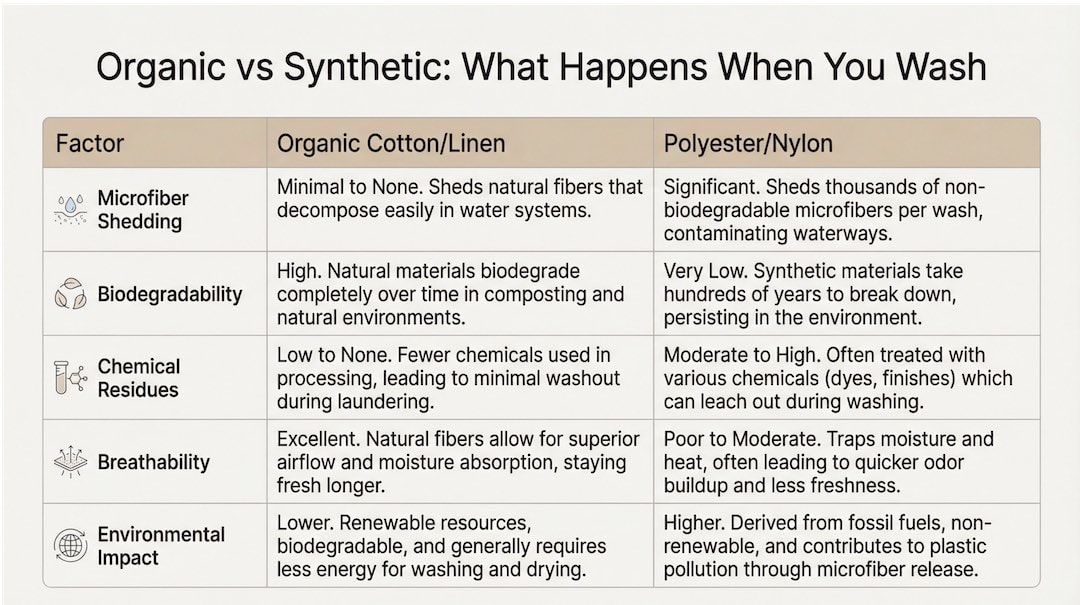
Kein Mikroplastik. Anders als Kunstfasern sind natürliche und Bio-Materialien biologisch abbaubar – sie belasten unsere Meere nicht bei jedem Waschgang.
-
Besser für die Umwelt. Ökobilanzen zeigen, dass Bio-Baumwollanbau im Vergleich zur konventionellen Produktion Wasserverbrauch und CO2-Emissionen reduzieren kann.
-
„Bio" hat eine rechtliche Bedeutung. In Deutschland und der EU ist der Begriff bei Textilien durch Zertifizierungen wie GOTS klar geregelt – kein reines Marketing-Schlagwort.
-
Schutz vor Greenwashing. Wer Bio-Zertifizierungen kennt, erkennt auch falsche „Öko"-Versprechen – zum Beispiel bei Produkten, die als „Bambus" vermarktet werden, aber meist aus synthetischem Viskose bestehen.
-
Unterstützung für faire Landwirtschaft. Wer Bio-Stoffe kauft, unterstützt direkt Bauern, die auf nachhaltigere, schadstofffreie Anbaumethoden setzen. Und das allein ist schon Grund genug.
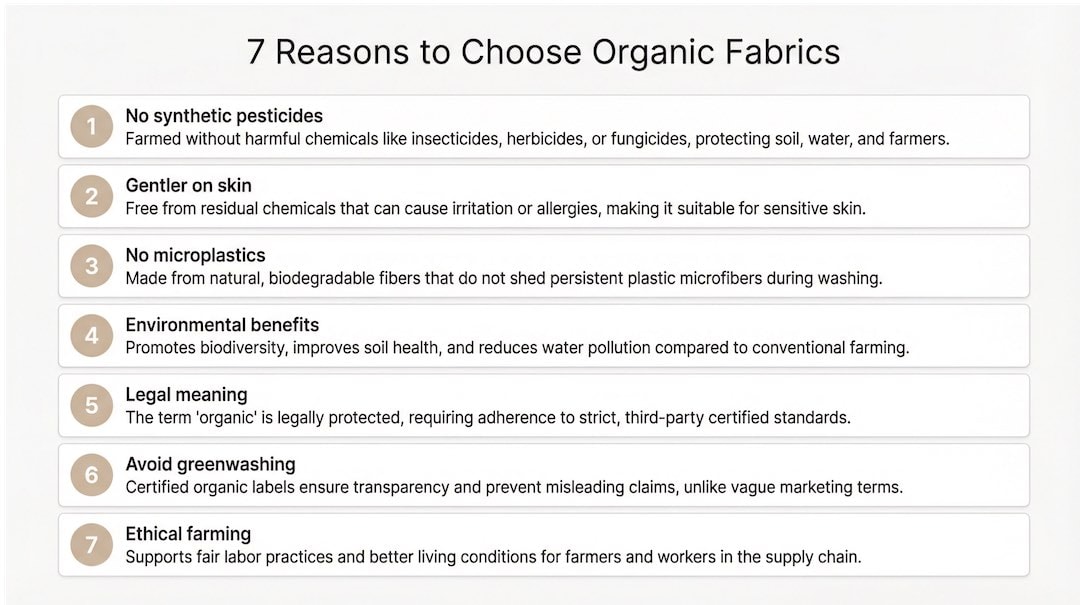
Grund 1: Bio Stoffe wie Bio-Baumwolle werden ohne synthetische Pestizide und Herbizide angebaut
Das ist der grundlegendste Grund für Biostoffe – und gleichzeitig einer der gewichtigsten.
Konventioneller Baumwollanbau ist stark auf synthetische Chemikalien angewiesen. Ältere Behauptungen, dass Baumwolle 16–25 % der weltweiten Insektizide verbraucht, werden zwar von neueren Analysen und Daten der UNCTAD und ICAC (engl.) inzwischen hinterfragt – aber die eigentliche Aussage bleibt: Konventionelle Baumwolle wird mit synthetischen Pestiziden angebaut. Bio Baumwolle nicht.
Was bedeutet das für dich? Die Baumwolle in deinem Kleid, in der Kinderkleidung, in den Schlafanzügen deines Babys – alles beginnt auf einem Feld. Wird dieses Feld ökologisch bewirtschaftet, kommen keine synthetischen Mittel an die Pflanzen, der Boden bleibt gesund, und die Bauern sind nicht täglich schädlichen Chemikalien ausgesetzt. Laut Forbes-Berichten zu Baumwolldaten werden die tatsächlichen Auswirkungen von Chemikalien auf konventionellen Baumwollfeldern nach wie vor unterschätzt.
Wer Bio-Stoffe wählt, sorgt dafür, dass der erste Schritt in der Produktionskette – der Anbau – von Anfang an richtig gemacht wurde.
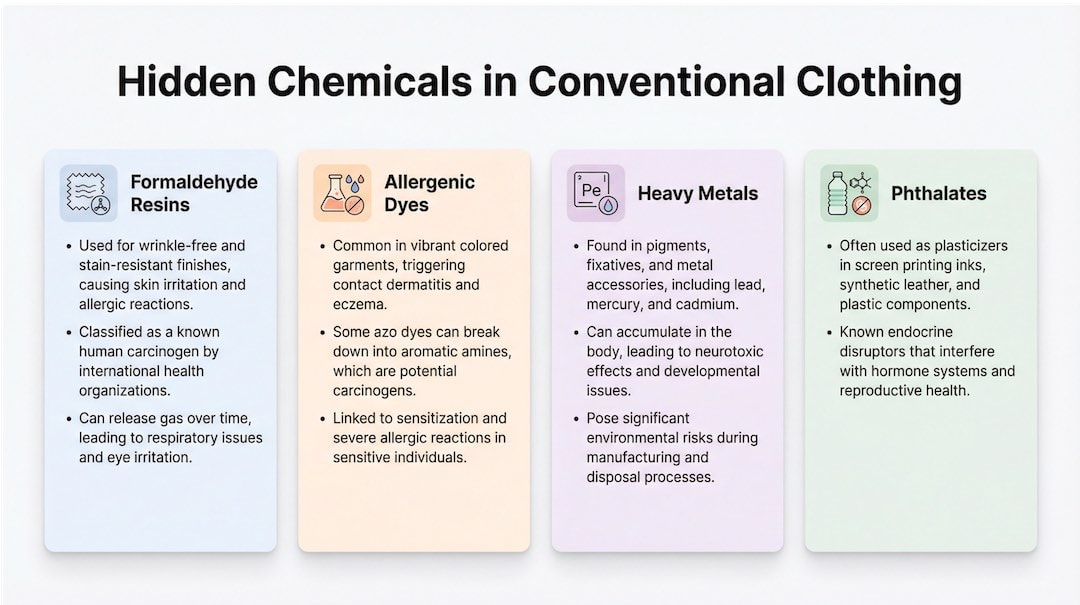
Grund 2: Bio-Textilien sind sanfter zur Haut – besonders für Babys und Kinder
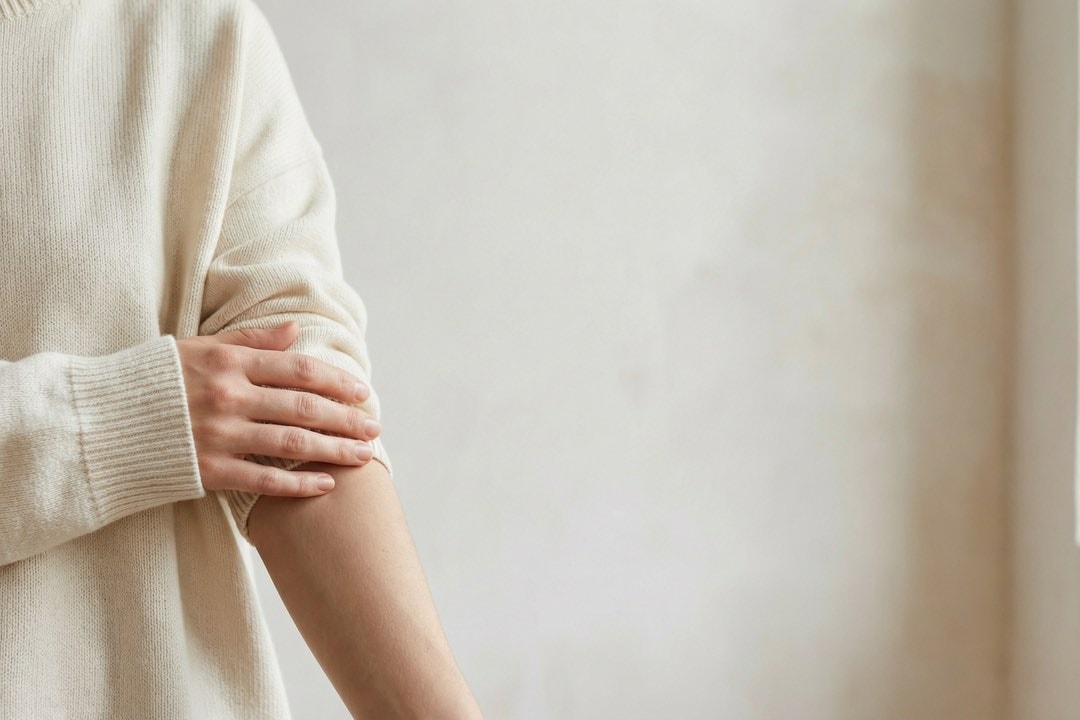
Wenn du oder dein Kind empfindliche Haut, Ekzeme oder Allergien habt – oder wenn du schon mal unerklärliche Hautreizungen durch bestimmte Kleidungsstücke hattest – könnte allein dieser Grund dich überzeugen.
Naturfasern wie Bio-Baumwolle und andere zertifizierte Bio-Textilien wie Leinen oder Hanf sind sanft, atmungsaktiv und in der Regel frei von vielen aggressiven Verarbeitungschemikalien, die bei konventionellen Textilien eingesetzt werden. Das macht sie ideal für empfindliche Haut.
Vorsicht bei sogenannten „Bambus"-Stoffen: Die US-amerikanische Federal Trade Commission weist darauf hin, dass die meisten als Bambus vermarkteten Textilien tatsächlich Rayon oder Viskose aus Bambusbrei sind – und entsprechend gekennzeichnet werden müssten. Mit natürlich verarbeiteten Bambusfasern haben sie wenig zu tun. In Deutschland und der EU gilt ähnliches: Auch hier ist die Kennzeichnungspflicht klar geregelt, und „Bambus" allein sagt nichts über die tatsächliche Verarbeitung aus.
Aber nicht nur der Anbau zählt. Auch die Chemikalien, die nach der Ernte eingesetzt werden, können problematisch sein. Formaldehydharze werden häufig in Kleidung eingearbeitet, um sie knitterfrei zu machen. Klinische Studien zeigen, dass eine Allergie gegen Textilharze auf Formaldehydbasis Kontaktdermatitis verursachen kann – und diese wird oft nicht erkannt. Die Internationale Agentur für Krebsforschung (IARC) stuft Formaldehyd als krebserregend für den Menschen ein. Auch die britische Gesundheitsbehörde HSE benennt diese Harzfinishes als Reizstoffrisiko in der Modeindustrie.
Biobaumwolle – vor allem in Kombination mit einer anerkannten Schadstoffzertifizierung – ist von Natur aus weicher, frei von diesen Chemikalien und deutlich atmungsaktiver. Für Familien mit Kindern, die auf bestimmte Stoffe reagieren, sind Biotextilien kein Luxus, sondern eine echte Notwendigkeit.
Mal ehrlich: Du würdest deinem Kind keine Lebensmittel geben, die mit Formaldehyd belastet sind. Warum sollte das bei Kleidung anders sein?
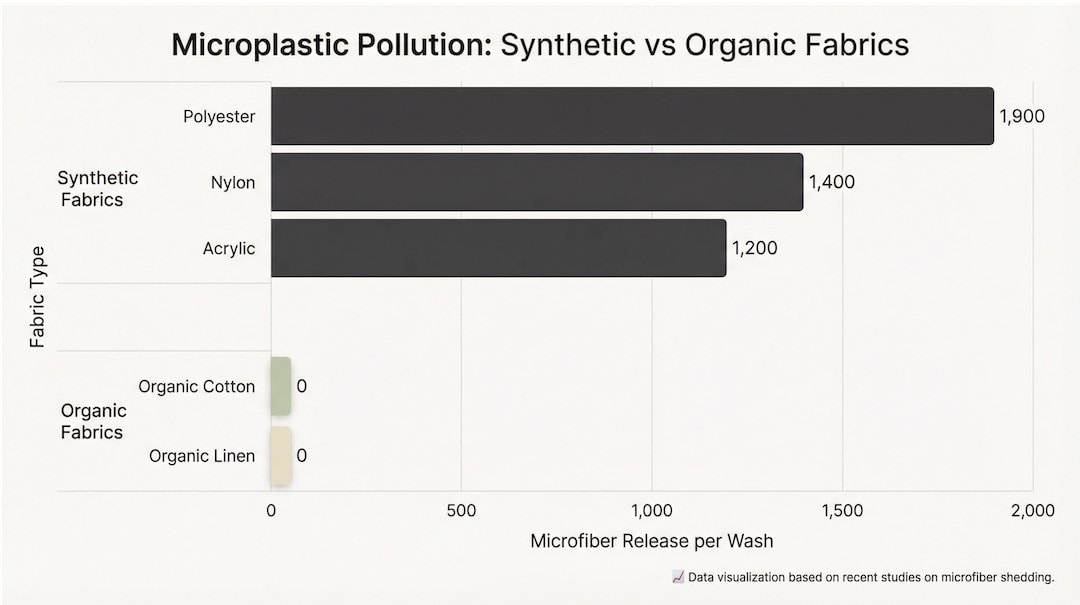
Grund 3: Kein Mikroplastik – besser für die Umwelt
Hier ist ein Grund für Bio-Stoffe, der viel zu selten Beachtung findet: Natürliche und Bio-Materialien setzen kein Mikroplastik frei.
Jedes Mal, wenn du synthetische Stoffe wie Polyester oder Nylon wäschst, lösen sich winzige Kunststoffpartikel und gelangen in unsere Gewässer. Wissenschaftliche Studien zeigen, dass das Waschen von Kunstfasern eine erhebliche Quelle von Mikrofasern in der Umwelt ist – und diese Partikel passieren Kläranlagen nahezu ungehindert. Peer-reviewed Forschung im Fachjournal Environmental Science & Technology hat gemessen, wie viele Mikrofasern Polyestertextilien beim Waschen abgeben.
Bio-Baumwolle,Bio-Leinen, Wolle – diese Naturfasern sind biologisch abbaubar. Was sich beim Waschen löst, zersetzt sich. Kein Plastik. Keine Verschmutzung.
Den Wechsel in deiner Garderobe zu vollziehen – bei Kleidungsstücken, Bettwäsche und dem alltäglichen Outfit deiner Kinder – ist eine der einfachsten Möglichkeiten, weniger Abfall zu produzieren und zur Gesundheit unserer Umwelt beizutragen. Jeder Waschgang wird ein kleines Stück weniger belastend für unsere Erde.
Grund 4: Echte Vorteile für die Umwelt
Eine viel zitierte Ökobilanz von Textile Exchange (engl.) zeigt, dass Bio-Baumwollanbau im Vergleich zur konventionellen Produktion potenziell weniger zur globalen Erwärmung beiträgt und weniger Oberflächenwasser verbraucht. Das sind echte Unterschiede – ökologische Anbaumethoden schonen den Boden, sorgen für sauberere Luft rund um die Felder und schonen Flüsse und Grundwasser.
Aber wir glauben an Ehrlichkeit. Zusammenfassungen von Ökobilanzen – etwa von Cotton Incorporated – und wissenschaftliche Übersichtsarbeiten weisen darauf hin, dass die Ergebnisse stark von Ernteerträgen, geografischen Bedingungen und der Berechnungsmethode abhängen. Wenn Biobetriebe geringere Erträge erzielen, können manche Kategorien bezogen auf die Produktionsmenge schlechter abschneiden.
Was bedeutet das für dich konkret? In den meisten Bewertungen schneidet Bio-Baumwollanbau umweltfreundlicher ab – besonders was pestizidfreien Boden, reduzierten Chemikalieneintrag ins Wasser und sauberere Gewässer betrifft. Die Vorteile sind real. Sie sind nur nicht so einfach wie „in jeder Kategorie 100 % besser" – und das solltest du wissen.
Das Fazit: Bio-Stoffe sind eine echte, bessere Wahl für die Umwelt. Nicht perfekt. Aber spürbar besser – und dieser Unterschied zählt, wenn Millionen von Familien dieselbe Entscheidung treffen.
Grund 5: „Bio" hat eine rechtliche Bedeutung
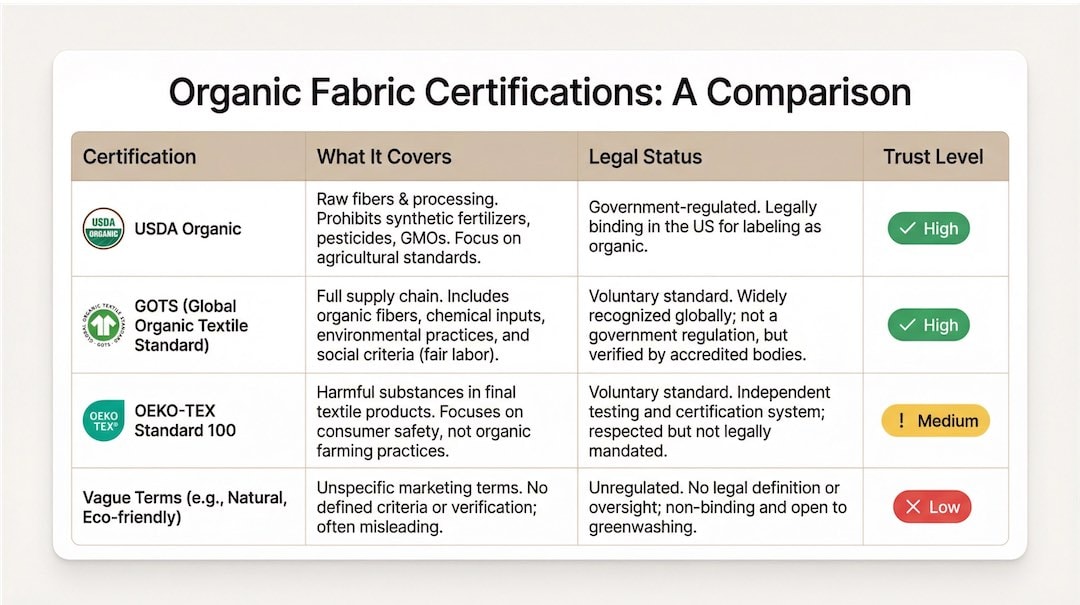
Anders als vage Begriffe wie „natürlich", „umweltfreundlich" oder „nachhaltig" ist das Wort „bio" auf einem Textiketikett rechtlich geregelt – das gilt international.
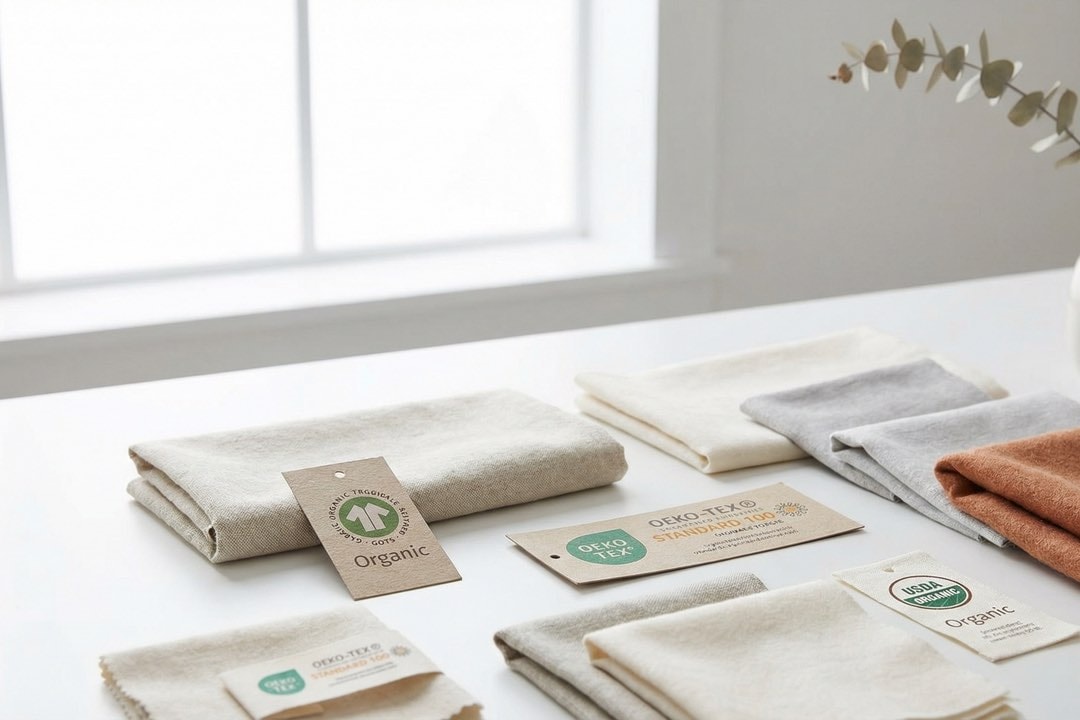
Der wichtigste Standard, den du kennen solltest: GOTS – der Global Organic Textile Standard. Er ist weltweit anerkannt und deckt die gesamte Produktionskette ab: vom ökologischen Anbau der Rohstoffe über die Verarbeitung bis hin zu sozialen Kriterien in der Herstellung. Wer das GOTS-Zertifikat auf einem Produkt sieht, weiß, dass dahinter echte Kontrollen stecken – keine Marketingversprechen.
Das ist wichtig, weil es dir einen verlässlichen Rahmen gibt. Wenn du „GOTS-zertifiziert" auf Bio-Stoffen siehst, stehen dahinter Inspektionen, klare Kriterien und Verantwortlichkeit. Keine leeren Versprechen.
Der zweistufige Schutz, auf den du achten solltest
So kannst du beim Einkauf wirklich sichere, nachhaltige Stoffe erkennen:
-
Stufe 1 – Zertifizierung des ökologischen Anbaus (GOTS): Bestätigt, dass die Rohstoffe – Bio- Baumwolle, Leinen, Wolle – ohne synthetische Chemikalien angebaut wurden. Gut für Bauern, gut für den Boden.
-
Stufe 2 – Schadstoffprüfung im Endprodukt (OEKO-TEX Standard 100): Der OEKO-TEX Standard 100 prüft Fertigprodukte auf eine Vielzahl bedenklicher Substanzen – darunter Formaldehyd, bestimmte Azofarbstoffe, Schwermetalle und PFAS-Verbindungen.
Wer beide Stufen kombiniert, bekommt Bio- Stoffe, die vom Feld bis in den Kleiderschrank sicher sind. Genau das verdient deine Familie.
Grund 6: Bio-Stoffe schützen dich vor Greenwashing
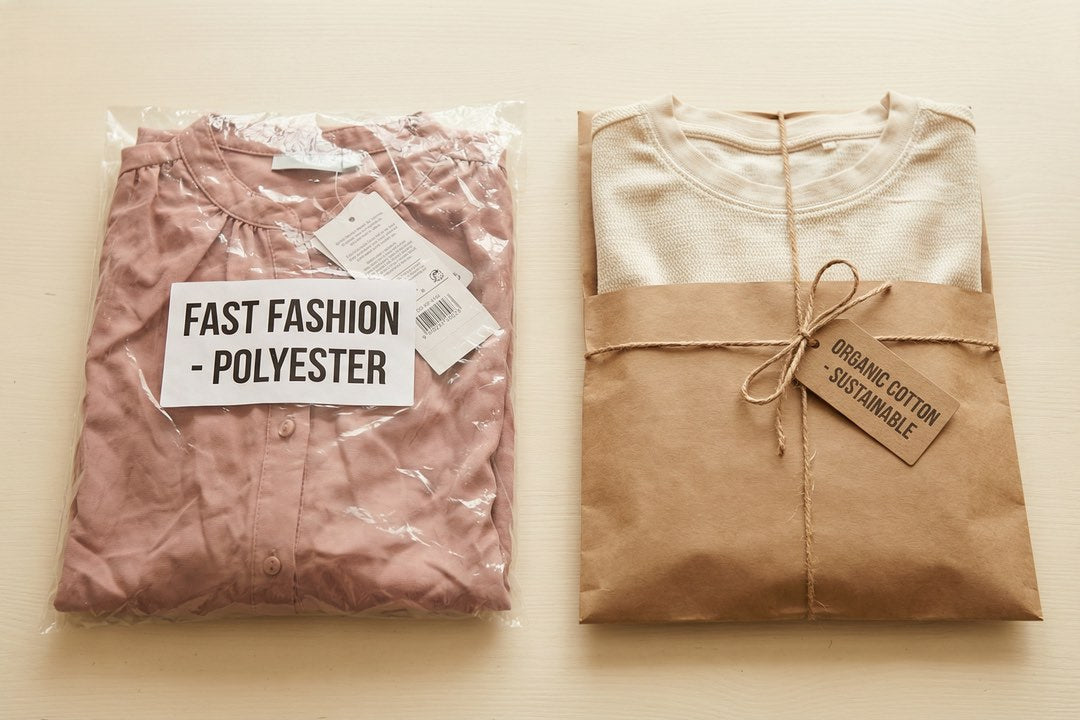
Die Fast-Fashion-Industrie ist sehr gut darin geworden, grün zu klingen, ohne es wirklich zu sein. Wer versteht, warum Bio- Stoffe wichtig sind, erkennt auch die Mogelpackungen.
Die Bambus-Täuschung
Wenn du dir aus diesem Abschnitt eine Sache merkst, dann diese: Die meisten „Bambus"-Kleidungsstücke sind kein echter Bambus.
Die US-amerikanische Federal Trade Commission (FTC) ist eindeutig: Als „Bambus" dürfen Textilien nur bezeichnet werden, wenn sie tatsächlich aus Bambusfasern bestehen. Die meisten „Bambus"-Textilien sind jedoch Rayon oder Viskose, die aus Bambusbrei hergestellt werden – ein Prozess, der aggressive Chemikalien erfordert und die natürlichen Eigenschaften der Pflanze zerstört. Die FTC hat bereits Unternehmen wegen falscher Angaben zu diesen Produkten verklagt.
In Deutschland und der EU gilt: Auch hier schreibt die Textiletikettierungsverordnung eine korrekte Faserbezeichnung vor. „Bambus" ohne weitere Angabe ist nicht zulässig, wenn es sich tatsächlich um Viskose handelt.
Welcher Stoff ist am ungesündesten? Es gibt keinen einzelnen Stoff, der pauschal „ungesund" ist – aber Kunstfasern mit nicht deklarierten chemischen Ausrüstungen und falsch etikettierte Produkte wie unechter „Bambus" tragen das höchste Risiko.
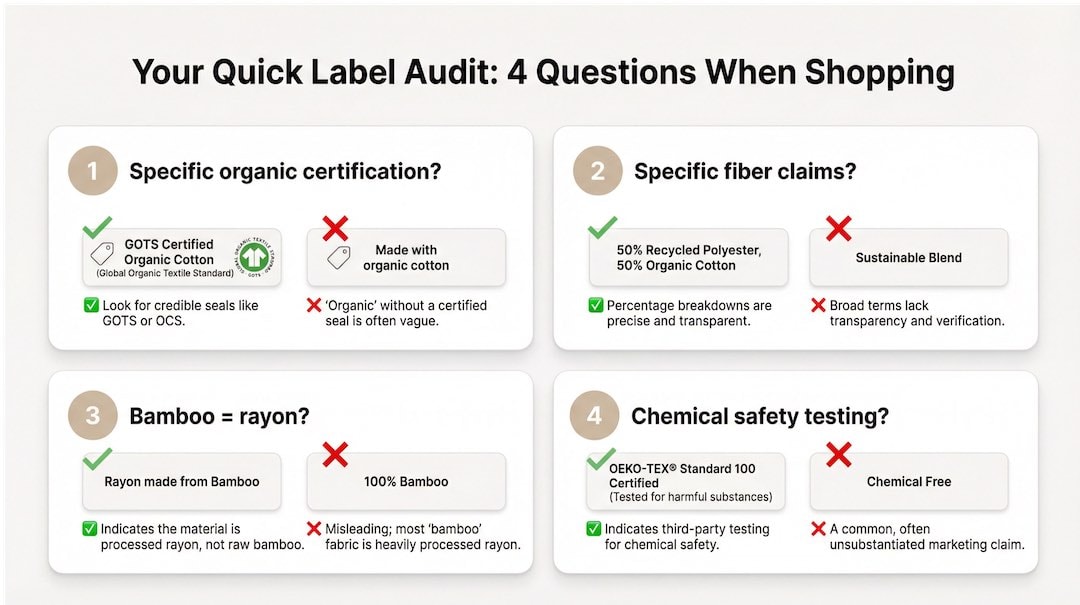
Dein schneller Etiketten-Check beim Einkauf
Stell dir beim nächsten Einkauf diese vier Fragen:
-
Wird eine konkrete Bio- Zertifizierung genannt – zum Beispiel GOTS?
-
Sind die Faserbezeichnungen spezifisch – etwa „100 % bio Baumwolle" – statt vager Begriffe wie „umweltfreundlich"?
-
Steht bei „Bambus" im Kleingedruckten „Viskose aus Bambus"?
-
Gibt es eine Schadstoffprüfung wie OEKO-TEX Standard 100 auf dem Etikett?
Die überarbeiteten Green Guides der FTC machen klar: Umweltbezogene Werbeaussagen müssen durch verlässliche Belege gestützt sein. Wenn eine Marke deine Fragen nicht beantworten kann, such weiter. Dein Einkauf sollte echte Nachhaltigkeit unterstützen – kein Greenwashing.
Grund 7: Du unterstützt faire Landwirtschaft und eine bessere Zukunft
Jedes Mal, wenn du Bio-Stoffe kaufst, stimmst du mit deinem Geldbeutel ab. Du sagst der Welt: Bauern verdienen es, nicht täglich Chemikalien ausgesetzt zu sein. Der Boden verdient es, gepflegt statt ausgelaugt zu werden. Und Familien überall auf der Welt verdienen Kleidungsstücke, die sicher zu tragen sind.
Die globale Realität
Bio-Baumwolle macht laut internationalen Marktberichten nach wie vor nur einen kleinen Teil der weltweiten Baumwollproduktion aus. Genau deshalb zählt deine Entscheidung – jede Familie, die sich für bio Baumwolle entscheidet, stärkt die Nachfrage nach nachhaltigen Materialien und besseren Bedingungen in der Landwirtschaft weltweit.
Verschiedene Organisationen messen den Pestizideinsatz im Baumwollanbau unterschiedlich. Wie Daten von UNCTAD und ICAC (engl.) zeigen, macht es einen Unterschied, ob man den Pestizidverkauf nach Wert oder den tatsächlichen Einsatz auf dem Feld betrachtet. Aber die praktische Schlussfolgerung ist einfach: Bio Baumwollanbau kommt ohne synthetische Pestizide aus. Das ist real, das ist messbar – und es bedeutet etwas für die Luft und die Menschen in der Nähe der Felder.
Je mehr die Nachfrage nach nachhaltigen Materialien wächst, desto größer wird auch das Risiko irreführender Versprechen. Deshalb ist es so wichtig, anerkannte Zertifizierungen zu kennen und darauf zu achten – dein Engagement für echte Standards hält die gesamte Textilindustrie ein Stück ehrlicher.
So geht's los: Synthetische Stoffe reduzieren und auf Bio Baumwolle umsteigen
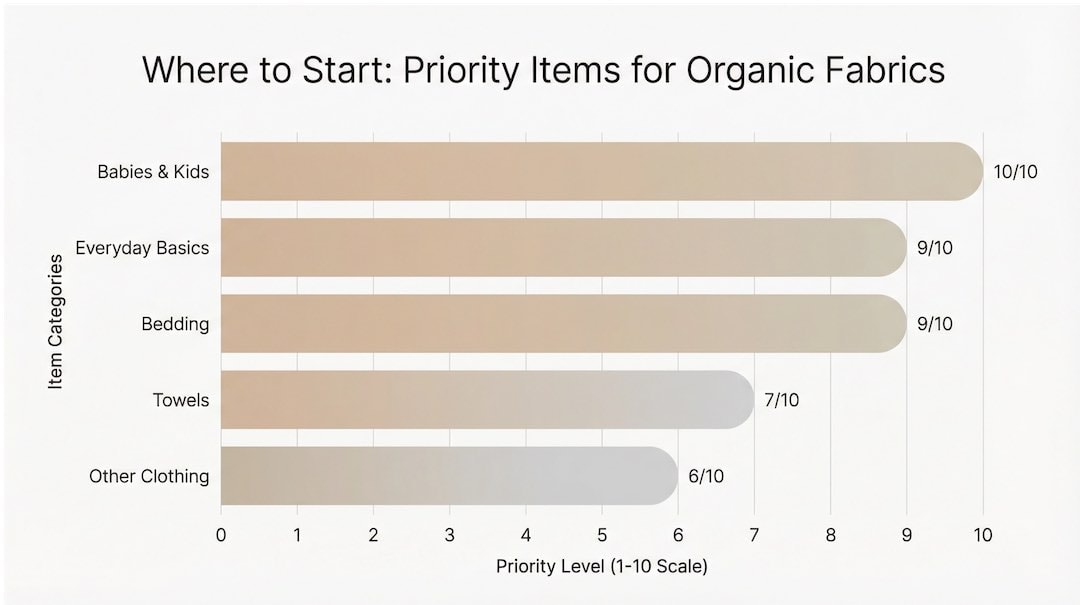
Du musst deinen gesamten Kleiderschrank nicht von heute auf morgen umkrempeln. Fang dort an, wo es für deine Gesundheit am meisten zählt:
-
Für Babys und Kinder: Setze bei Kleidungsstücken, die direkt auf der Haut getragen werden, auf Bio- Baumwolle – Bodys, Schlafanzüge, Unterwäsche. Ein weicher bio Musselin eignet sich perfekt für leichte Schlafanzüge und Schlafsäcke. Die Haut von Kleinkindern ist durchlässiger – deshalb sind Bio- Kinderstoffe hier besonders wichtig.
-
Für deinen Alltag: Starte mit den Basics – Bio-Baumwoll-T-Shirts, Bio-Leinenkleider, Unterwäsche und Bettwäsche. Das sind die Dinge, die du täglich trägst und in denen du schläfst – also dort, wo der Hautkontakt am intensivsten ist.
-
Für dein Zuhause: Bio- Baumwoll-Bettwäsche und Jersey-Stoffe machen einen echten Unterschied für die Schlafqualität. Du verbringst ein Drittel deines Lebens im Bett – nutze diese Stunden gut.
Schau beim Einkauf immer auf das Etikett und achte auf 100 % Naturfasern. Sei vorsichtig bei Mischgeweben – synthetische Anteile können die Eigenschaften eines Stoffes und seine biologische Abbaubarkeit erheblich verändern.
Jedes Bio- Kleidungsstück, das du nach Hause holst, ist ein Schritt hin zu einem bewussteren Leben. Und wenn genug Familien diese Wahl treffen, muss die gesamte Textilindustrie zuhören.
FAQ: Deine Fragen zu Bio Stoffen
Welche Stoffe sind Bio?
Die gängigsten Bio Stoffe sind Bio Baumwolle, Bio Leinen, Bio Hanf und Bio Wolle. Das sind alles Naturfasern, die unter Standards wie GOTS zertifiziert wurden – das heißt, sie wurden ohne synthetische Chemikalien produziert.
Ist Bio Baumwolle besser als normale Baumwolle?
In den meisten Punkten: ja. Bio Baumwolle wird ohne synthetische Pestizide und Herbizide angebaut, ist sanfter auf der Haut, setzt kein Mikroplastik frei und schneidet in den meisten Umweltbewertungen besser ab. Konventionelle Baumwolle hingegen wird mit synthetischen Chemikalien angebaut – und fertige Kleidungsstücke können zusätzlich mit Verarbeitungschemikalien wie Formaldehydharzen behandelt sein. Für alle, die empfindliche Haut haben oder Wert auf Nachhaltigkeit legen, ist Biobaumwolle die klarere Wahl.
Warum ist Bio wichtig – auch bei Stoffen?
Weil Kleidung stundenlang direkt auf der Haut liegt. Die Textilindustrie ist eine der chemikalienintensivsten Branchen der Welt. Bio-Stoffe bedeuten: kein Pestizideinsatz im Anbau, weniger Chemikalien in der Verarbeitung, keine Mikroplastikbelastung beim Waschen – und bessere Bedingungen für Bauern und Umwelt entlang der gesamten Produktionskette.
Was sind die Vorteile von Bio-Stoffen?
Bio-Stoffe bieten pestizidfreie Herstellung, ein sanfteres Tragegefühl bei empfindlicher Haut, kein Mikroplastik beim Waschen, eine reduzierte Umweltbelastung laut Ökobilanz-Daten von Textile Exchange sowie überprüfbare Sicherheitsstandards. Besonders wertvoll sind sie für Babys, Kinder und Menschen mit Ekzemen oder Allergien.
Was sind die Vor- und Nachteile von bio Naturfasern?
Die Vorteile: kein Pestizideinsatz im Anbau, sanfter auf der Haut beim täglichen Tragen, biologisch abbaubar, in den meisten Bewertungen umweltfreundlicher. Die Nachteile: höherer Preis, manchmal begrenzte Verfügbarkeit – und „bio" allein bedeutet nicht automatisch, dass das fertige Produkt schadstofffrei ist. Für vollständige Sicherheit brauchst du zusätzlich eine Schadstoffprüfung wie den OEKO-TEX Standard 100.
Bedeutet „Bio Stoff", dass das Endprodukt schadstofffrei ist?
Nicht automatisch. „Bio" bezieht sich zunächst auf den Anbau der Rohstoffe – nicht zwingend auf die gesamte Verarbeitung. Verarbeitungschemikalien wie Formaldehydharze können trotzdem noch eingesetzt werden. Deshalb bietet die Kombination aus Bio Zertifizierung – zum Beispiel GOTS – und einer zusätzlichen Schadstoffprüfung wie dem OEKO-TEX Standard 100 den umfassendsten Schutz.
Was sollte man auf jeden Fall Bio kaufen – und wo fängt man am besten an?
Fang dort an, wo der Hautkontakt am intensivsten ist: Unterwäsche, Schlafanzüge, Babykleidung und Bettwäsche. Das sind die Textilien, die am längsten und direktesten auf der Haut liegen – besonders bei Kindern, deren Haut durchlässiger ist. Wer dort auf Bio-Baumwolle oder Bio -einen umsteigt, macht schon einen großen Unterschied.
* Werbung: Dieser Artikel enthält mit * gekennzeichnete Affiliate-Links. Wenn du über diese Links einkaufst, erhalten wir eine kleine Provision – für dich entstehen keine zusätzlichen Kosten. Die bereitgestellten Informationen dienen ausschließlich Bildungs- und Informationszwecken und stellen keine medizinische Beratung dar. Sie ersetzen nicht die Konsultation eines Arztes oder qualifizierten Gesundheitsdienstleisters. Dieser Artikel wurde mit Unterstützung von KI-Tools erstellt und von unserem Team redaktionell geprüft und freigegeben. Alle geäußerten Meinungen sind unsere eigenen.
Lilija Bairamova

Lilija ist die Gründerin von Orbasics und Mutter ihrer Tochter Nika. Sie gründete Orbasics als Mutter auf der Suche nach gesunder und biologischer Kleidung für ihr Kind. Heute bietet Orbasics nicht nur Kleidung aus Bio-Baumwolle an, sondern hat sich auch zu einem Blog entwickelt, der sich nachhaltigem, gesundem und achtsamem Leben widmet. Mit Tipps, Anleitungen und Artikeln, die Ihnen helfen, einen nachhaltigeren, bewussteren und gesünderen Lebensstil zu führen.


Hinterlasse einen Kommentar