
Article: Natural Fiber Workout Clothes: What Actually Works (and the One Thing Your Leggings Still Need)
Table of Contents
Natural Fiber Workout Clothes: What Actually Works (and the One Thing Your Leggings Still Need)
This page may contain affiliate links. We may earn a commission on purchases, at no additional cost to you. Learn more →
You read the labels on your food. You swapped your deodorant. But you flip your leggings inside out and read the tag: 75% recycled polyester, 25% spandex. Plastic, pressed against your skin for an hour while you sweat.
So you search for natural fiber workout clothes. One camp says polyester is poisoning you. The other sells 100% cotton leggings that sag by your third squat and stay soaked through every high intensity workout. Neither helps you get dressed tomorrow.
This is for you if you want non-synthetic workout clothes that still perform, or simply less plastic in your workout gear. Here is the short answer. Natural fibers work beautifully when you match them to the workout. And fitted pieces almost always need a little stretch. I'll show you which fabrics do what, where plastic still hides, and why I chose TENCEL™ Lyocell with ROICA™ for our own activewear.
Key Takeaways
No fiber wins every workout. A 2022 systematic review of 32 studies found no consistent winner: knit, fit, climate and intensity all matter.
Cotton, hemp and linen shine for lower-sweat, looser movement. Cotton holds water in hard sessions.
Merino wool is the odor specialist. TENCEL™ Lyocell is wood-based, not technically a natural fiber.
Leggings and sports bras need elastic recovery. ROICA™ is still elastane, just a better-documented one.
Polyester's clearest problems are odor and persistent microplastics. Chemical findings like BPA are real, but they stop short of proving harm from wear.
What Counts as Natural Fiber Workout Clothes?
Most traditional activewear is built almost entirely from synthetic materials. And this is where many "plastic free workout clothes" lists get sloppy. U.S. labeling law separates natural fibers from manufactured ones, and the difference matters for your wardrobe.
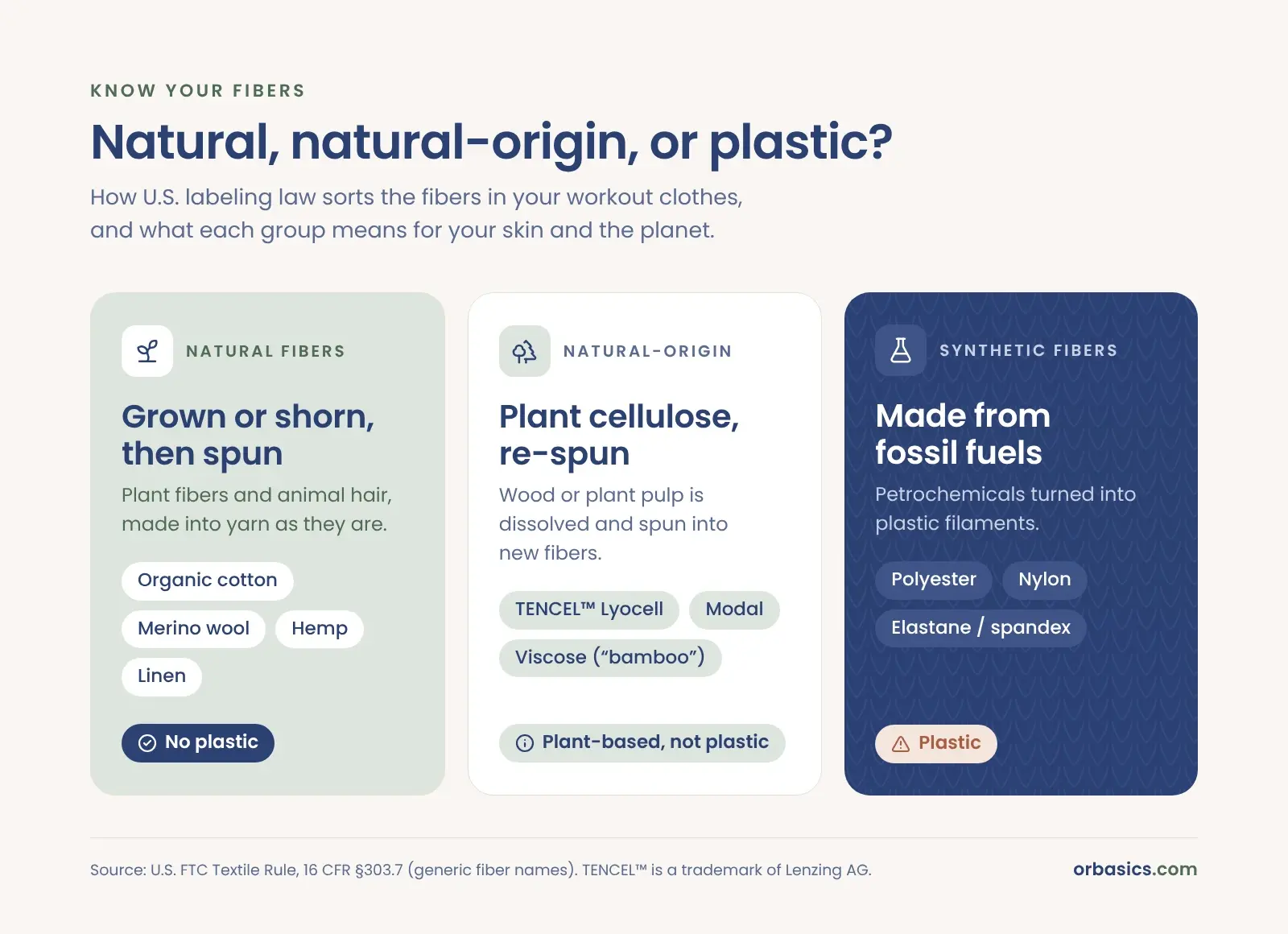
TENCEL™ is Lenzing's brand of lyocell, made from dissolved wood pulp. I explain the process in what TENCEL™ actually is. Most soft "bamboo" fabric is viscose, which is why the FTC requires it to be labeled as rayon. Their production chemistry differs a lot: see lyocell vs. viscose.
So when I talk about natural activewear, I mean plant-based materials and wool: natural and natural-origin fibers. For the broader case for these fibers, read the benefits of natural fiber clothing.
Fabric by Fabric: What Works and What Doesn't
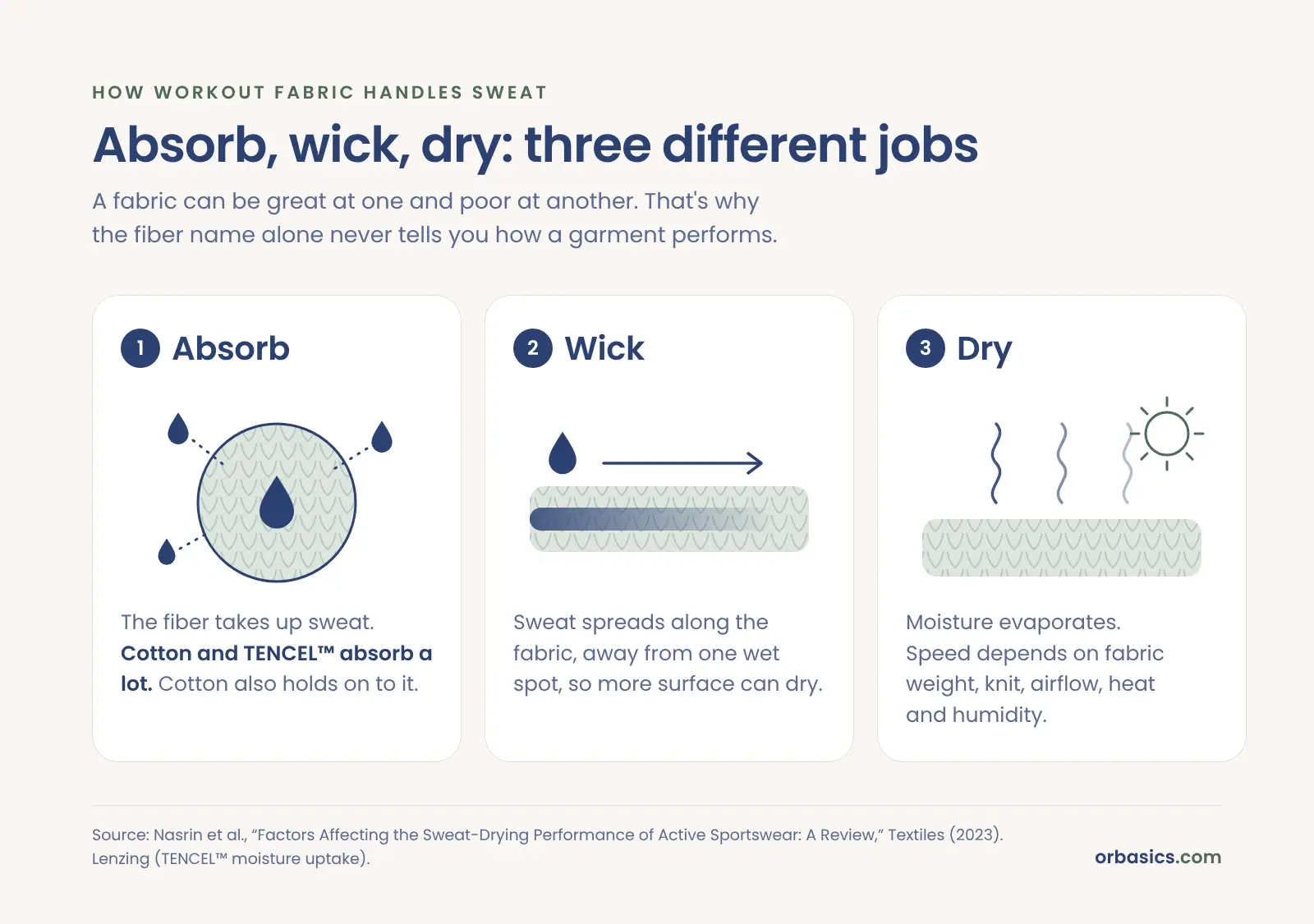
Three words get mixed up constantly. Absorbing means the fiber takes up sweat. Moisture wicking means it moves sweat along the fabric. Drying means it evaporates. A 2023 review on sportswear drying treats these as separate properties, and a fabric can excel at one and fail at another. I go deeper in the best fabric for sweating.
Organic Cotton: Soft, Breathable, Heavy When Soaked
Organic cotton is grown without synthetic pesticides and feels wonderful for everyday wear, yoga and walking. It absorbs a lot of water and holds on to it. In a sweaty session, that means cling and weight.
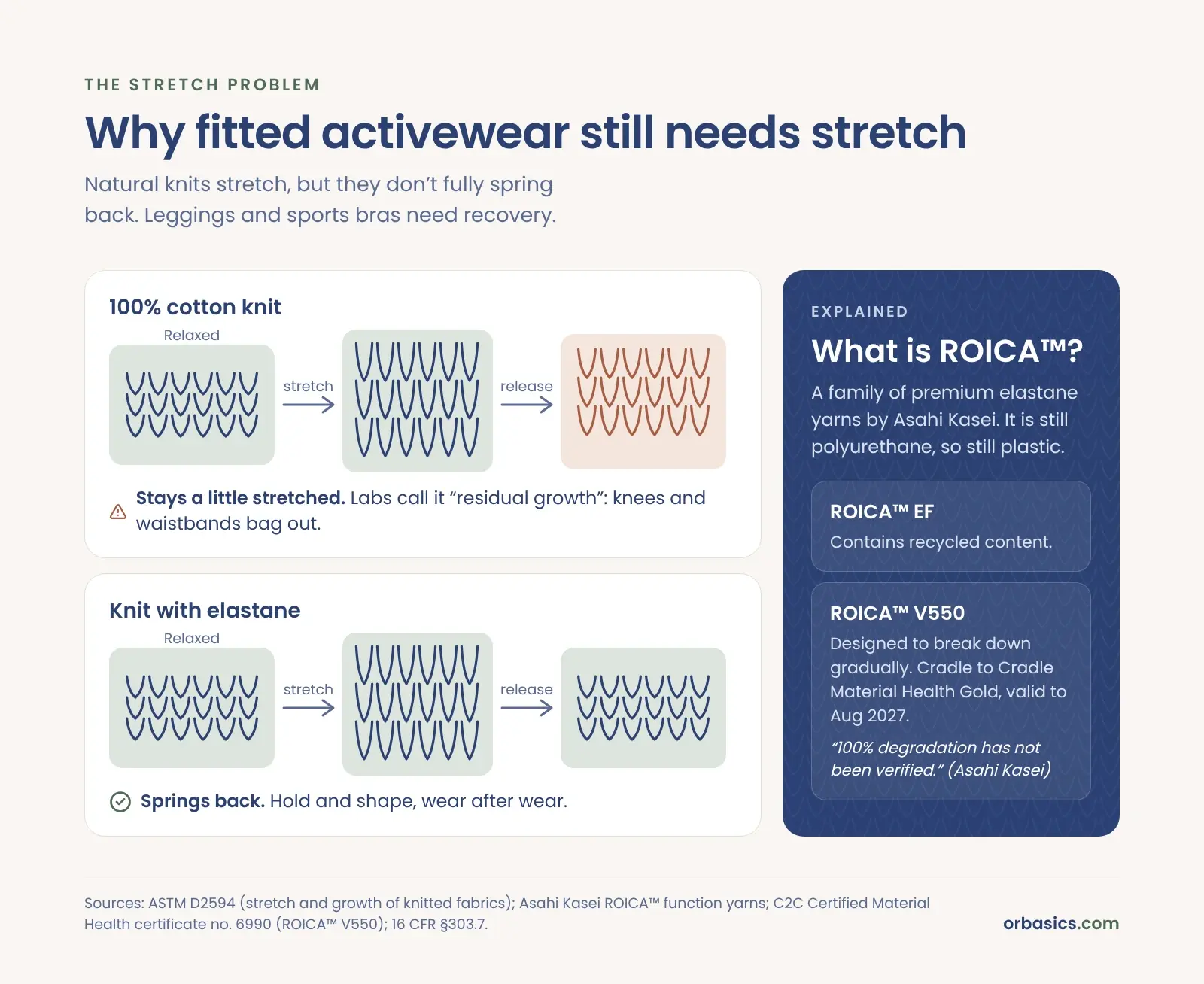
Why do 100% cotton leggings sag? Cotton knit loops stretch, but they don't spring fully back. Textile labs even measure this leftover "growth" as a standard stretch property. That's why most organic workout clothes contain a little elastane. Even our own GOTS-certified organic cotton leggings are 95% cotton and 5% elastane.
One of wins for cotton: in a 26-person spin-class study, polyester shirts smelled stronger and less pleasant than cotton after incubation.
Merino Wool: The Odor-Resistant Specialist
Merino buffers moisture and supports temperature regulation in cool weather, and a small wearer study linked wool to better comfort after exercise. In another study, a blend with just 20% wool reduced odor compared with polyester. The catch: most merino studies are small, wool dries slowly in heat, and "superwash" wool is chemically treated. Ask how it was finished.
Hemp and Linen: Airy, but No Compression
In a controlled knit comparison, hemp fabric had the highest air permeability against cotton and linen. But skip the "naturally antibacterial" marketing: a study of commercial hemp fabrics found no antibacterial activity. Linen knits showed low elasticity and high residual deformation. Think loose tees and shorts, not yoga pants.
TENCEL™ Lyocell: Moisture Management Without Plastic
According to Lenzing, more than 99.8% of the solvent is recovered in its closed-loop process. The fiber has high moisture uptake and "a higher perceived thermal comfort level." Lenzing also reports at least 50% lower carbon emissions and water use than generic lyocell, a smaller environmental footprint. Its standard fibers are certified biodegradable in soil, freshwater and marine environments. That applies to the fiber, not to a finished garment with elastane and thread. I compare the two in detail in Tencel vs. polyester.
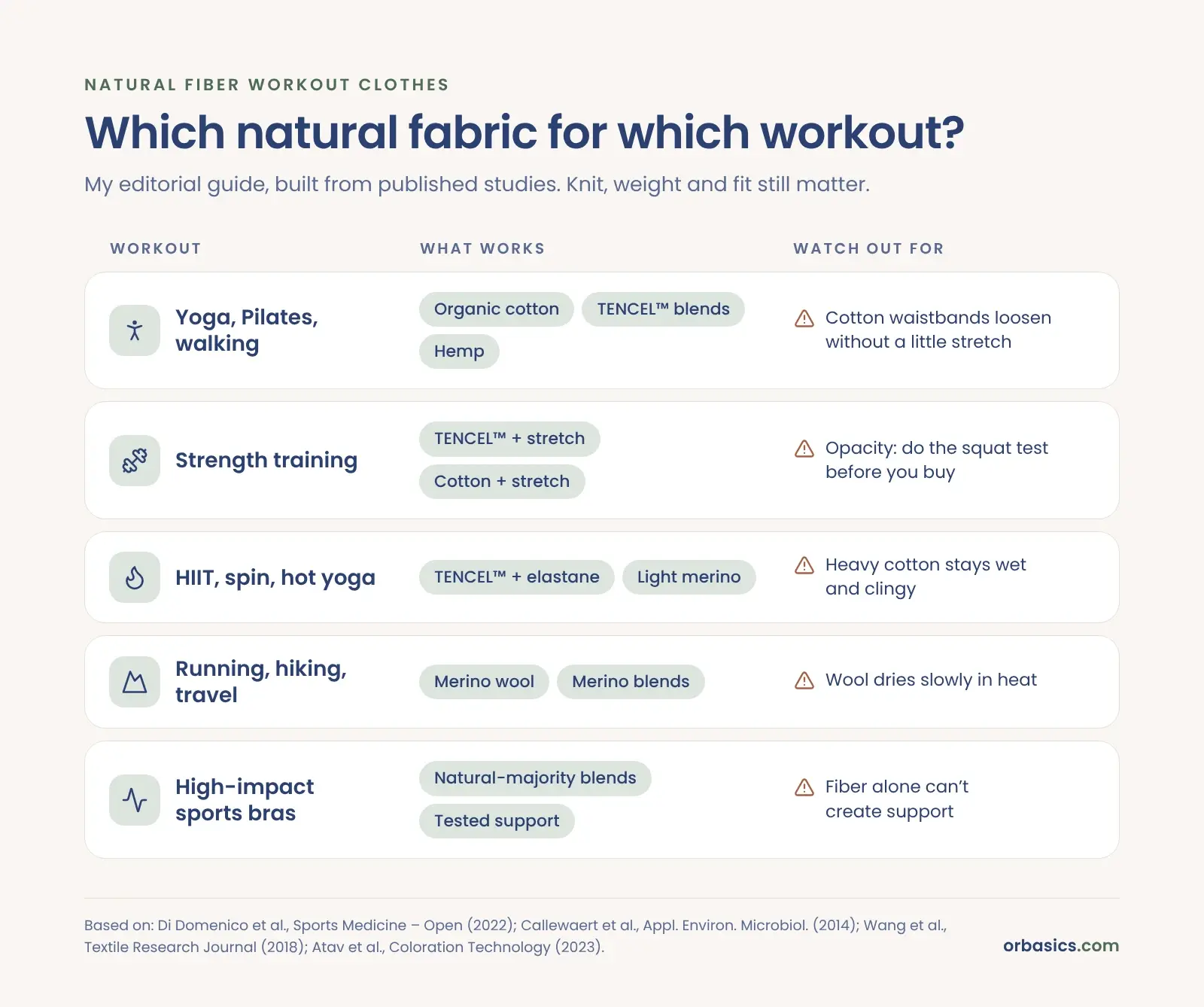
Best Natural Fabric for Working Out, by Activity
This guide matches natural fiber workout clothes to your workout. It's my editorial guide, built from the studies above.
Natural fiber activewear brands take different routes. Pact and Fair Indigo lean on organic cotton, Reprise Activewear builds around TENCEL™, and Groceries Apparel colors some pieces with dyes upcycled from food waste. For specific pieces, see my picks for non-toxic yoga clothes, organic cotton leggings and non-toxic sports bras.
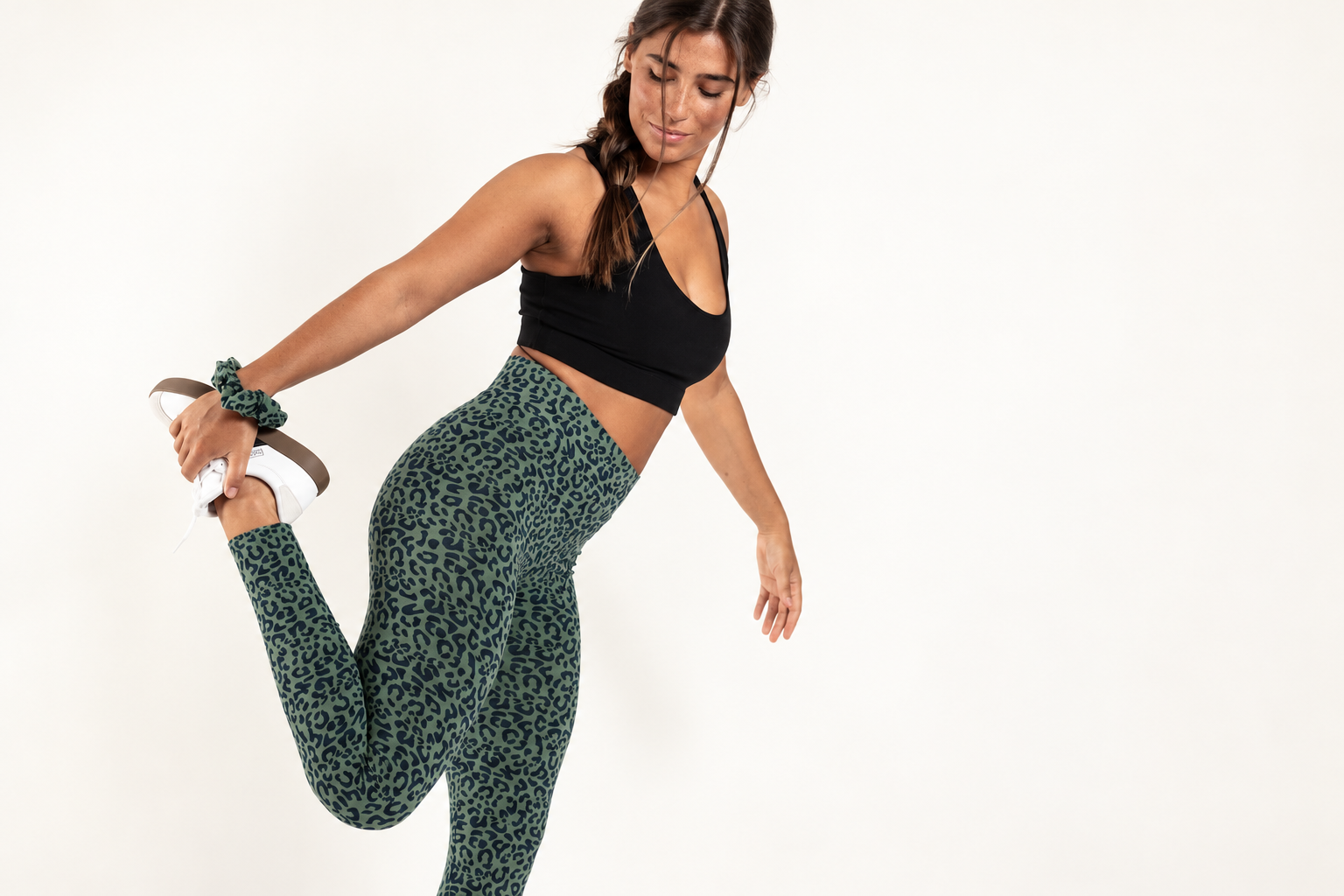
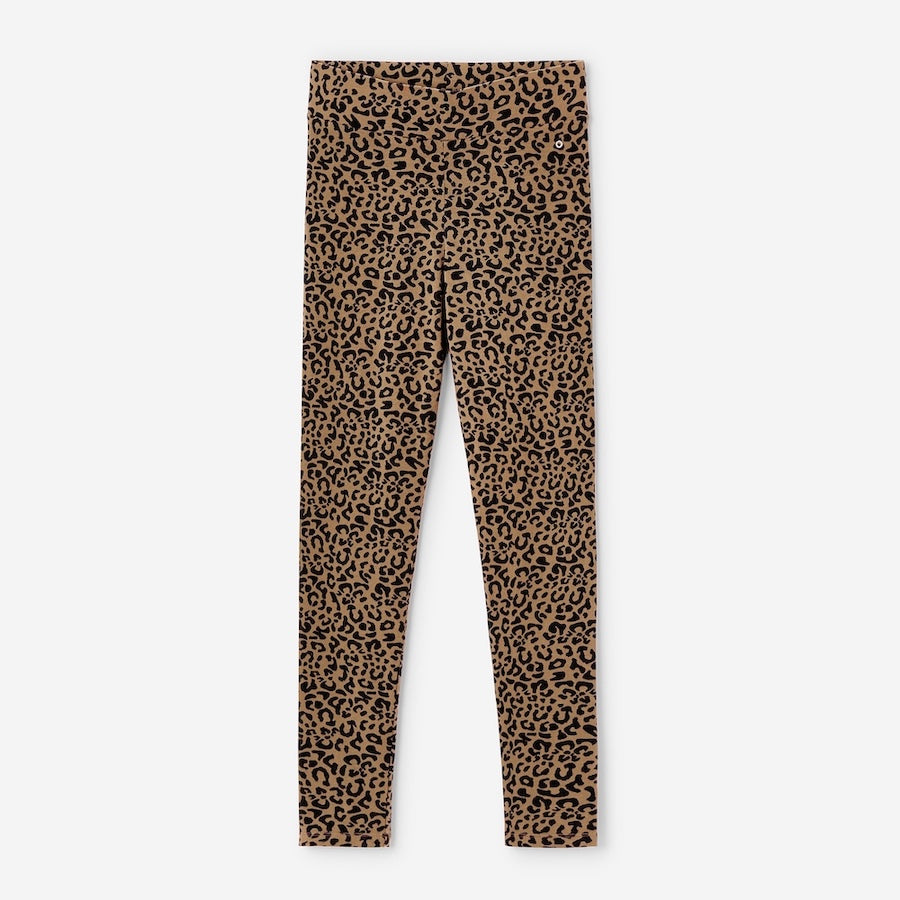
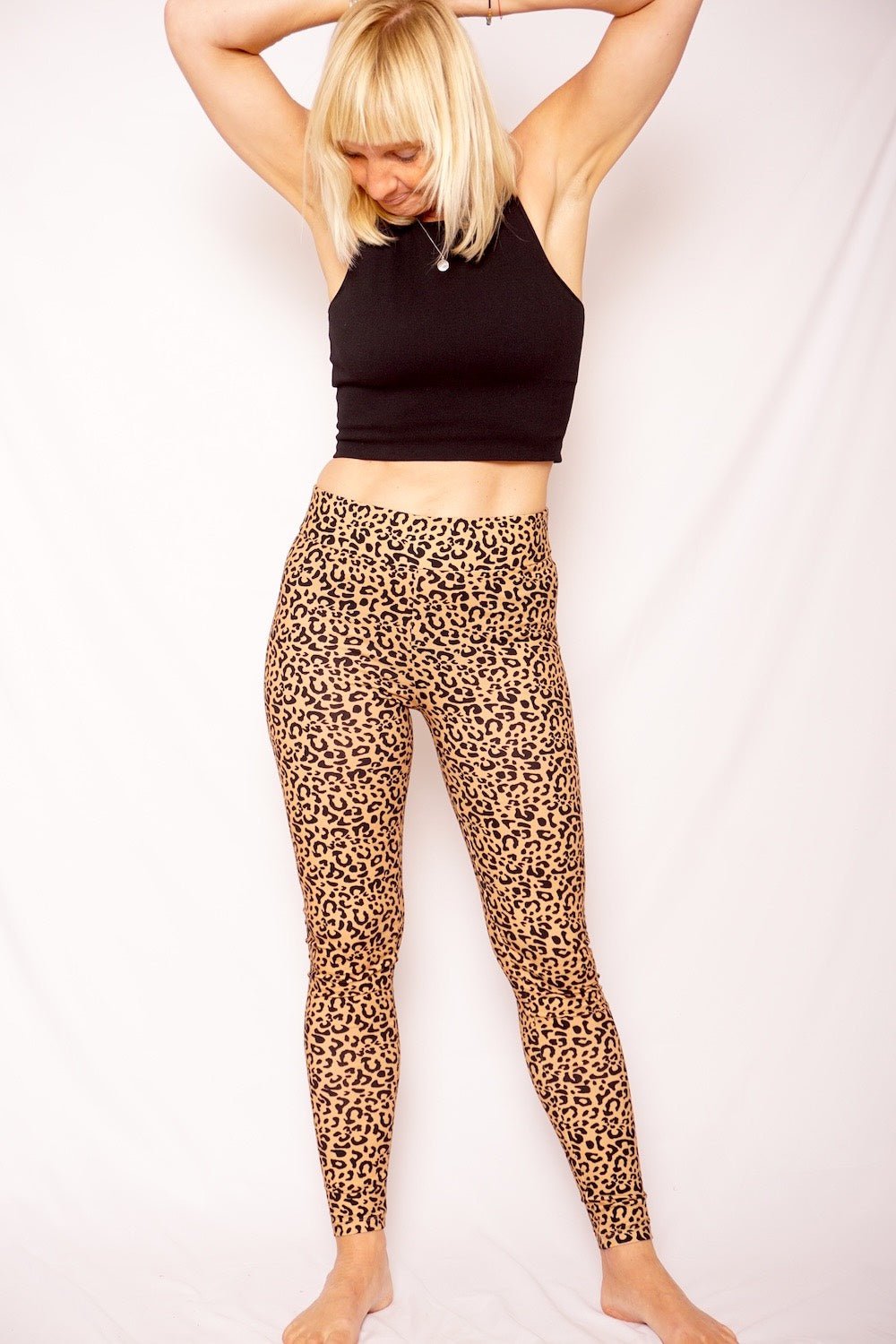
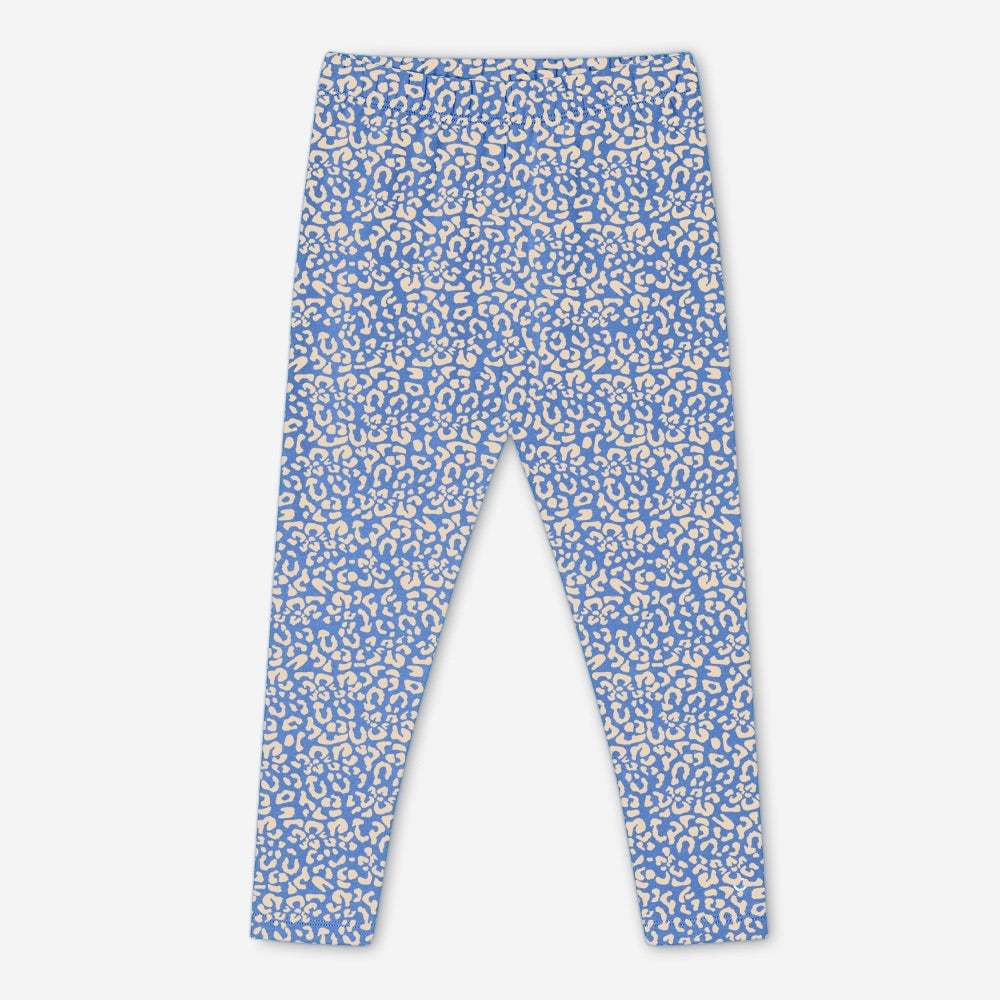
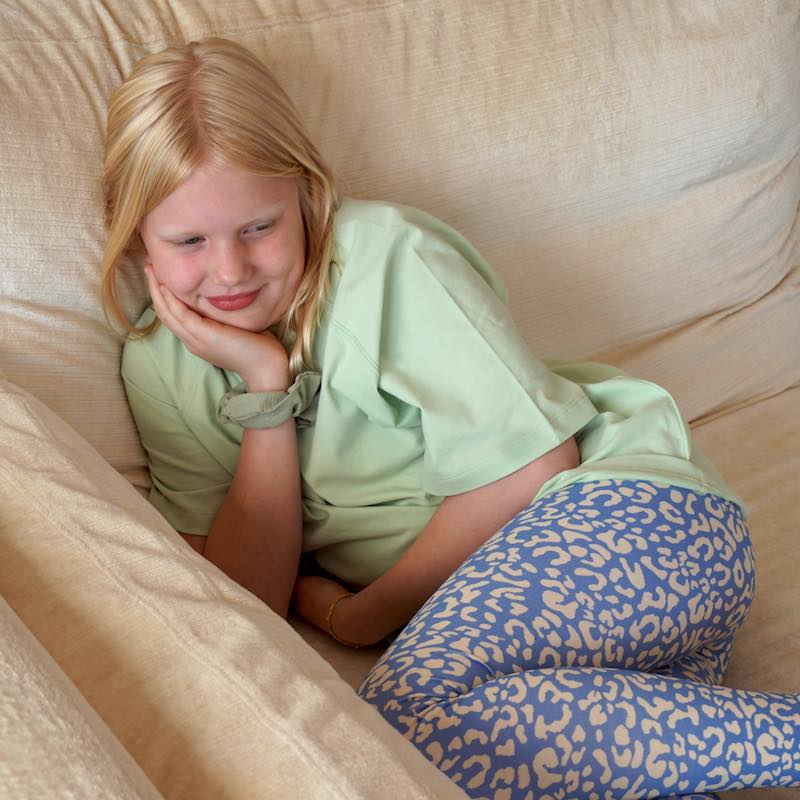
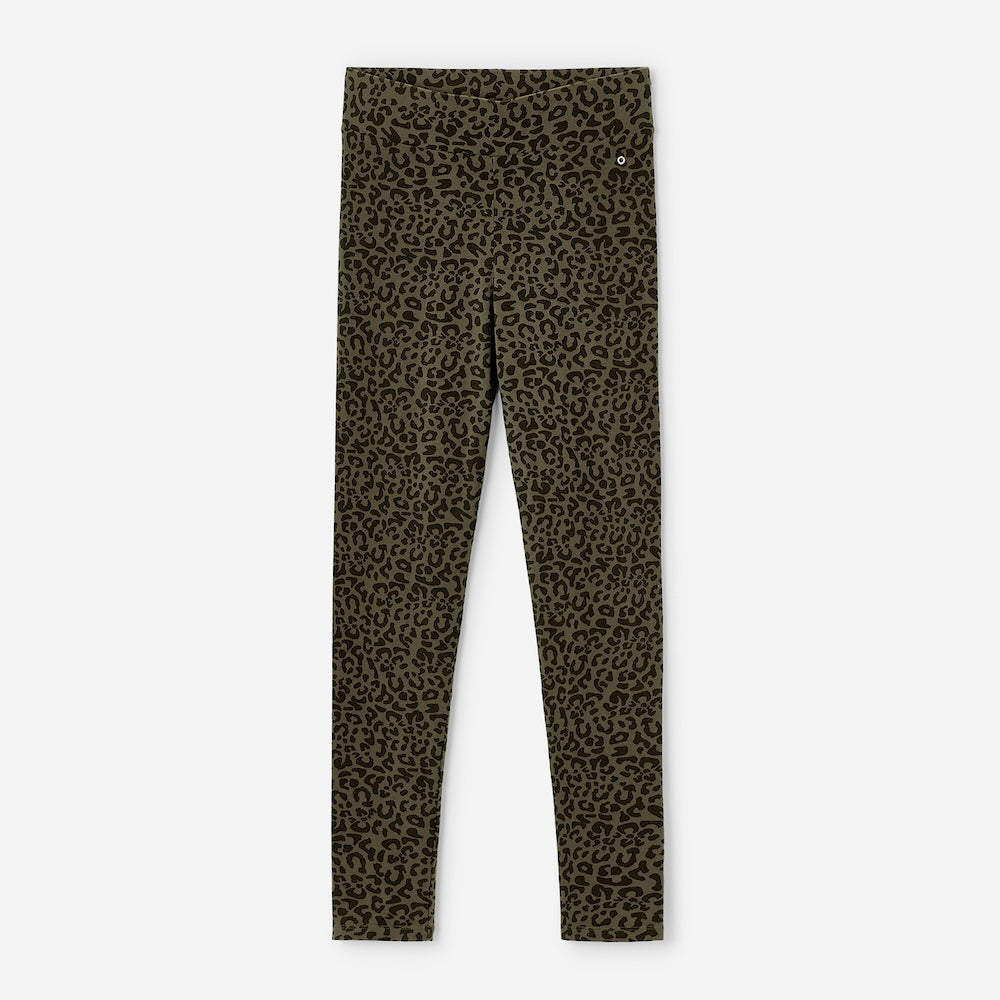
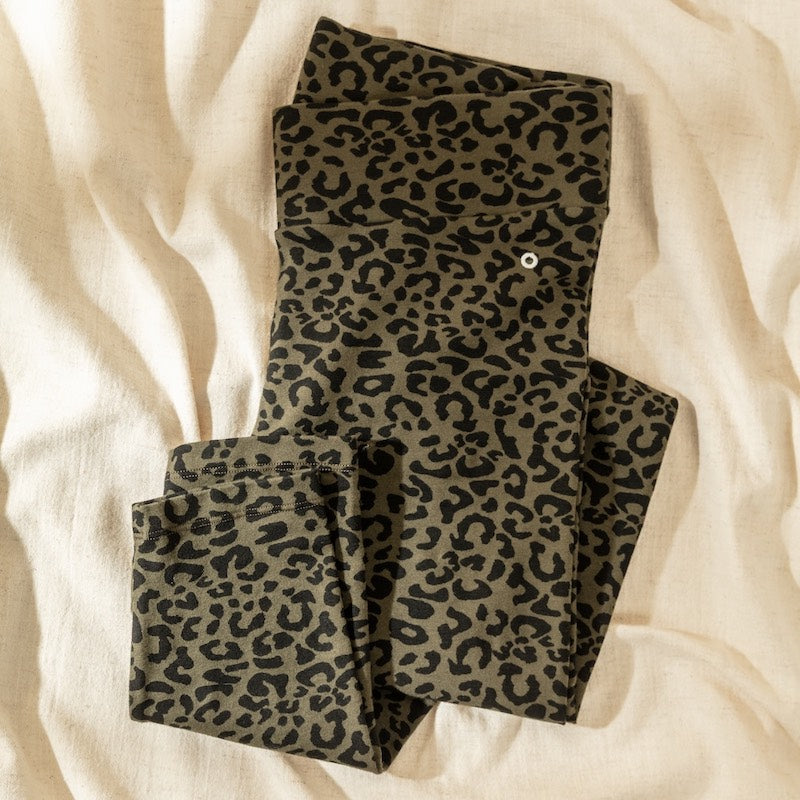
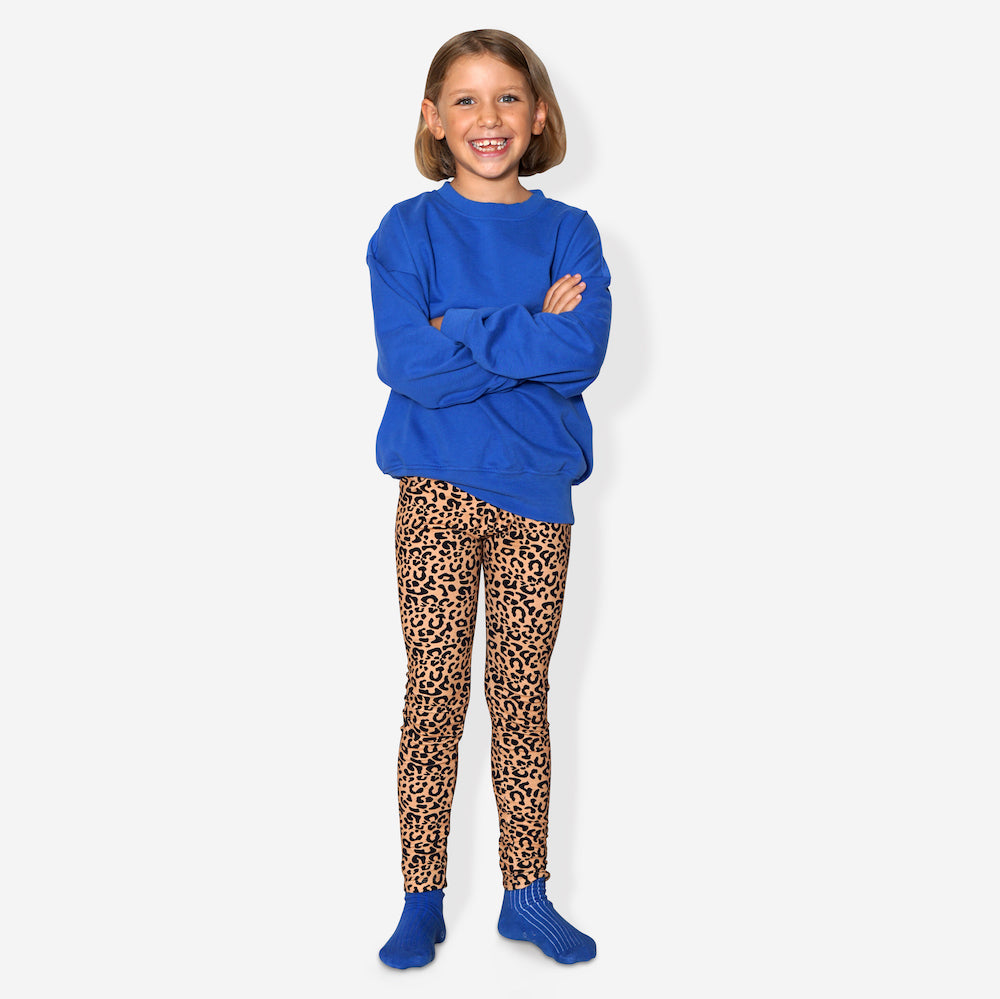
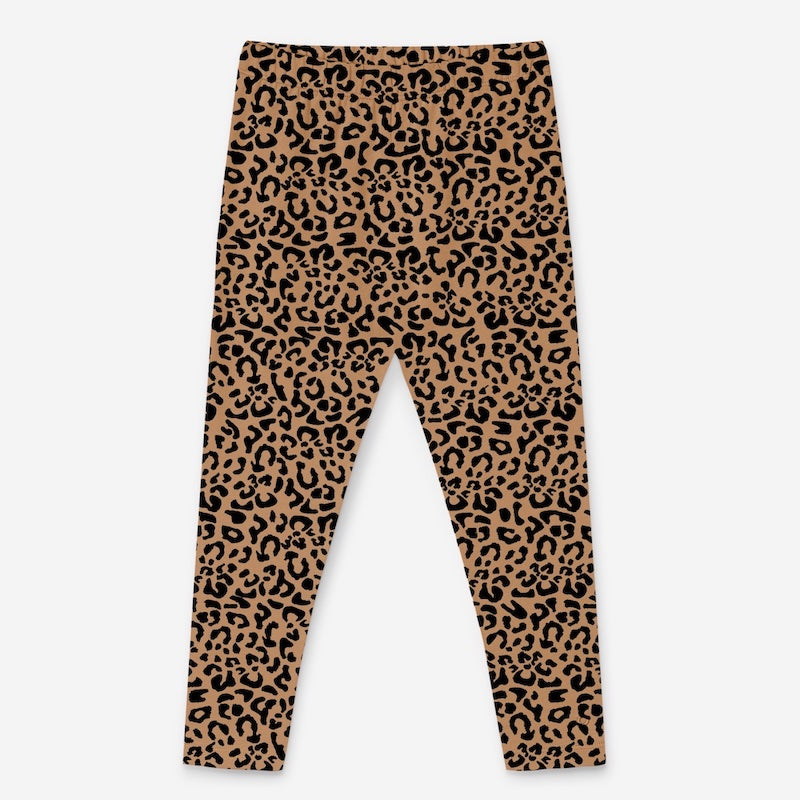
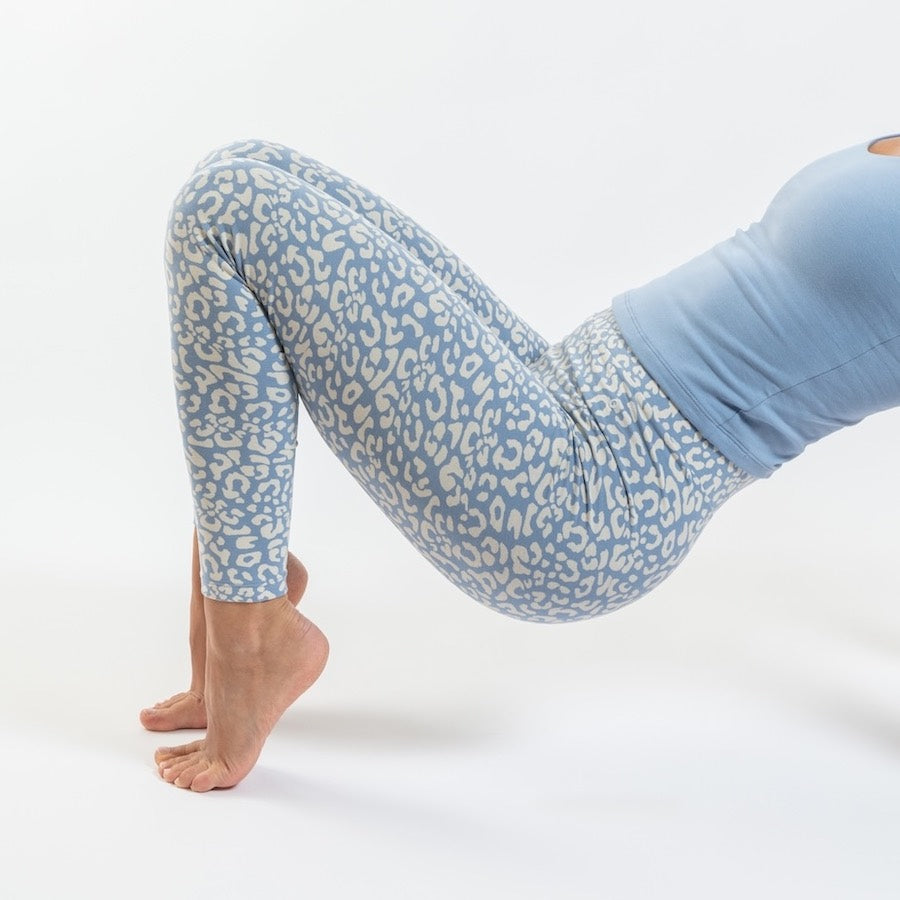
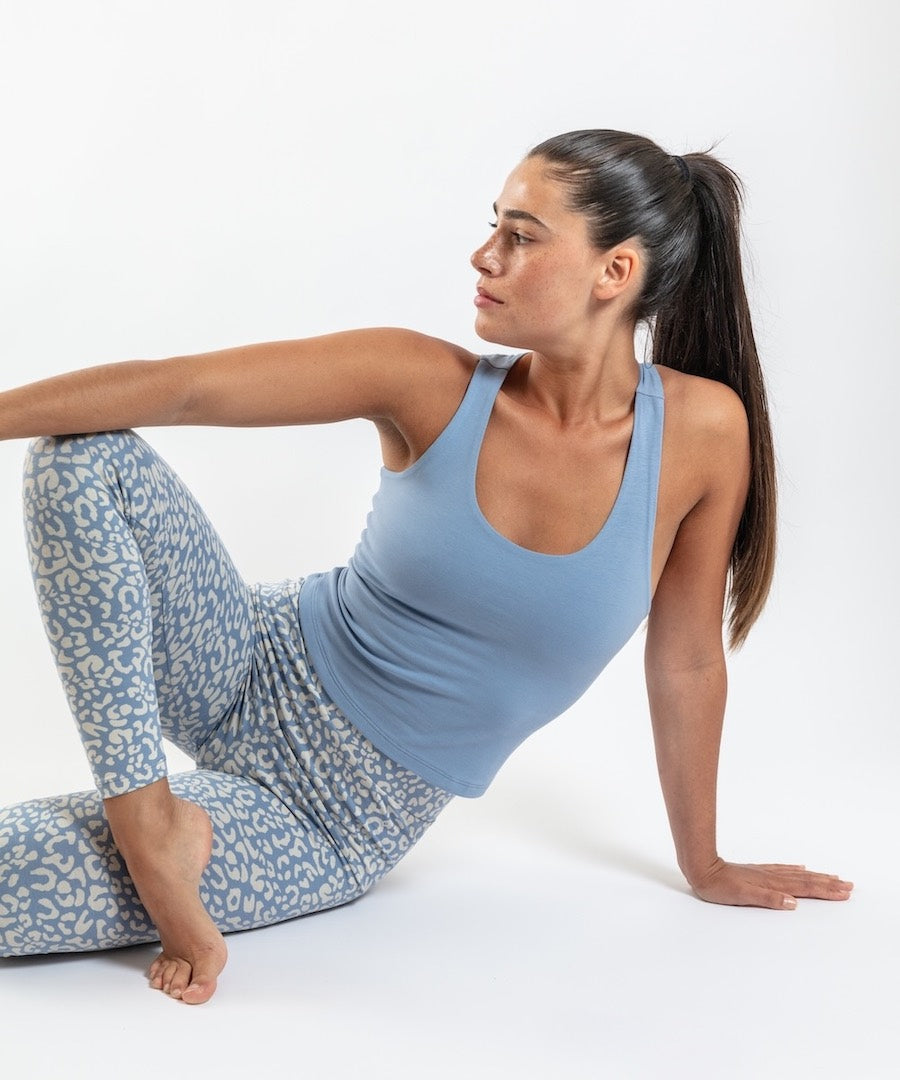
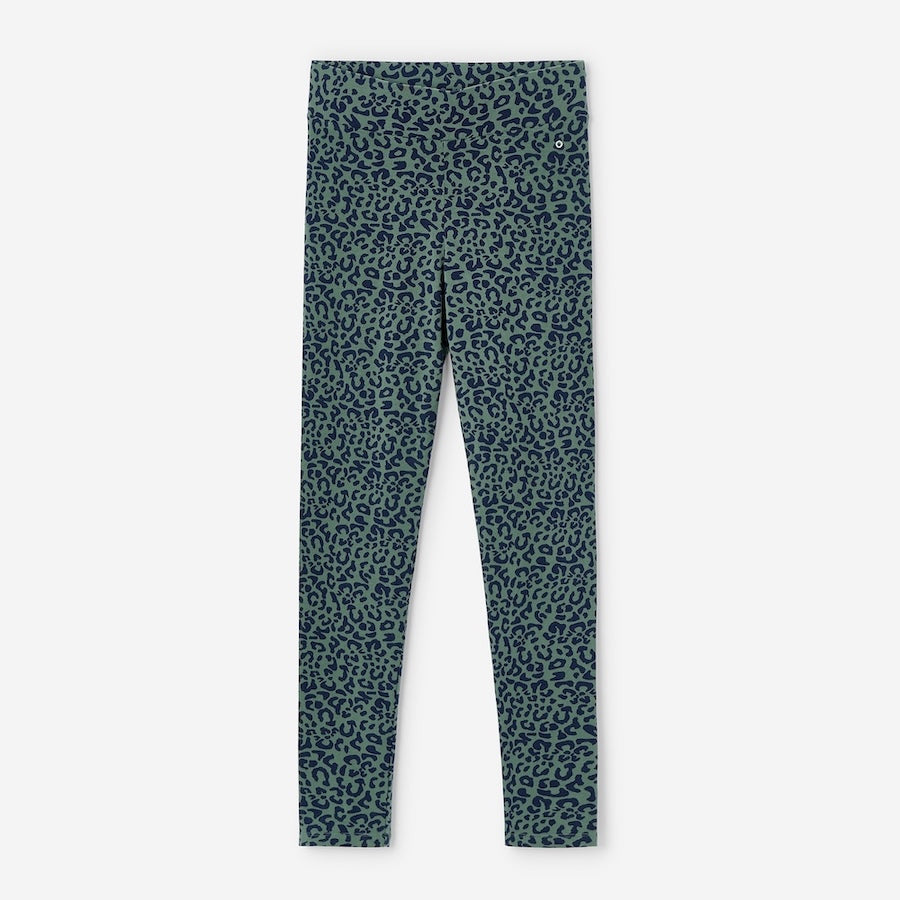
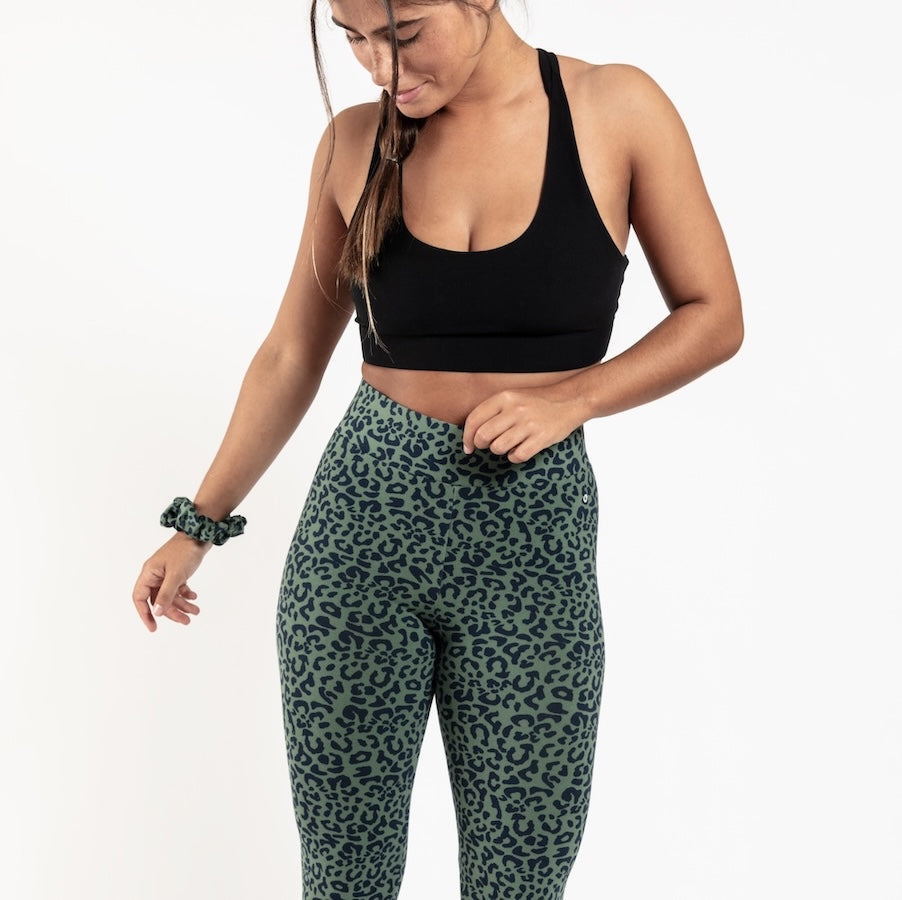
For yoga and gentle movement: our Cheetah Print Leggings.
The Stretch Problem: Elastane, ROICA™ and Real Alternatives
Natural fibers stretch a little. They don't snap back. For leggings, bike shorts and sports bras, you need recovery, and that usually means elastane (spandex). Under U.S. rules, spandex is at least 85% polyurethane. It is plastic.
What Is ROICA Fabric?
ROICA™ is a family of premium elastane yarns from Asahi Kasei. A "ROICA fabric" is any fabric knit with ROICA™ yarn. Two grades matter here. ROICA™ EF contains recycled content. ROICA™ V550 is designed to break down gradually and holds a Cradle to Cradle Material Health Gold certificate. Asahi Kasei itself states that "100% degradation has not been verified." I unpack the grades in elastane vs. ROICA.
What Is an Alternative to Elastane?
Mechanical stretch (rib knits, crepe weaves, twisted yarns) works for loose, low-support pieces. Natural rubber filaments exist, but latex can trigger allergies. Bio-based and recycled spandex cut fossil feedstock, yet remain manufactured polymers. For fitted leggings, no fully plastic-free option matches elastane's recovery today.
Why I Chose TENCEL™ + ROICA™ for Orbasics Activewear
Since 2018 organic cotton has been our heart, from kidswear to our organic activewear basics. It's still my absolute favorite for everyday wear and a gentle yoga flow. But I know its limits when sweat really pours.
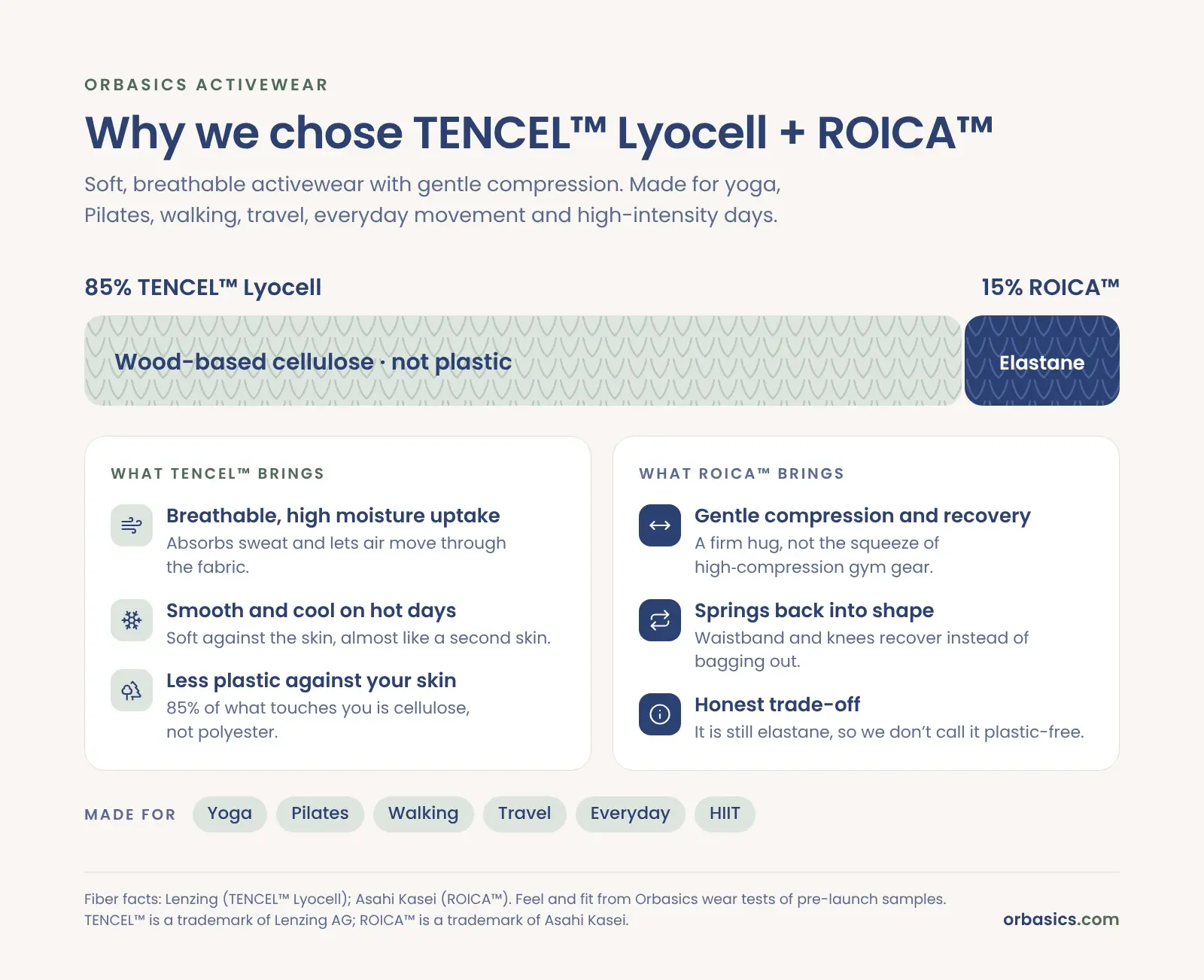
That's why we're launching activewear in 85% TENCEL™ Lyocell and 15% ROICA™. It's made for yoga, Pilates, walking, travel and everyday movement, and it holds up in a high intensity workout too.
In my opinion, TENCEL™ is the best base fabric for workout clothes right now. Here's why:
-
It breathes and handles sweat. High moisture uptake, smooth on the skin. On hot summer days, my samples feel cool and soft, almost like a second skin.
-
Most of what touches you isn't plastic. 85% of the fabric is cellulose. That means far less synthetic fiber against your skin and in your washing machine.
-
The chemistry can be verified. When the fabric is properly certified, "non-toxic" stops being a promise and becomes something you can check.
-
It needs stretch, and I'm open about that. The 15% ROICA™ gives the hold most natural activewear is missing. It's gentle compression: a firm hug, not the squeeze of high-compression gym gear.
Why ROICA™? Among the elastanes available today, we chose the grade with the strongest verified credentials on material health and degradability. It is still 15% plastic. But it's the most honest compromise I've found.
Looking for cotton pieces now? Explore our current organic cotton leggings.
Natural Fiber Workout Clothes vs. Polyester: What the Evidence Says
How I read chemical studies. The U.S. EPA separates contact with a chemical from absorbing it. So I ask five questions: Was it detected in the fabric? Does it move into sweat? Can it pass skin? Was it measured in the body? Did it cause harm? Most headlines stop at question one or two.
BPA. Between 2022 and 2023, the Center for Environmental Health found BPA in polyester-spandex sports bras, leggings, shirts and shorts from big brands, including Nike, Athleta and Patagonia. CEH says the clothing could expose wearers to up to 40 times California's safe limit. Athleta disputed the claims. A 2024 study of 57 garments modeled higher exposure when fabric is wet with sweat. More in BPA in clothing.
PFAS. In Mamavation's 2022 testing, a quarter of 32 leggings showed organic fluorine, a marker for these "forever chemicals." A University of Birmingham study found many PFAS, applied directly, can pass through a lab-grown 3D skin model. PFAS is usually a finish, so cotton can carry it too. Here's whether polyester has PFAS.
Antimony and dyes. Polyester is often made with an antimony catalyst. In a lab study of six textiles, up to 2% of it moved into artificial sweat. Toxic dyes are a separate issue: disperse dyes are a known trigger of textile dermatitis. And natural fibers aren't automatically clean: wrinkle-resistant resins can add formaldehyde to cotton, too. Here's how to know if clothing is non-toxic and free of toxic chemicals you didn't ask for.
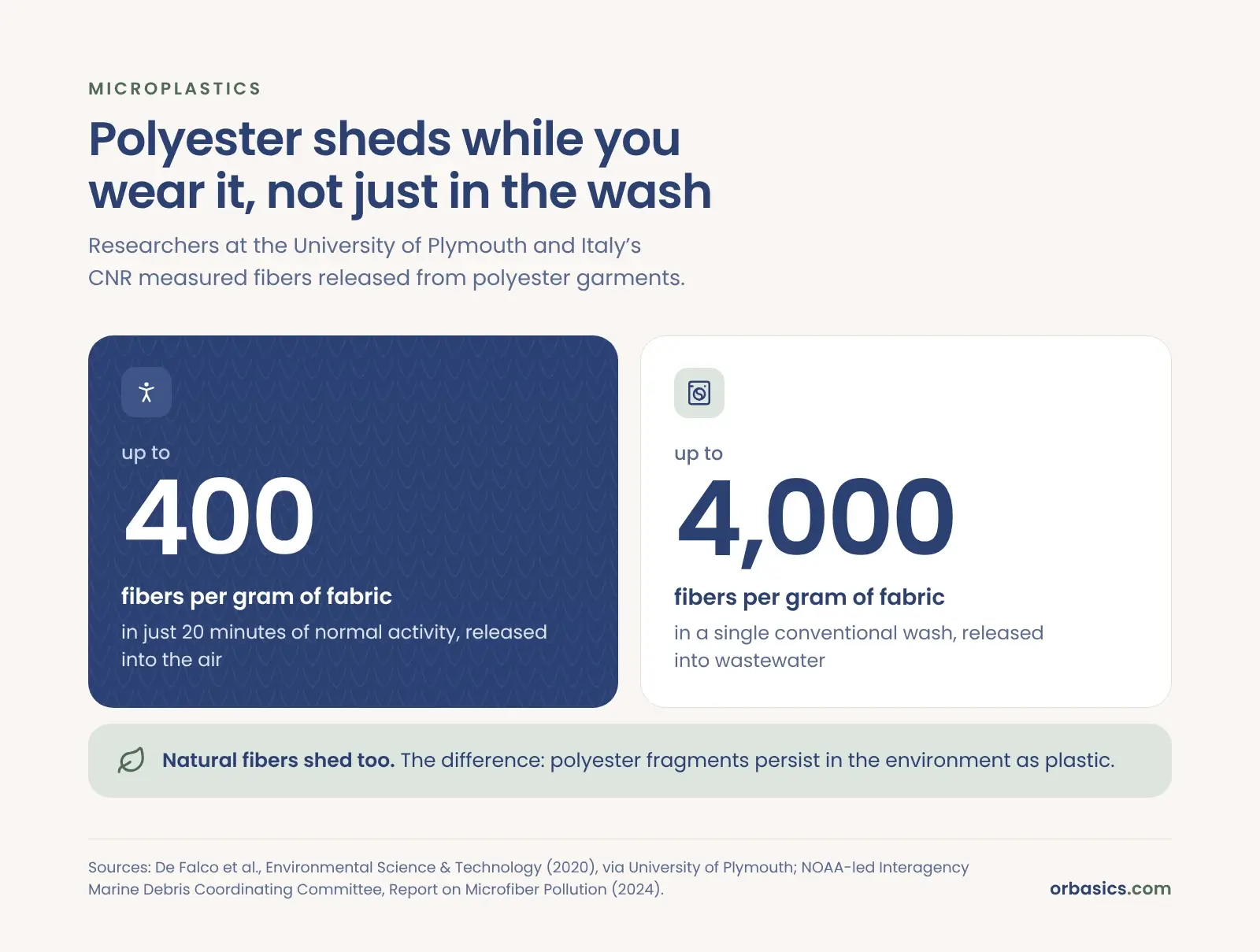
Microplastics. Researchers at the University of Plymouth found polyester garments shed up to 400 fibers per gram in just 20 minutes of normal activity, and up to 4,000 per gram in a wash. As a NOAA-led federal report explains, is that polyester fragments persist as plastic in the environment.
My take: you're stacking unknowns or also known chemicals against warm, sweaty skin for hours (more on how synthetic fabrics affect skin health). When a natural alternative performs, I'd rather shrink that stack.
How to Shop for Natural Workout Clothes
-
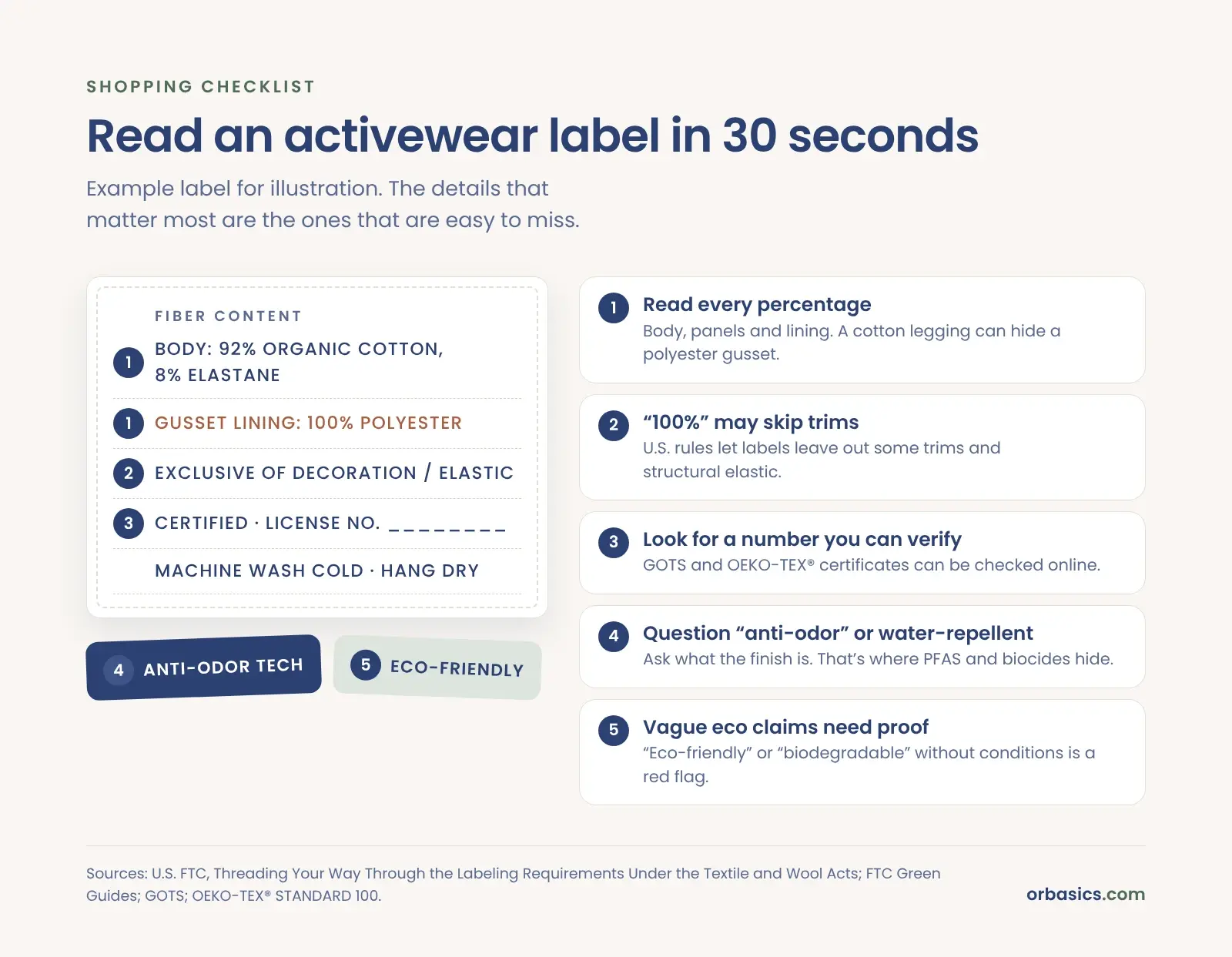
Read every percentage. Check body fabric, panels and lining. The FTC allows "100%" labels to exclude some trims and structural elastic.
-
Check certificates, not adjectives. GOTS labels "organic" from 95% certified fiber. OEKO-TEX® STANDARD 100 tests articles against harmful substance limits, stricter for skin contact. bluesign® focuses on production chemistry. Compare them in OEKO-TEX vs. GOTS.
-
Avoid unexplained "anti-odor" or water-repellent finishes. Those are where harmful chemicals hide.
-
Ask about dyes. Plant-based dyes avoid some synthetic dye chemistry. See how to choose non-toxic dyes.
-
Be skeptical of vague eco-friendly claims. "Biodegradable" without conditions is a red flag under the FTC Green Guides. My greenwashing checklist helps.
-
Look for ethical manufacturing practices, too. GOTS includes social criteria for workers, and Fair Trade certification covers labor. A brand with sustainable and ethical practices can show you both, because sustainable practices are about people as much as fibers.
-
Check knit quality. Hold the fabric to the light and stretch it. A dense knit is usually more durable and more opaque.
-
Swap high-contact pieces first. Sports bras and leggings sit tightest and get sweatiest.
Care tips: Reduce shedding and catch loose fibers.
-
Wash cooler and shorter. Follow the care label and choose a cycle that gets your clothes clean. A P&G-funded study found about 30% less fiber release with a cold, 30-minute cycle than with a 40°C, 85-minute cycle. Wash full loads without overfilling.
-
Add a microfiber filter or washing bag. A purpose-built washing machine filter captures fibers from the outgoing water; a bag such as Guppyfriend can reduce shedding and retain loose fibers. A comparison of six devices found that performance varied by device. Check compatibility and follow maintenance instructions.
More practical steps in how to avoid microplastics.
My Verdict
The best natural fiber workout clothes are the ones built for your workout. Organic cotton for gentle movement. Merino for cool runs. TENCEL™ blends with a small, well-chosen stretch when you need hold and real sweat management. Natural materials won't fix everything. But they do cut the plastic against your skin and the environmental impact of every wash.
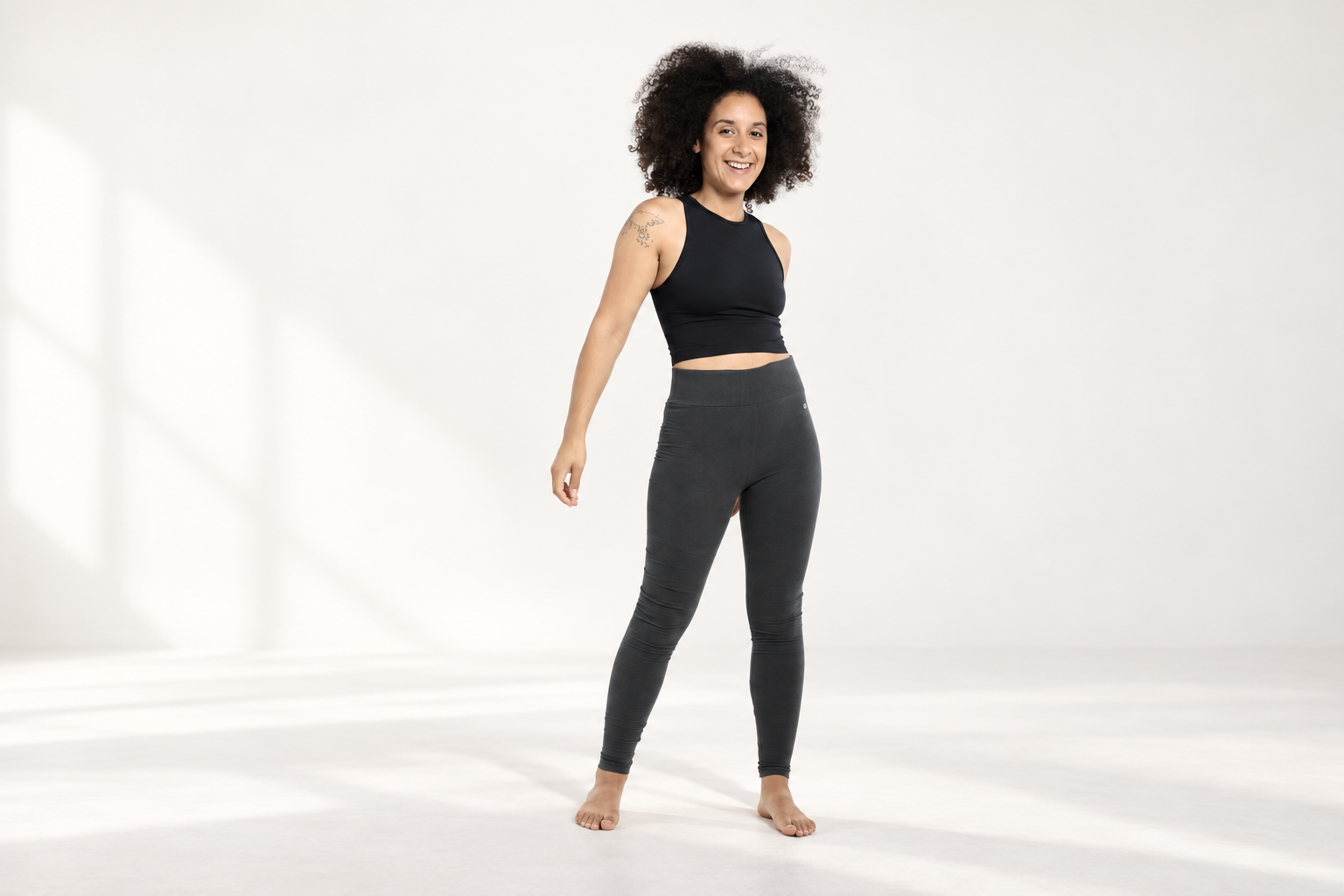
Compare my favorite brands in the guide to non-toxic activewear brands, or shop our organic cotton leggings.
FAQ
What is the best natural fiber for activewear?
No single fiber wins. A 32-study review found climate, intensity and fabric construction matter. Merino suits cool, multi-day use; organic cotton suits low-sweat workouts; TENCEL™ blends handle sweat with less plastic.
Can natural fibers handle a high intensity workout?
Yes, with the right blend. Heavy cotton stays wet, but TENCEL™ absorbs moisture well and pairs with a small amount of elastane for hold. Check the full composition before you buy.
Is polyester safe for workout clothes?
Hormone and fertility concerns deserve attention. A 2008 study of 35 female dogs reported lower progesterone and failure to conceive in eight dogs wearing polyester-containing underwear for 12 months. Their progesterone levels and ability to conceive recovered after the garments were removed. These small animal experiments raise questions. Separately, BPA can interfere with hormones and has been detected in some polyester-spandex sportswear. Finding it in fabric raises an exposure concern.
Does recycled polyester solve the problem?
Not really. It reuses plastic, but it's still polyester and still sheds microfibers. I explain why in is recycled polyester harmful.
Why does my skin itch when I work out?
Heat, sweat and friction play a role, and dyes or finishes can add to it. Smoother natural fibers may feel gentler to your skin. See why your skin itches during exercise, and see a dermatologist if a rash persists.
*Advertisement: This article contains affiliate links marked with*. If you make a purchase through these links, we may earn a small commission at no additional cost to you.
The information provided is for educational and informational purposes only and is not intended as medical advice. It should not replace consultation with your physician or qualified healthcare provider. This article was created with the assistance of AI tools and has been editorially reviewed and approved by our team. All opinions expressed are our own.
Lilija Bairamova

Lilija is the founder of Orbasics, a brand born from her passion for creating a healthier, more sustainable world, starting with organic, toxin-free clothing for children. As a mother committed to a non-toxic lifestyle, Lilija has spent years exploring and embracing clean beauty, non-toxic living, and holistic wellness. She shares her expertise on everything from natural personal care to creating toxin-free home environments, offering practical tips and in-depth guides that empower you to make healthier choices and lead a more mindful, health-conscious life.


Leave a comment