
Table of Contents
What Is Tencel? Does It Beat Polyester for Your Workout?
This page may contain affiliate links. We may earn a commission on purchases, at no additional cost to you. Learn more →
You paid good money for those leggings. And twenty minutes into your workout, they're clinging, your skin is prickling, and there's that familiar itch spreading along the waistband. Sound familiar? Here's the part that bothers me most: the "performance fabric" causing it is usually just plastic — polyester that traps sweat and heat against your body, smells after one wear, and sheds microplastics into every wash. So you flip the label looking for something better and keep landing on one word: Tencel. But what is Tencel, exactly? A fabric? A brand? Or just another greenwashed marketing term?
I've spent years researching what clothes do to our skin — it's why I founded Orbasics. So, what is Tencel? It's the brand name for lyocell, a cellulose fiber made from wood pulp, and in my opinion it's currently the best fabric you can wear for working out: soft, genuinely breathable, and free of polyester's plastic problem. In this guide, I'll show you what Tencel fabric is made of, whether lyocell is breathable, where it honestly falls short, and why we chose it for our own activewear.
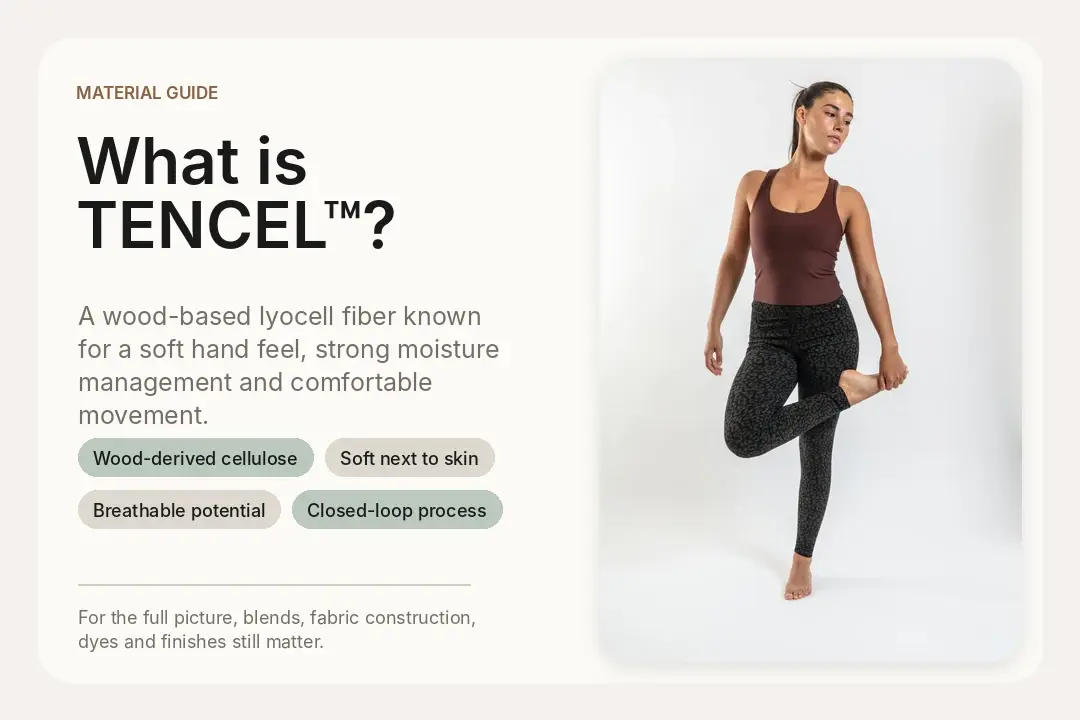
Quick answer: TENCEL™ is Lenzing's trademarked brand of wood-based lyocell (and modal) fibers. The wood pulp is dissolved and spun into fiber in a closed loop production process that recovers 99.8% of the solvent. It's soft, breathable, and biodegradable at fiber level — but not automatically a fully natural or perfect garment.
Key Takeaways
-
TENCEL™ is a brand, lyocell is the fiber. Tencel is Lenzing AG's trademark for lyocell fibers made from dissolving wood pulp — typically eucalyptus, beech and other wood species from certified, sustainably managed forests.
-
It's a cellulose fiber, not plastic. Polyester is made from petroleum and natural gas; Tencel's raw material is wood.
-
Yes, lyocell is breathable — research shows better moisture management and water-vapor handling than many synthetic fabrics, with air permeability determined largely by fabric construction, not fiber type alone.
-
Tencel is biodegradable, with TÜV Austria certification for compostability.
-
Even the breakdown is clean: ecotoxicity tests commissioned by Lenzing at Normec OWS found that undyed standard TENCEL™ Lyocell fibers left no harmful effects on plants or earthworms after biodegrading.
-
It's not automatically perfect. Wood sourcing, finishes, and blends still matter — check for OEKO-TEX® Standard 100.
What Is Tencel?
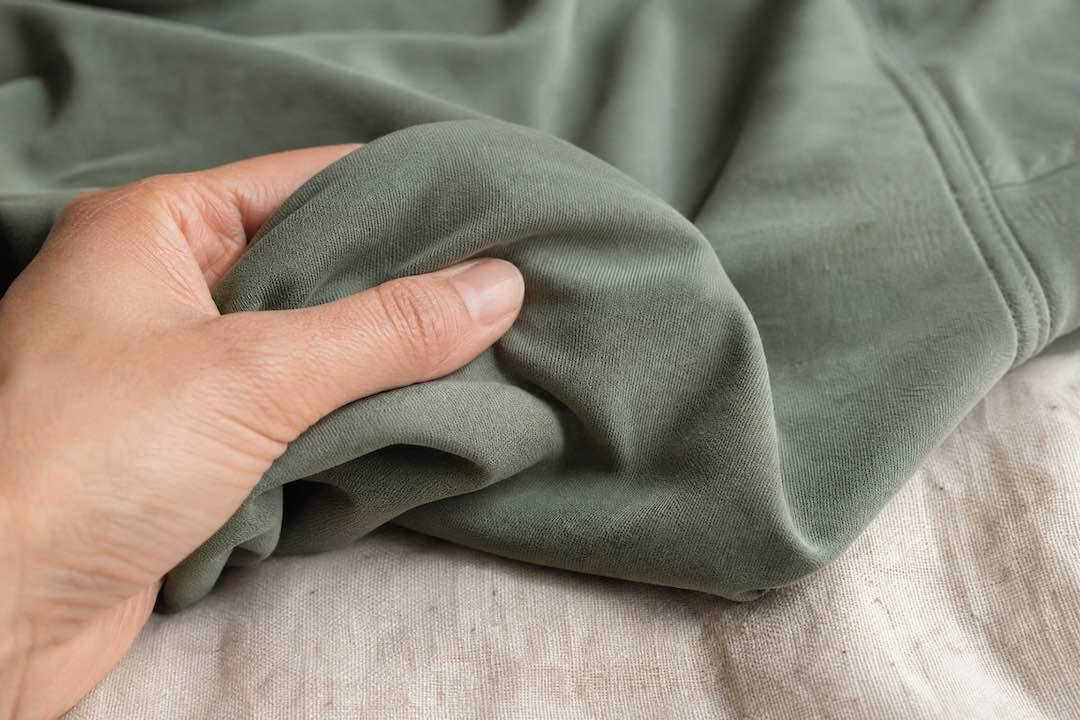
Tencel in one sentence: TENCEL™ is the brand of lyocell (and modal) fibers made from wood-derived cellulose — the Austrian company Lenzing AG makes Tencel. So when you see "Tencel clothing" on a label, you're looking at branded lyocell fibers: a fiber that begins as a tree, not as a barrel of oil. You'll find the Tencel brand everywhere from dresses and underwear to bedding and home textiles.
Is Tencel the same as lyocell?
Almost — and in the U.S., the difference is written into law. Under the FTC's textile labeling rules, lyocell is the generic fiber name — approved by the FTC back in 1996, technically as a sub-category of rayon — while TENCEL™ is Lenzing's trademarked brand of lyocell with specific sourcing standards and certifications. All TENCEL™ Lyocell is lyocell; not all lyocell is TENCEL™. (Curious how it differs from its older cousin? Here's my guide to lyocell vs. viscose.)
Generic lyocell from an unknown mill isn't automatically the same quality — a distinction that matters when you're checking whether clothing is truly non-toxic. Fun fact: Courtaulds Fibres in the UK first commercialized lyocell in the late 1980s, before Lenzing acquired the technology — and the Tencel brand itself — in the 2000s.
Is Tencel natural or synthetic?
Honestly: neither, fully. Tencel is a regenerated cellulose fiber — sometimes labeled semi synthetic. The raw material is a natural fiber source (wood), but the cellulose is dissolved and re-spun into thin fibers. Unlike viscose rayon, the cellulose isn't chemically altered into something new, which is what makes lyocell production cleaner.
Plant origin, industrial process — I find that honesty matters more than a "100% natural" sticker, the same standard when comparing organic cotton with conventional cotton.
What Is Tencel Made Of — and How Is It Made?
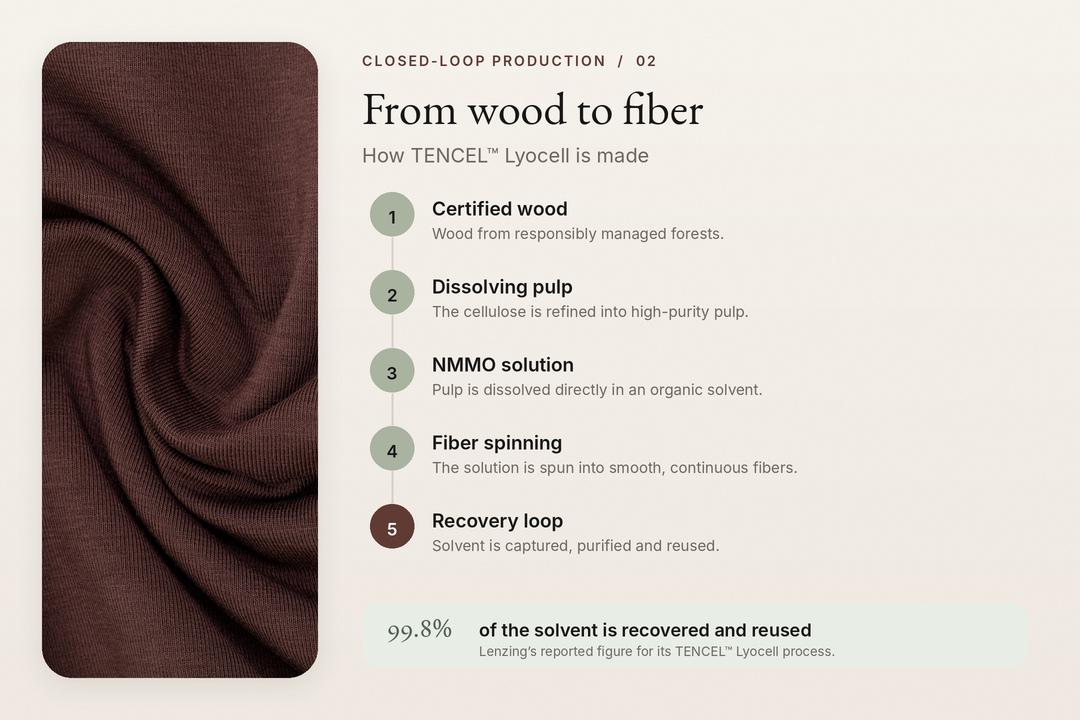
Tencel is made of cellulose from wood pulp. According to Lenzing's official TENCEL™ documentation, the fibers are made like this:
-
Wood is harvested — eucalyptus trees, beech, spruce and other species grown in sustainably managed forests, with wood pulp sourced under FSC® or PEFC™ certification. (So "eucalyptus fabric" as a blanket label is marketing shorthand, not a guarantee.)
-
The wood is broken down into dissolving wood pulp.
-
To create lyocell, the pulp is dissolved in NMMO, a direct organic solvent considered to be of relatively low toxicity when properly managed. One precision note: "organic" is a chemistry term here, not a purity badge — the decisive advantage is that this process avoids the hazardous carbon disulfide used for conventional viscose rayon.
-
The solution is pushed through spinnerets to form smooth, thin fibers, which are spun into yarn and knitted or woven into fabric.
Why the closed-loop production process matters
Here's what made me pay attention as a founder. Tencel production runs on a closed loop system: Lenzing reports that 99.8% of the solvent is recovered and reused, per its own fiber documentation — and independent technical reviews of lyocell production cite recovery rates above 99% as well. The closed loop manufacturing process, plus far lower water use than conventional cotton, gives Tencel a genuinely smaller environmental impact than most other fibers.
One caveat: this figure is Lenzing's claim for its process — generic lyocell producers don't automatically match it.
Certifications: what they prove — and what they don't
Even the cleanest fiber can be ruined by dirty finishing. Dyes, softeners, and coatings are where most harmful substances in clothing enter the picture, so I never buy on fiber content alone:
-
OEKO-TEX® Standard 100 tests the finished textile against over 1,000 harmful substances.
-
FSC/PEFC verify the wood comes from sustainably managed forests.
-
GOTS applies to organic natural fibers like cotton — here's what GOTS-certified clothing means and how OEKO-TEX and GOTS differ.
My rule: Tencel fabric plus OEKO-TEX® Standard 100 on the finished garment — the closest thing to peace of mind the textile industry currently offers. Before buying, I check four things: the full fiber label (percentage of lyocell and every blend partner), the TENCEL™ trademark rather than anonymous lyocell, finished-product testing, and the dye story — because dyes and formaldehyde-based finishes can undo everything the fiber got right.
Is Lyocell Breathable?
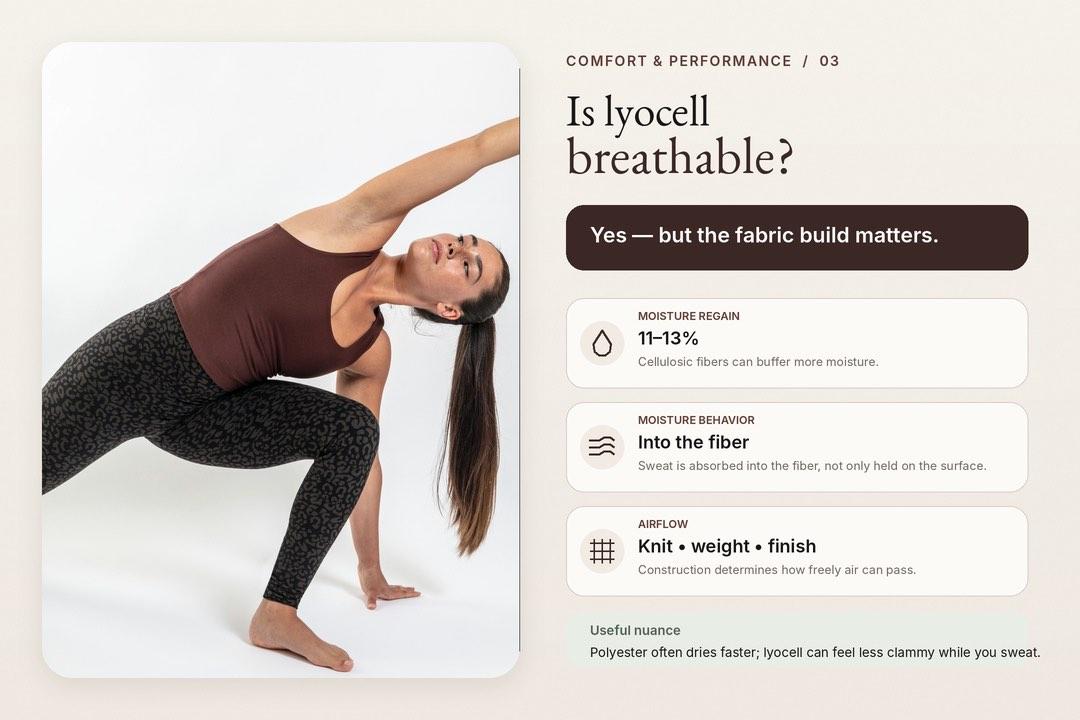
Yes — this is where Tencel earns its reputation, especially in warm weather. A peer-reviewed textile review describes lyocell as a third-generation cellulose fiber with a moisture regain of around 11–13%, delivering superior moisture buffering, water-vapor handling and wicking compared with many other fibers.
In plain English: its moisture wicking properties pull sweat off your skin and let heat escape, helping regulate body temperature instead of trapping it.
Two nuances: breathability belongs to the whole fabric, not the fiber name alone — weave, weight and finish change the result. And absorbing moisture isn't the same as fast drying: polyester dries quicker; lyocell simply feels drier and less clammy while you sweat.
A bonus most people miss: because moisture is absorbed into the fiber instead of sitting on the surface, there's less of the damp film where odor-causing bacteria thrive. Lenzing reports its lyocell absorbs moisture around 50% more effectively than cotton — one reason Tencel clothes stay fresher through repeated wear.
Tencel vs. cotton for hot weather
I love organic cotton — we built Orbasics on it. But cotton absorbs sweat and holds it, which is why a soaked cotton tee feels heavy on a July run.
Tencel absorbs and releases moisture faster, with a smooth texture, silk-like softness, and a luxurious feel that stays cool against the skin. I've compared both in my guides to the best fabric for sweating and Tencel vs. cotton for sensitive skin — for movement, Tencel wins more often than not.
Tencel vs. polyester for workouts and sensitive skin
Polyester is hydrophobic: it barely absorbs moisture, so sweat sits between the fabric and your skin. Dermatology sources are direct here — the American Academy of Dermatology advises people with eczema to wear loose-fitting clothes made from soft, breathable fabrics such as 100% cotton — and to avoid wool as well as synthetic fibers like polyester, nylon, acetate, rayon and spandex, because they can trigger flare-ups. I
f you deal with itching, chafing, or textile dermatitis, what sits against your sweaty skin for an hour matters.
One caveat I'll always give you: no fiber name guarantees a reaction-free garment — dyes, elastic, finishes and even detergents play a role, and a fiber label alone can't tell you whether non-toxic chemicals were used in dyeing and finishing. (If the itching mainly shows up mid-workout, here's why skin can itch when you exercise.) I've written more on how synthetic fabrics affect skin health and a head-to-head on Tencel vs. polyester.
Is Tencel Really Sustainable?
Mostly yes — with honest limits.
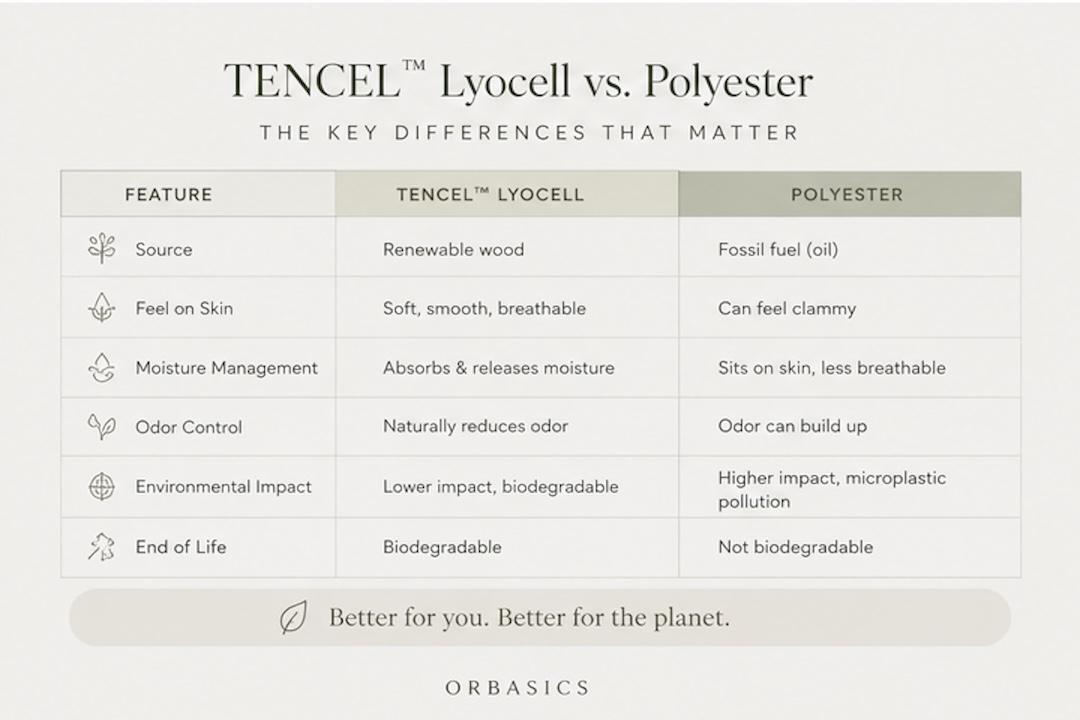
The strong case: renewable raw material, a closed loop production process, lower water use than cotton, and end-of-life credentials other fabrics can't touch: Tencel is biodegradable and compostable, certified by TÜV Austria. Eucalyptus grows fast with minimal pesticides and irrigation. That life cycle makes it a genuinely eco friendly choice — one of the most environmentally friendly fibers at scale — a story polyester cannot tell, because polyester is plastic made from fossil fuels (yes, your leggings might be plastic).
Lenzing's 2025 sustainability report additionally claims at least 50% lower carbon emissions and water consumption than generic lyocell and modal, based on Higg MSI data — a useful number, though it's a brand-reported, cradle-to-gate figure, not a whole-garment verdict.
One more distinction I insist on: biodegradability is certified at fiber level. A finished garment with elastane, polyester sewing thread or prints is not automatically compostable — anyone claiming otherwise is greenwashing, and it's exactly why we word ROICA™ claims so carefully.
The limits: "made from wood pulp" is only as good as the forest behind it. Canopy's Hot Button Report shows most cellulose fiber producers now earn green ratings, but warns that growing demand pressures ancient forests unless recycled inputs scale up. And per Textile Exchange's market data, man-made cellulosic fibers (most of them wood-based) still make up only about 6% of global fiber production, while polyester dominates at roughly 59%. Choosing Tencel garments is a vote for shifting that ratio — one of several sustainable fabrics worth choosing, alongside natural-fiber clothing with real benefits.
Progress is real, though: the 2025 Hot Button Report counts 21 man-made cellulosic producers with "green shirt" ratings and 16 commercial next-gen product lines — large suppliers are moving toward circular, lower-impact feedstocks faster than most of the industry.
Tencel vs. Polyester: The Comparison That Actually Matters
Let me be precise, because I refuse to fear-monger: not every polyester garment will harm you. The real issues with synthetic fabrics are specific and documented:
-
Microplastics. Synthetic textiles are a major source of microfiber pollution across their whole life cycle, per the OECD — every wash sheds fibers. Here's where microplastics come from.
-
Chemical load. Research has found antimony — a PET catalyst residue — can migrate from polyester textiles under sweat conditions, and studies have detected BPA in clothing, including sportswear. Your skin is not a wall; dermal absorption is a real exposure pathway.
-
PFAS finishes. "Performance" coatings often rely on PFAS — I've covered PFAS in workout clothes, and it changed how I shop.
-
Heat and irritation. A review of textile contact dermatitis notes that dyes and finishes — not usually the fiber itself — cause most skin reactions, and occlusive synthetics make it worse by trapping heat and sweat.
|
|
TENCEL™ Lyocell |
Viscose / Rayon |
Conventional Cotton |
Polyester |
|---|---|---|---|---|
|
Raw material |
Wood pulp (cellulose fiber) |
Wood pulp / plants |
Cotton plant |
Petroleum / natural gas |
|
Process |
Closed loop, 99.8% solvent recovery |
Often carbon disulfide |
Grown, ginned, spun |
Melt-spun plastic |
|
Moisture behavior |
Absorbs & releases; moisture wicking |
Absorbs; weaker when wet |
Absorbs & holds |
Repels; sweat sits on skin |
|
Microplastic shedding |
No — plant-based |
No |
No |
Yes, every wash |
|
Biodegradable |
Yes, at fiber level (TÜV certified) |
Yes, fiber level |
Yes (slower if treated) |
No — persists for centuries |
|
Sensitive skin |
Very gentle, smooth fibers |
Gentle but variable |
Gentle, esp. organic |
Can trigger irritation |
|
Watch out for |
Wood sourcing, finishes |
Worker & chemical safety |
Pesticides if conventional |
PFAS, antimony, BPA, dyes |
My balanced takeaway: if you prioritize skin comfort, zero microplastic shedding, and fewer chemical finishes, Tencel is generally the stronger choice — polyester's only remaining arguments are price and stretch. And stretch, it turns out, is solvable.
Why I Chose 85% Tencel for Orbasics Activewear
Here's the thinking behind our own launch: if natural fibers are better, why does almost all activewear stay synthetic?
The answer: elasticity. Pure Tencel or cotton sports clothing bags out — you lose that supportive, held-in feeling. Most brands fix this with 20–30% spandex plus polyester, and you're back to plastic against your skin.
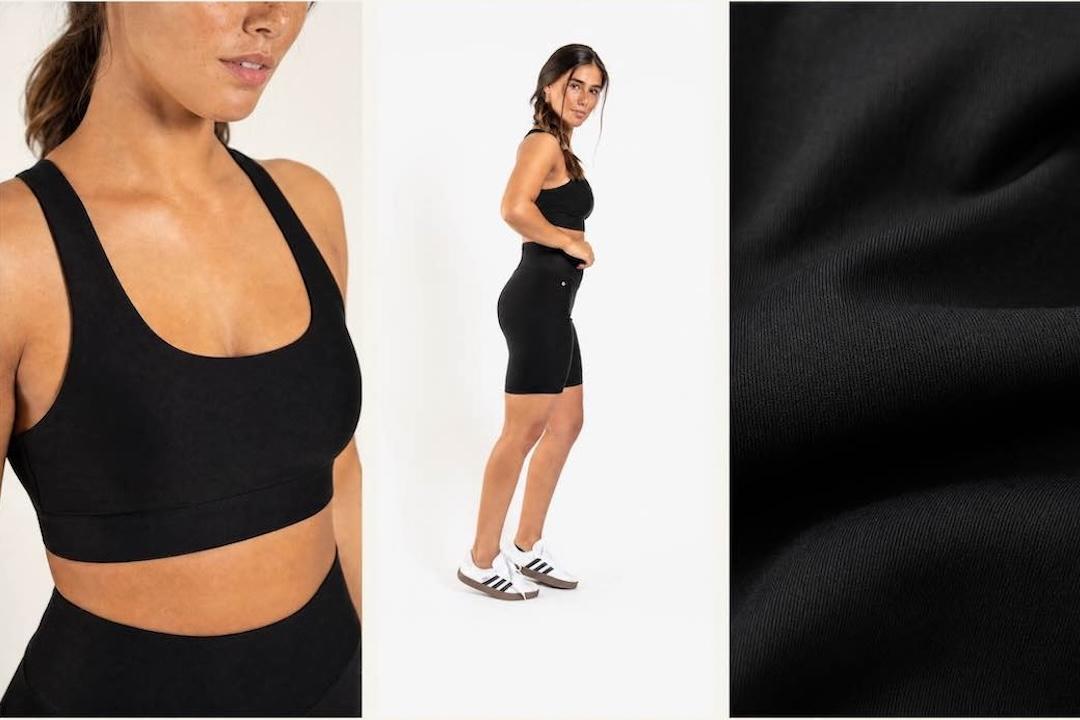
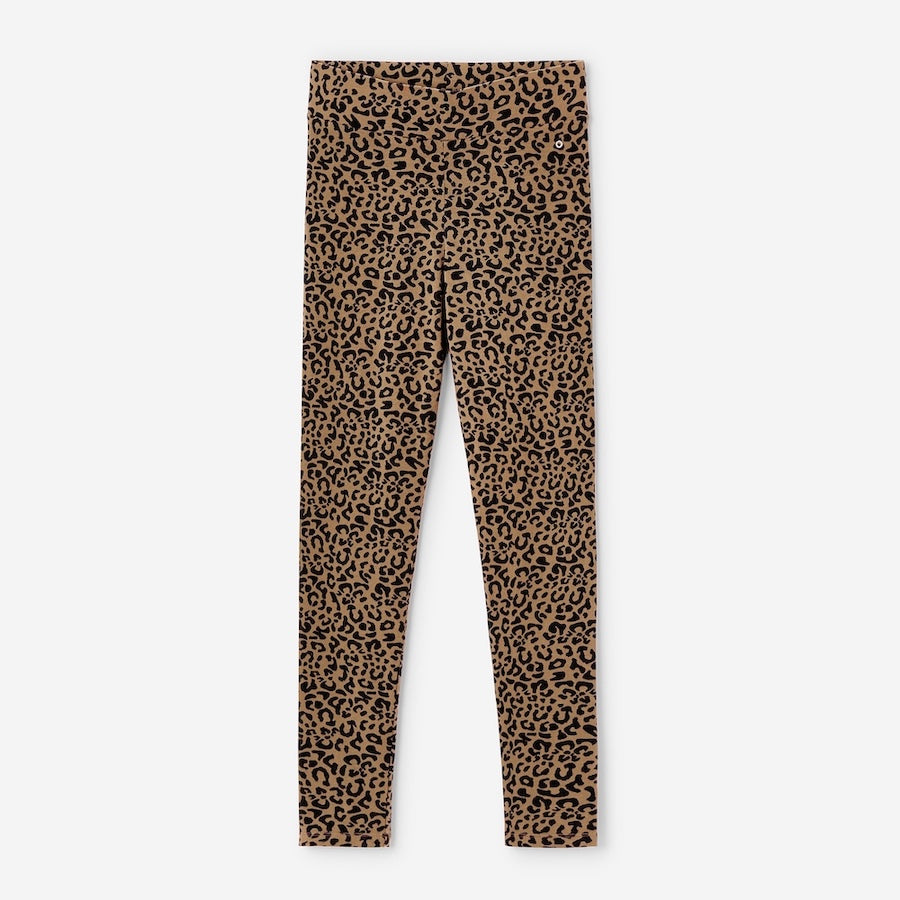
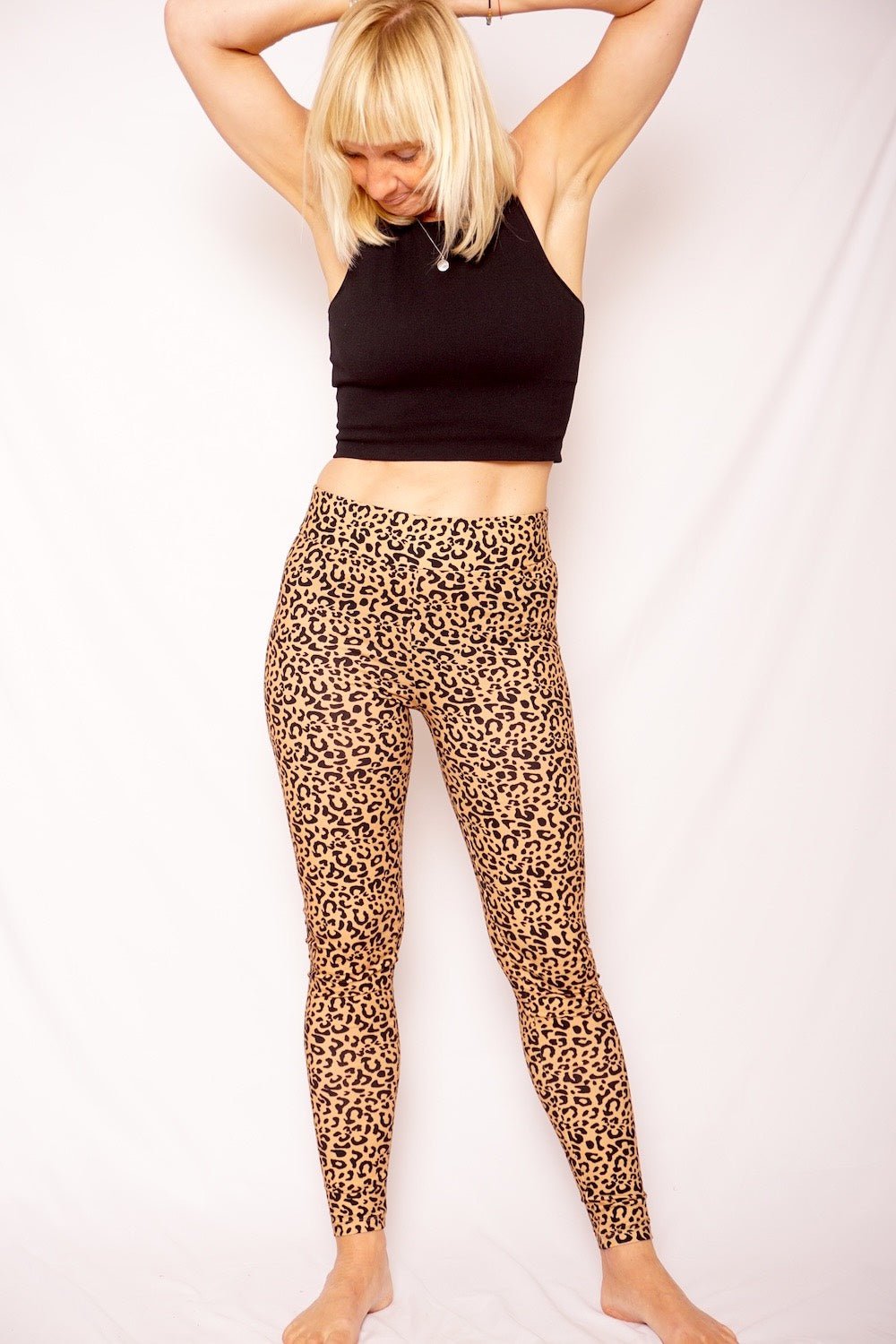
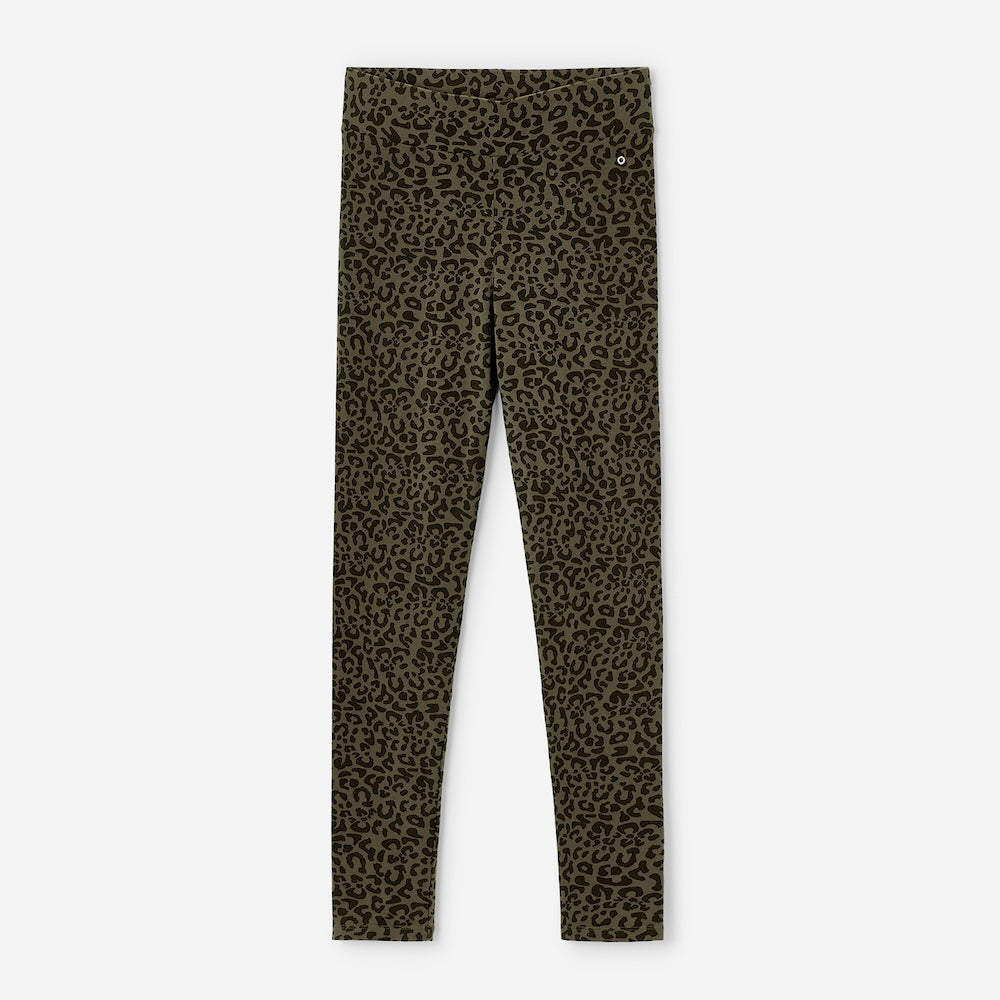
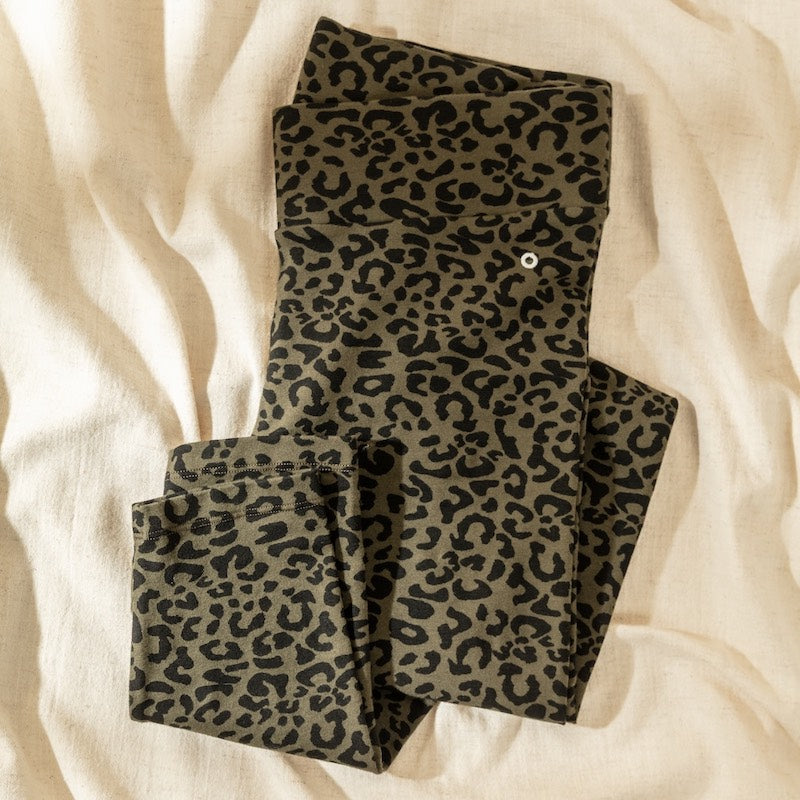
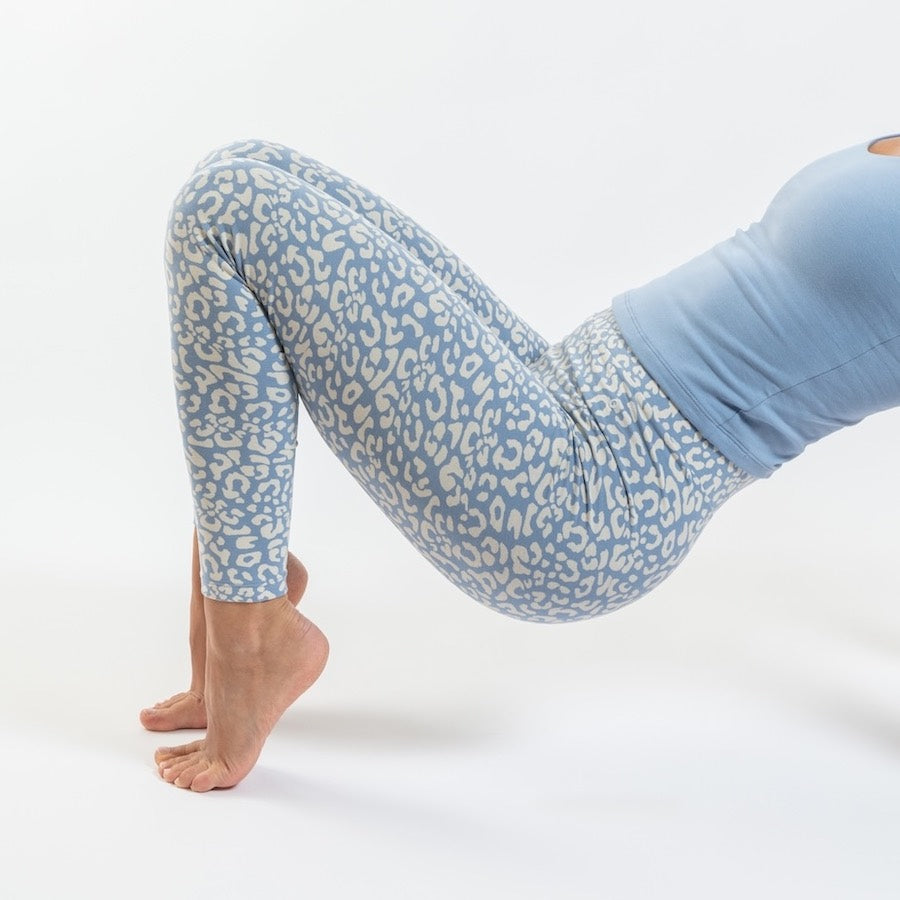
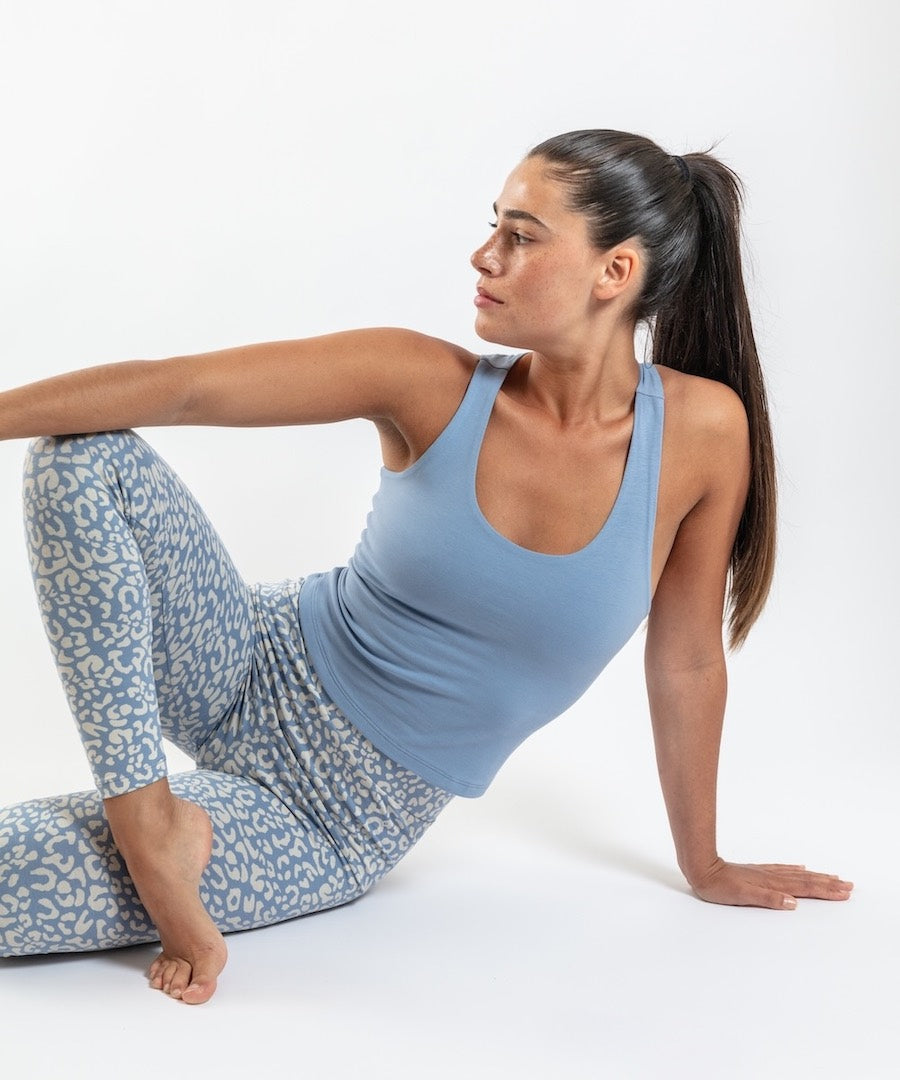
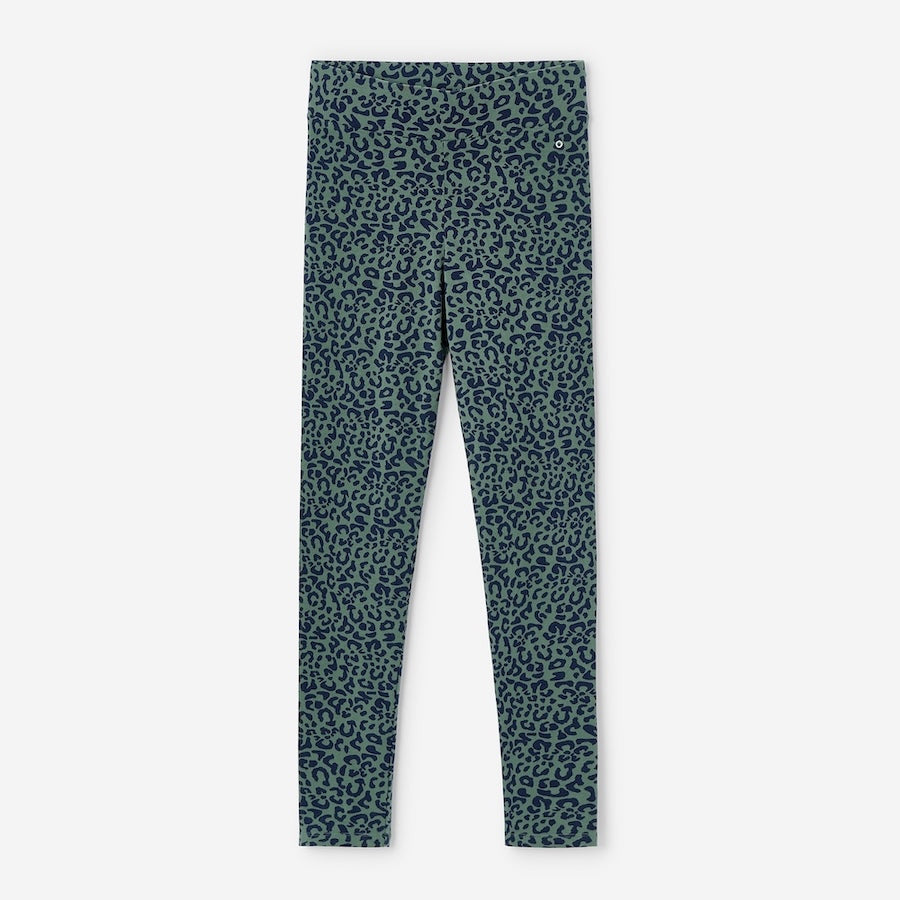
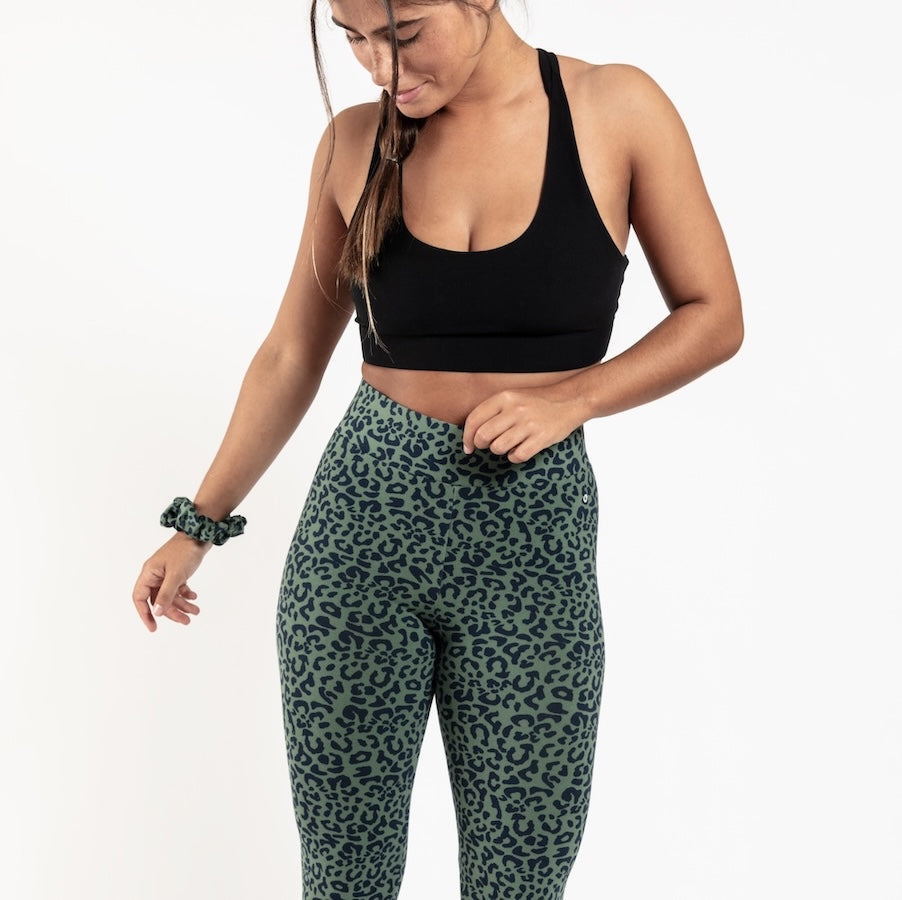
We go a different route: 85% TENCEL™ Lyocell and 15% ROICA™ — a premium stretch fiber chosen because select ROICA™ yarns carry third-party verification for breaking down without releasing harmful substances, rare in the stretch world.
The result surprised even me: all the key benefits of Tencel — soft, breathable, cool — plus a real compression feeling, the gentle hugging support that's missing in nearly every natural activewear line. That cooling-yet-soft touch makes it my favorite thing to wear in summer.
To be specific about the stretch fiber: ROICA™ V550 holds Cradle to Cradle Certified® Material Health Gold and Hohenstein environmental compatibility certification, with tests showing degradation into CO₂ and water in soil and compost conditions without verified harmful residues.
It's not fully biodegradable — I won't claim that — but it's the most honest stretch option the market currently offers. And we're not alone in this thinking: stretch denim capsules like the LoopTy Collection pair the same TENCEL™ + ROICA™ V550 combination for lower-impact, degradable stretch jeans.
It's made for yoga, Pilates, walking, travel, everyday movement — and it holds up in high-intensity workouts too. Not stiff high-compression gymwear; support that's gentler on skin.
If you're building a cleaner workout wardrobe, start with my guides to the best fabric for working out, non-toxic activewear brands, non-toxic yoga clothes, non-toxic sports bras, and organic cotton leggings.
How to Care for Tencel (So It Lasts for Years)
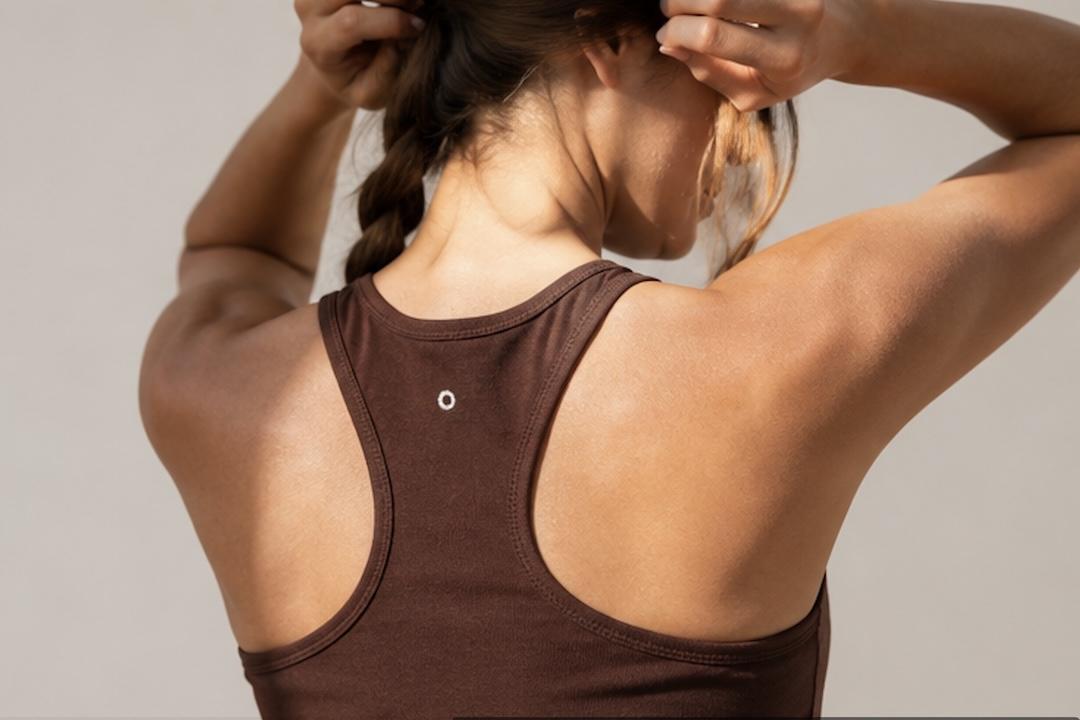
Tencel is more durable than traditional rayon and, unlike viscose, keeps most of its strength when wet — in many fabric constructions it holds its shape and dimensional stability at least as well as cotton when properly cared for. Still, treat it kindly:
-
Cold water (max. 30°C / 86°F), gentle cycle, mild detergent, no chlorine bleach — delicate pieces are best hand washed
-
Turn garments inside out, and skip fabric softener; it coats the fiber and interferes with its moisture behavior
-
Skip the dryer; air dry flat or hanging
-
Wash less often — its moisture management genuinely means fewer washes (here's how I wash workout clothes so they stop smelling)
-
Slight fibrillation (a soft peach-fuzz surface) can appear on clothes made of Tencel after repeated washing; gentle care minimizes it
Is it worth the investment? Tencel costs more than fast-fashion polyester — but it offers superior next-to-skin comfort and biodegrades instead of persisting for decades in a landfill.
Its actual lifespan depends on fabric design and care, and polyester keeps the lead only in pure abrasion resistance. That math is still easy for me.
Final Thoughts
If you prefer cotton instead, our organic cotton sports bra is a mostly natural-fiber option for lower-impact movement.
So, what is Tencel? A wood-based cellulose fiber that manages to be soft, breathable, biodegradable, and — when properly certified — genuinely low in harmful substances. It's not a miracle; no fabric is. But after years of researching what we put on our bodies, Tencel lyocell is currently my best answer to the activewear question: the performance benefits, none of the plastic.
Start small. Check labels for lyocell plus OEKO-TEX® Standard 100. And if you want pieces already vetted, explore our organic clothing — every piece chosen the way I'd choose for my own family.
FAQ
What is the disadvantage of Tencel fabric?
Three honest ones: it costs more than polyester or conventional cotton, it needs gentler care, and some weaves can fibrillate with rough handling. Also, generic lyocell doesn't automatically match Lenzing's forest and closed-loop standards.
Is Tencel fabric better than cotton?
For moisture management, yes — lyocell absorbs sweat notably faster than cotton and stays smoother and cooler on skin. For easy care, cotton (especially organic) holds its own. I wear both, for different jobs.
Is Tencel a cotton or polyester?
Neither. Tencel is lyocell, a regenerated cellulose fiber made from wood pulp — plant-based like cotton, but completely unrelated to polyester, which is plastic.
Does Tencel have microplastics?
No. Tencel fibers are cellulose — anything shed in the wash biodegrades like plant matter instead of persisting as microplastic, assuming the fabric isn't heavily blended with synthetics. One of its biggest advantages over polyester.
Is Tencel natural or synthetic?
Semi-synthetic — a man-made cellulose fiber. The raw material (wood) is natural; the fiber is produced by re-spinning that cellulose in a closed loop system.
*Advertisement: This article contains affiliate links marked with*. If you make a purchase through these links, we may earn a small commission at no additional cost to you.
The information provided is for educational and informational purposes only and is not intended as medical advice. It should not replace consultation with your physician or qualified healthcare provider. This article was created with the assistance of AI tools and has been editorially reviewed and approved by our team. All opinions expressed are our own.
Lilija Bairamova

Lilija is the founder of Orbasics, a brand born from her passion for creating a healthier, more sustainable world, starting with organic, toxin-free clothing for children. As a mother committed to a non-toxic lifestyle, Lilija has spent years exploring and embracing clean beauty, non-toxic living, and holistic wellness. She shares her expertise on everything from natural personal care to creating toxin-free home environments, offering practical tips and in-depth guides that empower you to make healthier choices and lead a more mindful, health-conscious life.




Leave a comment