
Table of Contents
Formaldehyde in Clothing: What's Hiding in Your Wardrobe
This page may contain affiliate links. We may earn a commission on purchases, at no additional cost to you. Learn more →
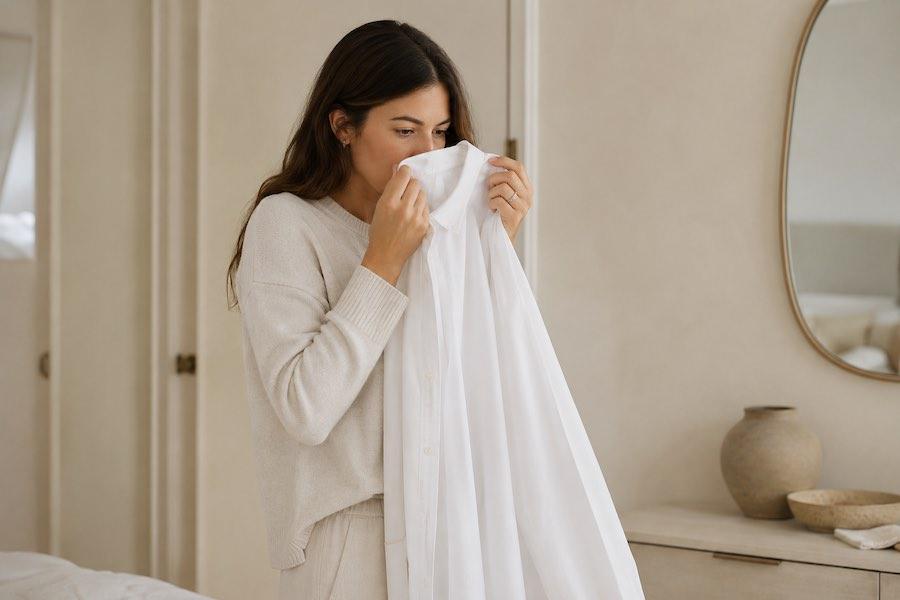
You buy a new shirt. It smells a little off — chemical, almost sharp. Most people wear it anyway. But that smell has a name: formaldehyde.
It's commonly used in clothing to keep fabrics wrinkle-free, colorfast, and mildew-resistant during shipping. Your label won't tell you it's there. But your skin might.
Formaldehyde exposure from textiles is more common than you realize, and the frustrating part is that your clothing label won't warn you.
In this article, I'll walk you through exactly what formaldehyde in clothing is, what the health risks actually look like, and — most importantly — what you can do about it today.
Key Takeaways
-
Formaldehyde is used in the textile industry primarily through resin-based finishes to create wrinkle-resistant and durable fabrics
-
The biggest health risk from clothing is allergic contact dermatitis
-
U.S. labels don't disclose formaldehyde treatment — look for claims like "wrinkle-free," "permanent press," or "crease-resistant"
-
Washing new clothes before wearing them reduces formaldehyde levels — but may not eliminate them entirely
-
Eco-friendly doesn't automatically mean formaldehyde-free — some studies found high levels in "green" garments
-
OEKO-TEX® Standard 100 and GOTS certification are the most reliable third-party standards to look for
What Is Formaldehyde in Clothing?
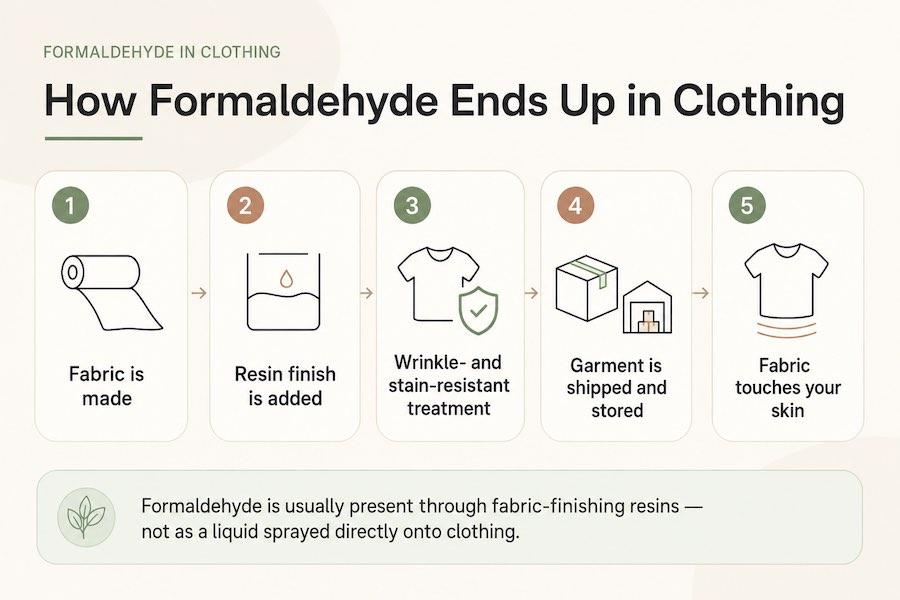
Here's something most of us don't know: when we talk about formaldehyde in clothing, we're not talking about a bottle of liquid sprayed directly onto fabric. We're talking about formaldehyde-based resins — chemical compounds baked into the fabric during the manufacturing process.
Formaldehyde is widely used in the treating of textiles. Manufacturers apply urea-formaldehyde or melamine-formaldehyde resins during the finishing process to achieve specific fabric properties. The result? Clothes that resist wrinkles, hold their shape, and don't shrink in the wash.
Formaldehyde has been used in the textile industry since the mid-1920s. It acts as a crosslinking agent, a dye-fixing agent, and an antimicrobial preservative. When your clothes are packed into humid shipping containers and transported across the world, formaldehyde prevents mold, mildew, and rot. It's a practical solution to a real logistics problem — but one that comes at a cost to your skin and your health.
The U.S. Consumer Product Safety Commission (CPSC) and GAO both describe "durable-press," "crease-resistant," "stain-resistant," and "static-resistant" finishes as key indicators that formaldehyde-based resins may be present. If you see those words on a label, it's worth paying attention.
Formaldehyde isn't the only chemical hiding in your wardrobe. Our guide to chemicals in clothing and whether polyester is an endocrine disruptor covers the broader picture — including PFAS, phthalates, and synthetic dyes, worth to read!
What Are the Real Health Risks?
This is where I want to be really precise, because most articles I've read either catastrophize formaldehyde or dismiss it entirely. In my opinion, the reality is more nuanced.
The Health Issue Most Clothing Wearers Actually Face
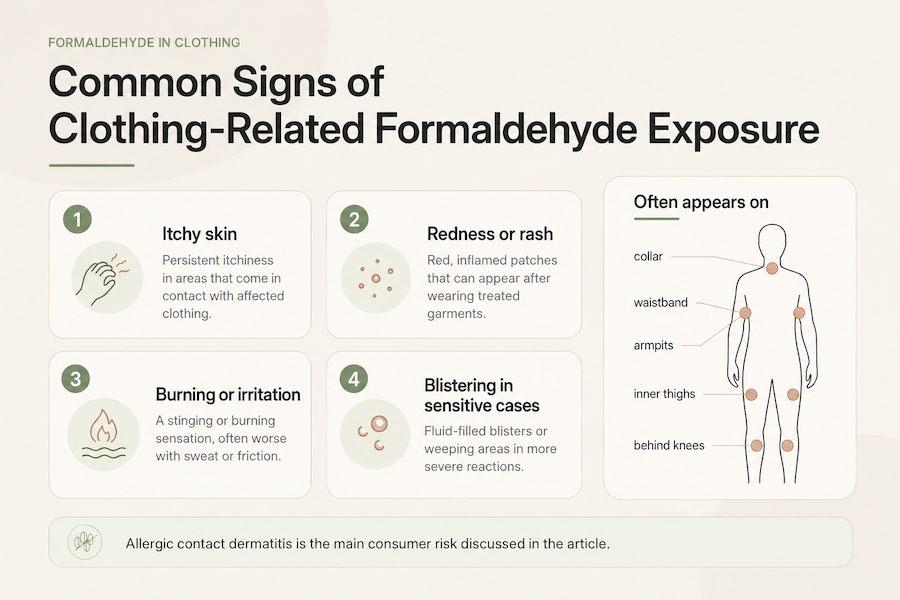
The GAO's landmark review of 180 textile items — still the most comprehensive U.S. government study on the topic — identified allergic contact dermatitis as the "health risk of greatest concern" from wearing clothes containing formaldehyde.
Contact dermatitis from formaldehyde typically looks like red, itchy, swollen, or blistered skin. It tends to appear exactly where clothing rubs against you: the collar, waistband, inner thighs, armpits, and behind the knees. DermNet notes that friction and sweat significantly amplify the reaction — which is why synthetic activewear and tight-fitting clothes can be especially problematic.
Skin irritation and allergic reactions are the most common symptoms of formaldehyde exposure from clothing. If you've ever blamed sensitive skin for a recurring rash and never figured out the cause, this might be worth investigating. (Patch testing by a dermatologist is the definitive diagnostic route.)
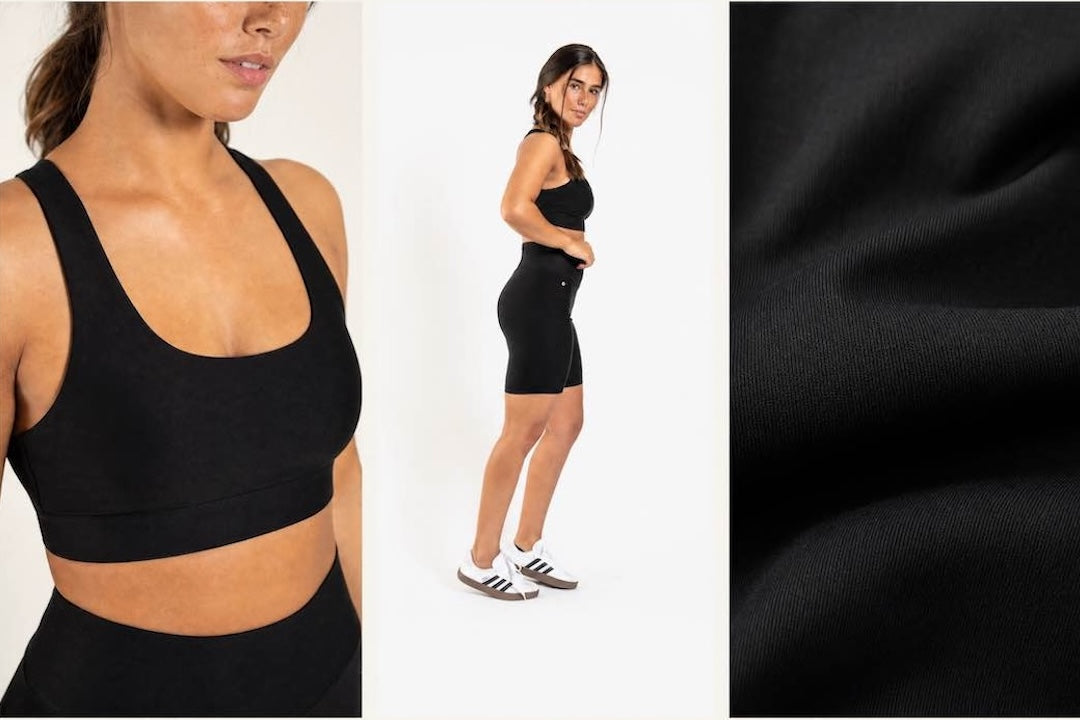
Performance finishes in activewear are among the most common sources of formaldehyde exposure through skin contact. If you work out in synthetic gear, our deep dive into PFAS in workout clothes is a useful companion read — because formaldehyde and PFAS often show up in the same garments.
How This Differs From Cancer Headlines
You've probably seen headlines declaring formaldehyde a carcinogen. That's true — the International Agency for Research on Cancer (IARC) classifies it as a Group 1 human carcinogen, and the National Toxicology Program lists it as a known human carcinogen. The U.S. EPA classifies formaldehyde as a probable human carcinogen.
But here's the critical distinction that most articles skip: the cancer risk is based primarily on inhalation at occupational or high-dose exposure levels.
The GAO review found no evidence of an inhalation-based health risk for consumers from everyday clothing. Health effects from wearing clothes are generally localized — meaning skin-level, not systemic.
Anyway, dermal absorption is a real exposure route: what sits against your skin can enter systemic circulation, particularly with prolonged contact, friction, or heat. The distinction the GAO draws is specifically about inhalation risk — not about ruling out systemic exposure through the skin entirely.
That said, the EPA published its Final Risk Evaluation for formaldehyde in December 2024, explicitly listing textiles, apparel, and leather as conditions of use. The conclusion — that formaldehyde presents "unreasonable risk of injury to human health" under certain conditions — sounds alarming.
But I'd read it with some skepticism. "Certain conditions" is doing a lot of work in that sentence. The EPA's evaluation spans the entire lifecycle of formaldehyde use, from industrial manufacturing to occupational exposure to consumer contact.
It doesn't cleanly tell you what the risk looks like for someone wearing a wrinkle-free shirt twice a week. That nuance matters. I think the honest answer is: we don't yet have a precise, clothing-specific risk picture from this evaluation, and that's exactly why individual precaution still makes more sense than waiting for regulators to catch up.
Who Should Pay the Most Attention
Not everyone faces the same risk. The groups with the most reason to be cautious:
-
Babies and young children — more sensitive skin, more direct and prolonged skin contact with clothing
-
Pregnant women — emerging research points to early-life formaldehyde exposure through clothing as a concern worth minimizing
-
People with eczema, atopic dermatitis, or known sensitivities — existing skin barrier dysfunction increases absorption and reactivity
-
Anyone who regularly wears "performance" or "permanent press" garments — especially close-fitting items with prolonged exposure against skin
Formaldehyde exposure can also exacerbate asthma and cause respiratory problems when off-gassing vapors from treated garments are inhaled in enclosed, poorly ventilated spaces. The adverse health effects from these consumer products vary widely — from mild irritation to full allergic reactions — depending on individual sensitivity.
If your child keeps getting rashes from new clothes, or you notice recurring irritation along collar lines, formaldehyde is a real suspect.
What Testing and Studies Actually Show
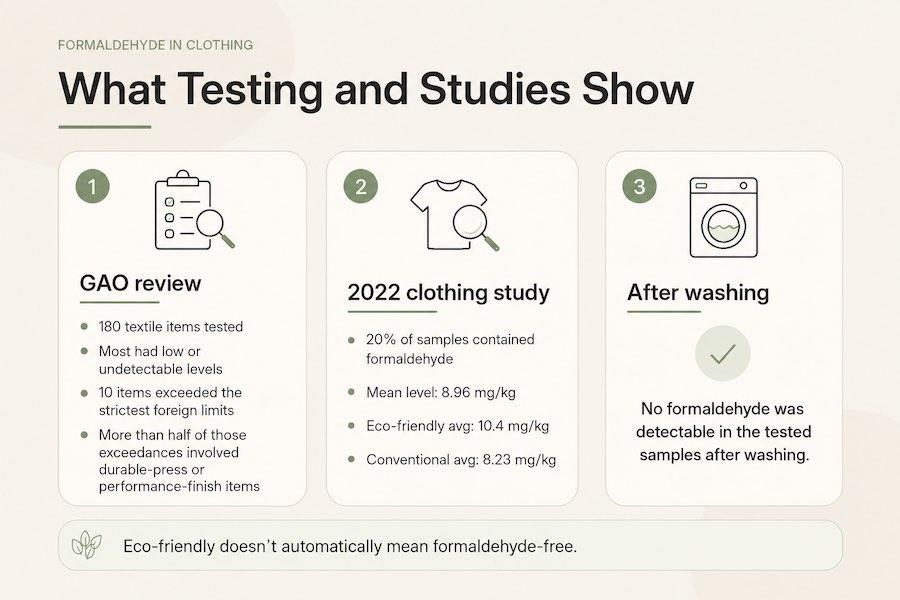
The GAO tested 180 textile items and found that most had low or undetectable formaldehyde levels. However, 10 articles exceeded the strictest foreign limits identified by the industry — and more than half of those exceedances involved durable-press or performance-finish items.
A more recent 2022 study on clothing for pregnant women, babies, and toddlers found formaldehyde in 20% of clothing samples, with a mean level of 8.96 mg/kg.
Here's the twist that surprised me most: eco-friendly garments had higher average levels than conventional ones (10.4 vs. 8.23 mg/kg). After washing, however, no formaldehyde was detectable in the samples tested.
This challenges two popular assumptions at once:
-
"All clothes contain dangerous formaldehyde" — most don't, or have very low levels
-
"Eco-friendly means formaldehyde-free" — not necessarily
I write about greenwashing in textiles, because "natural" and "sustainable" marketing doesn't always reflect what's actually in the product. Even organic cotton clothing can still undergo chemical finishing treatments. And when you factor in that polyester may also carry PFAS treatments alongside formaldehyde-based finishes, the picture gets complicated fast. Our guide to the best non-toxic clothing brands covers which labels have genuinely cleaned up their supply chains.
One more important finding: according to GAO, U.S. labels generally do not disclose whether a garment has been treated with formaldehyde. You are essentially shopping blind unless you know what certifications to look for.
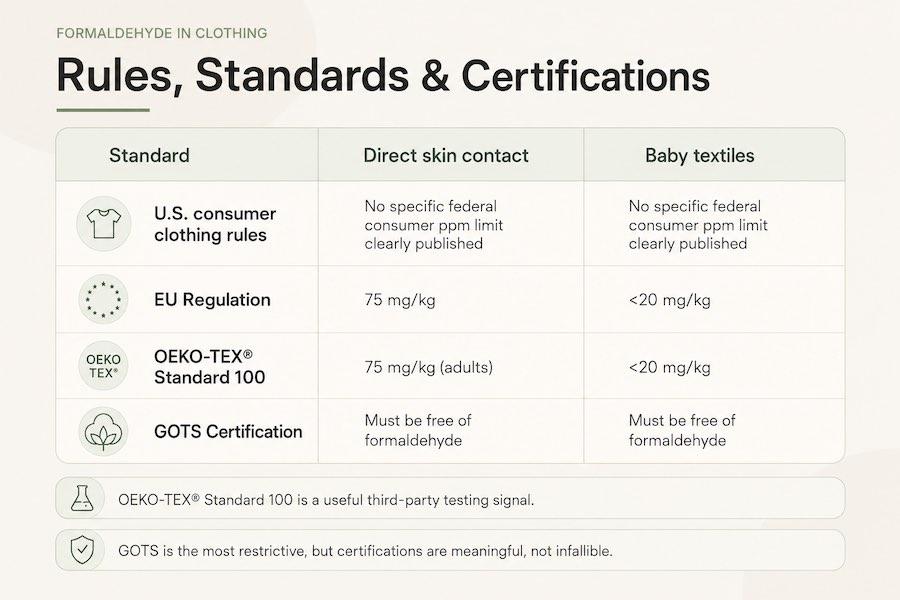
Rules, Standards, and Labels
Ss of the GAO's report, the United States had no specific federal legal limit (in parts per million) for formaldehyde in clothing. The CPSC reviewed formaldehyde levels in clothing back in the 1980s and concluded the levels found did not pose a public health concern.
That assessment, however, was made decades before today's manufacturing volumes, global supply chains, and chemical finishing practices — and it's overdue for reevaluation.
In the current EPA and CPSC sources reviewed, no clearly published national consumer ppm limit for clothing has emerged — though the regulatory situation is actively evolving via the EPA's TSCA risk evaluation process.
Compare that to international standards:
|
Standard |
Formaldehyde Limit (direct skin contact) |
Baby textiles |
|---|---|---|
|
EU Regulation |
75 mg/kg |
<20 mg/kg |
|
OEKO-TEX® Standard 100 |
75 mg/kg (adults) |
<20 mg/kg |
|
GOTS Certification |
Must be free of formaldehyde |
Must be free of formaldehyde |
OEKO-TEX® Standard 100 tests textiles against harmful substances with stricter requirements where skin contact is greater. It's not a quality label in the broad sense, and it only speaks to the garment's state at production — not what might happen through use or washing. But for most consumers, it's the clearest third-party signal currently available.
GOTS certification is the most restrictive — it requires that certified textiles be free of formaldehyde entirely. That said, a 2022 study found that some GOTS-certified garments still showed quantifiable amounts. Certifications are meaningful, but not infallible. Not sure which label to trust? Our breakdown of OEKO-TEX vs. GOTS — which certification actually keeps you safe explains the differences clearly.
The EPA's 2024 and 2025 formaldehyde evaluations are the freshest anchor here. The agency has explicitly included textiles and apparel in its risk assessment, and its conclusion that formaldehyde presents unreasonable risk under certain conditions of use signals that federal regulatory action on clothing could follow.
How to Reduce Formaldehyde Exposure Without Panic
You don't need to throw out your entire wardrobe. What you need is a practical hierarchy.
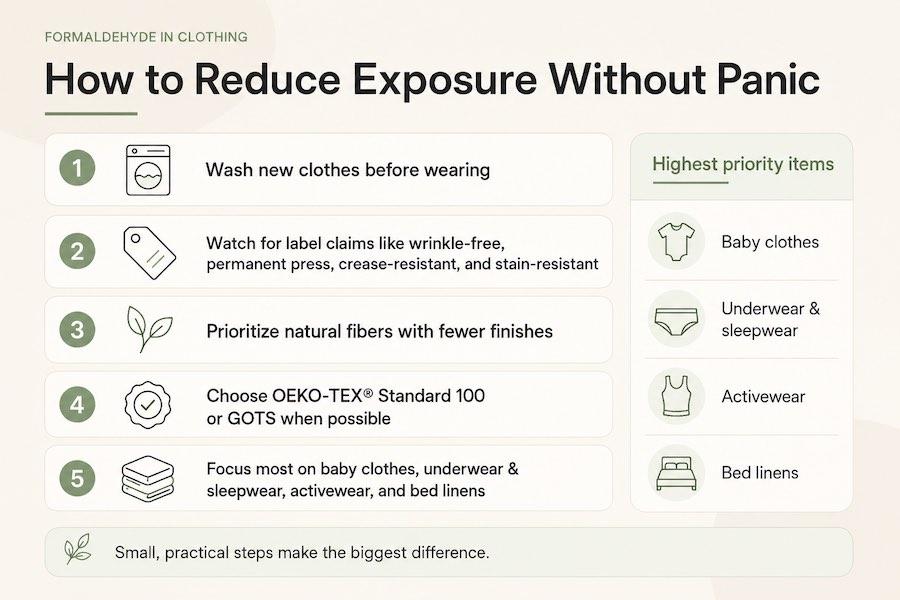
Always Wash New Clothes Before Wearing Them
This is the single most effective step. DermNet, and GAO all recommend washing new garments before first wear.A 2022 study on early-life formaldehyde exposure through clothing confirmed that after washing, no formaldehyde was detectable in tested samples.
Important caveat from GAO: the effectiveness of washing depends on the type of resin used and the wash conditions — water temperature, alkalinity, water hardness, and whether bleach is used. Washing reduces formaldehyde levels, but it may not always eliminate them completely, especially with certain durable-press finishes.
What you wash with also matters. Our guides to non-toxic laundry detergent brands and the best non-toxic laundry sheets can help you avoid adding more chemicals back onto clean fabric.
Bottom line: wash new clothes before wearing, preferably more than once for anything with heavy performance finishes.
Read Labels Like an Investigator
Claims to watch for:
-
Wrinkle-free / wrinkle-resistant
-
Permanent press
-
Durable press
-
Crease-resistant
-
Stain-resistant
-
Static-resistant
-
Shrink-proof
Any of these suggest formaldehyde-based resin finishing. That doesn't mean the garment is unsafe — but it does mean more scrutiny is warranted, especially if you or your child has sensitive skin.
Prioritize Natural Fibers With Fewer Finishes
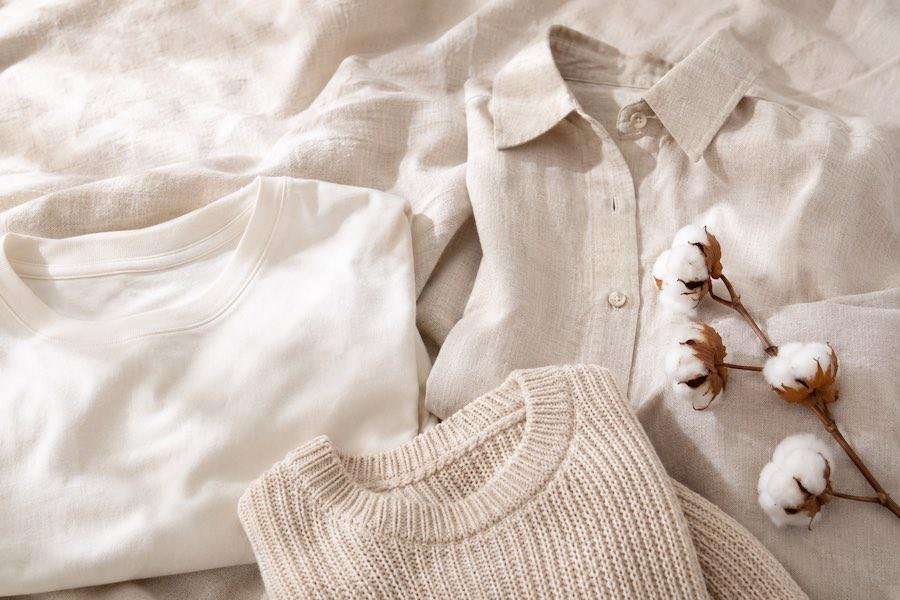
Natural fibers like untreated organic cotton, linen, and wool generally require less chemical resin treatment to maintain their shape and stain resistance. They're not automatically formaldehyde-free — as we've seen, even eco-labeled garments can test positive — but they're less likely to be treated with heavy-duty performance finishes. These clothing materials also tend to breathe better, which matters because sweat and friction amplify skin reactions to formaldehyde released from fabric resins.
Our guides to best fabrics for sensitive skin and non-toxic clothing go into more detail on which fabric types and certifications to prioritize.
Choose Certified When You Can
For garments worn directly on skin — underwear, sleepwear, babies' clothes, activewear — look for OEKO-TEX® Standard 100 or GOTS certification. You can verify any OEKO-TEX label at their official Label Check tool.
Underwear is especially important given how close and constant the skin contact is. Our guide to the best non-toxic underwear brands covers exactly what to look for — and which brands have the certifications to back up their claims.
GAO found that 13 of 16 U.S. retailers it contacted had internal formaldehyde limits — which is actually reassuring evidence that private compliance standards are doing real work even in the absence of a federal clothing-specific limit.
A Practical Buyer's Guide
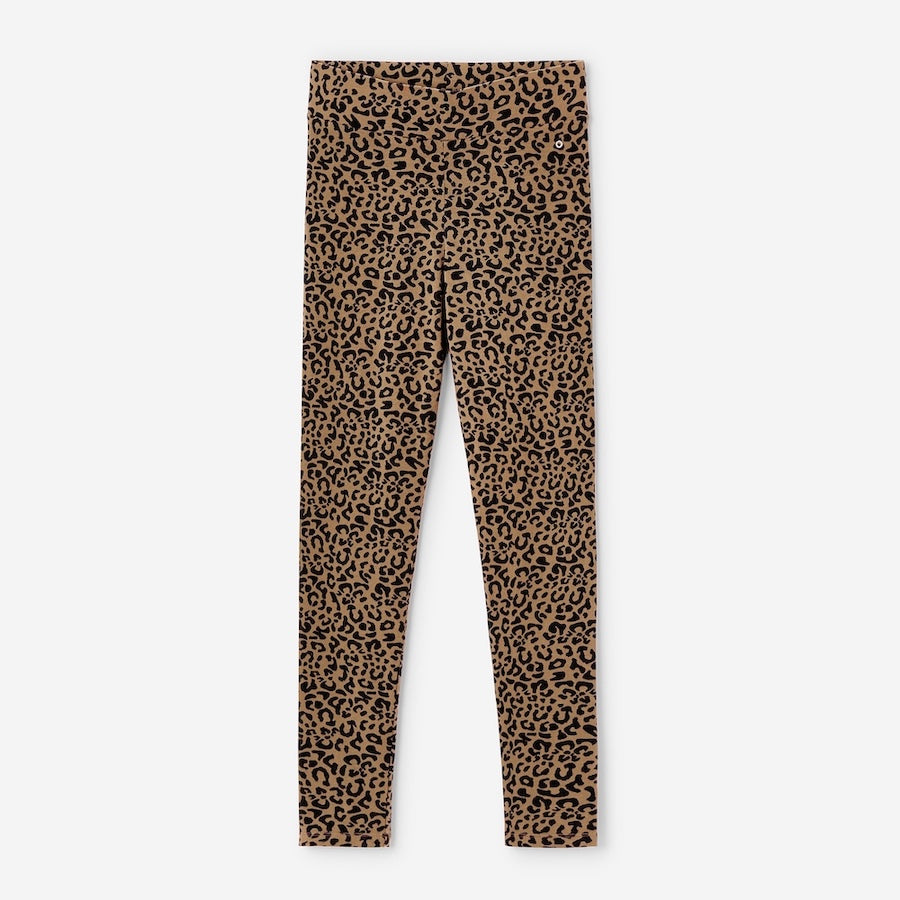
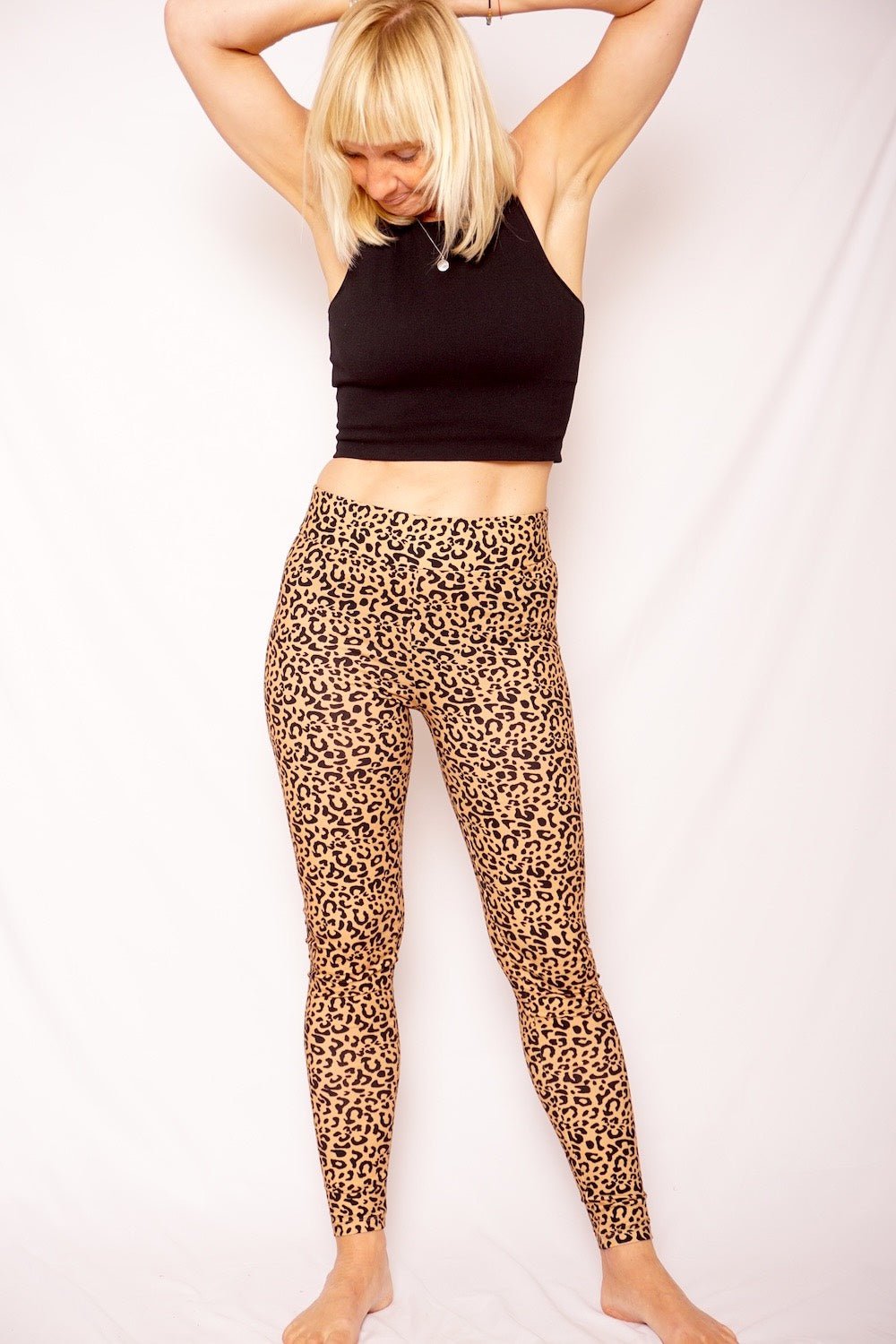
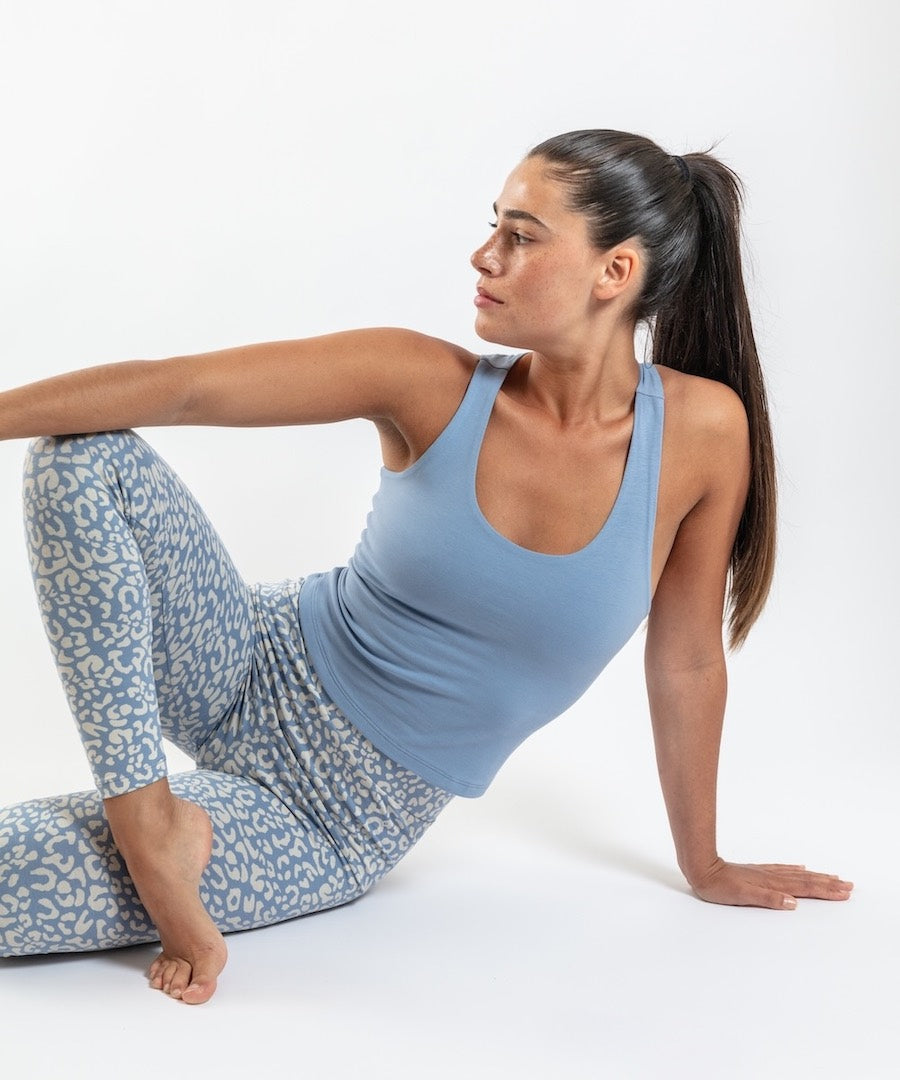
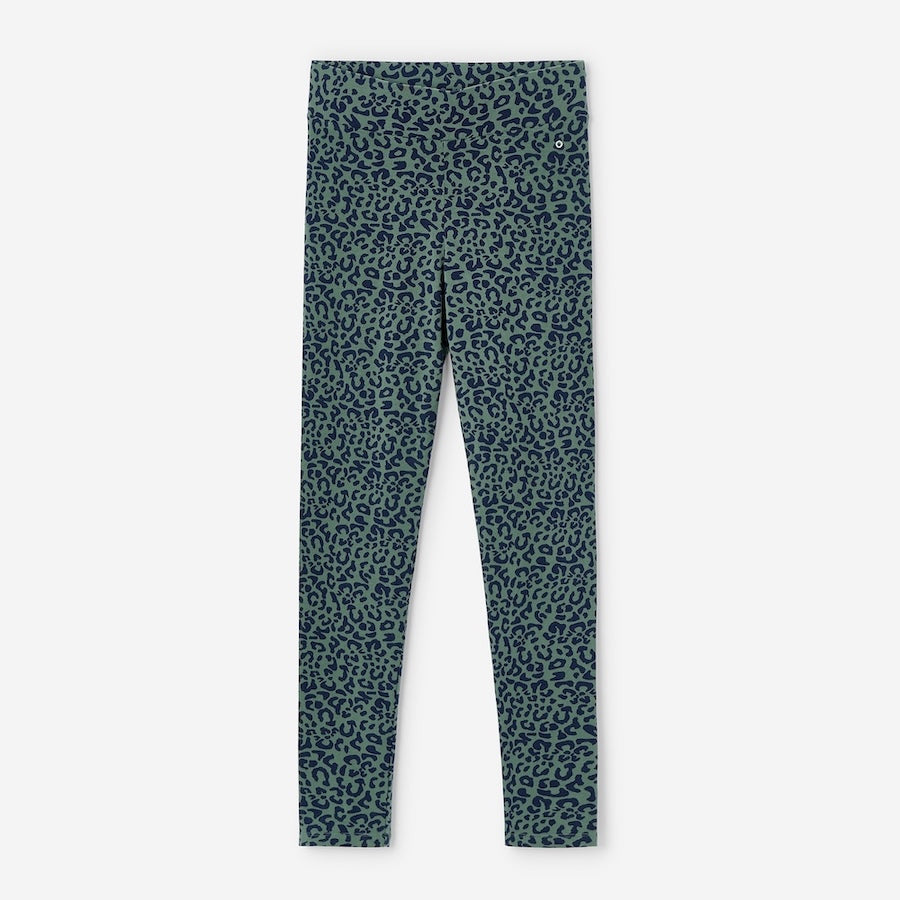
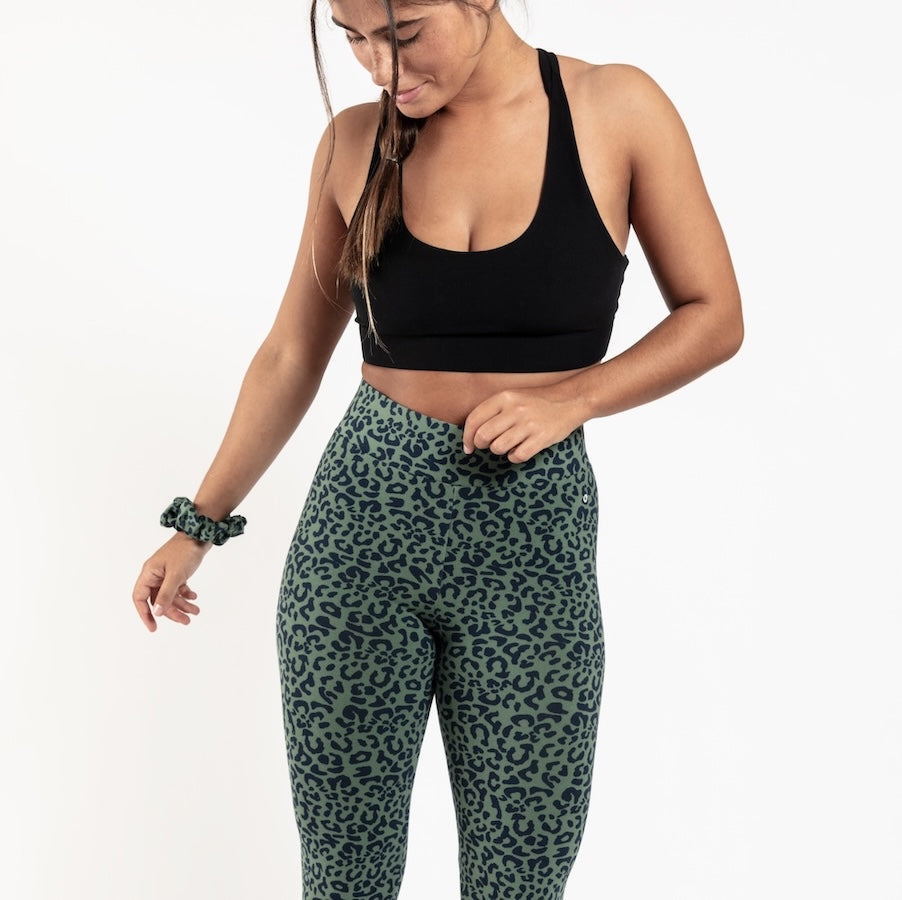
If you want an easier place to start, browse our organic clothing and organic cotton tops for everyday basics. For movement, our organic cotton leggings and organic cotton sports bra keep the fabric mix predominantly organic cotton.
Not everything needs equal scrutiny. Here's how to prioritize your attention:
Most important to check:
-
Baby and children's clothing (highest skin contact, most sensitive)
-
Underwear, sleepwear, and base layers (direct, prolonged skin contact)
-
Activewear with moisture-management or compression finishes
-
Bed linens and anything worn during sleep
What to look for:
-
GOTS or OEKO-TEX® Standard 100 certification
-
Absence of performance finish claims on the label
-
Brands with transparent sourcing and chemical policies
What doesn't fully protect you:
-
"Eco-friendly" or "natural" marketing without third-party certification
-
"Organic cotton" alone (the fiber may be organic; the finish may not be)
For deeper research on certifications, our certification guide breaks down exactly what each label means and doesn't mean. If you're looking to reduce your overall chemical load at home — not just in clothing — our guide to 10 non-toxic home swaps for healthier living is a good place to start. Formaldehyde, it turns out, is also released by scented candles, air fresheners, and certain cleaning products — which is exactly why we put together our guide to non-toxic candles as well.
Conclusion
Formaldehyde in clothing is real. It's not a myth invented by the wellness industry — it's documented by the GAO, the EPA, and peer-reviewed research. But it's also not a reason to panic about every item in your closet.
The most realistic risk for most people is skin irritation and allergic contact dermatitis. The people who need to take this most seriously are those with sensitive skin, babies, young children, and anyone who already reacts to new clothes. For everyone else: wash new garments before wearing them, learn to read performance finish labels, and prioritize certified natural clothing, especially where skin contact is highest.
FAQ to Formaldehyde in Clothing
What fabrics have formaldehyde in them?
Formaldehyde-based resins are most commonly used in synthetic blends and treated natural fibers marketed as wrinkle-free, durable-press, or permanent-press. Polyester-cotton blends are particularly common carriers. Even some garments labeled "organic cotton" may have been treated with formaldehyde-based finishing resins.
Does formaldehyde wash out of clothes?
Washing new clothes before wearing them significantly reduces formaldehyde levels — one 2022 study found no detectable formaldehyde in washed samples. However, the GAO notes that washing effectiveness depends on the resin type and wash conditions, and reduction may not always be complete or permanent. Always wash new clothes before first wear, especially for children.
Why do they put formaldehyde in jeans?
Jeans and other garments are treated with formaldehyde-based resins primarily to achieve wrinkle resistance, shrink-proofing, and shape retention. Formaldehyde also acts as a preservative against mold and mildew during long ocean shipping — which is especially relevant for denim produced in Asia and shipped to the U.S.
How do I know if my clothing is toxic?
U.S. labels don't disclose formaldehyde treatment. Watch for terms like "wrinkle-free," "permanent press," "crease-resistant," "stain-resistant," or "static-resistant" — these signal likely chemical finishing. For the most reliable assurance, look for OEKO-TEX® Standard 100 or GOTS certification and verify via the brand's official certification database.
*Advertisement: This article contains affiliate links marked with*. If you make a purchase through these links, we may earn a small commission at no additional cost to you.
The information provided is for educational and informational purposes only and is not intended as medical advice. It should not replace consultation with your physician or qualified healthcare provider. This article was created with the assistance of AI tools and has been editorially reviewed and approved by our team. All opinions expressed are our own.
Lilija Bairamova

Lilija is the founder of Orbasics, a brand born from her passion for creating a healthier, more sustainable world, starting with organic, toxin-free clothing for children. As a mother committed to a non-toxic lifestyle, Lilija has spent years exploring and embracing clean beauty, non-toxic living, and holistic wellness. She shares her expertise on everything from natural personal care to creating toxin-free home environments, offering practical tips and in-depth guides that empower you to make healthier choices and lead a more mindful, health-conscious life.




Leave a comment