
Table of Contents
9 Best Non Toxic Leggings & Best Organic Cotton Leggings for 2026
This page may contain affiliate links. We may earn a commission on purchases, at no additional cost to you. Learn more →
Worried about toxins in your leggings? I totally get it.
As someone who’s always on the go—yoga, pilates, gym sessions, running errands, etc—I practically live in activewear. But after learning that conventional leggings can contain hormone disrupting chemicals like PFAS and BPA, I started rethinking what I was wearing every day.
Many conventional leggings are made from polyester, nylon, and elastane blends. These fibers can be useful for stretch and performance, but they may also come with chemical finishes, azo dyes, coatings, and microplastic shedding that I would prefer to avoid.
That’s why I began looking for the best non-toxic leggings and yoga pants that could handle my daily movement, without exposing my body to toxic chemicals. After testing dozens of organic leggings over the past two years, I’ve finally found my go-to picks for comfort, performance, durability, squat-proof coverage, and 100% free from the nasty stuff!
In this guide, I'll share my curated list for the best non toxic leggings and the best organic cotton leggings for 2026. I focused on the details that count: organic cotton, natural fibers, low-impact dyes, PFAS-free materials, and trusted certifications like GOTS and OEKO-TEX® STANDARD 100. These are my favorite leggings for whatever your day looks like: yoga, pilates, intense workout, lounging, travel, errands, and more!

What “Non Toxic” Leggings Really Means
Unfortunately, “non-toxic” is not a regulated clothing category in the US. This means brands can call their leggings "non-toxic" purely for marketing purposes. For this article, non toxic leggings means leggings that avoid the biggest textile red flags: polyester- or nylon-heavy fabrics, intentionally added PFAS water/stain repellents, harsh finishing chemicals, toxic azo dyes, and unclear material claims.
⚠️ Keep in mind: This guide is for educational shopping research, not medical advice. If you have eczema, contact dermatitis, latex allergy, or chemical sensitivity, consider asking a dermatologist and choosing spandex-free, latex-free, dye-free, or undyed options first.
Why Switch to Organic Cotton Non Toxic Leggings?
Many conventional leggings are made from synthetic fabrics like spandex, nylon, and polyester. These materials are essentially plastics, and they can shed synthetic microfibers during washing and wear. But that's not all, regular leggings often contain chemicals like toxic dyes, flame retardants, pesticides, PFAS, BPA, and other toxins that can harm your health.
I came across this while digging into fabrics, and it stuck with me. In 2022, the Center for Environmental Health found BPA in many popular polyester-based leggings. Similarly, Mamavation found PFAS (forever chemicals) in 25% of the workout leggings, yoga pants, and loungewear they tested.
But here’s the worst part: leggings sit directly on your skin, right when you’re most likely to sweat.
And when you sweat, your skin can absorb those chemicals more easily.
Luckily, there are many non-toxic leggings you can choose from. You just need to learn how to spot them!
How to Find the Best Non Toxic Leggings
When looking for non-toxic leggings, keep these safety tips in mind:
-
Start with the fiber content. Choose organic cotton, Tencel Lyocell, hemp, or Merino wool where possible. A little elastane may help fit, but 100% organic cotton is better for plastic-free goals. Natural fiber provides a skin-friendly experience without the worry of chemical exposure.
-
Look for GOTS to ensure organic textile processing. The Global Organic Textile Standard (GOTS) requires a minimum of 70% certified organic fibers for the “made with organic” label grade and at least 95% for the “organic” label grade. It also restricts many problematic processing chemicals, including certain heavy-metal dyes and hazardous inputs.
-
Use OEKO-TEX® as a chemical-safety signal. The OEKO-TEX® standard means a finished textile has been tested for harmful substances, but the fabric can still be made from polyester or nylon.
-
Be careful with bamboo claims. In the US, bamboo viscose/rayon should be described as viscose or rayon made from bamboo, not natural bamboo fiber.
-
Look for brands that clearly state their leggings are PFAS-free. Terms like “stain-resistant,” “water-repellent,” or “easy-care” can sometimes signal added chemical finishes, so it’s worth double-checking what’s actually being used.
-
Pick the right legging for the activity. Organic cotton is beautiful for yoga, Pilates, walking, lounging, travel, and everyday wear. For very sweaty workouts like HIIT, look for blends with natural fibers mixed with a small amount of elastane for stretch, or moisture-managing options like TENCEL™, which feel lighter without relying on fully synthetic fabrics.
Below, you’ll find our top picks, all carefully vetted and tested so you don’t waste time or money!
How We Chose the Best Organic Cotton Leggings
We know that finding a good pair of leggings can feel like finding a needle in a haystack, especially if you're looking for sustainable materials. After testing 20+ brands over the past two years, here’s what I considered when choosing the top picks:
-
Natural fibers: I prioritized 90–100% organic cotton whenever possible, with a small amount of elastane or spandex for better stretch and fit. I also considered overall comfort, flexibility, and whether they’re best suited for workouts, everyday wear, or lounging.
-
Real life performance: I wore each pair across different activities, from yoga and pilates to strength workouts, long walks, travel days, and even lounging at home. And yes, every pair went through a proper squat test, think squats, lunges, and stretching. I checked them in different lighting and even asked others to take a look from different angles, just to be sure nothing was see-through!
-
Certifications: I looked for trusted labels like GOTS and OEKO-TEX® STANDARD 100 to ensure the fabrics were tested for harmful substances and made with safer, more transparent practices.
-
Transparency: I looked for brands that clearly disclose materials, clean dye practices, manufacturing location, and product details.
What are The Best Non Toxic Leggings Brands?
Orbasics | Shop Here*
MATE the Label | Shop Here*
AYA | Shop Here*
Fair Indigo | Shop Here*
Cottonique | Shop Here*
Pact | Shop Here*
Lezat | Shop Here*
Groceries Apparel | Shop Here*
Maggie’s Organics | Shop Here*
Quick Picks: Best Non Toxic Leggings at a Glance
|
Best for |
Brand + legging |
Why it made the list |
|
Best overall everyday organic cotton leggings |
Orbasics Organic Cotton All Day Leggings |
95% GOTS-certified organic cotton, 5% elastane, soft everyday fit, made in Portugal. |
|
Best plastic-free leggings |
AYA Organic Pima Cotton Leggings |
100% organic Pima cotton fabric, cotton thread, and tree-rubber/cotton elastic. |
|
Best 100% organic cotton leggings |
Fair Indigo 100% Organic Cotton Leggings |
Pure organic Peruvian Pima cotton; spandex-free with mechanical stretch. |
|
Best spandex-free cotton leggings |
Pansy Organic Cotton Leggings |
100% US-grown organic cotton and organic cotton thread; no spandex. |
|
Best for very sensitive skin |
Cottonique Organic Cotton Leggings |
100% organic cotton fabric, latex-free, spandex-free, and designed for allergy-prone skin. |
|
Best low-impact workout leggings |
MATE the Label Organic Stretch Leggings |
92% organic cotton, 8% spandex, GOTS-certified organic cotton, made for low-impact movement. |
|
Best budget organic cotton leggings |
Pact On The Go-To Leggings |
Organic cotton blend, Fair Trade Certified factory, affordable price point. |
|
Best USA-made low-tox active leggings |
Lezat Reagan or Sara Organic Cotton Leggings |
High organic cotton content, bio-based elastane on current styles, low-impact azo-free dyes. |
|
Best plant-dyed leggings |
Groceries Apparel Naomi High-Waist Legging |
92% organic cotton, 8% spandex, dyed with plant-based Vege-dye™. |
|
Best warm base layer |
Maggie’s Organics Base Layer or Fleece Leggings |
GOTS-certified organic cotton blend, cozy, practical, and made by union workers in India. |
The Best Non Toxic Leggings (PFAS-Free & Organic)
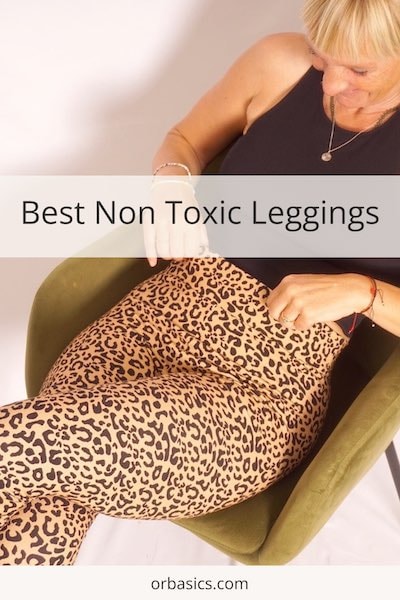
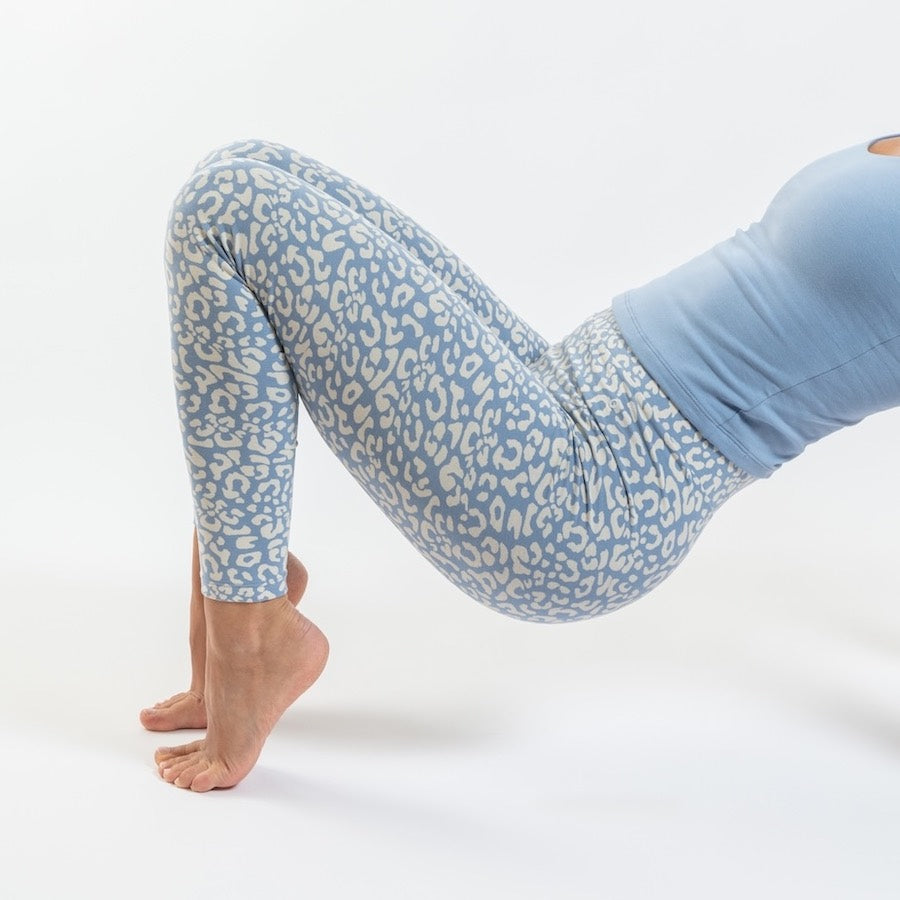
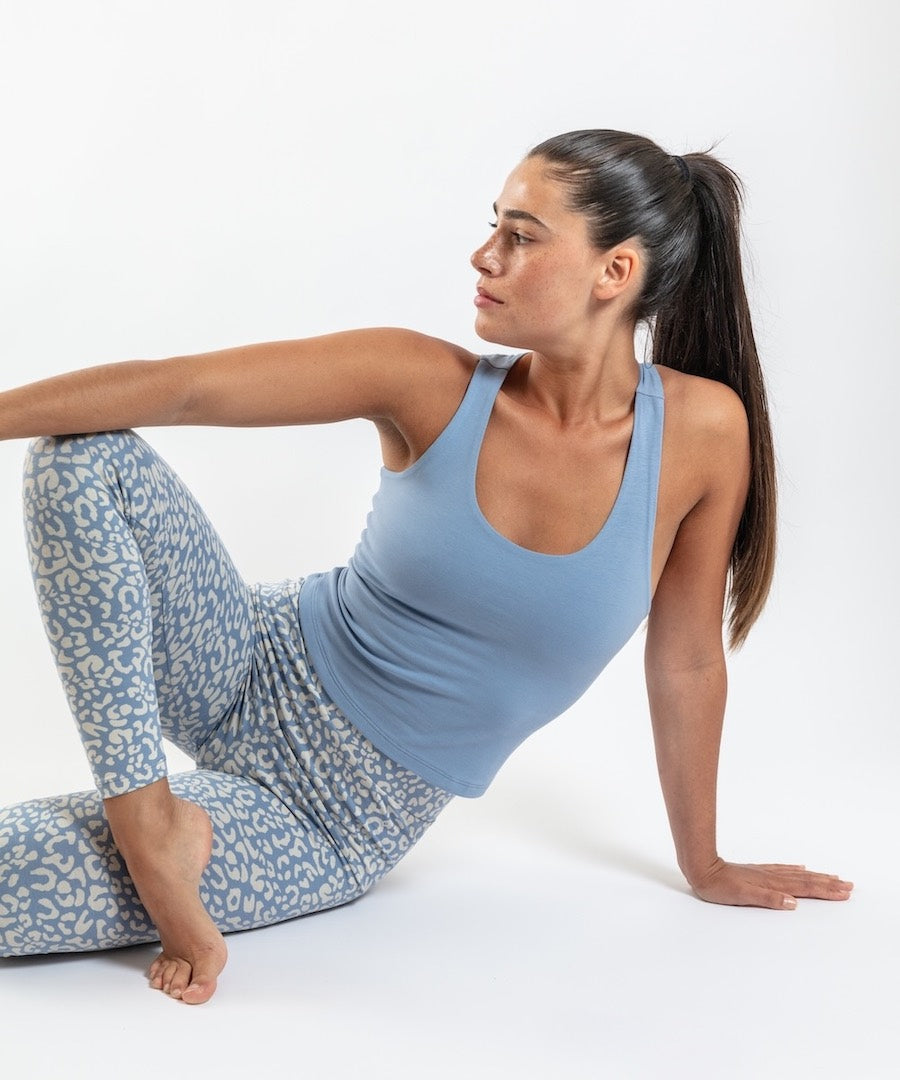
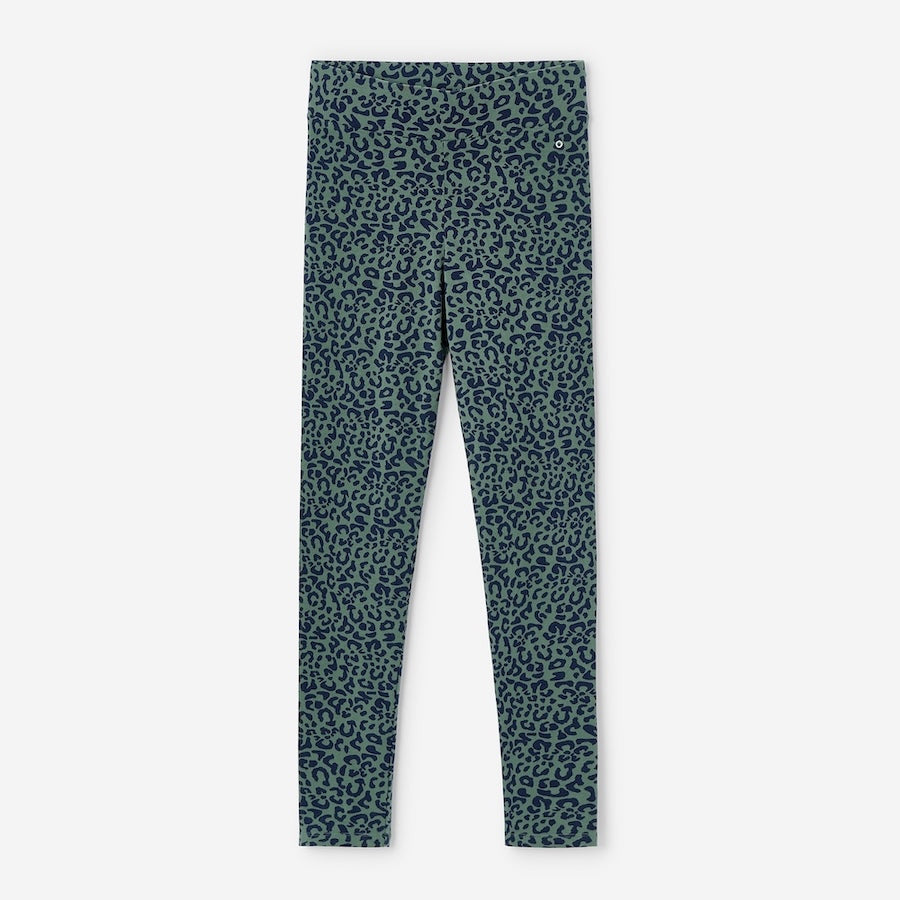
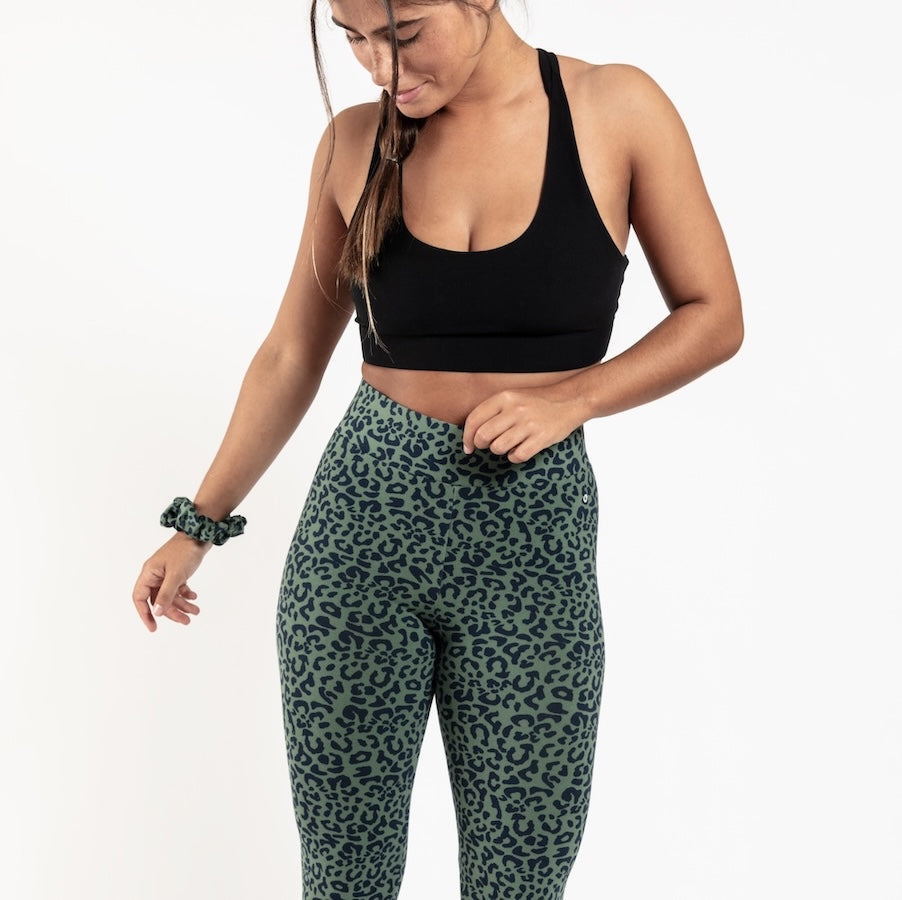
1. Orbasics - Best Overall Organic Cotton All Day Leggings
Best for: Everyday softness, sensitive skin, lounging, errands, gentle movement
Organic Materials: 95% GOTS-certified organic cotton, 5% elastane
Certifications: GOTS; responsibly made in Portugal
Sizes: XS–XL
Typical price: From €49.90
When we launched this legging, we set out to create the best organic cotton leggings we could never quite find ourselves: free from unnecessary chemicals and soft enough to wear all day without compromising on fit or quality.
After wearing them myself, I can confidently say they've become my go-to leggings. The fabric is unbelievably soft against the skin, and the high, wide waistband provides support without digging in or feeling restrictive. If I had one small note, it’s that they’re less stretchy than synthetic activewear leggings. For me, though, that's a trade-off I'm happy to make for the natural feel of organic cotton.
Durability: These organic cotton leggings retain their shape wear after wear without becoming baggy.
Squat-Test: The fabric stays opaque, even when I'm bending or moving around throughout the day.
Non-toxic note: These are a low-tox, organic-cotton-first choice, not a fully plastic-free choice. If you prefer plastic-free leggings, see AYA, Fair Indigo, and Cottonique below.
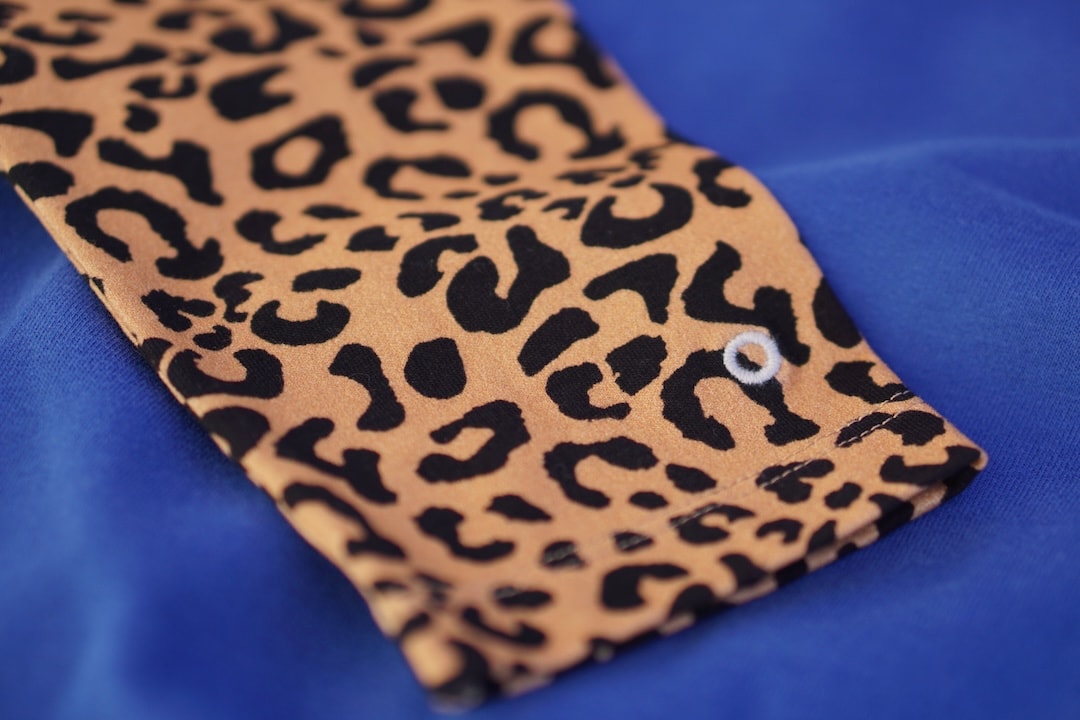
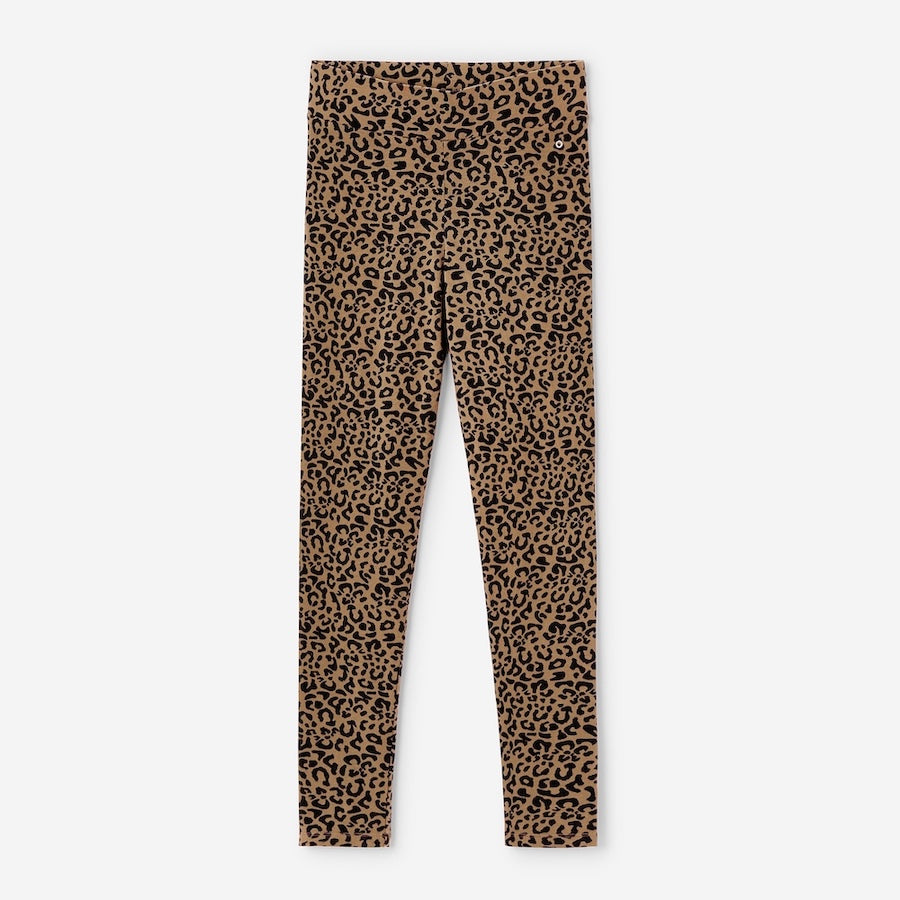
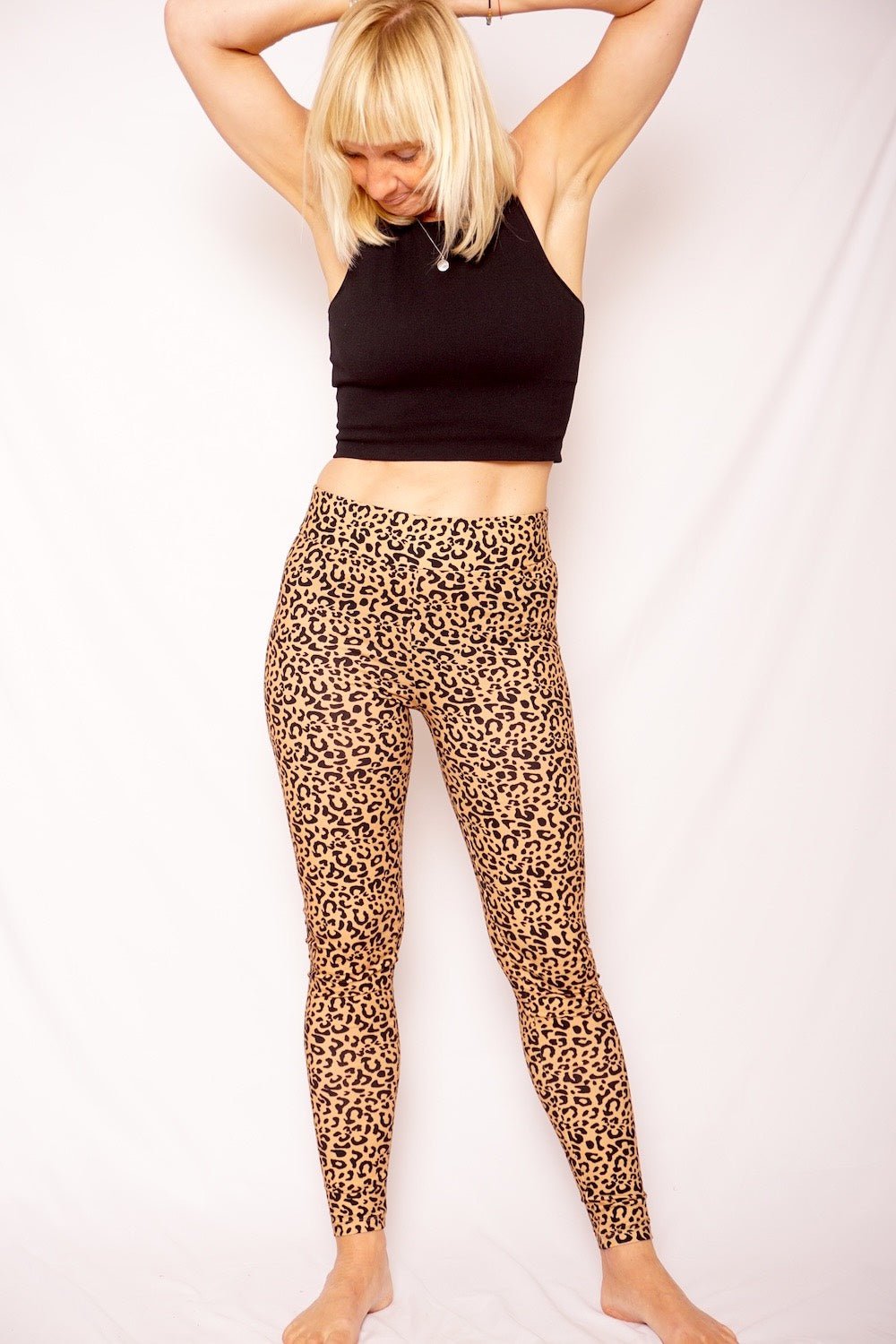
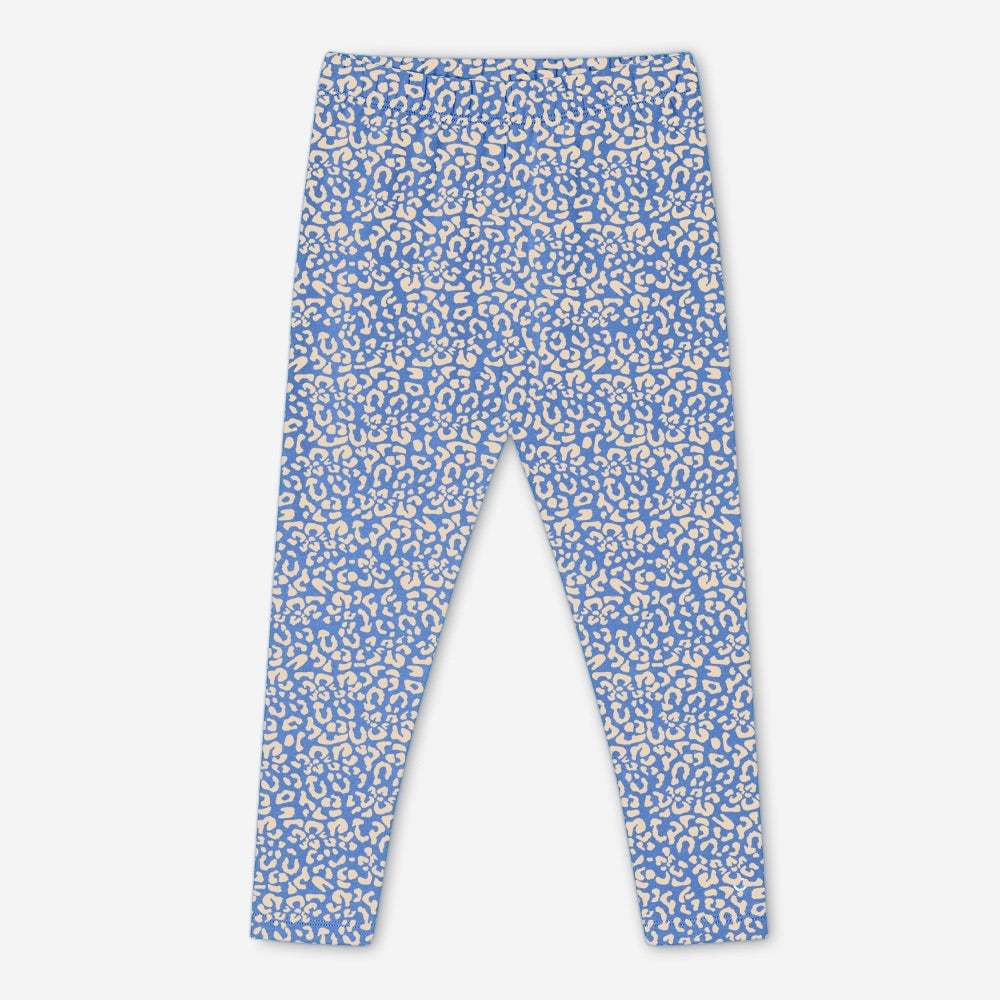
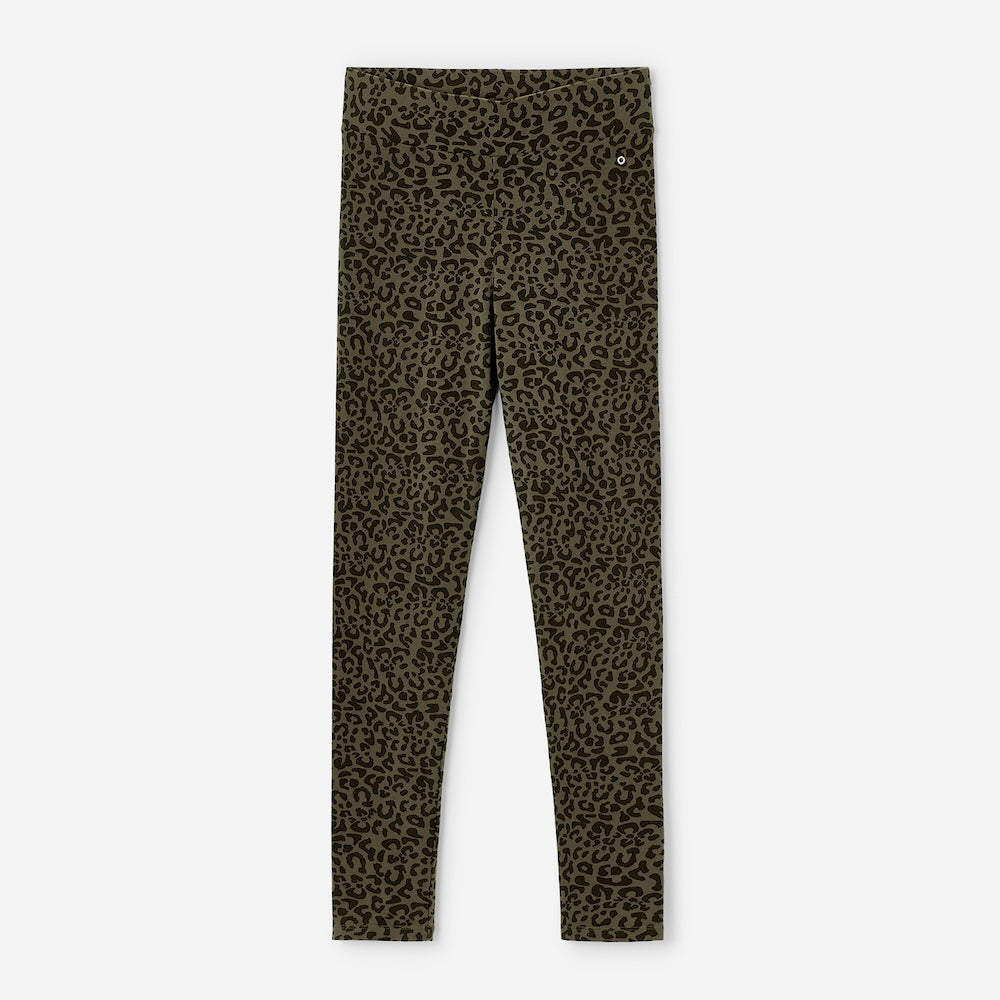
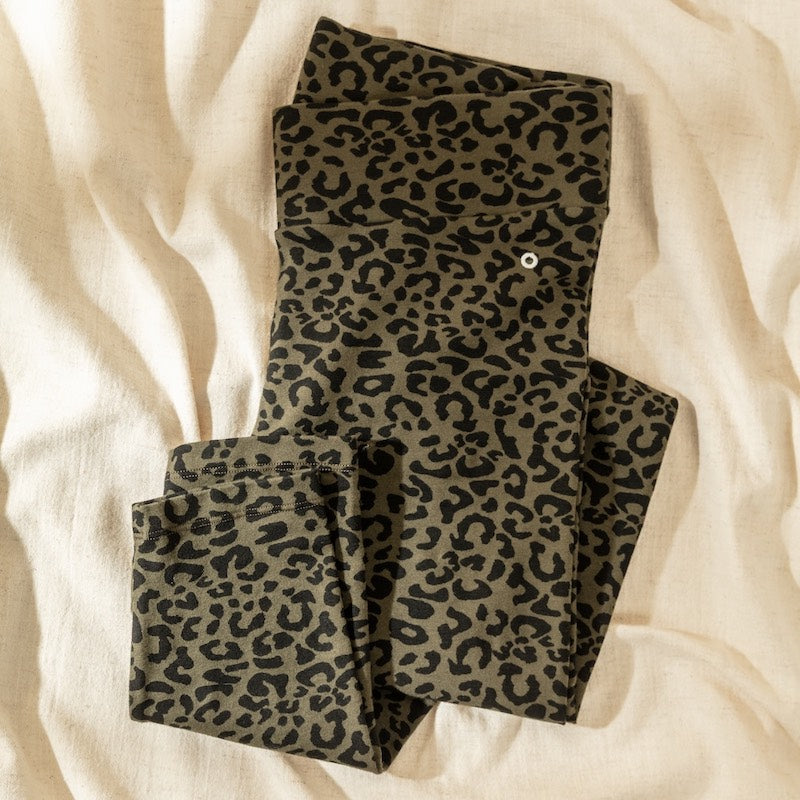
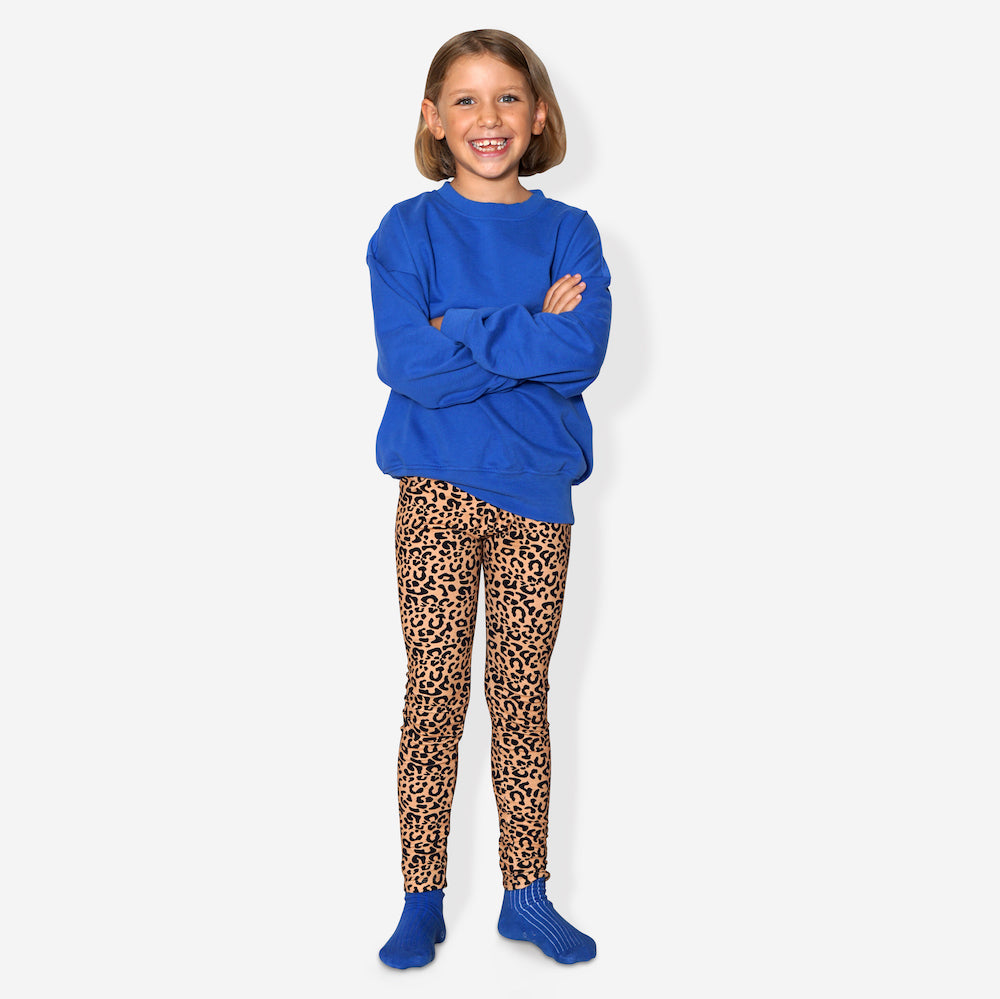
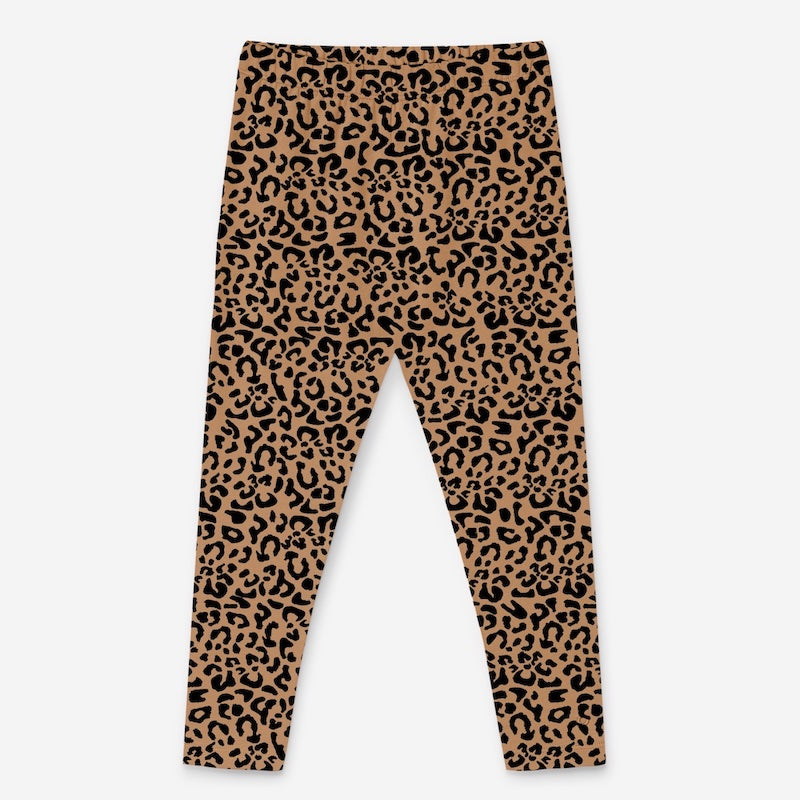
Shop Orbasics Organic Cotton All Day Leggings | Shop Orbasics Leo Leggings

2. AYA Organic - Best Plastic-Free Leggings
Best for: Plastic-free leggings
Plastic-Free Materials: 100% organic Pima cotton fabric, cotton thread, organic cotton labels, tree-rubber/cotton elastic
Certifications: GOTS, OEKO-TEX®
Sizes: XS–XXL
Typical price: Around $54–$60
Made from 100% organic Peruvian Pima cotton, AYA's leggings avoid the usual elastane or synthetic blends, which makes them one of the cleanest and most natural-feeling options I’ve tried.
When I wear them, the first thing I notice is how soft, breathable, and gentle they feel on the skin. The fabric is simple but high quality, and it works really well for everyday comfort. I like them most for yoga, stretching, lounging, or running errands. They’re not designed for high-performance workouts, but for anyone looking for the best non-toxic leggings, they’re a strong choice.
Durability: I’ve been using them for the past three months and they still feel high-quality, but I’ll need more time to see how they hold up long term.
Squat-Test: I’ve tried the Dark Teal leggings, and while the fabric feels thinner than other brands, it remains opaque during most everyday movements.
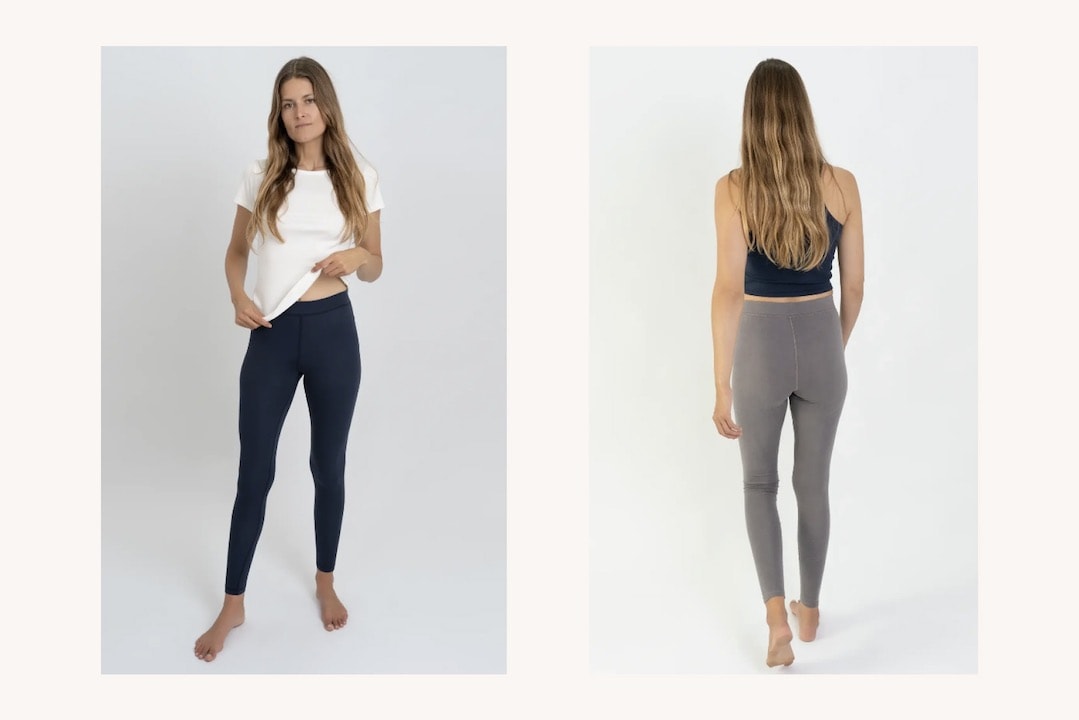
Image @ AYA
3. Fair Indigo - Best 100% Organic Cotton Leggings
Best for: Spandex-free organic cotton comfort
Materials: 100% organic Peruvian Pima cotton
Certifications: GOTS
Sizes: XS–XL
Typical price: $49.90-$59.90
These buttery-soft leggings are made from 100% organic Peruvian Pima cotton, considered among the top 0.05% of cotton in the world! You can immediately feel the difference—softer and smoother than most regular organic cotton leggings. They avoid synthetics like polyester, nylon, and spandex, which makes them especially great for sensitive skin.
In terms of wear, they feel best for lounging, sleeping, home office days, and relaxed everyday use. I’d recommend sizing down 1–2 sizes since they tend to run large and have a slightly loose fit. If you’re looking for top-tier comfort and natural materials, these are an excellent choice for everyday ease.
Durability: There’s no noticeable fading after multiple washes, though I’ve noticed a bit of stretching. I’ve also avoided putting them in the dryer, as many others report shrinkage when they do.
Squat-Test: The opacity is decent for everyday wear.
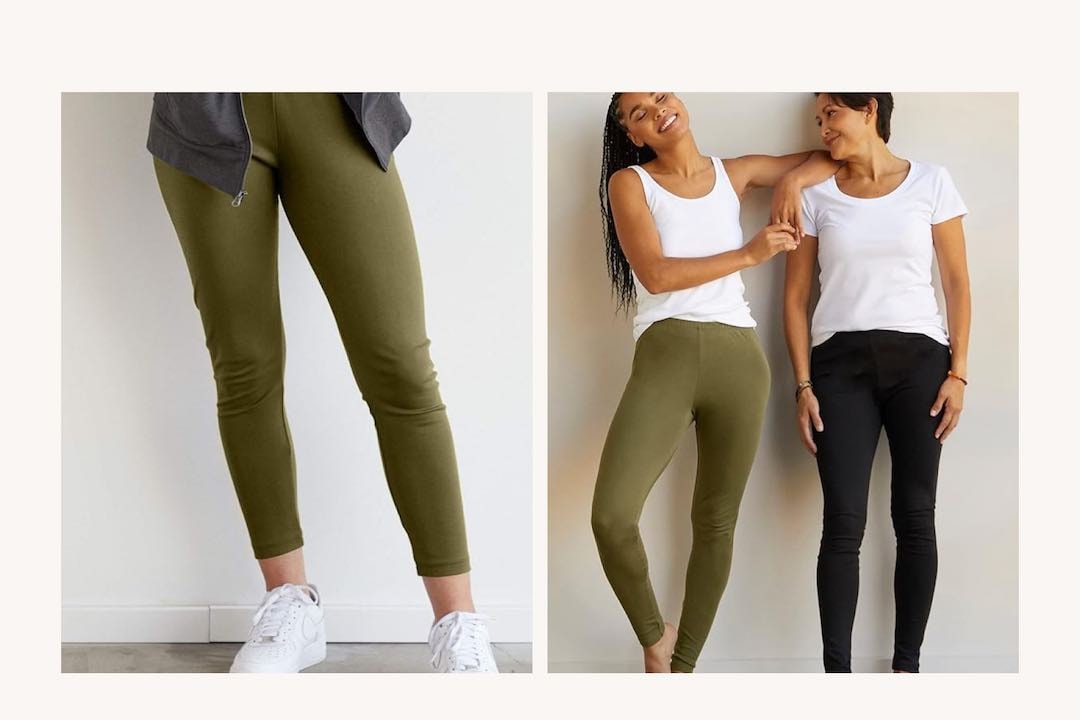
Image @ Fair Indigo
4. Cottonique - Cropped Non Toxic Leggings with Pockets*
Best for: Chemical sensitivities, latex allergy, spandex sensitivity, eczema-prone skin
Natural Materials: 100% organic cotton fabric on key legging styles; product details vary
Certifications: GOTS
Sizes: 4-8
Typical price: $55.00
I’ve found these organic leggings to be a standout option, especially if you have sensitive skin. They’re made from 100% organic cotton with no latex, spandex, or synthetic blends, which makes them incredibly gentle and breathable for all-day wear.
Cottonique positions its range as allergy-focused, with many styles specifically designed to be latex-free and spandex-free for people who react to synthetic fibers, harsh dyes, resins, bleach, or formaldehyde. It’s easy to see why their leggings are a top favorite among people with eczema and other skin conditions, as well as those with general chemical sensitivities.
Durability: They hold up well with gentle washing, but they tend to stretch over time.
Squat-Test: Generally opaque for everyday wear.
5. MATE the Label - Best Non-Toxic Workout Leggings (PFAS-Free)*
Best for: Low-impact workouts and a cleaner alternative to synthetic activewear
Organic Materials: 92% organic cotton, 8% spandex
Certifications: GOTS
Sizes: XS–3XL, depending on style
Typical price: $149.50
These organic leggings are comfy, true to size, and have just enough stretch to move with you without feeling restrictive, especially during yoga, Pilates, or light workouts where you’re moving and sweating.
The fabric is a medium weight, which makes them feel really well made. They feel soft and close to a second skin, while still offering a supportive and flattering fit. For me, they strike a really nice balance between comfort, stretch, and fit, while still being a cleaner option than typical synthetic leggings.
Durability: If you care for them properly, they can last a long time.
Squat-Test: I’ve worn them through different movements and never had any issues with them being see-through. These squat-proof leggings give me full confidence in terms of coverage.
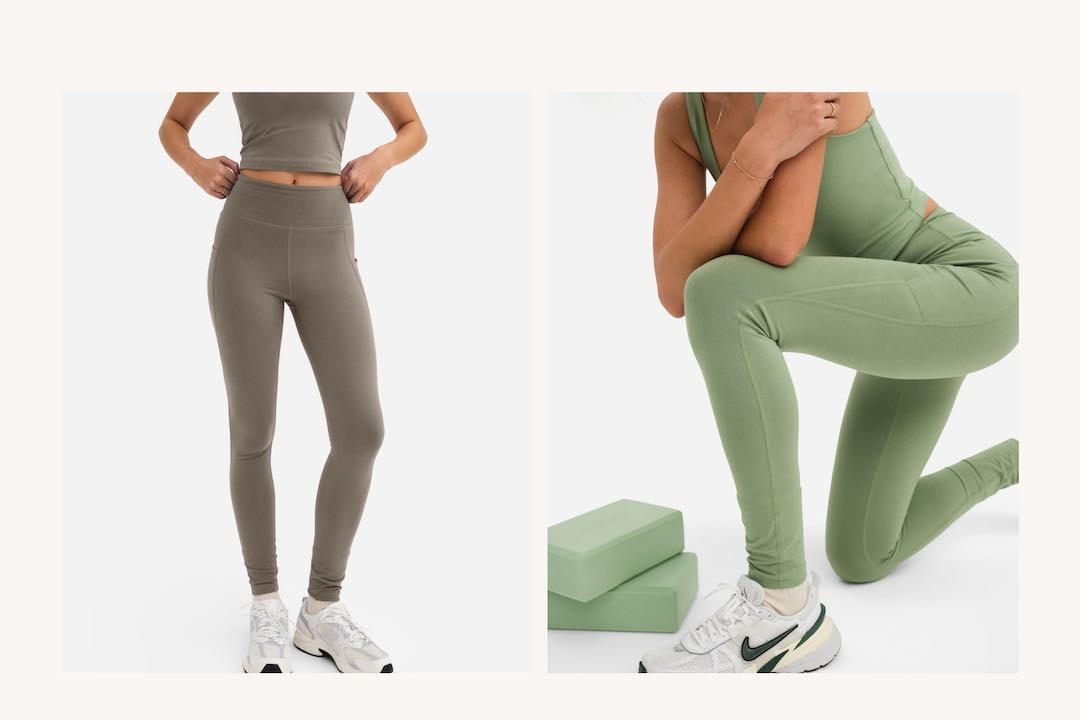
Image @ Mate the Label
6. Pact - Best Budget-Friendly Organic Cotton Leggings*
Best for: Budget-friendly organic cotton leggings
Non-Toxic Materials: Organic cotton blend with elastane/spandex
Certifications: GOTS, Fair Trade USA, and SimpliZero
Sizes: XS–XXL, depending on style
Typical price: $25–$38
These are really comfortable organic leggings and a great affordable option if you’re looking for something non-toxic. I’ve been wearing them mostly for lounging, running errands, and easy days when I just want something breathable and simple.
The pockets are honestly one of my favorite parts. They’re actually useful, and it’s nice being able to just slip my phone in and go without thinking about it. Fit-wise, they’re comfortable overall, but I did notice they can run a bit large depending on your body type, and they may slide down slightly during wear. Still, for the price and the clean material, I think they’re a really solid entry-level choice.
Durability: They’ve maintained their shape and quality through frequent use.
Squat-Test: Dark colors are not see-through, while lighter colors can become slightly translucent.
Non-toxic note: Choose Pact for low-tox everyday use, not for a fully plastic-free wardrobe. If elastane is a concern, choose AYA, Fair Indigo, or Cottonique instead.
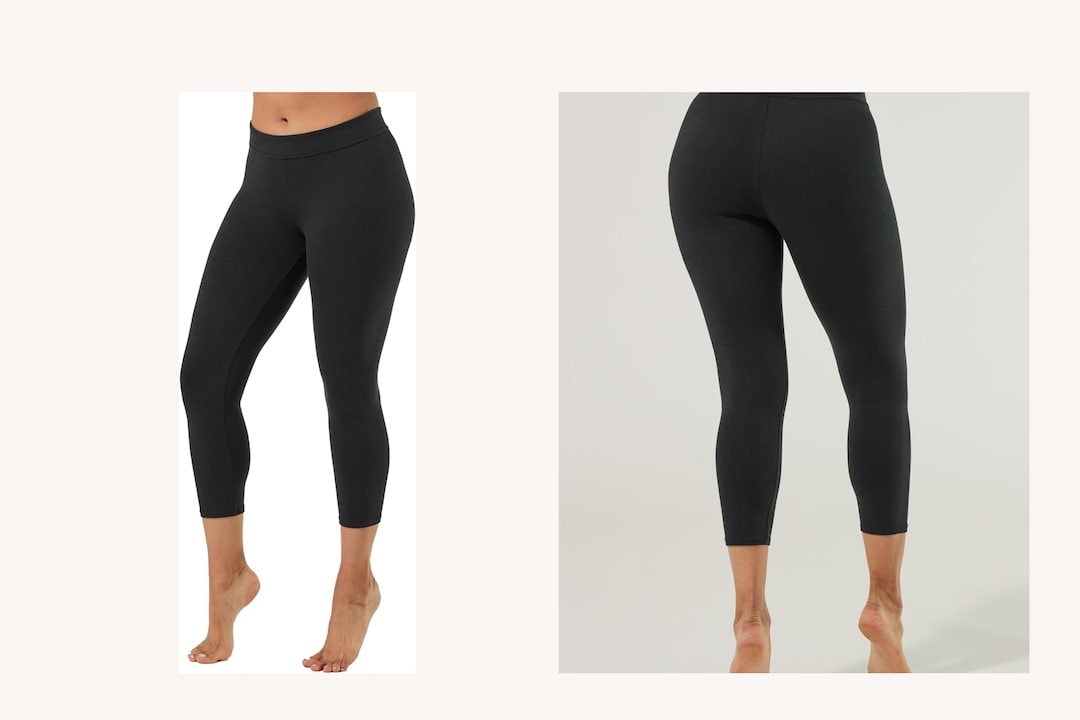
Image @ Pact
7. Shop Lezat here*
Best for: USA-made low-tox activewear
Toxin-Free Materials: 95% certified organic cotton with 5% bio-based elastane, or 92% certified organic cotton with 8% bio-based elastane
Certifications: GOTS
Sizes: XS–XL or more, depending on style
Typical price: $85.68
I’ve been really liking the Reagan Organic Cotton Leggings overall. The extremely soft and comfortable feel is the first thing you notice—I honestly end up living in them for Pilates, yoga, or just lounging. They’re breathable during workouts and have a flattering fit and nice aesthetic, especially for low-impact movement .
What I like is that Lezat sits nicely between soft cotton comfort and activewear stretch. They do run a bit small and can vary between batches, so sizing isn’t always perfect.
Durability: Generally holds up well, though you may notice fading over time with frequent washing.
Squat-Test: They’re generally fine for low-impact movement, but during deeper squats you may notice a slight sheerness when the fabric is fully stretched.
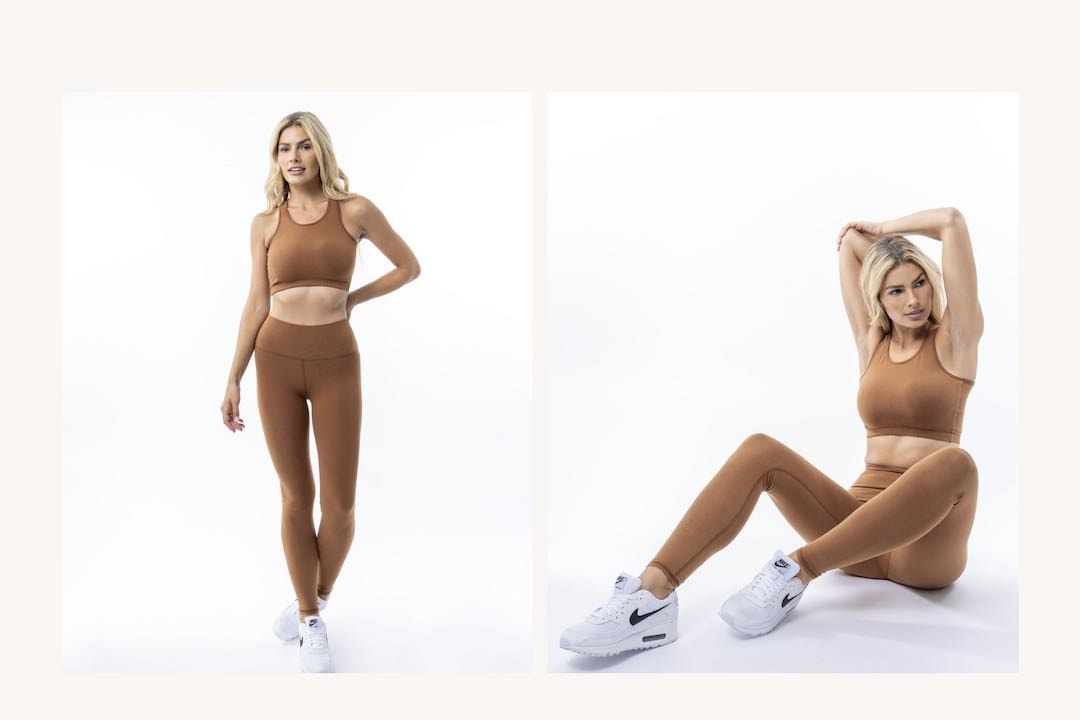
Image @ Lezat
8. Groceries Apparel - Naomi High-Waist Legging (Plant-based Dyes)*
Best for: Plant-dyed organic cotton leggings
Materials: 92% organic cotton, 8% spandex
Certifications: Plant-based Vege-dye™ claim; made locally in Los Angeles
Sizes: XS–XL
Typical price: $73-$98
This organic legging feels like an easy everyday staple you can throw on and instantly feel good in. The organic cotton fabric is soft, breathable, and comfortable enough for all-day wear, whether you’re lounging, heading out, or doing a light yoga session.
The high-rise waist offers a flattering fit that gently hugs without feeling tight. I also love the plant-based dyes, which give the colors a unique, earthy feel that stands out from basic options. Crafted right in Los Angeles, these leggings are dyed using eco-friendly, low-impact plant-based dyes that significantly reduce water pollution and minimize chemical exposure.
Durability: Over time, they may not hold their shape as well as more performance-focused leggings.
Squat-Test: They’re generally opaque for everyday wear.
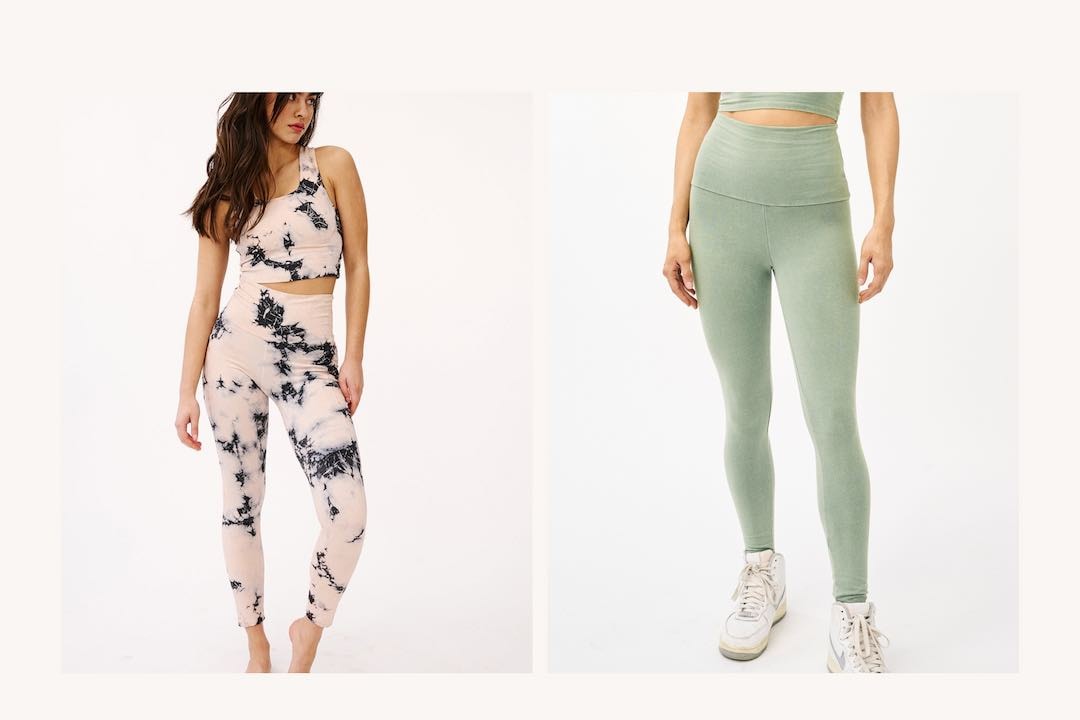
Image @ Groceries
9. Maggie’s Organics - Best Base Layer or Fleece Leggings
Best for: Cold weather, layering, and cozy organic basics
Non-Toxic Materials: 90% organic cotton,10% spandex
Certifications: GOTS Certified
Sizes: S–XXL
Typical price: From around $45
The Maggie's Organics Base Layer and Fleece Leggings are one of those reliable cold-weather staples you end up reaching for on repeat. The organic cotton feels soft and gentle on the skin, and the fleece version adds a really nice layer of warmth that makes cold days feel a lot more manageable.
I like how effortless they are to throw on, whether I’m layering them under something or just wearing them around the house. They’re not meant for intense activity, but for comfort, warmth, and everyday use, they do exactly what you want them to.
Durability: They hold up well for everyday wear.
Squat-Test: They’re not fully squat-proof, but since they’re made for layering, it’s hardly a dealbreaker.
Non-toxic note: These are not plastic-free because they contain spandex. They are still a strong lower-tox alternative to polyester fleece or nylon base layers.
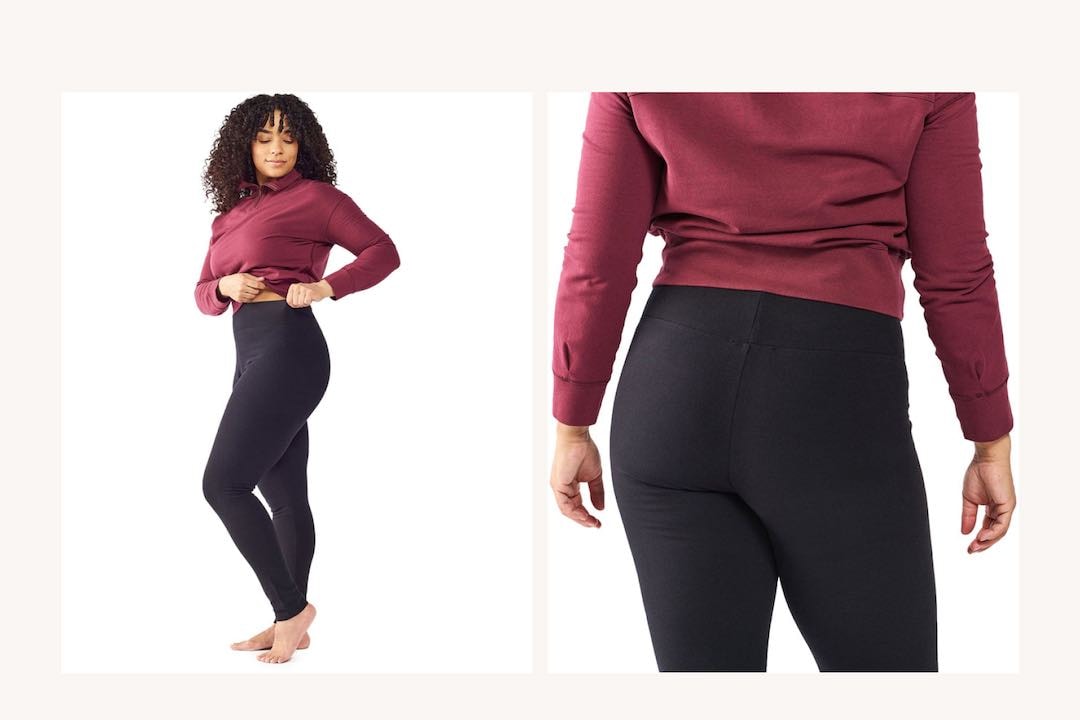
Image @ Maggies Organics
Harmful Chemicals to Watch For in Leggings
Here are a few common chemicals that can show up in traditional leggings and are worth being aware of:
-
PFAS: Often used in water- or stain-resistant finishes. PFAS may increase the risk to hormone disruption and certain cancers. Look for PFAS-free claims backed by GOTS or OEKO-TEX®.
-
Formaldehyde: Can be used in textile finishing, especially wrinkle-resistant or easy-care finishes. It can irritate skin and airways and is classified as a carcinogen under certain exposure conditions.
-
BPA: The Center for Environmental Health (CEH) has found BPA in several polyester and spandex leggings. BPA in clothing can be absorbed through the skin and has been linked to developmental and reproductive health concerns.
-
Azo dyes and heavy-metal dyes: Risk depends on the dye and concentration. GOTS and OEKO-TEX® help reduce this concern by restricting or testing for many harmful substances. These toxins have been linked to skin allergies, dermatitis, and even certain types of cancer.
-
Phthalates: More relevant to plastic prints, coatings, and some synthetic components than plain organic cotton fabrics. Phthalates may increase the risk of certain cancers.
-
Microplastic fibers: Polyester, nylon, acrylic, and elastane can all release tiny synthetic microfibers during wear and washing.
Wondering how to make your non-toxic leggings last longer? Check my top tips below!
Caring for Your Non-Toxic Leggings
First thing first: you CAN wash your leggings in your washing machine! That being said, if you choose to go this route, be sure to use the gentle cycle, use ONLY cold water and if possible use a non toxic laundry detergent, that´s gentle to your skin and the planet.
Now the bad news: you shouldn’t use your dryer. The heat and tumbling can do a number on your leggings, so for the best results, you should air dry your leggings to help preserve your fabric.
Some other key tips include:
-
Wash cold and inside out.
-
Use a gentle, fragrance-free detergent if you have sensitive skin.
-
Avoid bleach, fabric softener, and dryer sheets.
-
Air dry flat or hang dry away from harsh direct sun.
-
Store folded in a cool, dry place.
Key Takeaways
-
Conventional Leggings Risks: Made from synthetic fabrics like spandex, nylon, and polyester, they contain harmful chemicals like BPA and PFAS, which can be absorbed by the skin and cause health issues.
-
The best non toxic leggings are usually organic cotton-first. Choose high organic cotton content and avoid unnecessary polyester, nylon, and PFAS finishes.
-
The best organic cotton leggings are not always gym leggings. They shine for yoga, Pilates, walking, lounging, travel, and everyday comfort.
-
Choose GOTS-Certified Clothing as GOTS is the strongest organic textile signal. OEKO-TEX® is helpful for chemical testing, but it does not mean organic.
-
Spandex-free options exist. AYA, Fair Indigo, Pansy, and Cottonique are the cleanest choices for shoppers avoiding elastane.
FAQs for Non Toxic Leggings
What are the best non toxic leggings?
The best non toxic leggings are made from organic cotton or other natural fibers, use safer dyes and finishes, avoid PFAS coatings, and clearly disclose materials. Our top picks are Orbasics, AYA, Fair Indigo, Cottonique, MATE, Pact, Lezat, Groceries Apparel, and Maggie’s Organics.
What are the best organic cotton leggings?
The best organic cotton leggings depend on your needs. Choose AYA, Fair Indigo, or Cottonique if you want spandex-free or plastic-free options. Choose Orbasics, MATE, Pact, Lezat, Groceries Apparel, or Maggie’s Organics if you want organic cotton with a little stretch for shape retention.
Which leggings don’t have forever chemicals?
To reduce PFAS risk, look for GOTS-certified organic cotton leggings, OEKO-TEX® tested garments, or brands that explicitly say they do not use intentionally added PFAS. Avoid water-repellent, stain-resistant, or mystery performance finishes unless the brand clearly explains the chemistry.
Are organic cotton leggings good for yoga?
Yes, organic cotton leggings can be lovely for yoga, Pilates, stretching, walking, and low-to-medium-impact movement. They are breathable and soft, but they absorb moisture, so they may feel heavier during hot yoga, HIIT, or long runs.
Are polyester leggings bad for you?
Not every polyester legging is automatically harmful, but polyester is a petroleum-based synthetic fiber that can shed microplastic fibers and may be treated with chemical finishes. Some polyester/spandex activewear has also been flagged for BPA in independent testing. If you want a cleaner everyday choice, organic cotton leggings are better for human health.
Are bamboo leggings non-toxic?
Most “bamboo” leggings are actually rayon or viscose made from bamboo, which is a chemically processed regenerated cellulose fiber. In the US, the FTC says bamboo-derived rayon/viscose should not be advertised simply as bamboo unless it is actual bamboo fiber. OEKO-TEX® certification can help with chemical-safety testing, but bamboo viscose is not the same as organic cotton.
Is organic cotton hypoallergenic?
Organic cotton is often gentler for sensitive skin because it is breathable and can be processed under stricter chemical standards, especially when GOTS-certified. But “hypoallergenic” is not a guarantee. People can still react to dyes, elastane, latex elastic, detergents, or finishing residues.
Do organic cotton leggings contain spandex?
Many do. A small amount of elastane or spandex helps leggings stretch and recover. If you want spandex-free leggings, look at AYA, Fair Indigo, Pansy, or Cottonique and always check the exact fabric label.
Are PFAS-free leggings still good for active lifestyles?
If you like to wear your leggings out on the town, you may be wondering if the organic cotton alternatives will still weather the elements. While organic cotton leggings may not repel water as easily, they are still incredibly breathable and moisture-wicking, which means you can still opt for organic cotton leggings without getting bogged down.
What clothing is not toxic?
Non toxic clothing should be made of natural, organic materials. Avoid synthetic materials like polyester and nylon and opt instead of clothing either made of plant-based fibers (cotton, linen, and hemp) or some animal-based fibers (like wool, silk, and cashmere). These materials are biodegradable, have a lower carbon footprint, and don't come with the same health risks (which range from dermatitis to cancer!) Also look for certifications such as GOTS (Global Organic Textile Standard) and OEKO-TEX® which guarantee that the fabrics are free from harmful chemicals.
*Advertisement: This article contains affiliate links marked with*. If you make a purchase through these links, we may earn a small commission at no additional cost to you.
The information provided is for educational and informational purposes only and is not intended as medical advice. It should not replace consultation with your physician or qualified healthcare provider. This article was created with the assistance of AI tools and has been editorially reviewed and approved by our team. All opinions expressed are our own.
Lilija Bairamova

Lilija is the founder of Orbasics, a brand born from her passion for creating a healthier, more sustainable world, starting with organic, toxin-free clothing for children. As a mother committed to a non-toxic lifestyle, Lilija has spent years exploring and embracing clean beauty, non-toxic living, and holistic wellness. She shares her expertise on everything from natural personal care to creating toxin-free home environments, offering practical tips and in-depth guides that empower you to make healthier choices and lead a more mindful, health-conscious life.





Leave a comment