
Table of Contents
Elastane vs ROICA: Safer Stretch or Greenwashing?
This page may contain affiliate links. We may earn a commission on purchases, at no additional cost to you. Learn more →
You've done the work. You read labels, you know your fibers, and you've started avoiding polyester where you can. Then you flip over a pair of "sustainable" leggings and see it: elastane. Again. And now brands are telling you their stretch is different because it's ROICA™ — biodegradable, certified, better. But is it? Or is this another layer of greenwashing wrapped around the same plastic?
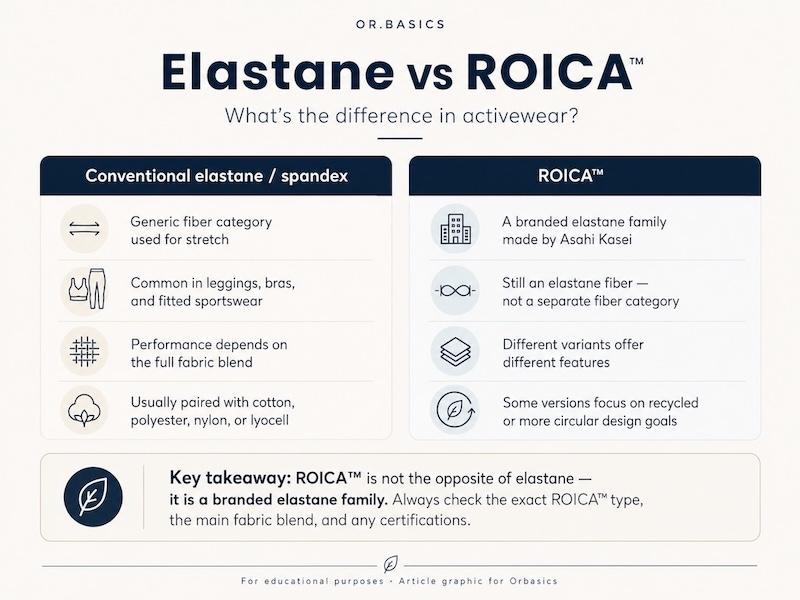
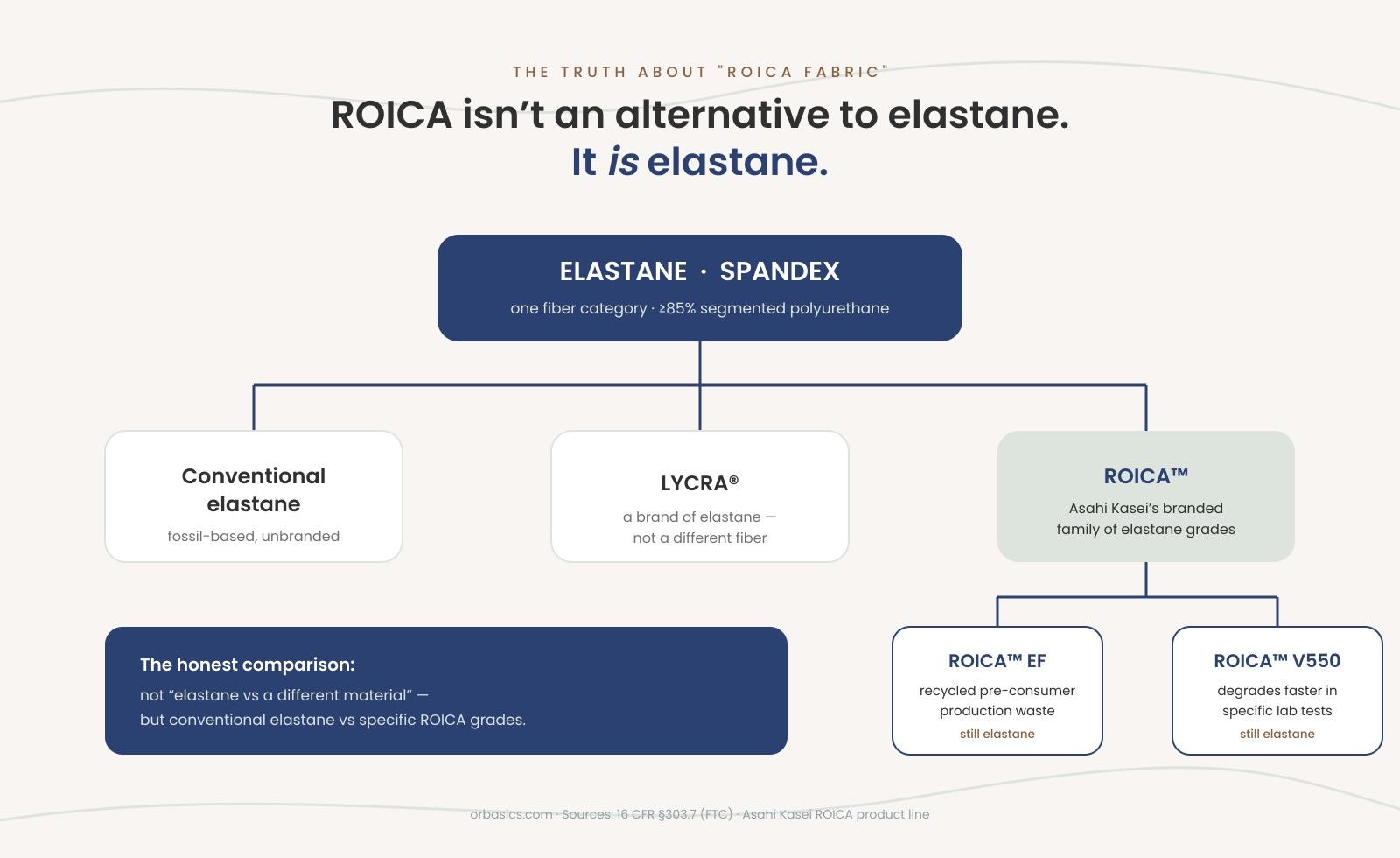
Here's my elastane vs ROICA statement: ROICA is not an alternative to elastane. It is elastane — a branded family of stretch fibers made by the Japanese company Asahi Kasei.
The real question is whether specific ROICA grades genuinely improve on conventional elastane. I've dug into the certifications, degradation tests, and chemistry, because we're using ROICA in our own activewear — and I want you to know exactly why, trade-offs included.
Key Takeaways
-
ROICA is elastane (called spandex in the US), not a natural fiber or a plastic-free substitute.
-
ROICA™ V550 is engineered to break down faster than traditional elastane in microbiologically active soil — but Asahi Kasei itself states that 100% degradation has not been verified.
-
ROICA™ EF is a recycled version made partly from pre consumer materials (production waste), not old garments.
-
V550 holds a Gold Material Health Certificate from Cradle to Cradle — meaningful, but not the same as full Cradle to Cradle certification.
-
No stretch yarn on the market today is fully biodegradable, plastic-free, and high performance. Every choice is a trade-off — and I'll show you how we weigh it.
Why This Comparison Starts With a Misunderstanding
Under US labeling rules, spandex is a manufactured fiber made of at least 85% segmented polyurethane, and the FTC allows "elastane" as the international name for the same thing. Lycra? Also elastane — just a brand. And ROICA is Asahi Kasei's trademarked family of elastane grades within that exact category.
So when you see "ROICA fabric," you're looking at a blend where the stretch component is a branded polyurethane fiber.
The honest comparison isn't elastane vs a different material — it's conventional elastane vs specific ROICA grades that do specific things better. That distinction changes everything about how you should read sustainability claims.
What Conventional Elastane Does — and Where It Fails
I'll give elastane its due first. The textile industry uses it because nothing else matches its ability to snap back: a few percent of this stretch yarn gives a fabric the elasticity to maintain recovery, compression, and shape in ways cotton, wool, or TENCEL™ knits can't achieve alone. That's why it's in leggings, sports bras, swimwear, socks, and denim.
The Disadvantages of Elastane
The problems show up across the entire lifecycle:
-
Fossil-based and energy intensive. Traditional elastane is made from petroleum-derived polyurethane, not renewable resources.
-
It blocks recycling. Even 5% elastane in a garment disrupts fiber-to-fiber recycling. A 2023 Green Chemistry study showed elastane can be chemically separated from blends in the lab — promising, but nowhere near your curbside bin.
-
It doesn't break down. Conventional elastane is not designed to biodegrade under normal disposal conditions. You'll read "200 years" online; I couldn't find a credible primary source for that exact figure, so I won't repeat it. "Persists indefinitely in landfill" is the honest version.
-
It's synthetic against your skin. Like other synthetic fabrics that can affect skin health, it doesn't breathe, and in blends it contributes to microfiber pollution — the kind I help you avoid in everyday life — though most shedding comes from the dominant polyester, which is genuinely plastic.
What Is ROICA Fabric, Really?
ROICA is not one thing — it's a lineup of elastane grades, each engineered with different properties: chlorine resistance for swimwear, odor control, moisture management, softness. Two grades matter for the sustainability conversation, and brands love to blur them together.
ROICA™ EF: The Recycled Elastane
ROICA EF reuses waste yarn from production as part of its raw material — Première Vision reports a GRS-certified grade with 58% pre-consumer content. That reduces virgin fossil input, which I genuinely value. But recycled elastane made from factory offcuts is not the same as recycling worn clothes, and — as I found researching recycled polyester — "recycled" says nothing about biodegradability or chemical safety on its own.
ROICA™ V550: The Degradable One
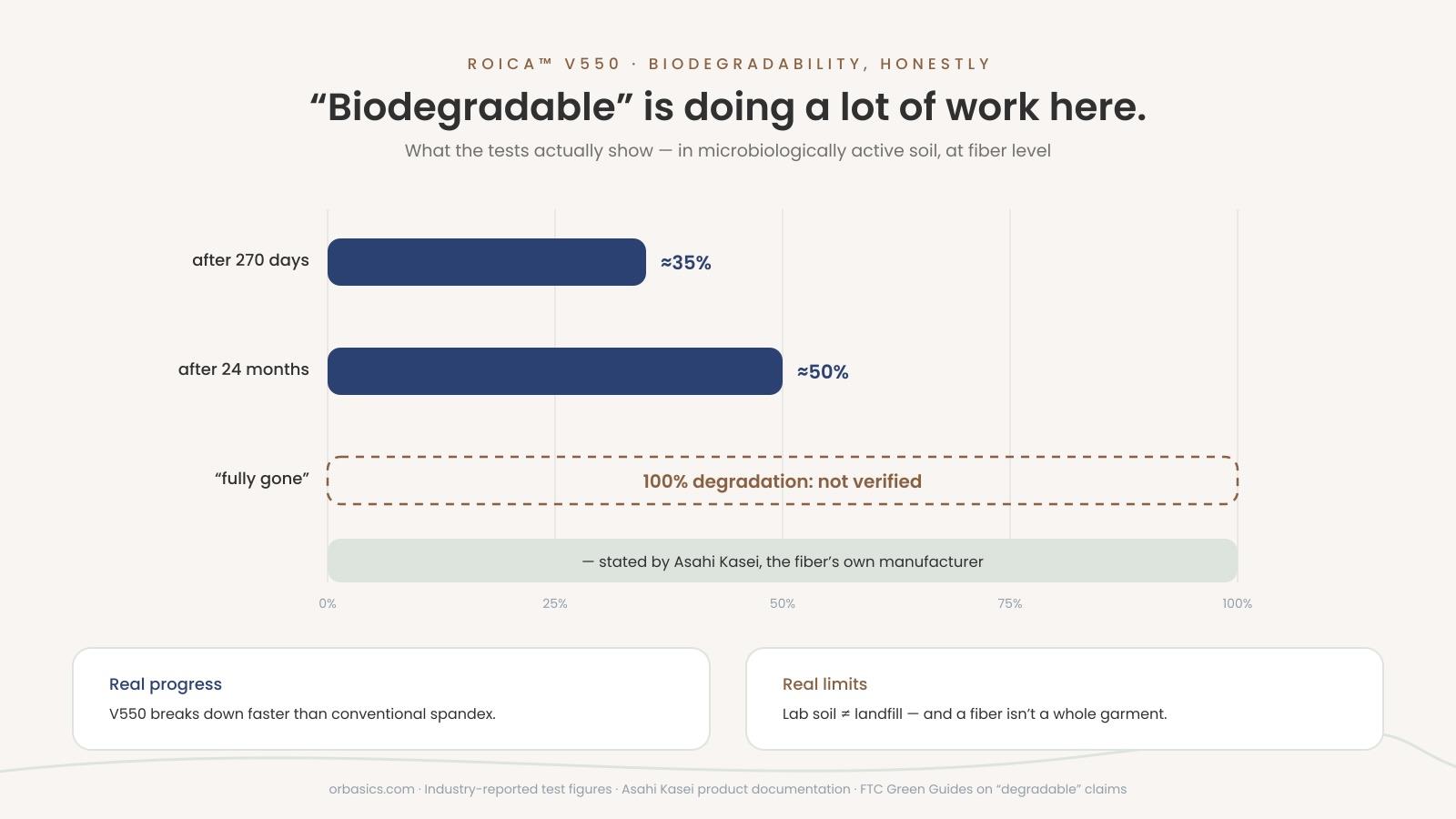
V550 is the grade behind the "biodegradable ROICA" headlines, popularized by brands like The Slow Label and Tripulse. It's designed to break down faster than regular spandex under specific test conditions. Industry reports cite roughly 35% degradation after 270 days and around 50% after 24 months in defined biologically active environments.
Here's what stopped me during my research: Asahi Kasei's own product page states that 100% degradation has not been verified. The manufacturer is more careful than the brands selling it. So when you read that V550 "disappears in two years" — no. Fully biodegradable is an environmental claim nobody has earned yet: under the FTC Green Guides, an unqualified "degradable" claim requires proof the product completely breaks down and returns to nature after customary disposal.
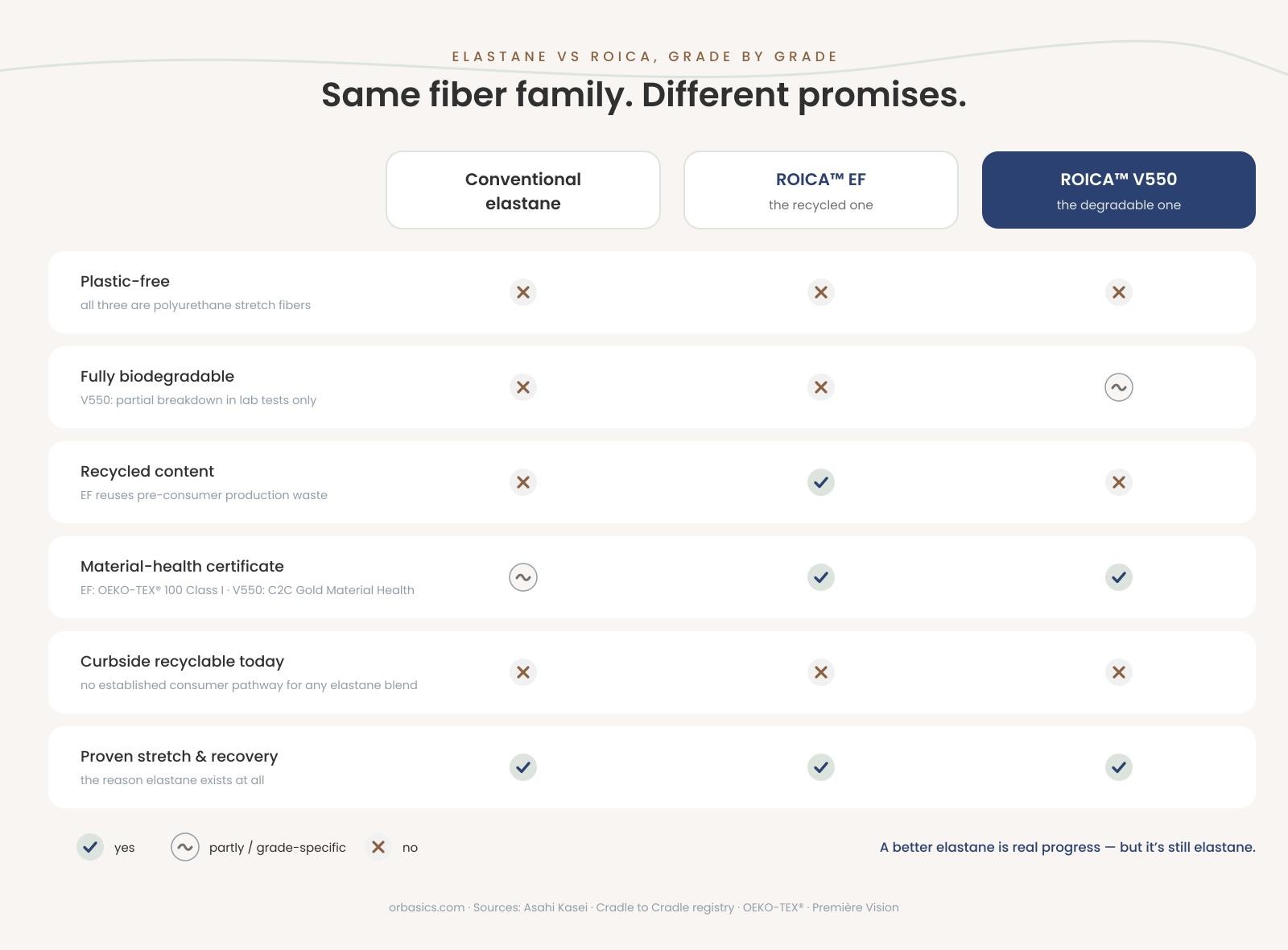
Conventional Elastane, ROICA EF, and ROICA V550 Side by Side
|
Criterion |
Conventional elastane |
ROICA™ EF |
ROICA™ V550 |
|---|---|---|---|
|
Fiber category |
Segmented polyurethane |
Elastane |
Elastane |
|
Key improvement |
None (baseline) |
Pre-consumer recycled content |
Accelerated degradation in specific tests |
|
Plastic-free |
No |
No |
No |
|
Fully biodegradable |
No |
Not established |
Not verified — partial only (around 50% in 2 years) |
|
Material health evidence |
Supplier-dependent |
OEKO-TEX® Standard 100 Class I (grade-specific) |
Cradle to Cradle Gold Material Health Certificate |
|
Curbside recyclable |
No |
No |
No |
Is ROICA Less Toxic Than Traditional Elastane?
This is where I push back on both sides — the fear-mongers and the marketers.
You've seen the viral claims: leggings disrupt hormones, BPA creates moisture wicking, phthalates make fabric stretchy. I care deeply about toxic chemicals in clothing — it's why Orbasics exists — and precisely because I care, I won't repeat claims the evidence doesn't support.
What is true: finished garments can carry toxic substances that have nothing to do with the base fiber — azo dyes, plastisol prints, antimicrobial finishes, and PFAS. The EPA confirms PFAS are used in some textiles for water, oil, and stain resistance — I've covered PFAS in workout clothes in depth — but they're not in every pair of leggings, and since 2025, New York bans intentionally added PFAS in new apparel.
Sweat, heat, and friction can leave some garments releasing harmful substances at higher rates, which matters if you deal with textile dermatitis — but exposure is compound-specific, not a blanket property of "synthetics."
So is ROICA safer? V550's Gold Material Health Certificate means its chemistry was assessed against Cradle to Cradle's material health criteria — genuinely more transparency than most conventional elastane offers. EF's OEKO-TEX® Standard 100 Class I certification means the certified fiber was tested against over 1,000 harmful chemicals at the strictest level, the one for baby products.
But remember what I always say about certifications — whether it's OEKO-TEX® vs GOTS or what GOTS-certified clothing means: a certified fiber doesn't certify the dyes, prints, and trims of the finished garment. Ask brands for the finished-product certificate, not just the fiber logo.
What Is an Alternative to Elastane?
If you want stretch fabrics without conventional elastane, here's my honest map of the sustainable stretch options — and what each is actually suitable for:
Mechanical stretch — clever knit constructions and twisted yarns create moderate stretch from natural elements alone, including organic cotton and wool. Maybe beautiful and sufficient for everyday clothes; but not enough recovery for activewear.
Natural rubber — Yulex's YULASTIC stretch yarn comes from renewable resources and shows real promise in denim, socks, and select knits. Not yet proven for chlorine-heavy swimwear or high-compression wear.
Bio based elastane — partially plant-derived, which reduces fossil input, but it's still polyurethane and not necessarily biodegradable.
Elastoesters like NEOLAST™ — Celanese and Under Armour designed this to make polyester-based garments more recyclable in the future.
Recycled and degradable elastane — ROICA EF and V550, which brings us full circle: right now, they're the most credible sustainable solution within the elastane category.
No option wins everywhere, which is the actual state of the textile industry in 2026.
Why Our New Activewear Blends TENCEL™ with ROICA™
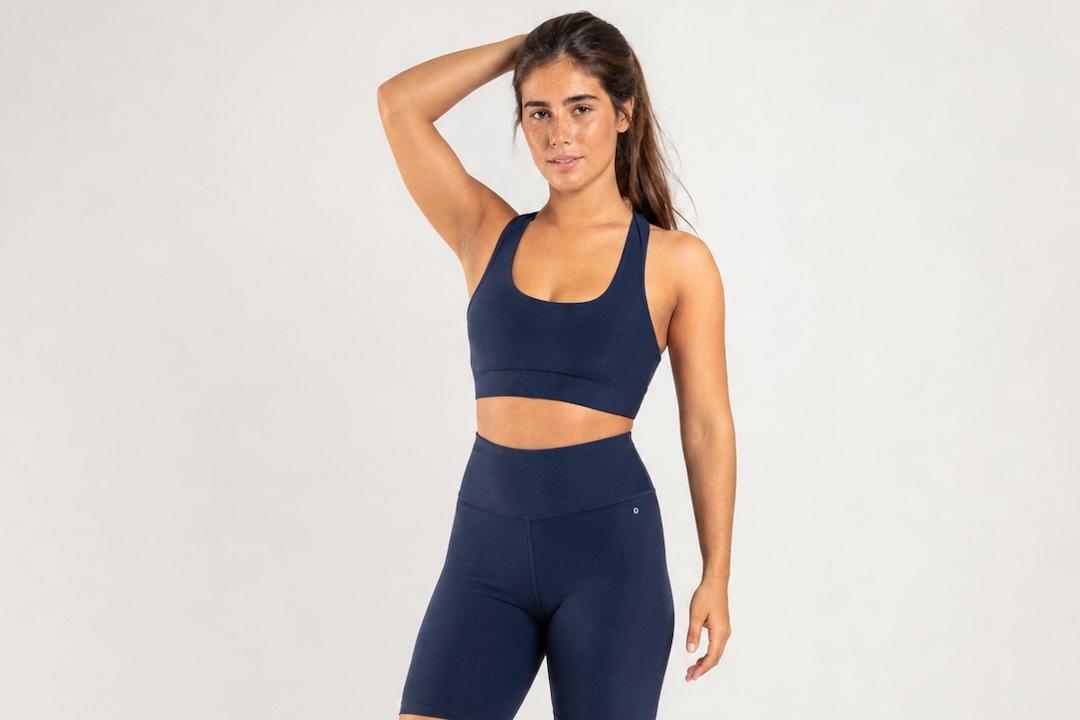
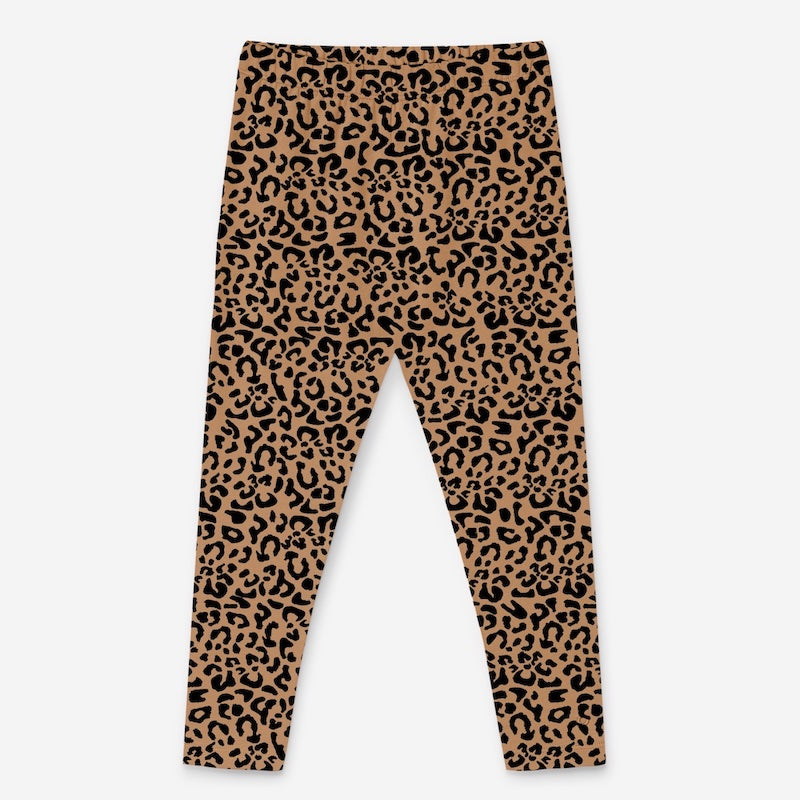
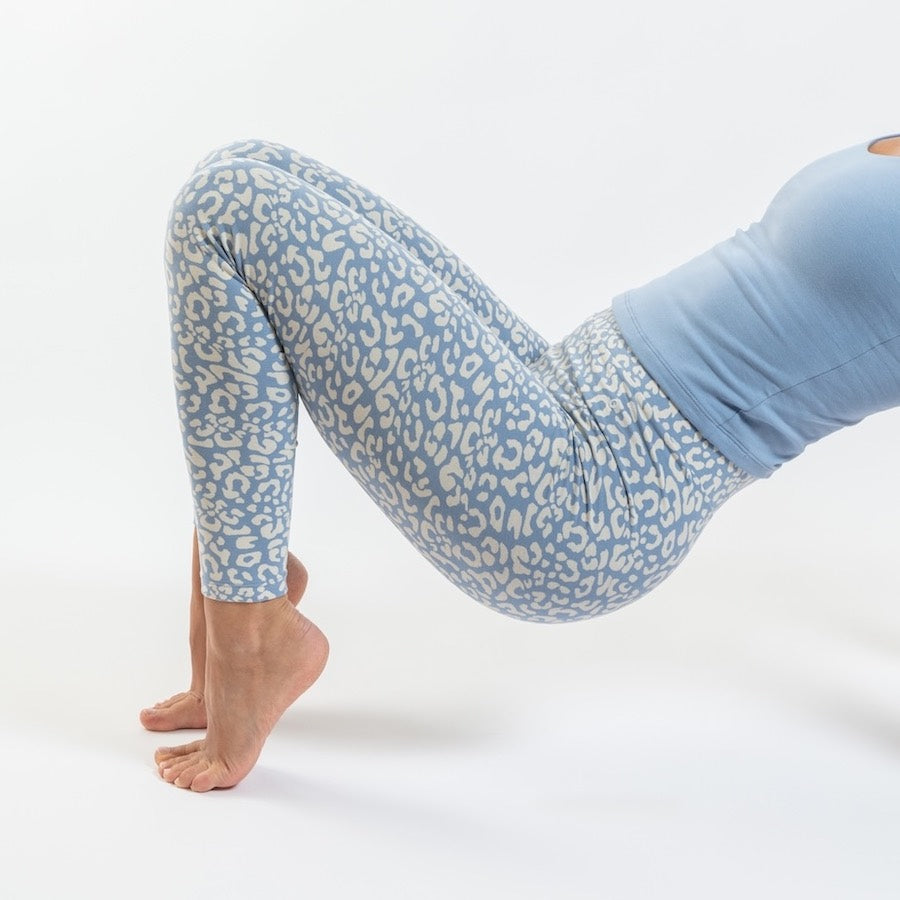
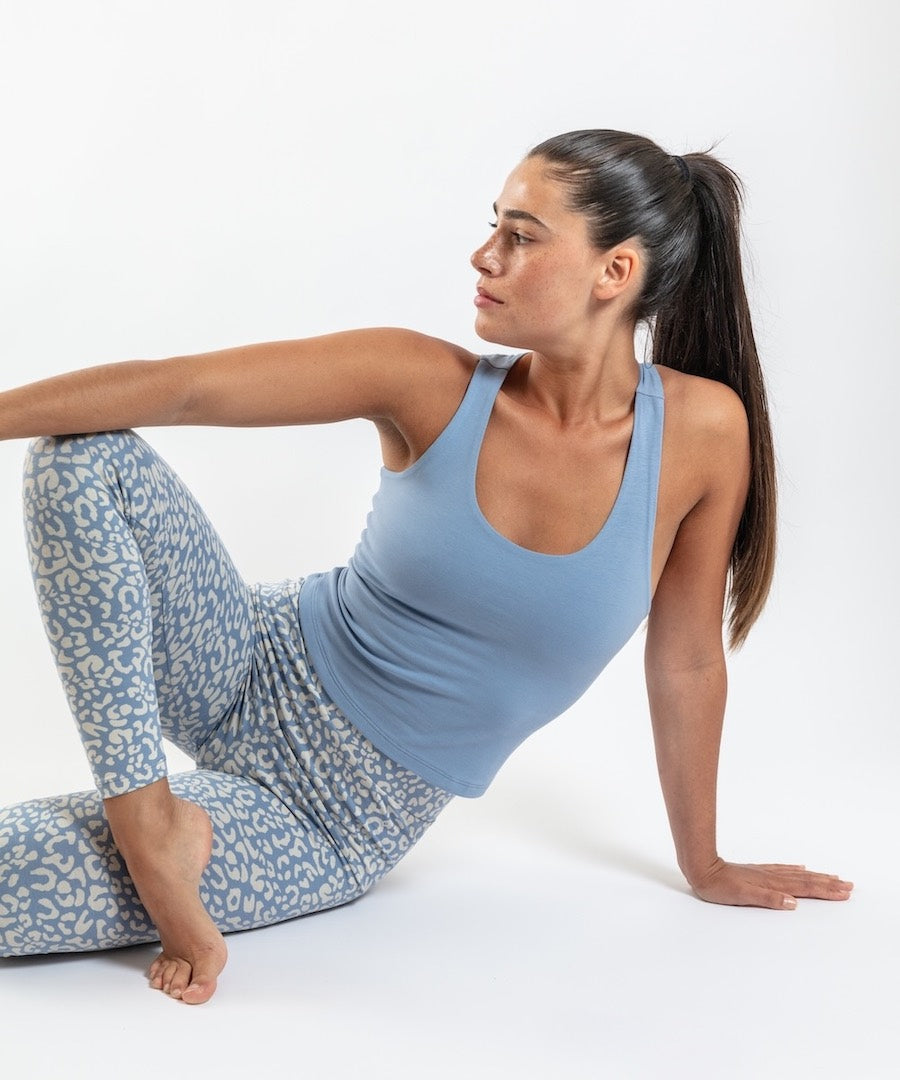
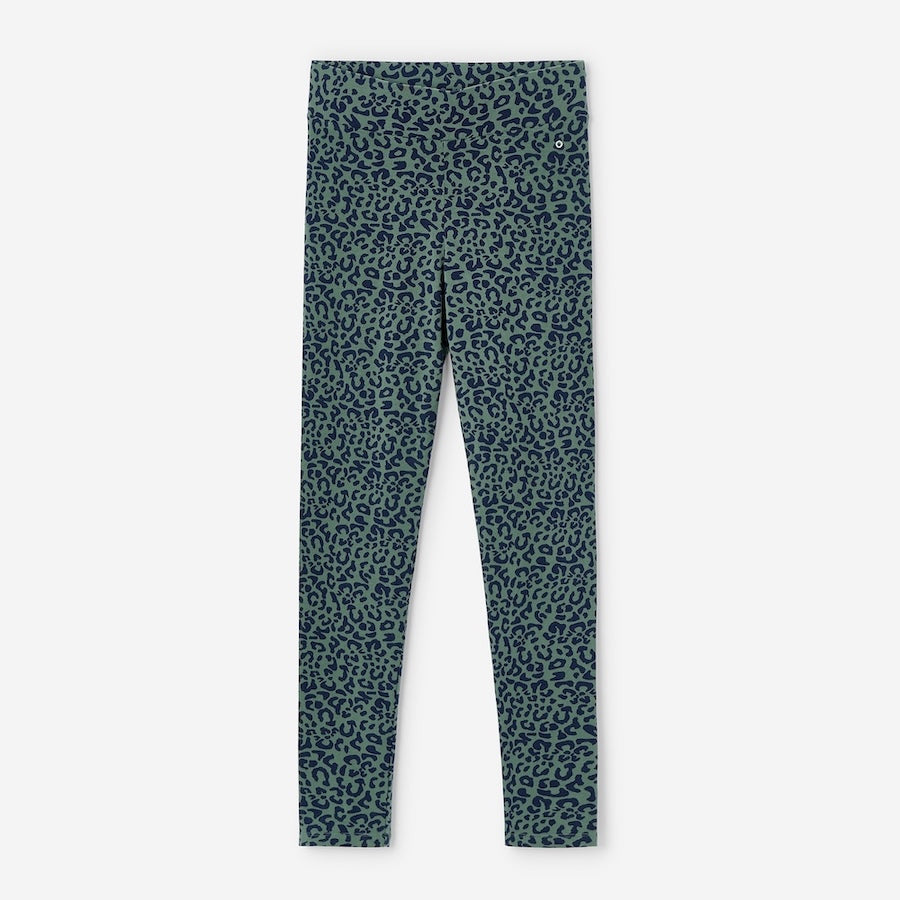
Now let me tell you where I landed personally, because we made this exact decision for our upcoming Orbasics activewear: 85% TENCEL™ Lyocell, 15% ROICA™.
After everything I've researched — what TENCEL™ fabric actually is, how it compares to polyester, lyocell vs viscose — TENCEL™ is, in my opinion, the best base fiber for workout clothing today. Properly certified, it's made in a closed loop with 99.8% solvent recovery, breathable because it's a natural-origin cellulosic fiber, biodegradable at the fiber level — and it minimizes the synthetic surface touching your skin, meaning far less microplastic contact than a full polyester legging. And the feel: in summer especially, a cool-to-the-touch softness no fabric I've tested for sweating matches.
But I won't pretend cellulose alone can do what activewear demands.
Pure natural-fiber leggings go baggy at the knees by the third wear. For real recovery — that gentle, held-in compression feeling most natural activewear completely lacks — you need elastane. So we chose the version with the strongest verified credentials. Our blend supports you through yoga, Pilates, walking, travel, and yes, intense workouts too — lightweight, soft, breathable, gentler on sensitive skin, without the squeeze of high-compression gymwear. It's not a perfect garment. A perfect garment doesn't exist, at least yet for me. It's the most honest one I know how to make, and honesty is the fabric standard I hold everything to.
Final Thoughts: Better Elastane Is Still Elastane
In the elastane vs ROICA comparison, ROICA doesn't escape the elastane category — it improves it. EF reduces virgin fossil input through pre-consumer recycling; V550 breaks down faster than conventional spandex under specific conditions, backed by a Gold Material Health Certificate. Neither makes a garment plastic-free or fully biodegradable, and any brand claiming otherwise is overselling.
My advice? You don't need to become a textile chemist — you just need one small habit: when a brand says "ROICA," gently look a little closer. Which grade is it? Is there a certificate behind the claim? Most good brands will happily tell you, and the ones that won't have answered your question too.
It's the same care I bring to every non-toxic activewear brand I recommend, from leggings made with natural fibers to yoga clothes and sports bras — because you deserve that honesty from every brand, including mine.
FAQ to Elastane vs ROICA
What is ROICA fabric?
ROICA is Asahi Kasei's trademarked family of elastane (spandex) stretch fibers. It's not a fabric on its own — it's the stretch component blended into knits, typically at 5–25%. Different grades serve different purposes: ROICA™ EF contains recycled pre-consumer content, while ROICA™ V550 is engineered for faster degradation.
What fabrics should you stay away from?
Rather than banning fiber names, I avoid: garments with stain- or water-repellent finishes unless the brand confirms no intentionally added PFAS, cheap prints and plastisol logos, uncertified synthetics worn tight against skin, and anything where the brand can't name its dyes or certifications. Fiber content is one signal; finishing chemistry is where most harmful chemicals hide.
What are the disadvantages of elastane?
It's fossil-based, energy intensive to produce, not designed to biodegrade, and it blocks textile recycling — even small percentages disrupt fiber recovery. It also traps heat against the skin in high concentrations. Its irreplaceable upside is stretch recovery, which is why even sustainability-focused brands still use it in small amounts, also for product longevity purposes.
What is an alternative to elastane?
Mechanical stretch knits, natural rubber yarns like YULASTIC, bio based elastane, elastoesters like NEOLAST™, and improved elastane grades such as recycled ROICA EF or degradable ROICA V550. Each trades off stretch, recovery, durability, or availability — no single option currently replaces conventional elastane in every garment.
*Advertisement: This article contains affiliate links marked with*. If you make a purchase through these links, we may earn a small commission at no additional cost to you.
The information provided is for educational and informational purposes only and is not intended as medical advice. It should not replace consultation with your physician or qualified healthcare provider. This article was created with the assistance of AI tools and has been editorially reviewed and approved by our team. All opinions expressed are our own.
Lilija Bairamova

Lilija is the founder of Orbasics, a brand born from her passion for creating a healthier, more sustainable world, starting with organic, toxin-free clothing for children. As a mother committed to a non-toxic lifestyle, Lilija has spent years exploring and embracing clean beauty, non-toxic living, and holistic wellness. She shares her expertise on everything from natural personal care to creating toxin-free home environments, offering practical tips and in-depth guides that empower you to make healthier choices and lead a more mindful, health-conscious life.




Leave a comment