
Table of Contents
Why Does My Skin Itch When I Exercise? And When Workout Clothes Are the Problem
This page may contain affiliate links. We may earn a commission on purchases, at no additional cost to you. Learn more →
So, why does your skin itch when you exercise?
For many people, it’s something harmless often called runner’s itch. As your body warms up, blood flow increases, tiny blood vessels expand, and nearby nerves can interpret that change as itching — especially if you’re new to exercise or getting back into movement after a break.
But that’s not always the whole story.
Sometimes itching is triggered by heat, sweat, histamine, or exercise-induced hives. And sometimes, the clothes you’re sweating in can make everything worse.
Tight synthetic activewear, friction, trapped sweat, detergent residue, textile dyes, and finishing chemicals can all irritate sensitive skin — especially when fabric is pressed against your body for an entire workout. Textile contact dermatitis can be linked to dyes and finishing agents used in clothing, including formaldehyde resins.
I used to ask myself this exact question a lot — especially when I wore polyester activewear. With sensitive skin and a migraine-prone body, I became much more aware of what I put on my skin, not just what I put in my body.
In this guide, we’ll look at what’s normal, what’s not, when itching could be a warning sign, and why your leggings might be part of the problem.
Key Takeaways
-
For many people it's runner's itch: a sudden rise in blood flow expands capillaries and stimulates nearby nerve endings, which your brain reads as an itchy sensation.
-
It's most common in beginner runners or anyone returning after a break, and usually fades as your routine builds.
-
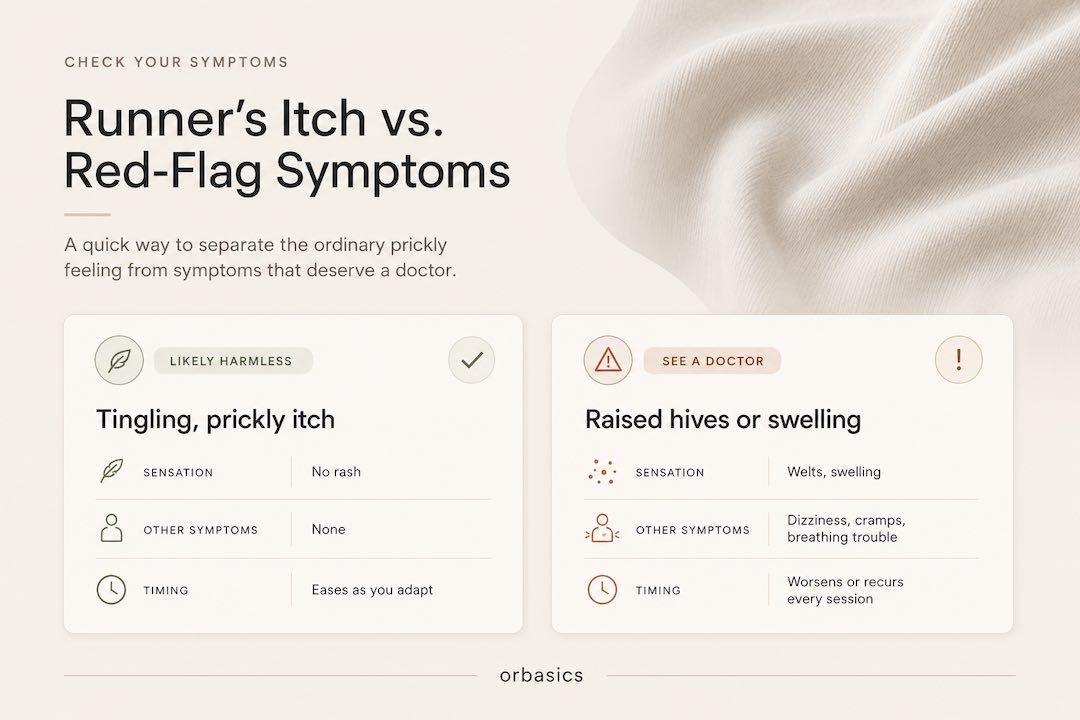
Hives, swelling, dizziness, cramps, or breathing trouble are not normal—they can signal exercise-induced urticaria or anaphylaxis and need a doctor.
-
The usual fabric culprits aren't "polyester itself" but disperse dyes, formaldehyde resins, PFAS, sweat retention, and friction.
-
Sensitive skin does better in moisture-wicking, low-tox, certified fabrics.
What usually causes itching when you exercise?
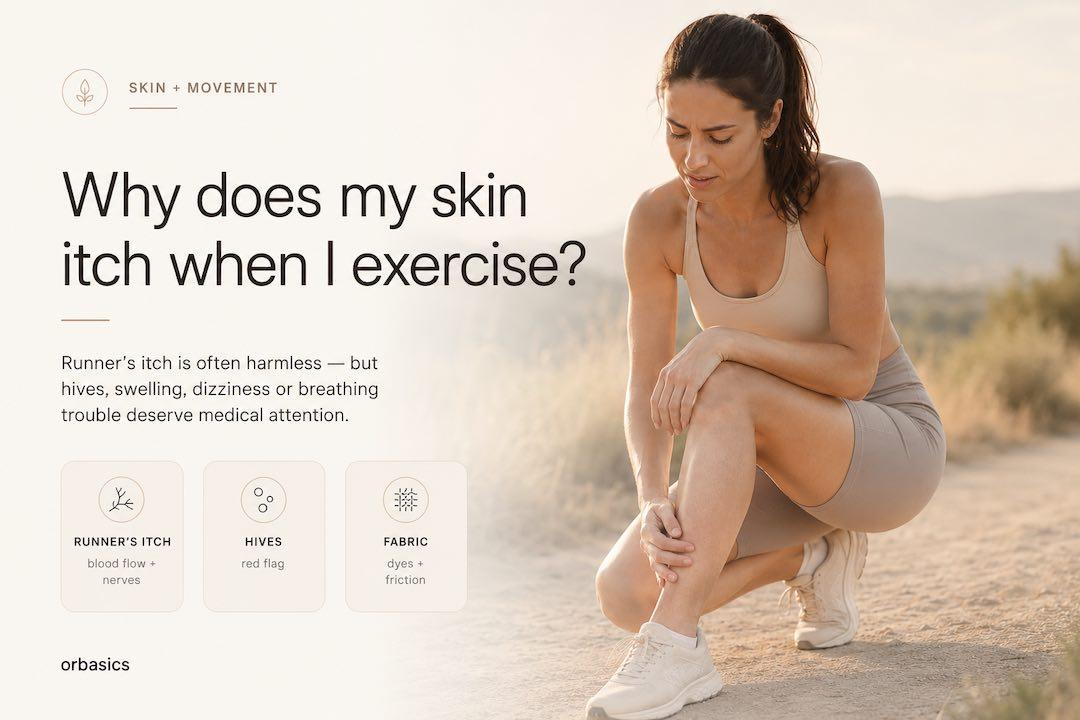
Here's the short answer. Runner's itch is a common, usually harmless phenomenon. When you start moving, your heart rate climbs, your body warms, and your arteries expand to push more blood to your working muscles. Dormant skin capillaries reopen and brush against nerve cells that haven't fired in a while. The result is that prickly feeling—a tingling sensation or full-on intense itching, usually on the legs or stomach during a cardio workout.
The Cleveland Clinic's explainer on why you might itch when you run notes it shows up most in people new to exercise or restarting a running routine. As your body adapts, those capillaries stay open and the itchy feeling settles down. The sensation usually subsides once your workout ends.
There's a second piece: histamine. Your body releases it during activity, and some researchers suggest this histamine response may help muscles resist fatigue. Histamine also expands blood vessels—the mechanism behind that increased blood flow—so a normal histamine release can add to the itching sensation as your body warms.
A quick myth-bust: this itch does not mean poor circulation. It's the opposite—a sign of blood pumping harder.
For why some polyester clothes make this worse, see our guide to synthetic fabrics and skin health.
When itchy skin is more than runner's itch
Most itching is benign. But itchy skin during exercise can also be your body raising a flag.
Exercise-induced urticaria (EIU) is an allergic response to exertion itself. Unlike simple runner's itch, it produces raised hives, welts, and severe itching. FamilyDoctor.org explains these hives can appear within minutes, sometimes with flushing or cramping.
Cholinergic urticaria is the heat-and-sweat cousin: tiny, intensely itchy bumps that erupt when your core temperature rises. The Cleveland Clinic lists exercise, stress, hot temperatures and spicy foods as classic triggers, and a clinical review in PMC notes it's more common in younger adults.
The serious one is exercise-induced anaphylaxis—rare, but potentially life-threatening. It's often food-dependent: certain foods (wheat, shellfish), alcohol, or NSAIDs eaten beforehand act as cofactors. The AAAAI flags this pattern. If you feel facial swelling, throat tightness, dizziness, or breathing trouble, stop exercising and seek emergency care.
Other overlooked causes of exercise-related itch
Not every itch is vascular. And not every reaction is a true allergy. A few quieter triggers are easy to miss:
-
Sweat and eczema. If your skin is dry, sensitive, or eczema-prone, sweat can sting, burn, and trigger inflammation. Rinsing or showering soon after a workout can help remove sweat before it dries on the skin and worsens irritation.
-
Heat-triggered hives. Some people get cholinergic urticaria — tiny, itchy hives that appear when body temperature rises and sweating starts. This can happen during exercise, hot showers, stress, or heat exposure.
-
Exercise-induced vasculitis. This one is underrated. It can show up as red or purple blotches, burning, stinging, or itching on the lower legs after long walks, hikes, or warm-weather exercise. DermNet notes that it often affects active women over 50 and may spare the skin covered by socks — which makes it look very different from classic hives.
-
Friction and chafing. Tight waistbands, rough seams, compression, damp fabric, and repetitive movement can all rub the skin until it feels itchy, raw, or irritated. This is especially common in leggings because they sit close to the body and move with you for long periods.
-
Laundry residue. Sometimes the “fabric reaction” is really your detergent, fragrance, fabric softener, or product buildup left in the clothing. When you sweat, that residue can sit against warm, damp skin and become more irritating.
-
Textile dyes and finishing chemicals. If your itch happens mostly where clothing touches your skin — especially around leggings, waistbands, seams, or tight areas — textile contact dermatitis may be part of the picture. Allergic clothing reactions are often linked to dyes and finishing agents rather than the fibre alone.
If your legs itch specifically, our deep dive on textile dermatitis covers how clothing, sweat, dyes, finishes, and skin sensitivity can interact.
Could your workout clothes be making you itch?
This is the part most articles skip, and it's where my own obsession started.
Textile contact dermatitis is more often caused by the chemicals in fabric than by the fiber itself. Reactions usually trace to dyes, formaldehyde finishing resins, and glues, not the polyester strand alone. True fiber allergy is comparatively rare.
So is polyester the villain? Not exactly—our explainer on whether polyester is plastic gives the full picture. But synthetic activewear can worsen itch through several stacking mechanisms:
-
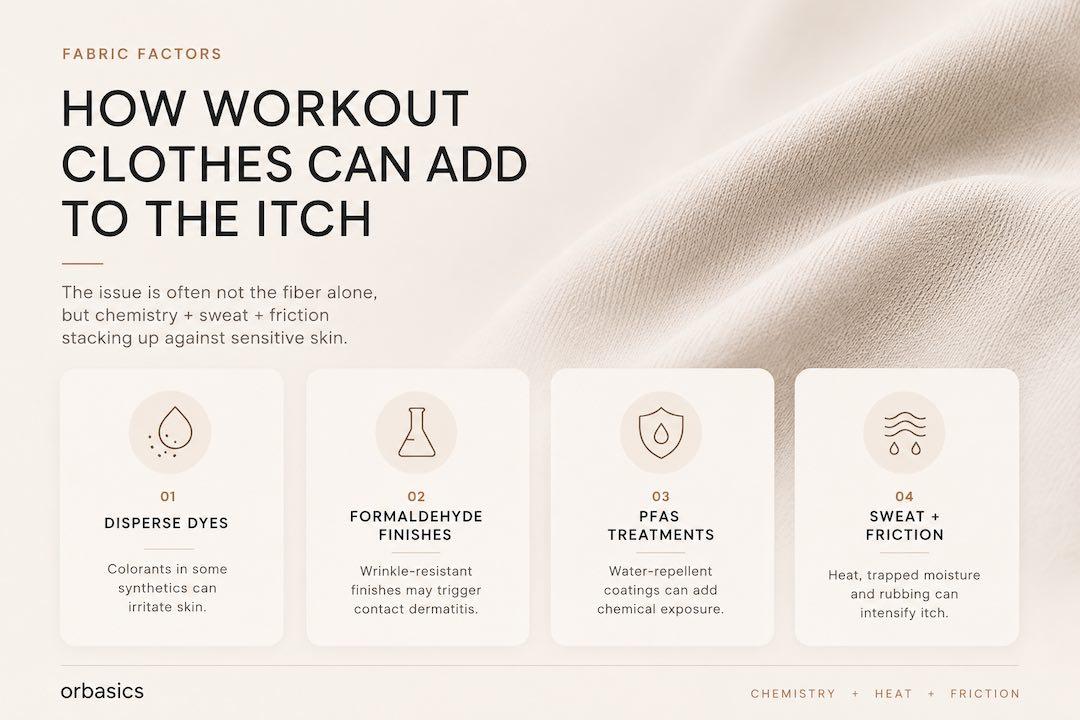
Disperse dyes. A review in Contact Dermatitis names disperse dyes as the most common cause of textile allergic contact dermatitis—markers like Disperse Blue 106 and 124, historically in dark synthetics. Susan Nedorost, MD, FAAD, of Case Western explains clothing allergies are usually caused by disperse dyes in synthetic clothing. Sweat can leach those dyes onto your skin.
-
Formaldehyde finishes. Used for wrinkle resistance. A U.S. GAO report found the main health risk from clothing formaldehyde is allergic contact dermatitis—and the U.S. has no general national limit for it in apparel.
-
PFAS-treated performance gear. Water- and stain-repellent finishes. The EPA calls PFAS persistent and widespread. More in our piece on PFAS in workout clothes.
-
Occlusion and friction. Tight, non-breathable synthetics trap heat and sweat against skin—exactly the conditions that intensify itch.
The fair conclusion: dark, heavily treated, occlusive synthetic activewear can make itch worse for sensitive individuals—but it's the chemistry and the sweat-trap, not "all polyester is toxic." When choosing gear, my guides to the best fabric for working out, the best fabric for sweating, and how to know if clothing is non-toxic show what to look for.
How to tell if your activewear is the culprit
Try this simple three-step approach:
-
Patch testing (the gold standard). A dermatologist places small amounts of suspected allergens on your skin for about 48 hours, then reads the reactions over the next three to seven days. It's the most reliable way to pin down a textile or dye allergy.
-
Run a fabric trial. No patch test handy? For four weeks, wear undyed layers next to your skin—cotton, rayon, TENCEL™ Lyocell, or merino wool. Outer layers like jackets can be anything, as long as you're not sweating or getting wet in them.
-
Look beyond clothing. If the dermatitis continues, your clothes may not be the only trigger. Moisturizers, sunscreens, shampoos, cosmetics, and even topical medications can spark flare-ups. Lasting relief usually comes only once every allergen is identified and avoided—a contact-dermatitis specialist can map them.
Why I'm building Orbasics activewear differently
If you prefer cotton close to the skin, our organic cotton sports bra is another mostly natural-fiber option for lower-impact movement.
After years of itchy, sweaty experiments, I couldn't find activewear that was both gentle on skin and actually performed. So we're making it.
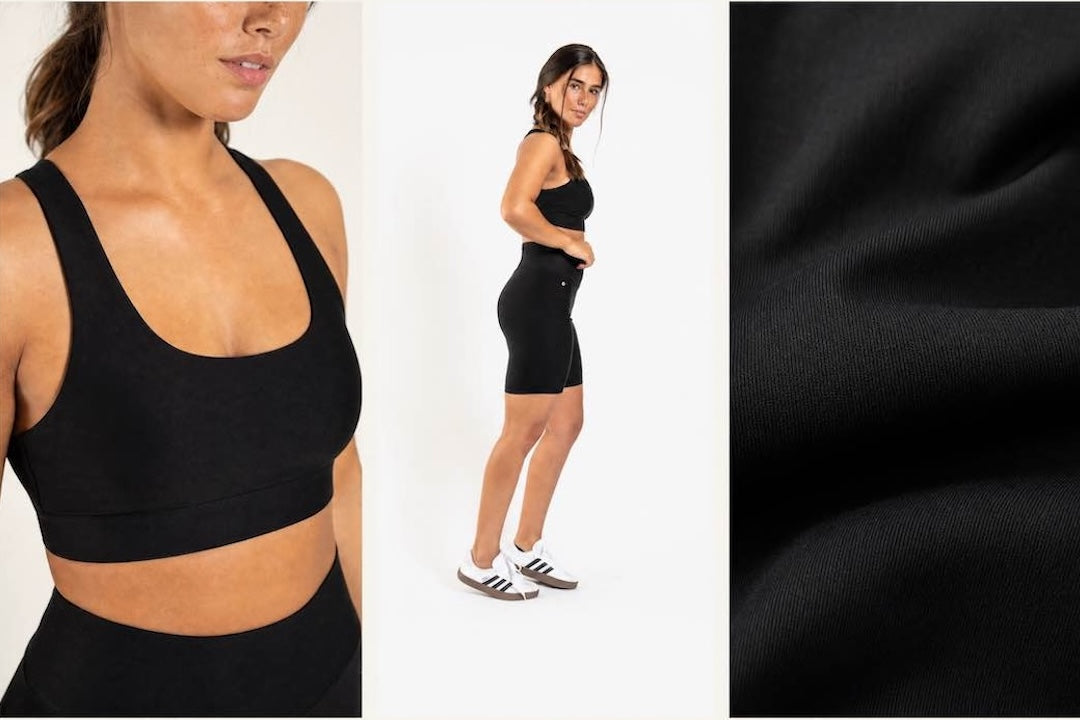
Orbasics activewear is 85% TENCEL™ Lyocell and 15% ROICA™—soft, breathable, moisture-wicking, and OEKO-TEX® certified, meaning it's tested against a long list of harmful substances. It's built for yoga, Pilates, walking, travel, and everyday movement, and holds up to higher-intensity workouts.
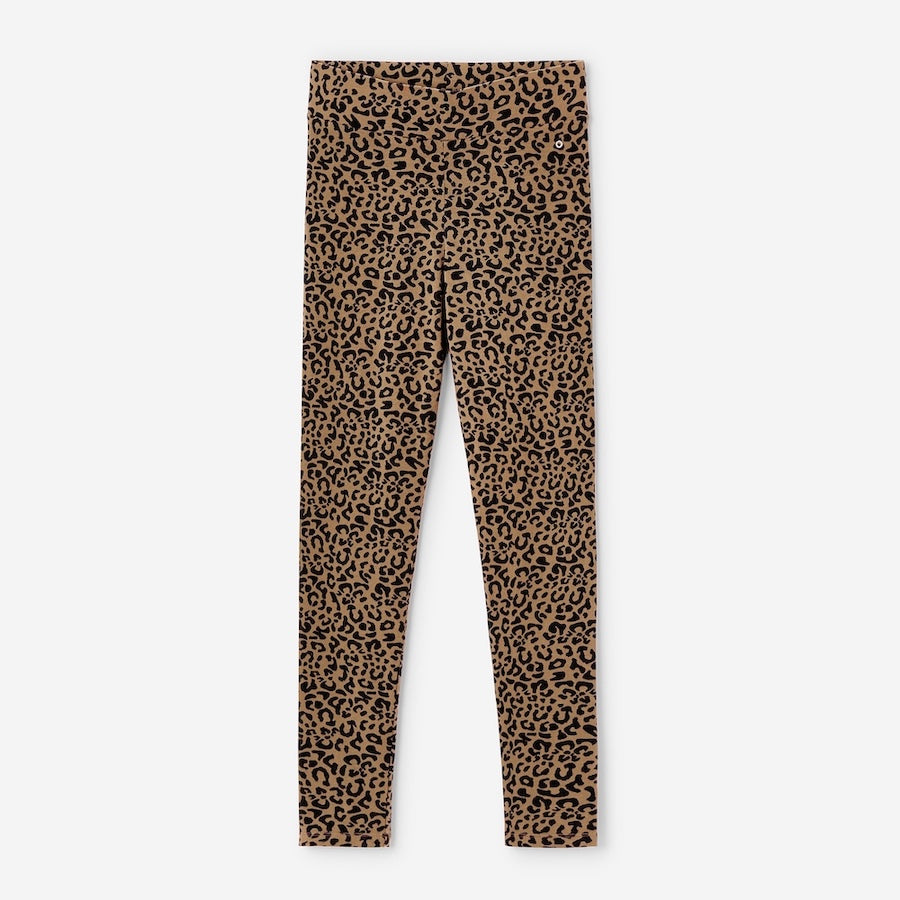
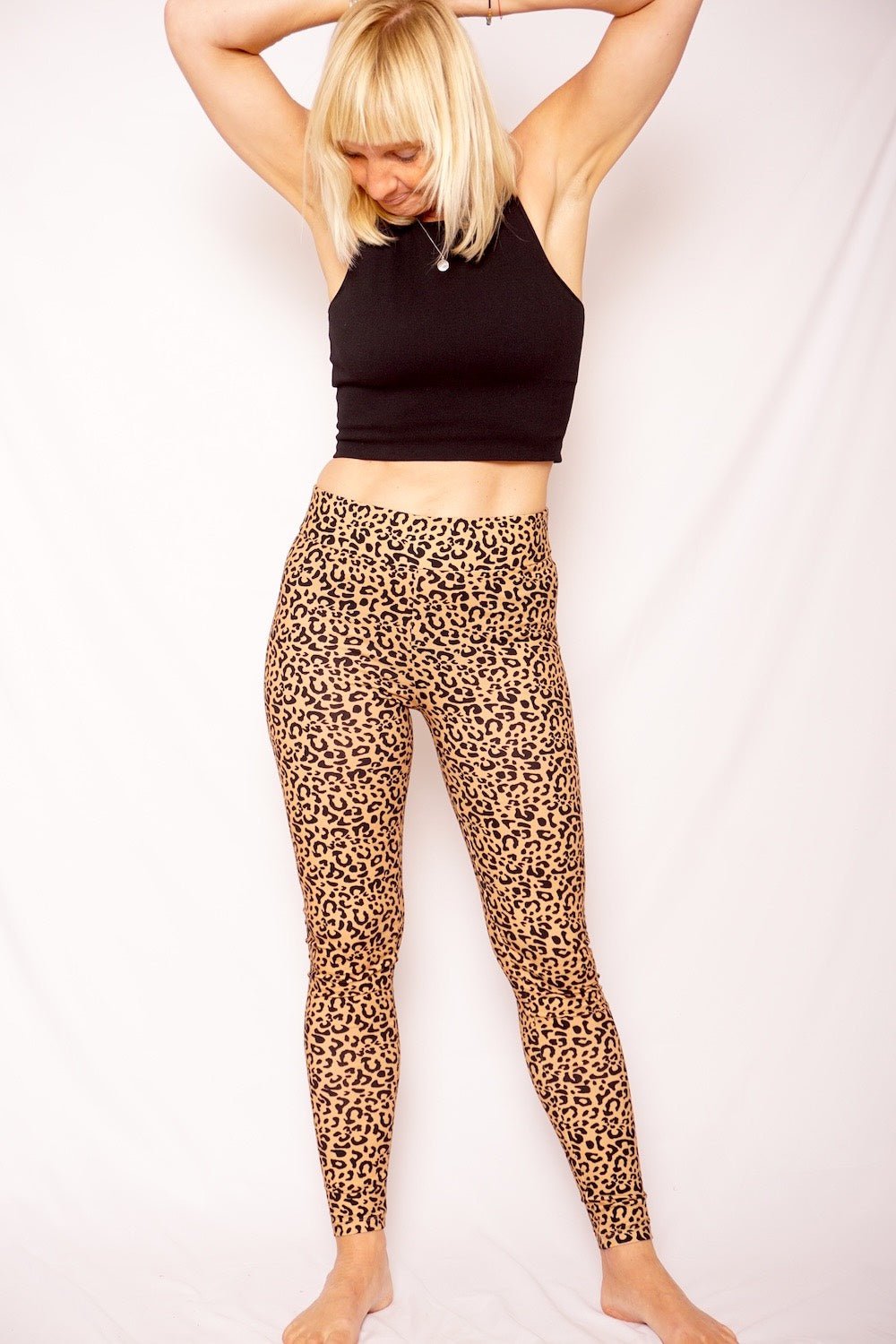
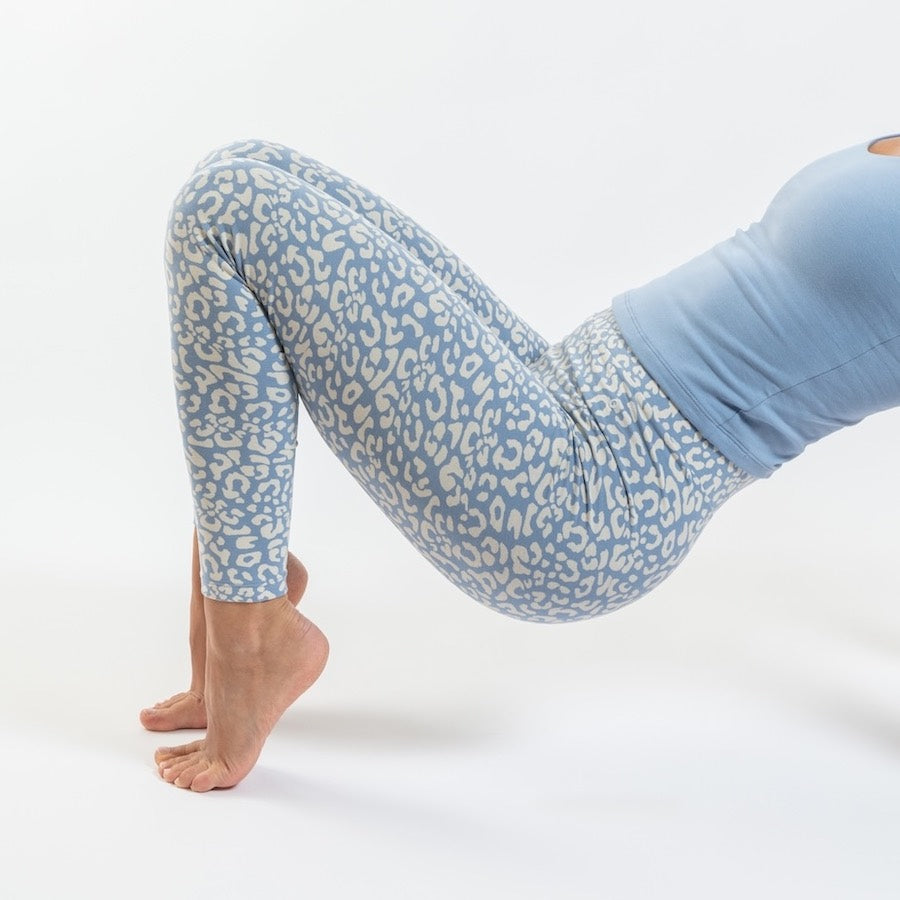
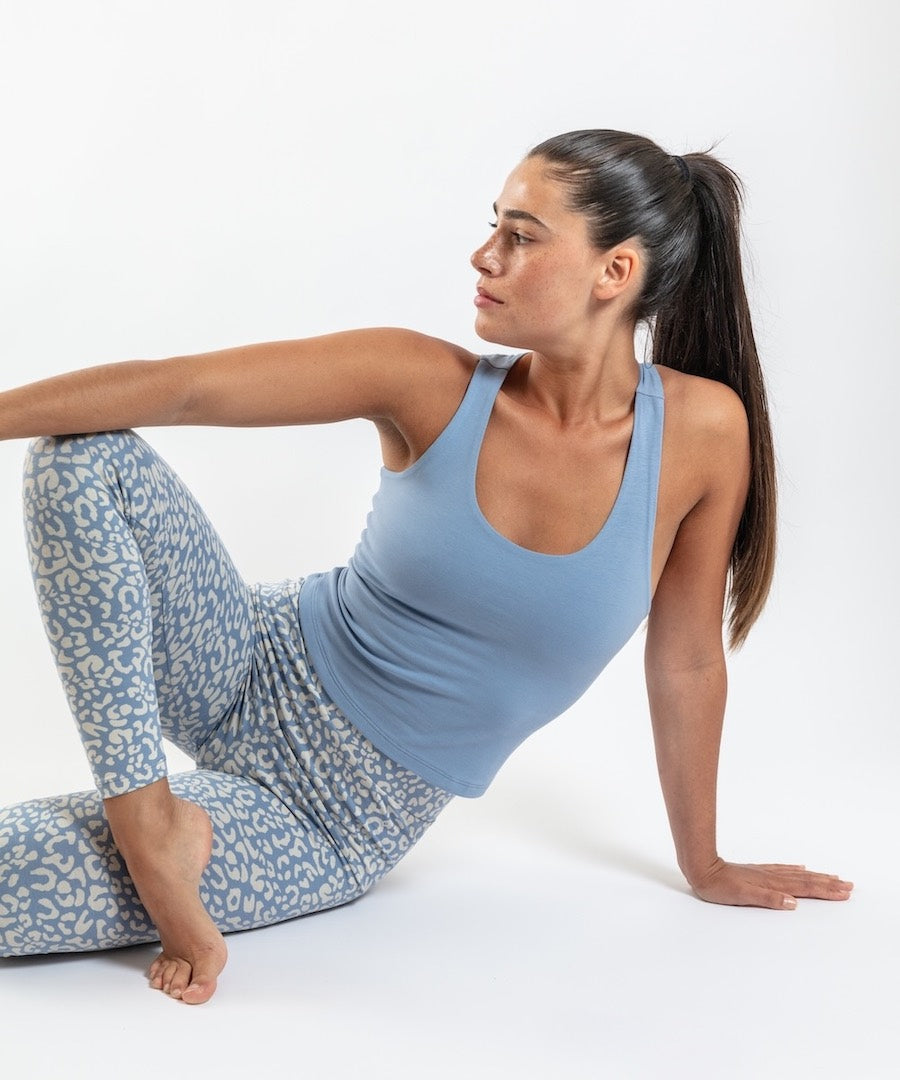
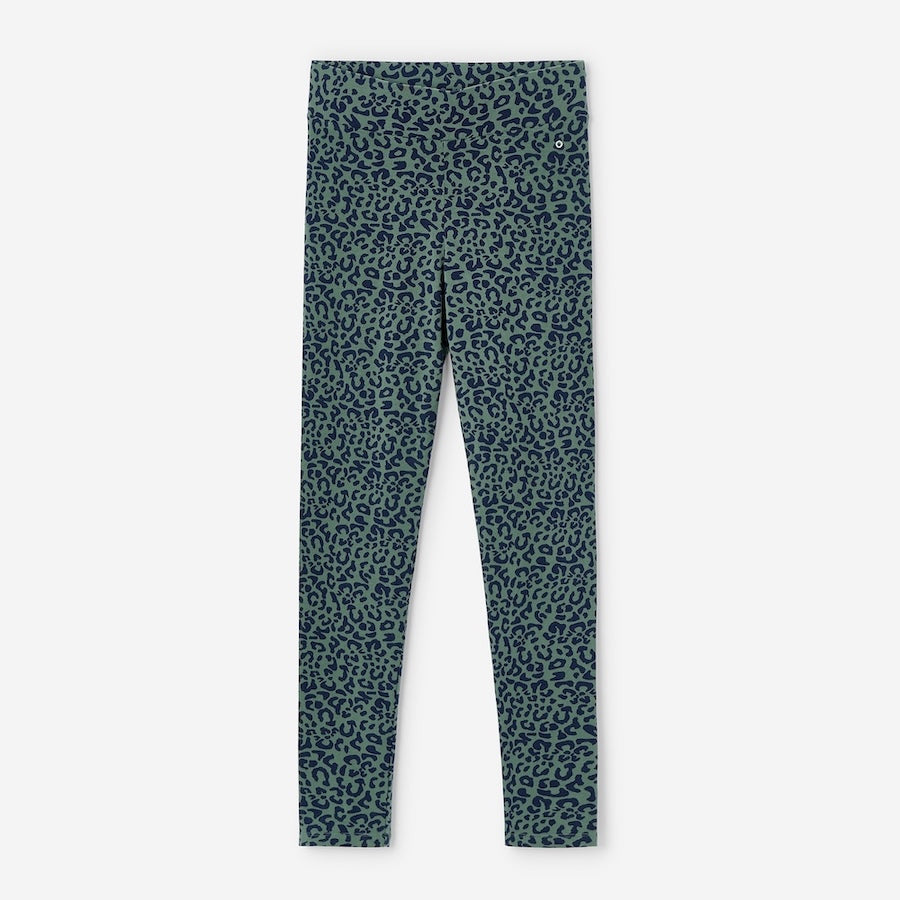
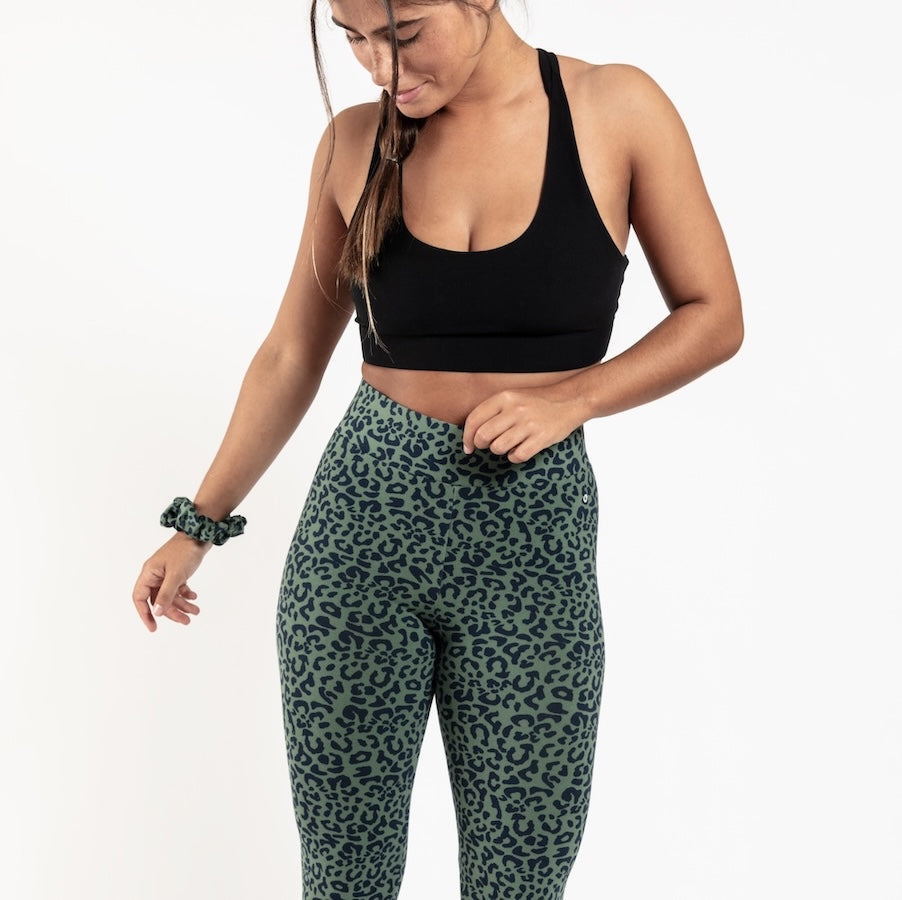
Most natural activewear loses that supportive compression feel; this keeps a gentle hold without the high-compression, plastic sweat-trap. Start with our non-toxic leggings and organic cotton tops, and see our roundups of the best non-toxic activewear brands and non-toxic yoga clothes for more options.
If your skin is truly reactive, GOTS-certified organic cotton is the gold standard—browse our sustainable, GOTS-certified clothing. For the fiber comparison, see TENCEL vs. cotton for sensitive skin and our overview of non-toxic fabric.

What helps—and when to see a doctor
Most cases respond to simple steps. To prevent runner's itch and find relief:
-
Build gradually. A slowly intensifying routine lets your capillaries adapt.
-
Moisturize before you move to combat dry skin and cut friction.
-
Hydrate before, during, and after. Skip alcohol and caffeine pre-workout if they trigger you.
-
Choose breathable, moisture-wicking materials, and wash new gear before wearing to rinse off finishing chemicals. Reduce friction with seamless cuts.
-
For diagnosed urticaria, a non-drowsy antihistamine before exercise can help—only under a healthcare professional's guidance.
-
A lukewarm (not hot) warm bath afterward (with camomille i.e.) can ease uncomfortable flares.
See a board-certified dermatologist or allergist if the itch persists, doesn't improve as you adapt, comes with a rash, or escalates to hives and severe symptoms. Anything life-threatening—swelling, dizziness, breathing trouble—is an emergency. Your healthcare provider can run proper exercise tests.

Final thoughts
So, why does your skin itch when you exercise?
The honest answer is: it depends.
For many people, that prickly, burning itch is runner’s itch — a common reaction that can happen when your body warms up, blood flow increases, tiny capillaries expand, and nearby nerve endings get stimulated.
But exercise-related itching isn’t always just “your body adjusting.”
Heat, sweat, histamine, eczema-prone skin, friction, chafing, detergent residue, and tight clothing can all make your skin more reactive during movement. For people with eczema-prone or sensitive skin, sweat itself can sting, dry out the skin, and trigger irritation — which is why rinsing off soon after exercise can make a real difference.
Then there’s the part many people overlook: what your skin is sweating into.
The problem isn’t always the fibre itself. With textile reactions, the usual culprits are often the things added to clothing: disperse dyes, formaldehyde resins, glues, chemical additives, finishing agents, and performance treatments. But synthetic-heavy activewear can still make sensitive skin feel worse by holding heat and sweat close to the body, increasing friction, and creating the perfect environment for irritation.
You need to listen to your skin.
Notice when the itching happens. Notice where it happens. Notice whether it fades as your body warms up, or whether it shows up exactly where your leggings, seams, waistband, detergent, or sweat sit against your skin.
That’s why what you wear matters.
Choose pieces that feel soft, breathable, and easy to trust. Look for fabrics that are lower in synthetics, made with certified (like GOTS or Oekotex) organic and natural fibres where possible, and held to stricter standards for dyes, finishes, and chemical residues.
That’s the whole reason Orbasics exists: to make the everyday things closest to your skin feel softer, cleaner, and more considered — so conscious living feels less overwhelming, and getting dressed feels like one simple choice you can trust.
Frequently Asked Questions
Why does my skin get so itchy when I exercise?
Usually it's runner's itch. As you warm up, blood flow increases, capillaries dilate, and they stimulate nearby nerve endings, which your brain reads as itch. A natural histamine release adds to it. It's most common in beginners. But what you wear matters too. Sweat, friction, tight synthetic fabrics, detergent residue, textile dyes, and finishing chemicals can all irritate sensitive skin — especially when your leggings sit close to your body for an entire workout. Movement clothing should feel soft, breathable, and easy to trust: lower in synthetics, made with natural certified materials.
Does itchy skin mean poor circulation?
No—it's the opposite. Runner's itch reflects a surge in blood flow, not poor circulation. Your blood vessels expand to fuel your working muscles, reopening skin capillaries that brush against nerves. Cold, discolored limbs are different—see a doctor.
How long does workout itchiness usually last?
For ordinary runner's itch, the itchy sensation usually subsides within minutes once you stop, and eases over weeks as your body adapts. If the itch persists every session or worsens, another cause is worth investigating, like i.e. checking on the fabrics you wear during the workout.
How do I stop itching when I exercise?
Moisturize beforehand, hydrate, wear natural and breathable moisture-wicking fabrics that are Okotex or GOTS certified, reduce friction, and build intensity slowly. Wash new gear first to remove finishing chemicals. A lukewarm rinse soothes irritated skin.
Are some people more prone to workout itch?
Beginner runners, people returning after a break, and those with sensitive skin, eczema, or a tendency toward allergic reactions flare more often. Heat, sweat, and reactive workout gear make these sensitive individuals itch sooner.
*Advertisement: This article contains affiliate links marked with*. If you make a purchase through these links, we may earn a small commission at no additional cost to you.
The information provided is for educational and informational purposes only and is not intended as medical advice. It should not replace consultation with your physician or qualified healthcare provider. This article was created with the assistance of AI tools and has been editorially reviewed and approved by our team. All opinions expressed are our own.
Lilija Bairamova

Lilija is the founder of Orbasics, a brand born from her passion for creating a healthier, more sustainable world, starting with organic, toxin-free clothing for children. As a mother committed to a non-toxic lifestyle, Lilija has spent years exploring and embracing clean beauty, non-toxic living, and holistic wellness. She shares her expertise on everything from natural personal care to creating toxin-free home environments, offering practical tips and in-depth guides that empower you to make healthier choices and lead a more mindful, health-conscious life.




Leave a comment