Table of Contents
The Best Fabric for Working Out (That Won't Poison You or the Planet)
This page may contain affiliate links. We may earn a commission on purchases, at no additional cost to you. Learn more →
I used to pull on a polyester top and head to the gym without thinking twice. Then I read a study that found BPA in sports bras and athletic wear at up to 22 times California's safe exposure limit — and it hit me: I was sweating in plastic, and that plastic was potentially sweating its chemicals right back into me.
That changed how I choose workout clothes. The fabric you wear during exercise can make all the difference — not just for comfort, but for what's actually entering your body through your skin.
The wrong workout gear traps moisture, breeds bacteria, sheds microplastics, and may expose you to endocrine disruptors like BPA and PFAS. The right workout gear supports you.
This is your guide to the best fabric for working out — one that puts your health first without sacrificing performance.
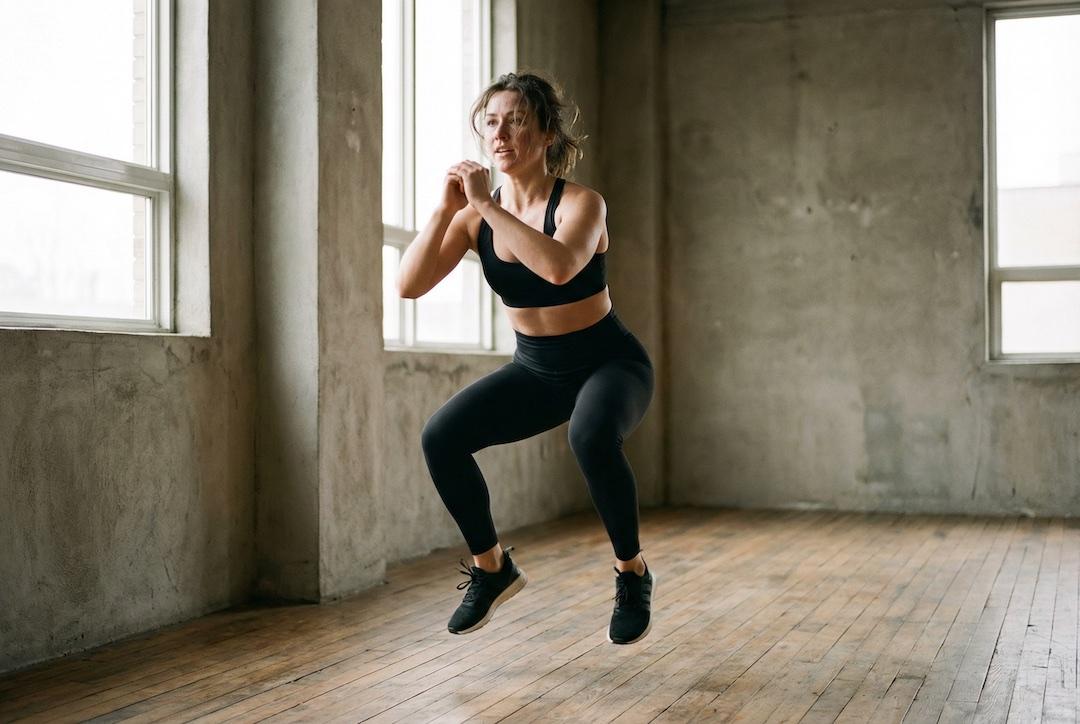
[Image: Woman in natural-toned Lyocell activewear stretching in a sunlit studio]
What's Actually in Your Workout Clothes?
Here's what most people don't realize: the mainstream activewear industry runs almost entirely on polyester, nylon, and spandex — all petroleum-based plastics.
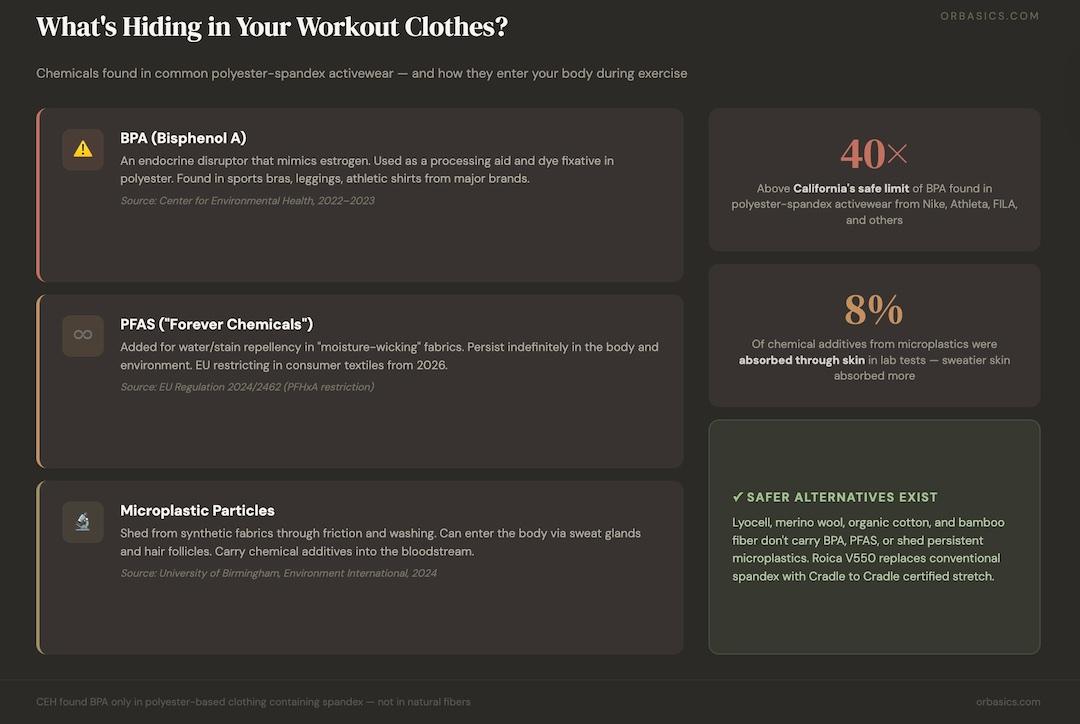
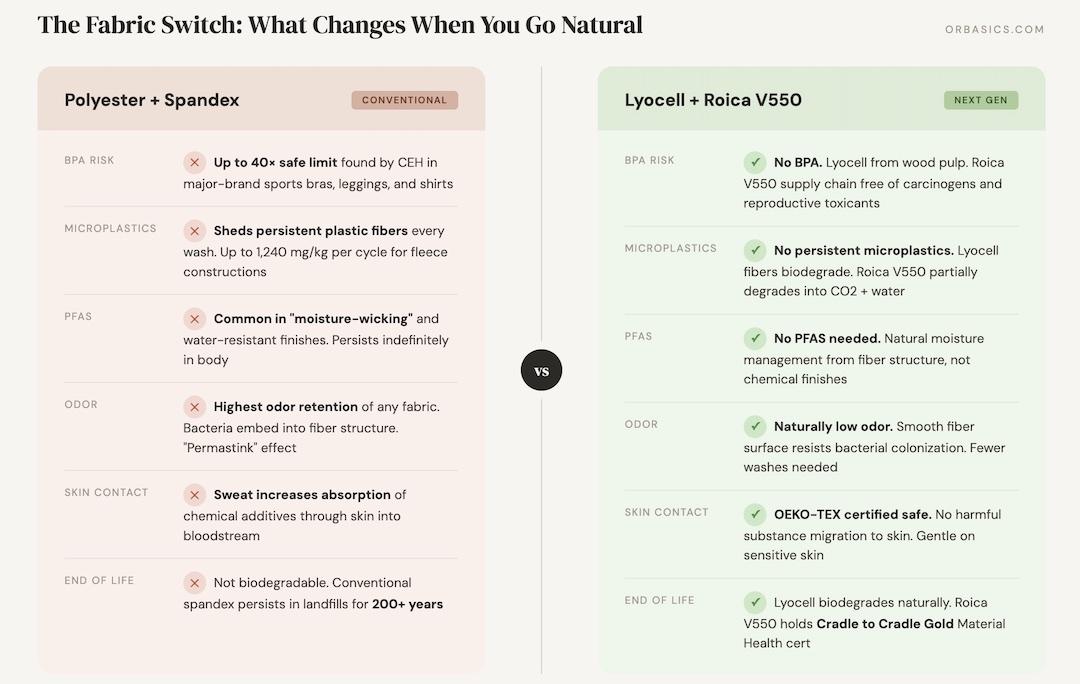
In 2022, the Center for Environmental Health (CEH) tested polyester and nylon sports bras and athletic shirts from major brands like Nike, Athleta, The North Face, and FILA. The results were alarming: BPA levels up to 22 times the safe limit under California's Proposition 65. By 2023, follow-up testing found concentrations up to 40 times the safe limit in leggings, shorts, and shirts across even more brands.
BPA is an endocrine disruptor that mimics estrogen in the body. It enters polyester during manufacturing as a processing aid and dye fixative. When you wear form fitting clothing made from polyester blends tightly against warm, sweating skin — exactly what you do during a workout — absorption increases.
A 2024 study from the University of Birmingham, published in Environment International, provided the first experimental evidence that chemical additives in microplastics can leach into human sweat and then be absorbed through the skin into the bloodstream. Sweatier skin absorbed more.
And a 2025 review in Frontiers in Sports and Active Living confirmed that sportswear can release plastic particles absorbed through the skin via friction and sweat during exercise.
The key features to understand: this isn't a distant environmental problem. It's happening against your skin, during every intense workout, in your gym clothes.
Why I Stopped Trusting Polyester and Nylon
I know the mainstream fitness fabrics gospel: polyester is lightweight, breathable, quick drying. Nylon gives you range of motion and compression. Polyester and nylon blends with spandex are "the best" for high intensity workouts.
But here's what that narrative leaves out.
-
Polyester traps bacteria and stinks. A University of Ghent microbiome study found polyester T-shirts smelled significantly more intense and less pleasant than cotton after exercise, with different bacterial growth patterns on synthetic fabrics. A 2023 sportswear odor review confirmed this is a consistent pattern across studies: polyester scores highest for unpleasant post-workout smell. That "permastink" in your gym wear? It's the fabric, not you.
-
Synthetic fabrics shed microplastics every wash. According to a controlled study in PLOS ONE, textile shedding ranges from 9.6 to 1,240 mg of microfiber per kg per wash — and fleece-like, mechanically treated polyester sheds the most. The European Environment Agency estimates textiles release 200,000–500,000 tonnes of microplastics into marine environments annually.
-
Recycled polyester isn't the solution either. As I wrote in my deep dive on recycled polyester, research shows recycled polyester sheds about 55% more microplastic fibers than virgin polyester during washing, and the particles are smaller — making them potentially more harmful. It still contains BPA. The "eco-friendly" label can be misleading.
-
PFAS finishes hide in "moisture wicking" and "water resistant" claims. Many polyester and nylon workout fabrics are treated with PFAS "forever chemicals" to add stain or water repellency. These persist in the environment and the body indefinitely. The EU is now restricting PFAS in consumer clothing from 2026 because safer alternatives exist.
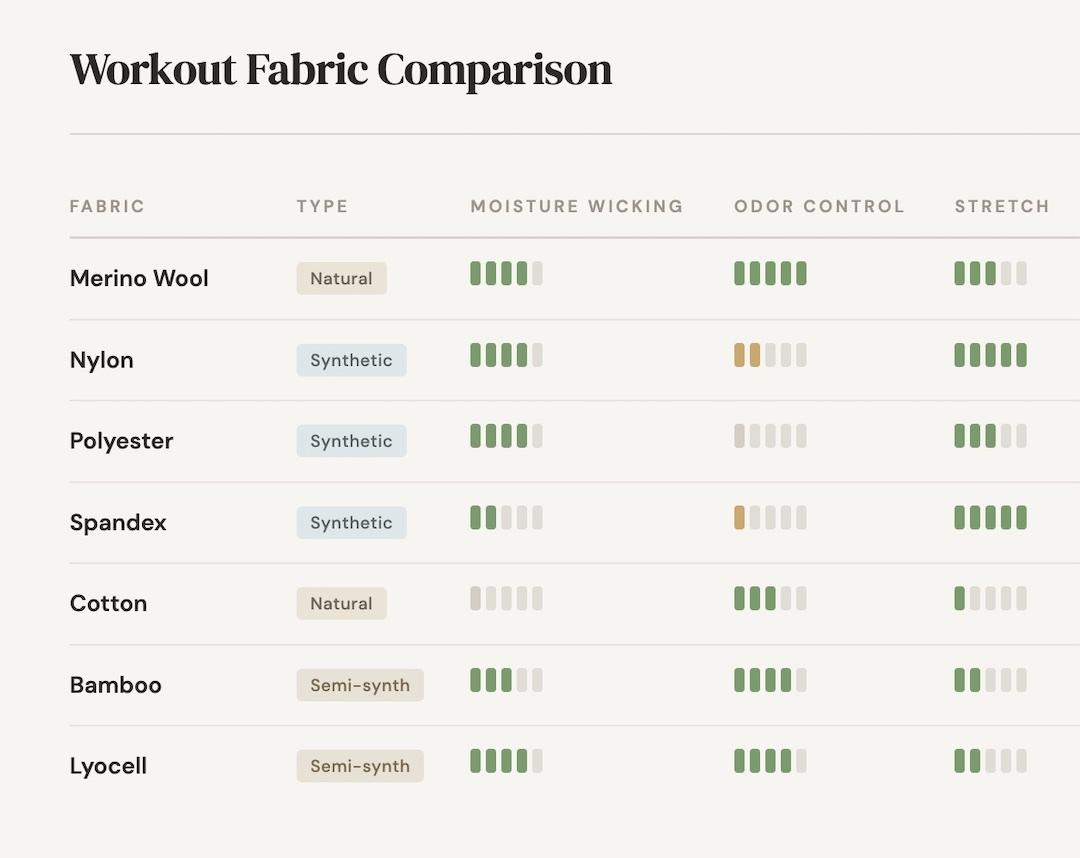
The Best Fabrics for Workout Clothes (Without the Toxic Chemicals)
So if synthetic materials aren't the answer for health-conscious athletes, what is? There are workout fabrics that deliver moisture wicking, breathability, stretch, and durability — without the chemical load. Here are the best fabrics I actually trust against my skin.
Lyocell + Roica: The Game-Changing Combination
This is my favorite and, I believe, the best material for high-performance workout clothing today.
Lyocell (often branded as TENCEL™) is made from sustainably sourced wood pulp through a closed-loop manufacturing process. It's breathable, has excellent moisture management capabilities, and feels silky against skin. In a thermophysiological sports test, Lyocell single-jersey showed impressively low microclimate humidity with high air permeability — keeping athletes comfortable without synthetic materials or chemical finishes.
Lyocell doesn't release persistent microplastics. It's not a single fabric solution on its own for high intensity workouts — you also need stretch. That's where Roica comes in.
Roica V550, by Japanese innovator Asahi Kasei, is a next-generation stretch yarn that earned the world's first Cradle to Cradle Material Health Gold Certificate for elastane. Unlike conventional spandex, Roica V550 contains no carcinogens, mutagens, or reproductive toxicants in its supply chain. It partially degrades at end of life into CO2 and water — it doesn't persist for centuries like regular spandex.
Lyocell blended with Roica delivers full range of motion in a flexible form, moisture wicking properties, and odor resistance — the same performance you'd get from polyester and nylon blends, without the BPA, PFAS, or microplastic concerns.
The fabric moves with your body, the moisture management keeps you dry, and you maintain comfort without trapping sweat or chemicals against your skin. Unlike conventional activewear fabrics that absorb sweat and hold chemicals against you during every intense workout, Lyocell releases more moisture outward to keep your body cool. For me, it's the best material for achieving fitness goals responsibly — with no trade-off on your health.
Best for: All workout types — including high intensity workouts, strength training, HIIT, and gym training, provided you choose products with credible certifications (for example OEKO‑TEX Standard 100)
Merino Wool: Nature's Odor-Fighting Base Layer
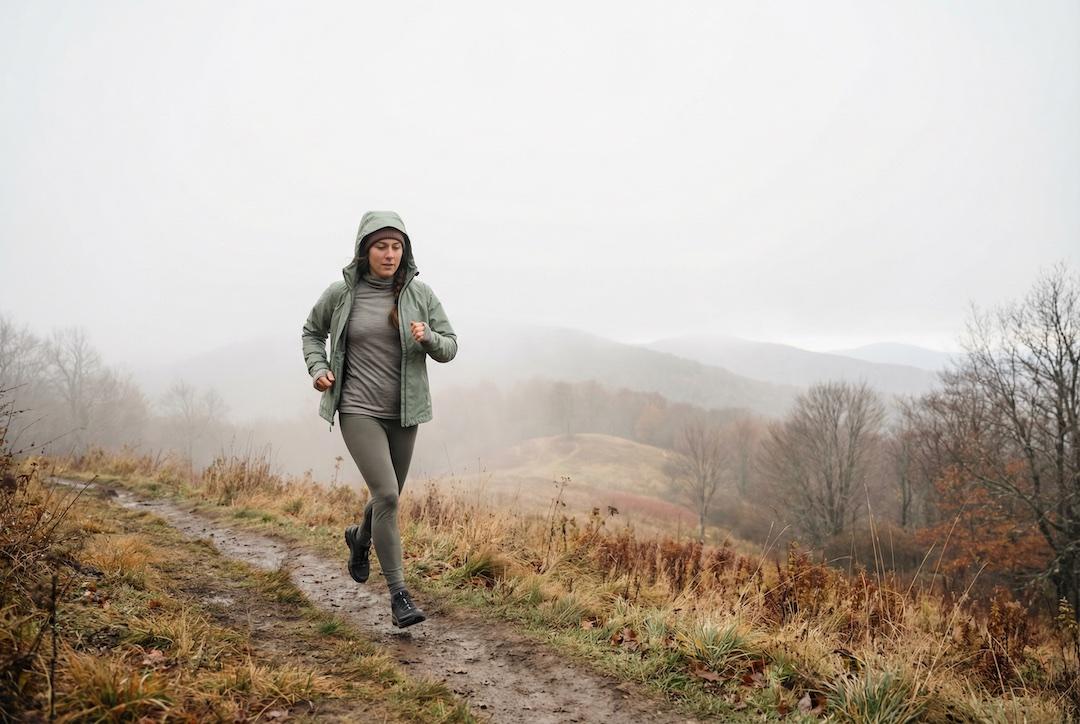
Merino wool remains one of the best fabrics for athletic wear — and the science keeps confirming why. Finer than human hair, merino fibers are soft, breathable, and regulate body temperature across weather conditions: warm in cold weather, cooling when body heat rises.
Merino wool is naturally odor resistant — far more so than any other fabric. Multiple peer-reviewed studies consistently show polyester rates highest for post-workout odor intensity, while merino wool rates lowest. This means you can wear merino base layers multiple times between washes, which reduces water consumption and fiber release into waterways.
Merino wool also avoids the microplastic issue entirely because it's a natural fiber. It sheds fibers, but they biodegrade. Beyond its moisture wicking properties, merino requires no chemical performance finishes to do its job. No anti-odor chemical treatments needed. No PFAS. No BPA. For choosing activewear that's genuinely non-toxic, certified chemical-free clothing is what matters, and merino delivers this naturally.
Best for: Base layers, outdoor training in cooler temperatures and cold weather, gym training, and any session where odor control matters. Works brilliantly as an outer layer in cooler weather conditions.
Organic Cotton: The Honest Classic
Cotton gets a bad reputation in fitness circles, and some of it is deserved. Cotton absorbs moisture quickly and holds onto it — trapping sweat against your skin during high intensity workouts. You end up feeling damp, heavy, and cold. That's real.
But organic cotton — grown without synthetic pesticides — still has a place in your workout wardrobe. For yoga, walking, stretching, and light gym training, cotton is soft, breathable, affordable, and completely free of the chemical concerns that plague synthetic fabrics. It's also highly durable in its own category.
You don't need maximum performance technology for every workout. When comfort takes priority, organic cotton delivers without the hidden cost.
Best for: Low-intensity training, yoga, casual athletic wear, and layering.
Bamboo Fiber: Gentle and Naturally Antibacterial
Bamboo fabric is made from bamboo pulp and has earned its reputation as one of the most skin-friendly fitness fabrics available. In most cases, so‑called “bamboo fabric” is actually bamboo viscose or rayon — a man‑made cellulosic fiber chemically regenerated from bamboo pulp rather than mechanically processed bamboo fibre. It's incredibly soft and breathable, but standard bamboo viscose does not show strong inherent antibacterial or odor‑resistant properties compared with other smooth cellulosic fibers like cotton or modal in independent tests.
Bamboo fiber is often marketed as hypoallergenic and mildew resistant — however, regulators such as the US Federal Trade Commission have warned that broad claims like “naturally antibacterial”, “hypoallergenic”, or “mildew resistant” for generic bamboo viscose are misleading unless they are backed by specific, product‑level testing.
As one of several breathable materials in the natural‑derived category, bamboo viscose fabric helps keep your body cool and absorbs sweat without feeling overly stiff, though it can hold on to moisture longer than some performance knits depending on fabric construction. For sensitive skin, the main benefits are its softness and smooth handfeel rather than any proven special medicinal or antimicrobial effect.
Best for: Yoga, Pilates, light gym training, and people who prioritize a very soft, breathable fabric — provided you choose products with credible certifications (for example OEKO‑TEX Standard 100) rather than relying on generic “bamboo is antibacterial” claims
Fabrics to Avoid (And Why)
Not all workout fabrics serve your fitness goals — or your health. I recommend avoiding these in your gym clothes:
-
Standard polyester and polyester blends. Polyester is linked to BPA exposure, microplastic shedding, bacterial odor retention, and potential endocrine disruption. Even recycled polyester carries these risks. If you currently wear polyester gym wear, change out of it immediately after your workout and shower. Also, whatch out for OEKO Tex certification when buying polyester clothes, to avoid toxic chemicals in these.
-
"Anti-odor" silver/biocidal finishes. Some gym wear uses silver-based biocidal treatments. Research in mSystems suggests these can alter your skin microbiome. Choose naturally odor resistant fabrics instead of relying on chemical fixes.
-
PFAS-treated activewear. Unless you specifically need rain protection for outdoor running, avoid PFAS finishes entirely. Most gym clothes don't need water repellency. The EU's OEKO-TEX Standard 100 now bans intentional PFAS use.
For more on identifying harmful chemicals in your wardrobe, read our guide to toxic clothing and non-toxic activewear brands.
How to Choose Workout Clothes by Activity Level
Choosing workout clothes based on your activity level makes all the difference. Here's how to find the right workout gear for each scenario:
-
High-sweat sessions (HIIT, CrossFit, running): You need aggressive moisture wicking fabrics that pull perspiration away and keep you from trapping sweat. A Lyocell-Roica blend gives you the full range of motion and quick drying performance you need . Unlike other fabrics and other materials that absorb sweat and hold it, moisture wicking fabrics in this category move more moisture away from your body.
-
Strength training: Choose workout clothing and workout fabrics that allow full range of motion and support your muscles during lifts. Lyocell-Roica or merino-elastane blends in form fitting clothing support blood flow and maintain comfort through every rep. The right workout gear for strength training is wrinkle resistant and highly durable. Unlike breathable fabrics made from synthetic materials, these activewear fabrics keep your body cool without chemical help.
-
Low-impact (yoga, Pilates, walking): Natural fibers shine here. Organic cotton, bamboo fiber, and Lyocell offer softness and breathability over maximum performance technology. These breathable materials — among the best fitness fabrics for gentle movement — maintain comfort without the chemical concerns that come with choosing workout clothes made from polyester blends.
-
Cold weather outdoor training: Layer smartly. A merino wool base layer manages body heat and regulates body temperature, while a breathable outer layer protects from weather conditions. If you need an outer layer shell, verify it's PFAS-free — and air dry it rather than machine drying to preserve its finish.
Choosing activewear based on your workout type isn't just about comfort anymore, but about reducing chemical exposure during the moments your skin is most vulnerable: when you're hot, sweating, and wearing form fitting clothing for extended periods.
The Sustainability Factor: Why It's Personal
I founded Orbasics because I believe the products touching our skin shouldn't harm us or the planet. Choosing activewear isn't just about how it performs — it's about the environmental impact of what you wear, wash, and discard.
Every polyester garment sheds more moisture-laden microplastic fibers with every wash cycle. France now requires microfibre filters in new washing machines as of 2025. The EU mandates separate textile collection from 2025 and is building toward digital product passports that reveal exactly what's in your clothes.
The industry is moving. And you can move faster.
Choose natural fibers and responsibly made activewear fabrics — these breathable fabrics and fitness fabrics reduce your exposure. Wash your performance fabrics on gentle cycles. Air dry when possible.
Look for OEKO-TEX, GOTS, Blue Engel or Cradle to Cradle certifications. Explore non-toxic sports bras and non-toxic leggings made from breathable materials you can actually trust.
These aren't small choices. They're how you protect your body and reach your fitness goals without compromising your health.
Frequently Asked Questions
What is the best fabric for working out?
For most people, the best material is a Lyocell-Roica blend for performance pieces and merino wool for base layers. This combination delivers moisture wicking, breathability, stretch, and odor resistance without the BPA, PFAS, or microplastic risks that come with conventional polyester and nylon. A single fabric can't do everything — choose based on your workout intensity.
Is polyester safe for workout clothes?
Polyester raises health concerns. CEH testing found BPA at up to 40 times California's safe limit in polyester-spandex athletic wear. Polyester also traps odors, sheds microplastics, and can be treated with PFAS finishes. While polyester is lightweight and quick drying, there are now performance fabrics made from natural fibers that match its capabilities without these trade-offs.
What are the best non-toxic alternatives to synthetic workout clothes?
The best fabrics for non-toxic athletic wear include Lyocell (TENCEL™), merino wool, organic cotton, and bamboo fabric. For stretch, look for Roica V550 — a Cradle to Cradle-certified alternative to conventional spandex. Check our guide to non-toxic activewear brands for specific recommendations.
What about recycled polyester — isn't that better?
Recycled polyester reduces waste by using repurposed materials like plastic bottles, which helps its environmental impact score. But from a health perspective, recycled polyester still sheds microplastics — about 55% more than virgin polyester — and may contain more BPA. It's better for the planet than virgin polyester, but it's not the safest choice for track shorts and gym wear worn against sweating skin.
Can natural fabrics really handle high intensity workouts?
Yes. Lyocell delivers moisture wicking and breathability comparable to synthetic materials, while merino wool outperforms polyester for odor control. Blended with Roica for stretch, these workout fabrics handle everything from strength training to HIIT. You don't need to sacrifice your health for maximum performance.
Lilija Bairamova