
Table of Contents
Nachhaltige Bademode: 8 Marken für Bikinis und Badeanzüge
This page may contain affiliate links. We may earn a commission on purchases, at no additional cost to you. Learn more →
Salz auf der Haut, warme Sonnenstrahlen und endlich Zeit am Wasser: Für einen schönen Strandtag brauchst du Bademode, in der du dich wohlfühlst. Wenn dir dabei auch Materialien und Herstellungsbedingungen wichtig sind, lohnt sich ein genauer Blick aufs Etikett.
Nachhaltige Bademode kann aus recyceltem Nylon, wiederverwendeten Stoffresten oder Bio-Baumwolle bestehen. Doch kein Material beantwortet alle Fragen auf einmal. Wie gut ein Bikini sitzt, wie lange er hält und welche Prüfungen der Stoff durchlaufen hat, ist genauso wichtig wie der Recyclinganteil.
Wir haben die Angaben von acht Marken recherchiert und zeigen dir, was ihre Badeanzüge und Bikinis auszeichnet. Diese Auswahl ist eine redaktionelle Einordnung anhand öffentlich zugänglicher Herstellerinformationen, kein eigener Trage- oder Labortest. Du erfährst auch, was Begriffe wie „PFAS-frei“, „bio“ und „schadstoffgeprüft“ tatsächlich aussagen.
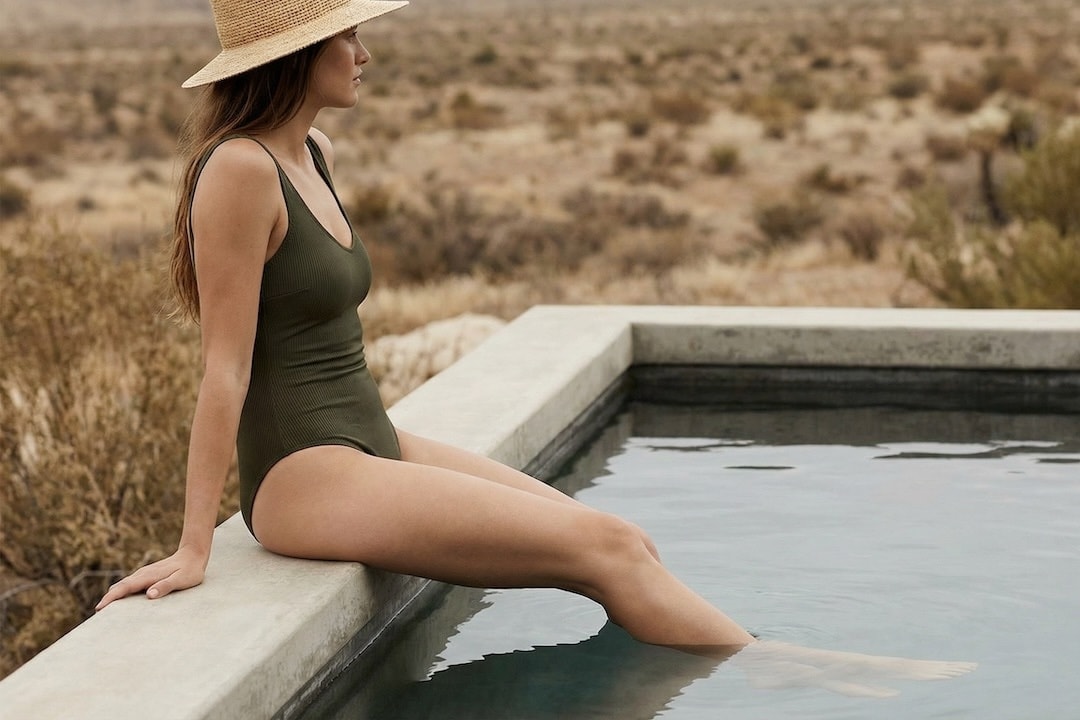
Was macht nachhaltige Bademode aus?
Nachhaltige Bademode verbindet langlebige Verarbeitung und zeitloses Design mit einem bewussten Umgang mit Rohstoffen. Für uns beginnt das mit einem Teil, das du gern und lange trägst. Dazu kommen nachvollziehbare Materialangaben und faire, transparente Produktionsbedingungen. Viele der vorgestellten Labels lassen in Europa fertigen; das kann Transportwege zum europäischen Markt verkürzen. Der Produktionsort allein belegt aber weder faire Löhne noch eine geringere Gesamtbelastung der Umwelt. Recycelte Fasern können neue Rohstoffe ersetzen; eine Fertigung auf Bestellung kann unverkaufte Ware vermeiden.
Nachhaltigkeit und Schadstoffprüfung sind dabei unterschiedliche Dinge. Ein hoher Recyclinganteil belegt keine besondere Hautverträglichkeit. Umgekehrt sagt ein schadstoffgeprüfter Stoff allein noch wenig über Löhne, Transportwege oder die Lebensdauer eines Badeanzugs aus. Unser Überblick über Nachhaltigkeitszertifikate und Textilsiegel hilft dir, die verschiedenen Schwerpunkte einzuordnen.
„Schadstofffrei“ ist ein großes Versprechen
Bei Bademode ist „schadstoffgeprüft“ die präzisere Formulierung, wenn ein entsprechender Nachweis vorliegt. Prüfungen arbeiten mit festgelegten Stofflisten und Grenzwerten. Sie bedeuten nicht, dass ein Produkt keinerlei chemische Substanzen enthält oder jede Hautreaktion ausgeschlossen ist.
Das Bundesinstitut für Risikobewertung betrachtet bei Textilien nicht nur die Eigenschaften einer Chemikalie, sondern auch ihre Menge, ihre Freisetzung und die mögliche Aufnahme in den Körper. Aus dem Materialnamen „Polyester“ oder „Nylon“ lässt sich deshalb keine konkrete Gesundheitsgefährdung ableiten.
Welche Stoffe eignen sich für nachhaltige Bademode?
Du möchtest Bahnen ziehen, surfen oder vor allem am See entspannen? Davon hängt ab, welches Material zu dir passt. Achte neben der Faser auch auf Verarbeitung, Futter und Passform.
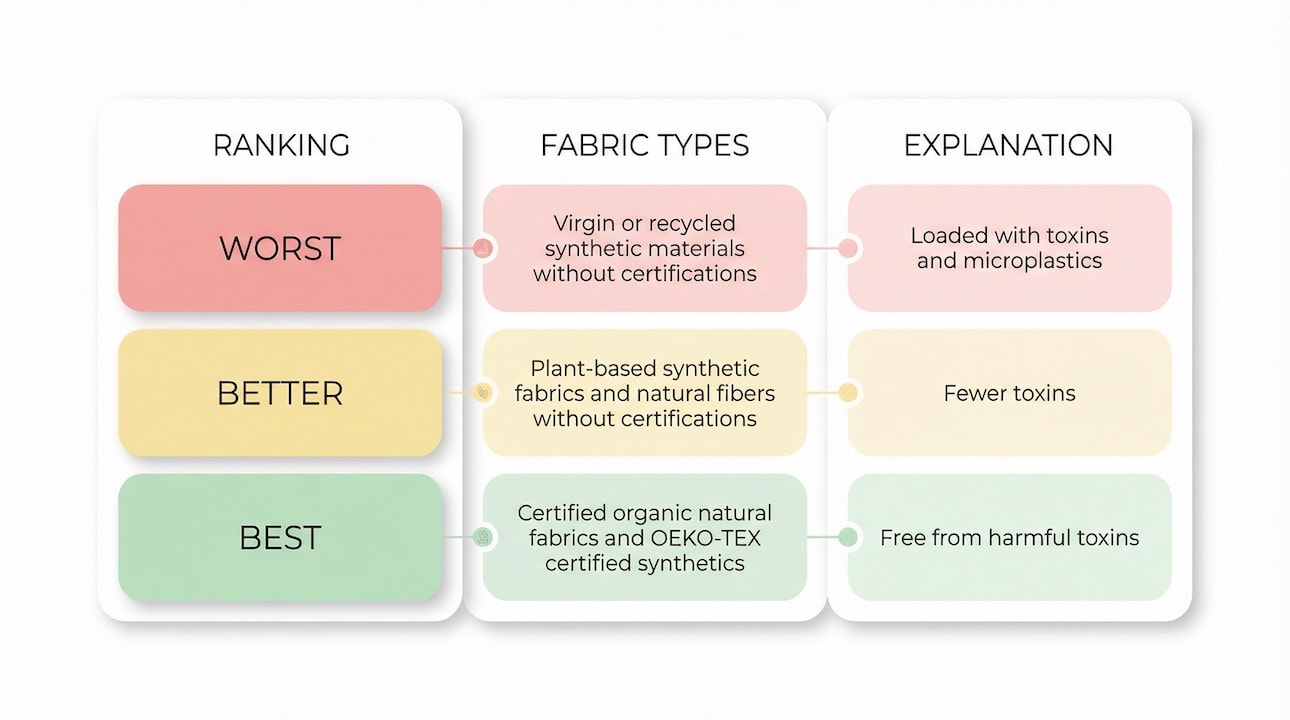
Recyceltes Nylon und Polyester
Herkömmliches, neu hergestelltes Nylon und Polyester werden in der Regel aus fossilen Rohstoffen gewonnen. Wenn du neue Badebekleidung brauchst, kannst du mit Recyclingfasern den Einsatz solcher Virgin Plastics verringern. Viele Marken nutzen recycelte Kunstfasern zusammen mit Elasthan. Das sorgt für die Dehnbarkeit, die du von klassischen Bikinis kennst.
ECONYL® ist regeneriertes Nylon, das unter anderem aus alten Fischernetzen, Teppichresten und Textilabfällen hergestellt wird. Diese Abfälle können aus dem Meer oder aus landbasierten Sammlungen stammen. Es besteht also nicht ausschließlich aus Netzen, die aus dem Meer geborgen wurden.
REPREVE® ist eine Marke für Recyclingfasern. Bei REPREVE Our Ocean werden Plastikflaschen in Küstengemeinden ohne ausreichende Abfallentsorgung gesammelt, innerhalb von 50 Kilometern zur Küste. Die Idee ist, zu verhindern, dass dieser Müll überhaupt ins Meer gelangt.
Beide Ansätze geben vorhandenen Rohstoffen eine weitere Nutzung. Die daraus hergestellten Stoffe bleiben jedoch Kunststoffe und können Mikrofasern abgeben. Mehr zu den Möglichkeiten und Grenzen findest du in unserem Artikel über recyceltes Polyester.
Bio-Baumwolle und Stoffreste
Bademode mit einem hohen Anteil an Bio-Baumwolle ist eine interessante Alternative, wenn du Naturfasern bevorzugst. Sie nimmt allerdings mehr Wasser auf und trocknet langsamer als typische Kunstfaser-Bademode. Ein kleiner Elasthananteil kann den Sitz verbessern; plastikfrei ist ein solches Mischgewebe dann nicht.
Bei Upcycling werden bereits vorhandene Materialien weiterverarbeitet. Das können ungenutzte Stoffrollen oder Zuschnittreste sein. „Deadstock“ beschreibt solche Restbestände und sagt zunächst nichts über die Faserart oder eine Schadstoffprüfung aus. Auch hier lohnt sich der Blick auf die konkrete Zusammensetzung.
Biobasierte Kunstfasern
Biobasiertes Polyamid kann Rohstoffe aus Pflanzen wie der Rizinuspflanze nutzen. Es bleibt trotzdem eine synthetische Faser. Biobasiert bedeutet weder automatisch biologisch abbaubar noch plastikfrei. Entscheidend ist außerdem, wie viel des fertigen Stoffes tatsächlich aus diesem Material besteht und welche weiteren Fasern hinzukommen.
Für wärmende Surfanzüge gibt es außerdem Naturkautschuk als Alternative zu Neopren: YULEX® Foam wird für solche Wetsuits verwendet. Das ist ein anderer Einsatzbereich als der dünne, elastische Stoff eines klassischen Bikinis.
Beste Fair-Fashion-Labels für nachhaltige Bademode
Jede Marke setzt andere Schwerpunkte. Statt die Labels pauschal nach vermeintlicher „Sicherheit“ zu ordnen, zeigen wir dir, welche Auswahl zu deinen Wünschen passen könnte:
-
MYMARINI*: klare Schnitte, wendbare Modelle und transparente europäische Lieferketten.
-
boochen*: farbenfrohe Prints und Bikinis mit mehreren Tragemöglichkeiten.
-
INASKA*: sportliche Bademode und einzeln kombinierbare Oberteile und Hosen.
-
Frija Omina*: Fertigung auf Bestellung in Brandenburg, auch mit Bio-Baumwolle.
-
Woodlike Ocean*: Recyclingmaterialien und Unterstützung für den Meeresschutz.
-
Demalou*: wendbare Surf-Bikinis mit verstellbaren Details.
-
Anekdot*: kleine Serien aus ausgewählten Reststoffen und Recyclingmaterialien.
-
LOVJOI*: unter anderem Bademode aus biobasiertem Polyamid.
Bademode für Damen: Unsere Auswahl für deinen Sommer
1. MYMARINI: Zeitlose Bademode aus Europa
Passt zu dir, wenn: du schlichte Designs magst, die sich vielseitig kombinieren lassen.
Materialien: überwiegend ECONYL®-Nylon, kombiniert mit Elasthan; Zusammensetzung je nach Modell.
Herstellung und Nachweise: MYMARINI nennt Kroatien, Portugal und Rumänien als Produktionsländer. Für die ECONYL®-Bademodenstoffe führt die Marke OEKO-TEX® STANDARD 100 und den Global Recycled Standard (GRS) an.
Bei MYMARINI gefallen uns die ruhigen Farben und durchdachten Schnitte. Viele Modelle lassen sich wenden und bringen so Abwechslung in deine Strandtasche. Die Marke legt auf ihren Produktseiten außerdem einzelne Schritte der Lieferkette offen. Das macht es leichter, die Herkunft deines Lieblingsteils nachzuvollziehen.
Zur Preisorientierung: Mehrere Badeanzüge lagen zum Recherchezeitpunkt bei regulär etwa 210 bis 230 Euro. Auch hier lohnt sich der Vergleich zwischen Einzelteil und komplettem Look.
Gut zu wissen: Ein angegebener UV-Schutz gilt für die bedeckte Haut. Für unbedeckte Stellen bleiben Schatten und passender Sonnenschutz wichtig.
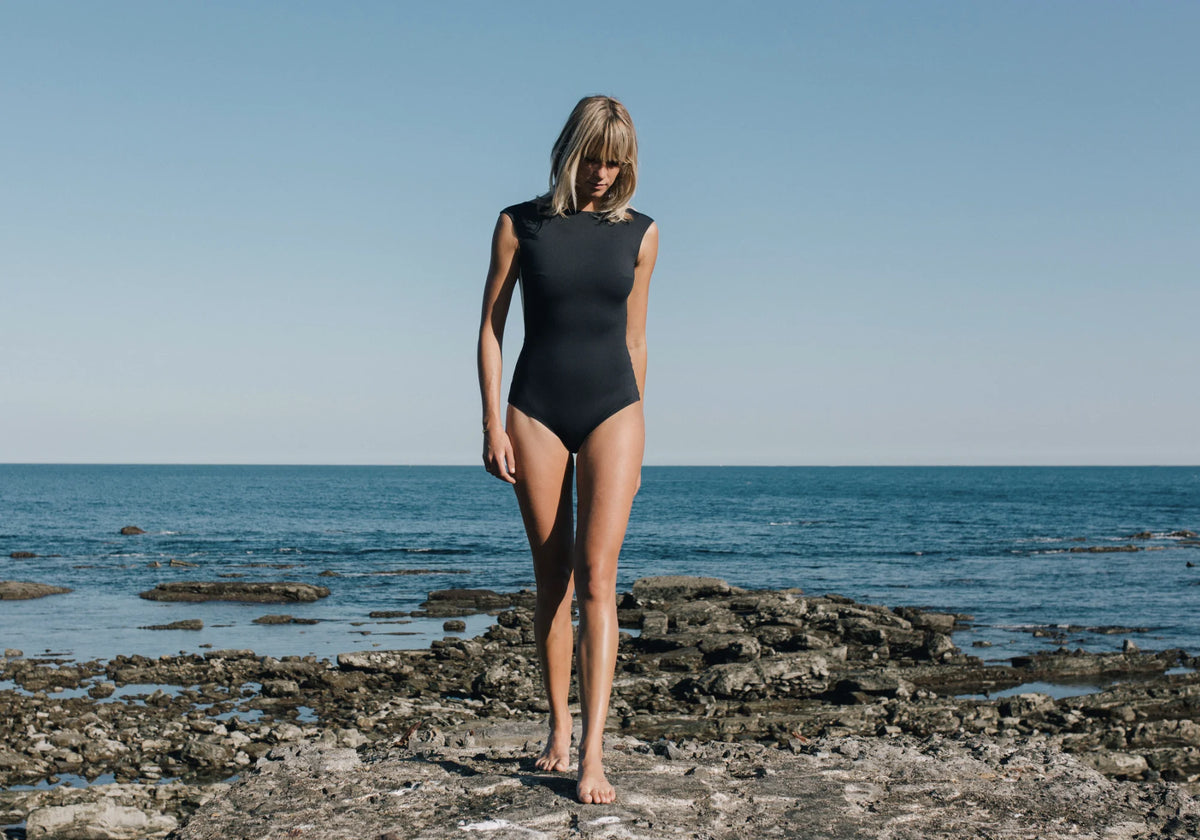
Image © MYMARINI · Bildquelle: MYMARINI
2. boochen: Farbenfrohe Bikinis zum Wenden
Passt zu dir, wenn: du Prints liebst und mit wenigen Teilen verschiedene Looks ausprobieren möchtest.
Materialien: laut Marke unter anderem REPREVE Our Ocean und LYCRA® XTRA LIFE™; die genaue Mischung hängt vom Produkt ab.
Herstellung: Die Marke beschreibt eine Zusammenarbeit mit einem kleinen Nähstudio in der Nähe von Hongkong.
boochen macht Lust auf Tage am Wasser. Besonders spannend finden wir das Noja-Top: Du kannst es wenden und laut Produktbeschreibung auf mindestens sechs Arten tragen. Auch Oberteile und Hosen lassen sich separat auswählen. Das gibt dir Spielraum bei Größe, Schnitt und Kombination.
Gut zu wissen: Der Recyclingfaser-Anteil ist nicht mit der Zusammensetzung des gesamten Bikinis gleichzusetzen. Der Stoff enthält zusätzlich Elasthan. Die aktuelle Nachhaltigkeitsseite erläutert die Produktion, nennt aber keinen unabhängig überprüfbaren Schadstoffnachweis für den fertigen Bikini.
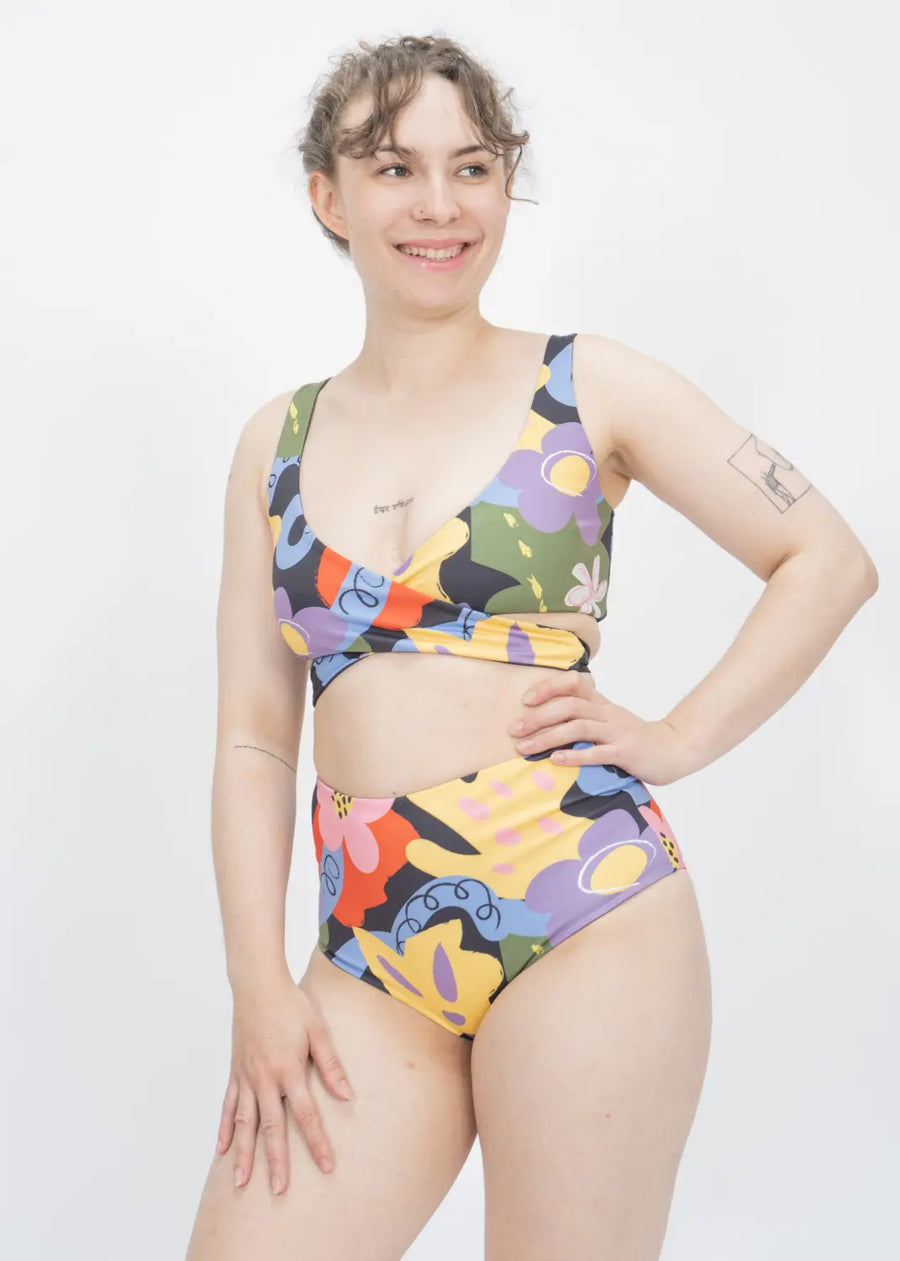
Image © boochen · Bildquelle: boochen
3. INASKA: Sportliche Bademode mit flexibler Passform
Passt zu dir, wenn: du dich im Wasser gern bewegst und Oberteil und Hose passend zu deinen Maßen kombinieren möchtest.
Materialien: unter anderem ECONYL®-Nylon und Elasthan. Die klassische Materialmischung der Marke enthält 78 % regeneriertes Nylon; neuere Linien können anders zusammengesetzt sein.
INASKA wurde von Gründerin Franziska Hannig ins Leben gerufen und richtet seine Bademode auf Bewegung aus. Verschiedene Schnitte und separat erhältliche Teile helfen dir, deinen eigenen Bikini zusammenzustellen. Statt dich nur am Größenbuchstaben zu orientieren, schau dir die Größenberatung und die Angaben zum gewünschten Halt an.
Uns gefällt, dass INASKA neben dem Material auch Reparatur, Rücknahme und Second Life auf seiner Website sichtbar macht. Solche Angebote können interessant sein, wenn du dein vorhandenes Teil länger nutzen möchtest.
Gut zu wissen: Angaben zu Stoffzertifikaten sollten zum konkreten Bikini passen. Ein Siegel auf einem Hoodie der Marke lässt sich nicht automatisch auf die Bademode übertragen.
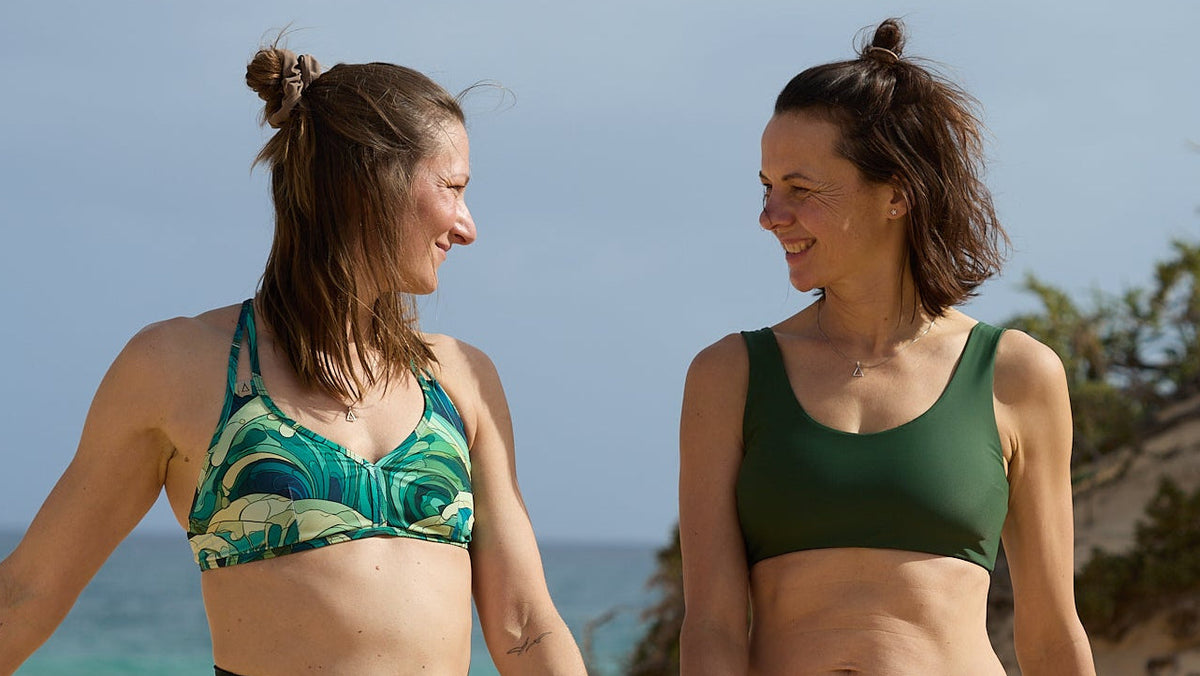
Image © INASKA · Bildquelle: INASKA
4. Frija Omina: Bademode auf Bestellung aus Brandenburg
Passt zu dir, wenn: du eine kleine Manufaktur unterstützen möchtest oder Bademode mit Bio-Baumwolle suchst.
Materialien: je nach Linie Bio-Baumwolle mit Elasthan oder Recycling-Nylon mit Elasthan.
Herstellung und Nachweise: eigene Manufaktur in Perleberg und Tangendorf. Frija Omina nennt GOTS-zertifizierte Webereien für seine Baumwollstoffe sowie OEKO-TEX® STANDARD 100 und GRS bei der Partnerweberei für Recycling-Nylon.
Bei Frija Omina wird jede Bestellung separat in der eigenen Manufaktur gefertigt. Diese Handarbeit richtet sich nach dem tatsächlichen Bedarf. Du wartest dadurch länger auf dein Paket, unterstützt aber eine Produktion, die sich an konkreten Bestellungen orientiert. Die Marke lädt Interessierte sogar ein, sich die Fertigung vor Ort anzuschauen.
Ein Beispiel für die Baumwoll-Linie ist die Badeshorts Isi Korte: Sie besteht aus 95 % Baumwolle aus kontrolliert biologischem Anbau und 5 % Elasthan. Die Marke weist ausdrücklich darauf hin, dass sie nass dunkler wird und langsamer trocknet als übliche Polyester-Bikinis.
Gut zu wissen: Zertifizierte Zulieferbetriebe sind nicht gleichbedeutend mit einer pauschalen GOTS-Zertifizierung jedes fertigen Badeartikels.
Frija-Omina-Bademode entdecken*

Image © Frija Omina · Bildquelle: Frija Omina
5. Woodlike Ocean: Bademode mit Engagement für die Meere
Passt zu dir, wenn: du Recyclingmaterialien mit einem konkreten Beitrag zum Meeresschutz verbinden möchtest.
Materialien: verschiedene Recyclingstoffe; darunter ein Gewebe aus 78 % ECONYL®-Nylon und 22 % XTRA LIFE LYCRA®.
Herstellung: laut Marke in einem kleinen Familienunternehmen in der Türkei.
Woodlike Ocean verbindet Bademode mit einer langjährigen Partnerschaft mit Healthy Seas. Die Marke gibt an, als Mitglied von 1% for the Planet mindestens 1 % ihres Nettoumsatzes an die Organisation zu spenden. Healthy Seas birgt unter anderem verlorene Fischernetze, deren geeignete Nylonanteile recycelt werden können.
Zur Auswahl gehören sportliche Shorts, Bikinihosen und wendbare Modelle. Wenn du gern kombinierst, schau dir die Schnittformen einzeln an: Mehr Bedeckung und ein hoher Bund fühlen sich anders an als ein knapp geschnittenes Modell.
Gut zu wissen: Die Meeresschutz-Spende ist ein eigener Beitrag der Marke. Sie macht den Stoff weder plastikfrei noch zu einem geprüften Produkt ohne Schadstoffe.
Woodlike-Ocean-Bademode entdecken*

Image © Woodlike Ocean · Bildquelle: Woodlike Ocean
6. Demalou: Wendbare Bikinis für aktive Tage
Passt zu dir, wenn: du einen Bikini mit verstellbaren Details für Bewegung im und am Wasser suchst.
Materialien: bei den geprüften Modellen 78 % regeneriertes Polyamid aus ECONYL®-Nylon und 22 % Elasthan.
Herstellung: laut Marke in einer kleinen Manufaktur in Portugal.
Demalou stammt aus der Nähe von München und konzentriert sich auf Surf- und Bademode. Bei der wendbaren Bikinihose Malu kannst du die Weite über eine zusätzliche Schnürung anpassen. Eine gemusterte und eine unifarbene Seite bringen Abwechslung, ohne dass ein zweites Teil in den Koffer muss.
Uns gefallen solche Details, weil sie im Alltag einen Unterschied machen können. Ob ein Bikini beim Surfen gut hält, hängt trotzdem von deiner Passform und dem gewählten Schnitt ab. Probiere beim Anziehen auch Bewegungen aus, statt nur den Sitz im Spiegel zu beurteilen.
Gut zu wissen: ECONYL® beschreibt die Nylonfaser. Daraus ergibt sich keine eigenständige Schadstoffzertifizierung des fertigen Bikinis.

Image © Demalou · Bildquelle: Demalou
7. Anekdot: Kleine Serien und ausgewählte Reststoffe
Passt zu dir, wenn: du besondere Schnitte magst und dich für die Geschichte hinter einem Stoff interessierst.
Materialien: je nach Design Restbestände, recyceltes Nylon und Elasthan.
Herstellung: Berlin oder Polen; der genaue Ort hängt vom Produkt ab.
Anekdot arbeitet mit Stoffüberschüssen und ausgewählten Recyclingmaterialien. Die verfügbaren Stoffe prägen dabei die Designs und Stückzahlen. Das gibt der Kollektion ihren eigenen Charakter und nutzt Materialien, die bereits hergestellt wurden.
Bei der Bademode lohnt sich ein genauer Blick: Das Set Mosaic / Nova + Core High besteht laut Produktseite aus 78 % ECONYL®-Nylon und 22 % Elasthan und wird in Polen gefertigt. Es ist damit ein Beispiel für Recycling-Bademode; nicht jeder Badeanzug der Marke besteht automatisch aus Vintage- oder Deadstock-Stoffen.
Gut zu wissen: Eine limitierte Auflage bedeutet nicht, dass jedes Stück ein Unikat ist. Prüfe Material, Produktionsort und Größenangaben direkt beim jeweiligen Design.
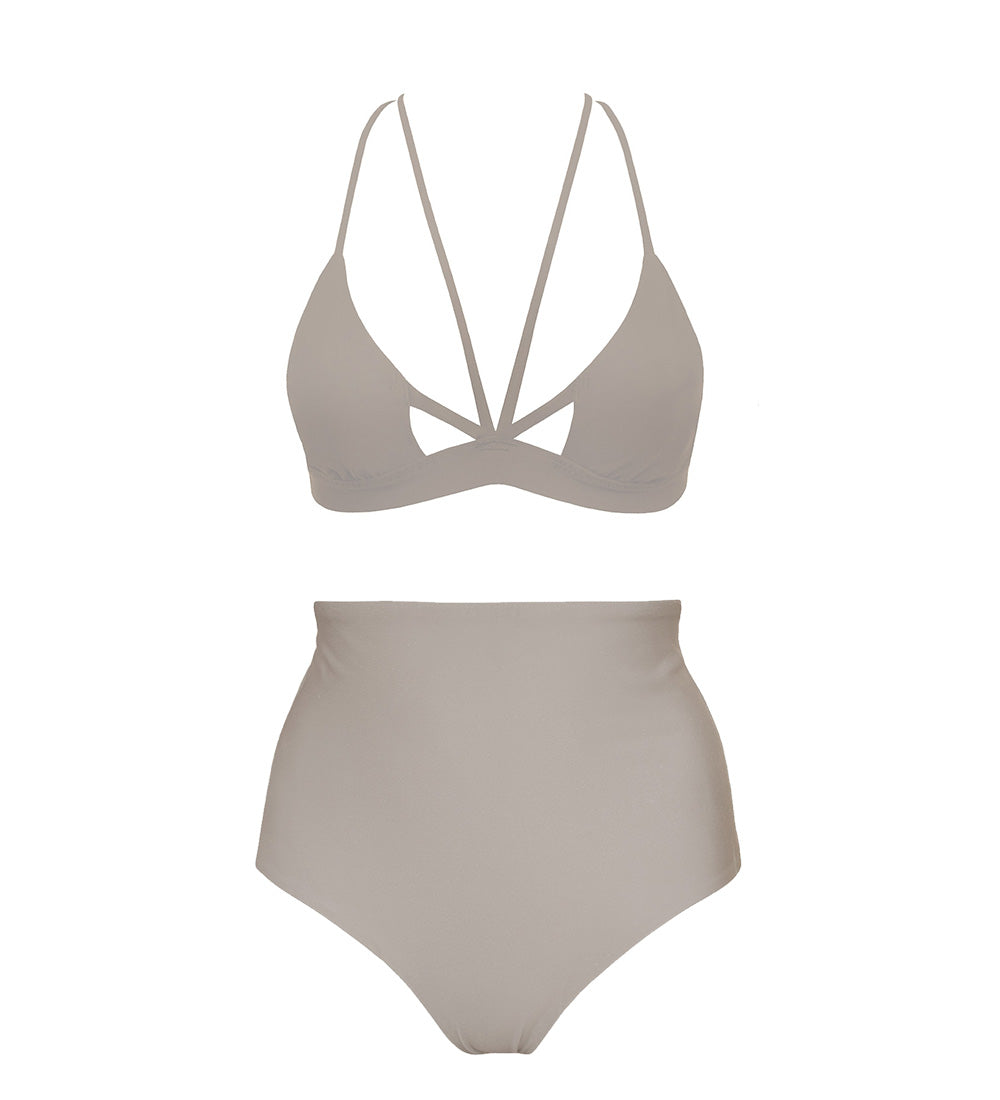
Image © Anekdot · Bildquelle: Anekdot
8. LOVJOI: Bademode mit biobasiertem Polyamid
Passt zu dir, wenn: du klare Schnitte und Alternativen zu ausschließlich erdölbasierten Rohstoffen suchst.
Materialbeispiel: Der Bikini-Slip Dirima Biobased Structure enthält 80 % Polyamid (Bio-Based EVO®) und 20 % Elasthan (Lycra®).
Herstellung: Für dieses Modell nennt LOVJOI Portugal.
LOVJOI zeigt mit Dirima, wie sich pflanzliche Ausgangsstoffe in funktioneller Bademode einsetzen lassen. Die Marke beschreibt das Polyamid als aus Rizinusöl hergestellt. Der hohe Beinausschnitt und die strukturierte Oberfläche geben dem schwarzen Slip einen klaren, markanten Look.
Die Materialidee ist spannend, sollte aber richtig eingeordnet werden: Auch biobasiertes Polyamid ist Kunststoff. Der Elasthananteil kommt zusätzlich hinzu. Aus dem pflanzlichen Ursprung lässt sich deshalb keine pauschale Aussage über biologische Abbaubarkeit oder Schadstofffreiheit ableiten.
Gut zu wissen: Die geprüfte Produktseite nennt keine konkrete Textilzertifikatsnummer. Wir führen für diesen Bikini daher keine pauschale GOTS- oder OEKO-TEX-Zertifizierung an.
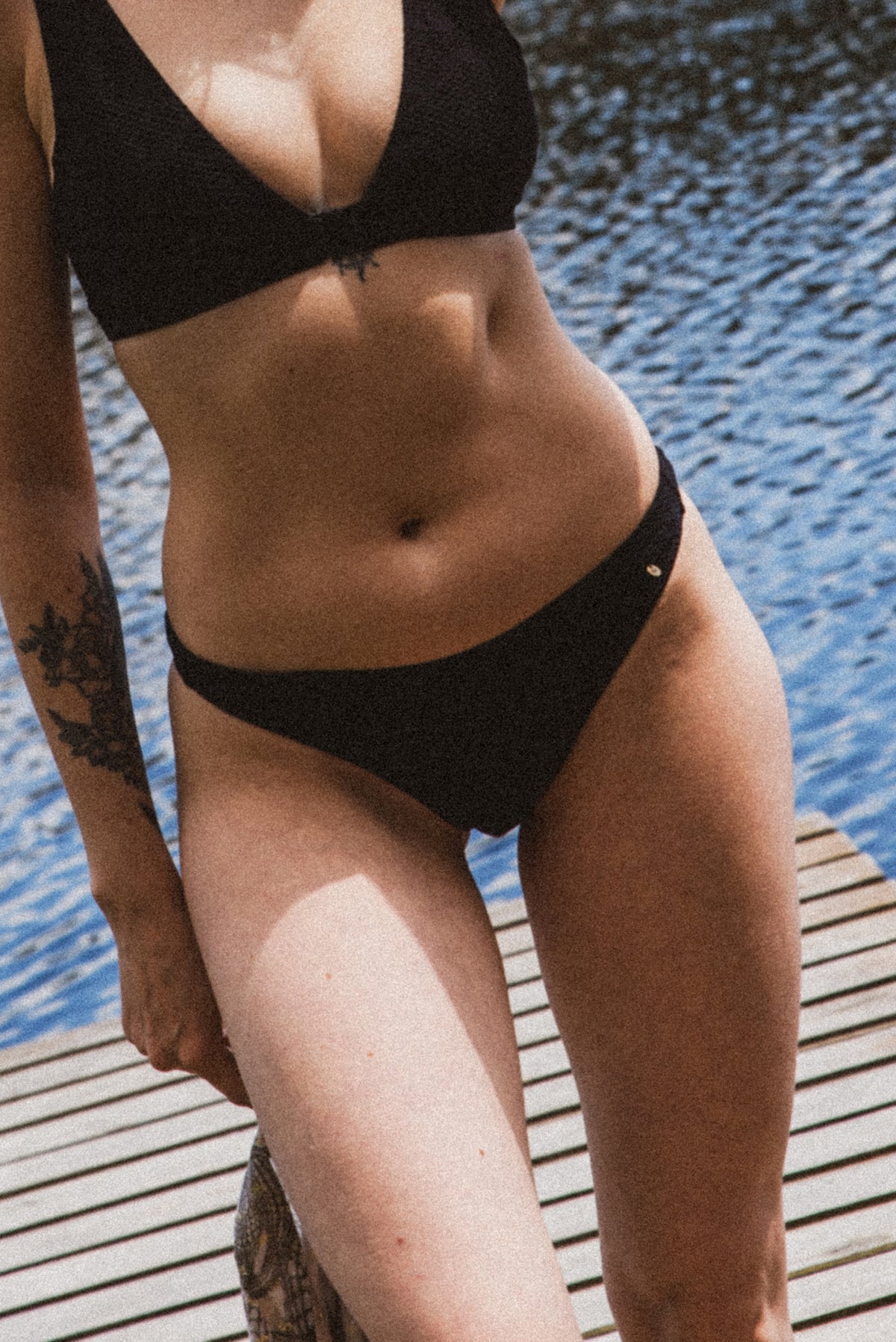
Image © LOVJOI · Bildquelle: LOVJOI
Bikini-Tops, Bikini-Hosen oder Badeanzüge: Was passt zu dir?
Die beste Badebekleidung passt zu deinem Alltag und deinem Stil. Für Bahnen im Pool, einen Surf-Urlaub oder Yoga am Strand brauchst du vor allem Bewegungsfreiheit und sicheren Halt. Wenn du lieber entspannt in der Sonne liegst, darf die Wahl stärker vom Design abhängen. Ob Bikini oder Badeanzug: Entscheidend ist, worin du dich wohlfühlst.
-
Asymmetrische Badeanzüge und Bikinis: Ein einzelner Träger oder ein schräger Ausschnitt setzt einen besonderen Akzent und betont die Linien deines Körpers. Probiere aus, ob das Top auch beim Strecken und Drehen an Ort und Stelle bleibt.
-
High-Waist-Bikinis und Radler: Ein hoher Bund und längere Hosen bieten mehr Bedeckung. Manche Frauen mögen dieses umschließende Gefühl, andere bevorzugen eine knappere Bikinihose. Jede Figur ist anders; dein Wohlgefühl zählt mehr als eine vermeintlich ideale Form.
-
Einfarbige Teile: Schlichte Farben lassen sich leicht miteinander kombinieren. Ein zeitloses Design kann dich über viele Sommer begleiten, auch wenn sich Trends ändern.
-
Mix & Match: Wähle Oberteil und Hose separat, wenn du unterschiedliche Größen brauchst. Wendbare Modelle bringen zusätzliche Looks, ohne dass du ein zweites Set kaufen musst.
Solche Schnitte findest du beispielsweise in der Swimwear-Auswahl von INASKA. Vielfalt bedeutet dabei auch, verschiedene Körperformen und Wünsche zu berücksichtigen. Neuheiten sind nur dann eine gute Ergänzung, wenn du sie wirklich gern und häufig trägst.
So findest du deine Größe: Miss Brust-, Unterbrust- und Hüftumfang und vergleiche die Werte mit der Tabelle des jeweiligen Labels. XS, S, M, L, XL und XXL können je nach Marke unterschiedlich ausfallen. Bei Bikini-Tops zählt außerdem deine Oberweite: Eine Cup-Angabe wie A allein reicht ohne passenden Unterbrustumfang nicht aus. Breitere Träger und verstellbare Verschlüsse können hilfreich sein, wenn du dir mehr Halt wünschst. Mach bei der Anprobe ein paar Bewegungen, die du auch beim Wassersport machst.
Du suchst zusätzlich Bademode für Kinder? INASKA führt dafür eine eigene Kategorie. Prüfe bei jedem Modell die aktuell verfügbaren Größen und den vorgesehenen Einsatz. Ein Sortiment für Damen sagt noch nichts über die Auswahl für Kinder aus.
Vor dem Kauf: Schau auf Nähte, Futter, Rückgabebedingungen und Reparaturmöglichkeiten. Hochwertige Verarbeitung und sorgfältige Pflege helfen, dass Badebekleidung länger als eine Saison hält. Wer ein vorhandenes Teil weiterträgt und dadurch weniger neu kauft, kann Ressourcen sparen. So entsteht Nachhaltigkeit auch durch die Nutzung – nicht nur durch das Material auf dem Etikett.
PFAS und andere Chemikalien: Worauf kommt es an?
Wenn du Bademode ohne absichtlich zugesetzte PFAS suchst, frag nach einer eindeutigen Erklärung zum konkreten Produkt. PFAS können für wasser-, öl- oder schmutzabweisende Ausrüstungen verwendet werden. „Schnelltrocknend“ allein ist jedoch kein Beleg für PFAS. Auch Faserart, Stoffaufbau und Stoffdicke beeinflussen die Trocknungszeit.
Unser Artikel über PFAS in Kleidung erklärt den Hintergrund. Für deinen Einkauf ist die konkrete Auskunft der Marke entscheidend: Bezieht sich „PFAS-frei“ auf den Verzicht in der Herstellung, auf einen bestimmten Stoff oder auf eine Prüfung des fertigen Produkts?
Auch schadstoffarme Farbstoffe und ein verantwortungsvoller Umgang mit Ausrüstungsmitteln gehören zu einer bewussten Textilproduktion. Nachvollziehbare Anforderungen an Chemikalien helfen, problematische Stoffe bei Herstellung und Nutzung zu begrenzen. Farbe und Faserart verraten dir jedoch nicht, ob ein Bikini problematische Rückstände enthält. Eine nachvollziehbare Schadstoffprüfung hilft dir hier weiter als ein pauschales Versprechen wie „chemiefrei“.
Diese Textilsiegel helfen dir bei der Auswahl
OEKO-TEX® STANDARD 100
Der OEKO-TEX® STANDARD 100 prüft Textilien auf zahlreiche schädliche Substanzen anhand definierter Grenzwerte. Der Anbieter nennt aktuell über 1.000 geprüfte Schadstoffe. Die Anforderungen richten sich unter anderem danach, wie intensiv ein Artikel mit der Haut in Kontakt kommt.
Der Standard untersagt den absichtlichen Einsatz von PFAS; Anfang 2024 wurden die dazugehörigen Prüfanforderungen verschärft. Achte auf ein gültiges Label und prüfe die Nummer im offiziellen Label Check. Ein Zertifikat für einen Stofflieferanten ist nicht automatisch ein Zertifikat für jeden fertigen Bikini. Quelle: OEKO-TEX-Regeländerungen 2024.
GOTS und Recycling-Nachweise
GOTS ist ein Standard für die Verarbeitung von Textilien aus Bio-Fasern und umfasst auch Umwelt- und Sozialanforderungen. Für die Kennzeichnung „organic“ müssen mindestens 95 % der Fasern aus zertifiziert biologischer Erzeugung stammen; bei „made with organic“ sind es mindestens 70 %. Entscheidend ist der konkrete Zertifizierungsumfang. Quelle: GOTS zu korrekten Bio- und Zertifizierungsaussagen.
Recycling-Nachweise wie GRS betreffen andere Kriterien als ein Bio-Siegel. Auch hier sollte klar sein, ob sich die Angabe auf das Garn, den Stoff oder das fertige Kleidungsstück bezieht. Verlass dich deshalb lieber auf nachvollziehbare Produktinformationen als auf eine lange Reihe von Logos.

So bleibt deine Bademode länger schön
Du hast schon einen Badeanzug, der gut sitzt? Dann ist sorgfältige Pflege ein guter nächster Schritt. Du musst ihn nicht allein wegen einer neuen Materialbezeichnung ersetzen.
-
Nach dem Baden ausspülen: Entferne Salz- und Chlorwasser mit klarem, kühlem Wasser.
-
Das Pflegeetikett beachten: Viele Labels empfehlen schonende Handwäsche, damit Form und Elastizität lange erhalten bleiben. Entscheidend ist trotzdem die Pflegeempfehlung deines Modells. Verwende ein mildes Waschmittel und die empfohlene Temperatur.
-
Sanft behandeln: Drücke Wasser vorsichtig heraus, statt den Stoff kräftig auszuwringen.
-
Im Schatten trocknen: Vermeide starke Hitze und den Trockner, sofern das Pflegeetikett nichts anderes erlaubt.
-
Vor rauen Flächen schützen: Ein Handtuch auf Steinen oder Poolrändern kann unnötigen Abrieb vermeiden.
Und was ist mit Mikroplastik?
Auch beim Tragen können synthetische Textilien Fasern verlieren. Eine 2024 vorgestellte Untersuchung der Arizona State University beobachtete im Salt River an einem untersuchten Tag im Juli 2023 einen achtfachen Anstieg der Mikroplastikkonzentration nach Freizeitaktivitäten. Die Forschenden sahen synthetische Bademode als wichtige Faserquelle.
Das ist ein Hinweis auf einen konkreten Eintragspfad, keine allgemeingültige Zahl für jeden Badesee. Auch die pauschale Aussage „recycelte Stoffe verlieren immer mehr Mikrofasern“ lässt sich daraus nicht ableiten. Für die Auswahl zählen neben der Faserherkunft auch Stoffqualität, Verarbeitung und Nutzung.
Dein Lieblingsteil soll zu deinem Alltag passen
Nachhaltige Bademode muss sich für dich gut anfühlen: beim ersten Sprung ins Wasser genauso wie beim nächsten Urlaub. Wähle einen Schnitt, in dem du dich bewegen kannst, prüfe die Materialangaben und frage bei unklaren Nachweisen nach. Ein gut sitzendes Teil, das du pflegst und oft trägst, ist ein schöner Anfang.
Für deinen Strandtag findest du bei uns auch einen Überblick über natürlichen Sonnenschutz. So kannst du deine Tasche in Ruhe packen und dich auf das Wasser freuen.

FAQ: Häufige Fragen zu nachhaltiger Bademode
Gibt es Badeanzüge ohne Polyester?
Ja. Viele Badeanzüge bestehen aus Polyamid beziehungsweise Nylon und Elasthan und enthalten kein Polyester. Das macht sie allerdings nicht plastikfrei. Wenn du weniger Kunstfasern möchtest, findest du auch Modelle aus Bio-Baumwolle mit Elasthan. Prüfe immer Oberstoff und Futter, denn beide können unterschiedlich zusammengesetzt sein.
Ist nachhaltige Bademode automatisch PFAS-frei?
Nein. „Nachhaltig“ ist keine eigenständige PFAS-Prüfung. Aussagekräftiger sind eine klare Erklärung zum Produkt, ein gültiges passendes Textilsiegel oder ein nachvollziehbarer Prüfbericht. Die Eigenschaft „schnelltrocknend“ verrät für sich genommen nicht, ob PFAS verwendet wurden.
Welcher Stoff ist für nachhaltige Bademode am besten?
Das hängt von deiner Nutzung ab. Recyceltes Nylon mit Elasthan bietet die Elastizität typischer Sportbademode. Bio-Baumwolle kann sich angenehm anfühlen, trocknet aber langsamer. Wichtiger als ein vermeintlich perfekter Stoff sind eine passende Konstruktion, nachvollziehbare Materialangaben und ein Teil, das du lange gern trägst.
Gibt es Bio-Bademode ohne Kunststoff?
Bio-Bademode kann Bio-Baumwolle enthalten und trotzdem einen Elasthananteil haben. Das geprüfte Baumwollmodell von Frija Omina besteht beispielsweise aus 95 % Bio-Baumwolle und 5 % Elasthan. Es ist somit nicht vollständig plastikfrei. „Bio“ und „plastikfrei“ solltest du beim Einkauf getrennt prüfen.
Ist ECONYL®-Bademode schadstofffrei?
ECONYL® bezeichnet regeneriertes Nylon, keine Schadstoffzertifizierung für den fertigen Badeanzug. Ob ein konkretes Modell entsprechend geprüft wurde, zeigen zusätzliche Nachweise. Aus dem Recyclinganteil allein lässt sich weder eine besondere Gesundheitsgefahr noch vollständige Schadstofffreiheit ableiten.
* Werbung: Dieser Artikel enthält mit * gekennzeichnete Affiliate-Links. Wenn du über diese Links einkaufst, erhalten wir eine kleine Provision – für dich entstehen keine zusätzlichen Kosten. Die bereitgestellten Informationen dienen ausschließlich Bildungs- und Informationszwecken und stellen keine medizinische Beratung dar. Sie ersetzen nicht die Konsultation eines Arztes oder qualifizierten Gesundheitsdienstleisters. Dieser Artikel wurde mit Unterstützung von KI-Tools erstellt und von unserem Team redaktionell geprüft und freigegeben. Alle geäußerten Meinungen sind unsere eigenen.
Cristina Solis

Cristina Solis ist eine engagierte Umweltingenieurin und Nachhaltigkeitsberaterin, die es sich zur Aufgabe gemacht hat, bewusste Verbraucher zu informieren und Unternehmen dabei zu unterstützen, einen positiven Einfluss auf unseren Planeten zu haben. Ihre Expertenmeinungen zu Umweltthemen wurden bereits in angesehenen Medien wie Forbes, American Recycler, Green Living Magazine und Homes & Garden veröffentlicht. In ihrer Freizeit verbindet sie sich gerne mit der Natur und verbringt Zeit mit ihrer Familie.




Hinterlasse einen Kommentar